Category: News This Week

  • ATNF Panel Examines State-Level Policy Challenges for Harm Reduction

    ATNF Panel Examines State-Level Policy Challenges for Harm Reduction

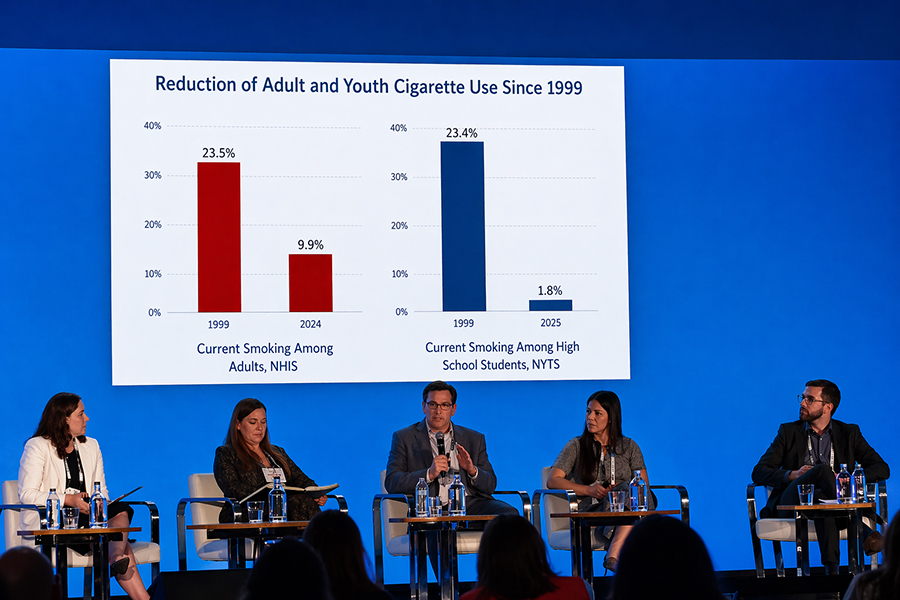
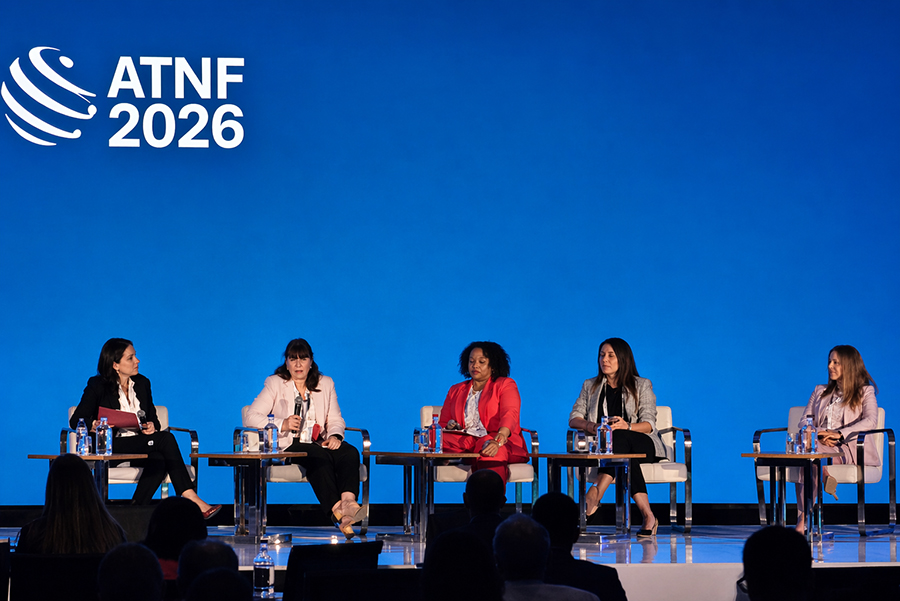
    At the American Tobacco and Nicotine Forum (ATNF), a panel moderated by Beth Oliva, a partner at Fox Rothschild, brought together industry, policy, and regulatory experts to examine how state and local policymaking is shaping harm reduction. Panelists Dr. Jeff Willett from the Progressive Policy Institute, Sarah McQuillan from JTI Liggett, Andrew Nunes from PwC, and Laura Leigh Oyler from Haypp Group, repeatedly emphasized a core issue: a widespread lack of understanding among state lawmakers about federal tobacco regulation and the FDA’s role. Several speakers noted that policymakers are often making decisions without a clear grasp of existing frameworks, definitions, or scientific standards, contributing to fragmented and sometimes contradictory regulations.

    A major theme was the disconnect between data and policymaking. Panelists pointed to declining cigarette use alongside growth in alternative products, yet said state responses are often driven more by headlines than evidence. Willett highlighted progress in reducing youth vaping since 2019 and stressed the importance of fact-based policy, while others noted that tax increases, flavor bans, and regulatory gaps can unintentionally push consumers toward illicit markets or cross-border purchases. Nunes and Oyler both underscored how inconsistent tax structures and regulatory approaches across states are distorting markets and complicating compliance for manufacturers and retailers.

    The panel also focused heavily on the growth of illicit markets, with speakers linking it to unmet consumer demand and regulatory gaps. Oyler argued that the lack of authorized products has created a “vacuum” filled by unregulated alternatives, while Willett pointed to evidence that high taxes and restrictions are driving illicit sales in markets like New York. Broader inconsistencies—such as stricter rules for nicotine compared to cannabis or alcohol—were cited as further complicating enforcement and public perception. Panelists warned that states are increasingly reliant on tobacco tax revenue, which can influence policy decisions, and called for more coordinated, evidence-based approaches rather than a patchwork of state-by-state rules.

    Finally, the discussion turned to communication and public health messaging. Speakers argued that the current narrative around nicotine lacks nuance, with limited recognition of the continuum of risk or the role of reduced-risk products. Several panelists called for the FDA to take a more active role in educating both lawmakers and the public, while also stressing the need for better data to be incorporated into legislative debates. Without improved communication and alignment between federal science and state policy, the panel suggested that regulatory fragmentation and market distortions are likely to persist.

    Top of Form

    Bottom of Form

  • UK Passes Tobacco and Vapes Bill to Create ‘Smoke-Free Generation’

    UK Passes Tobacco and Vapes Bill to Create ‘Smoke-Free Generation’

    The UK Parliament has passed the Tobacco and Vapes Bill, introducing a phased ban on cigarette sales to anyone born on or after January 1, 2009, effectively creating a “smoke-free generation.” The legislation also grants ministers new powers to regulate tobacco, vaping, and nicotine products, including controls on flavors, packaging, and marketing.

    The bill expands restrictions on vaping, banning its use in cars carrying children as well as in playgrounds, near schools and at hospitals, while allowing use in certain outdoor and private settings. Smoking and vaping will remain permitted in homes and some outdoor spaces, including hospitality venues.

    Officials described the measure as a major public health intervention aimed at reducing smoking-related harm, while some lawmakers raised concerns about its impact on retailers. Health groups welcomed the legislation and called for additional support for smoking cessation programs, however, critics find the regulation too broad and obtuse.

    “A critically important element of the Tobacco and Vapes Bill is that it gives the government the power to regulate nicotine pouch products,” said Markus Lindblad, head of legal and external affairs at Haypp. “Nicotine pouches do not contain tobacco, nor produce vapor, so they fell outside the scope of existing nicotine product laws. Introducing regulations such as an 18+ age-of-sale and an upper limit of 20mg of nicotine per pouch will help send the message that these products are for adult nicotine users only. Oral nicotine products have enabled Sweden to achieve smoke-free status, and with sensible regulation arising from this Bill, pouches can play a similar role driving down smoking rates in the UK.”

  • PMI Q1 Results Driven by Smoke-Free Growth

    PMI Q1 Results Driven by Smoke-Free Growth

    Philip Morris International reported first-quarter 2026 net revenues of $10.1 billion, up 9.1%, with adjusted diluted EPS rising 16% to $1.96 despite a decline in reported EPS due to a non-cash adjustment. Growth was driven primarily by the company’s smoke-free portfolio, which now accounts for 43% of total revenue and is available in more than 100 markets.

    The smoke-free segment delivered strong performance, with revenue increasing 24.7% and shipment volumes up 11.9%. IQOS remained the key growth driver, with double-digit gains and expanding market share, including becoming the top nicotine brand in markets where it is present. E-vapor products also showed rapid growth, while nicotine pouch volumes expanded in several markets despite declines in Nordic snus.

    Combustible cigarette volumes declined 5.1% in the quarter, although pricing supported modest revenue growth in the segment. Looking ahead, PMI expects continued momentum in smoke-free products, forecasting adjusted EPS growth of 10.9% to 12.9% for 2026 and organic revenue growth of 5% to 7%, supported by ongoing investment in its reduced-risk portfolio.

  • Tennessee Lawmakers Adopt Amendment Strengthening Vape Bill

    Tennessee Lawmakers Adopt Amendment Strengthening Vape Bill

    Tennessee lawmakers approved an amendment to a vape-related bill that expands its scope to more aggressively address youth access and safety concerns, including provisions aimed at tightening controls around vape sales and use tied to incidents in schools. The amendment was backed by bipartisan support, with legislators saying it significantly strengthens the original proposal.

    Rep. Elaine Davis pointed to recent cases at a Knoxville high school where students required medical treatment after vaping, including instances requiring emergency intervention, as evidence of the growing problem. Lawmakers said such incidents are becoming more common across the state, driving urgency for stricter oversight.

    While some legislators raised concerns about regulating adult behavior and potential impacts on local tax revenues, others argued the changes were necessary to address public health risks. Bill sponsor Rep. David Hawk noted implementation challenges with broader restrictions but said further measures could be considered in future sessions. The final vote on the full bill was delayed for additional review.

  • Connecticut House Advances Bill to Limit Vape Shop Growth

    Connecticut House Advances Bill to Limit Vape Shop Growth

    Connecticut lawmakers have approved legislation aimed at reducing the number of smoke and vape shops and strengthening oversight of retailers selling nicotine products. The state House passed the measure 140-3, giving the Department of Consumer Protection expanded authority to deny e-cigarette dealer licenses based on business practices and market saturation.

    Under the bill, regulators could reject license applications if more than 50% of a business’s revenue comes from nicotine-related products or if such products occupy more than 25% of retail space. The proposal also allows the state to deny new licenses in municipalities that already have one dealer per 2,500 residents, while renewal applications would not be subject to this density limit.

  • Malaysian Vape Industry Group Pushes Back on Drug Contamination Claims

    The Malaysian Retail Electronic Cigarette Association (MRECA) raised concerns over reports of vape products containing prohibited substances, while emphasizing that such cases are linked to illicit trade rather than the regulated industry. The group said products approved by the Ministry of Health must meet strict testing and compliance requirements and are distributed through licensed retail channels.

    MRECA said illegal or contaminated products are typically sold through unregulated markets, including unauthorized online platforms, and should not be conflated with compliant offerings. The association also warned about the spread of misleading content on social media, which it said has unfairly implicated legitimate retailers and created confusion about enforcement efforts.

    The group has filed complaints with authorities to address false claims and called for clearer distinctions between regulated products and illicit goods. MRECA said it will continue working with regulators to support enforcement and maintain industry standards.

  • PCA Expands into Asia with Cigraal Partnership

    PCA Expands into Asia with Cigraal Partnership

    The Premium Cigar Association (PCA) announced a strategic partnership with Cigraal to expand its presence in Asia, aiming to support growth and professionalization of the premium cigar sector across key markets, the organization said in a press release. The collaboration will focus on education, regulatory advocacy, and industry engagement in the Asia-Pacific region, the Middle East, and Africa.

    The initiative will launch with PCA Connect Asia, a multi-city program scheduled for November 30 to December 6, featuring training workshops, certification programs and industry events in Hong Kong and Macau. The program will bring together retailers, hospitality operators and industry stakeholders through structured education and networking activities.

    PCA said the partnership reflects growing demand for premium cigars in Asia and the need for stronger industry frameworks to support that expansion. Cigraal, which operates across distribution, retail and brand development, will provide regional expertise to support the rollout of the program.

  • 7th Circuit Upholds Wisconsin Ban on Unauthorized Vape Sales

    7th Circuit Upholds Wisconsin Ban on Unauthorized Vape Sales

    The U.S. Court of Appeals for the Seventh Circuit has ruled that federal law does not preempt Wisconsin’s authority to ban the sale of e-cigarettes that lack FDA authorization, allowing the state to continue enforcing its restrictions. The decision rejects arguments from vaping industry groups that federal tobacco regulations should override state-level controls on product sales and marketing.

    The court found that while the FDA regulates tobacco products at the federal level, states retain the power to impose their own rules on how such products are sold within their borders. The ruling reinforces the ability of states to take independent action against unauthorized vaping products, particularly those that have not received marketing authorization from the FDA.

  • Panel: From Pilot to Progress in Product Authorizations

    Panel: From Pilot to Progress in Product Authorizations

    The panel on the FDA’s nicotine pouch pilot program, moderated by Roxana Weil from McKinney Specialty Labs, was a great discussion between the FDA’s Cristi Stark, Reynolds American’s Carolina Garcia-Canton, Altria Client Service’s Sydana Rogers Hollins, and Kleinfeld, Kaplan, and Becker’s Stacy Ehrlich about the status of the pilot program and what both the FDA and the industry have learned from in the process.

    The pouch pilot program was introduced in 2025, and according to Stark, it started with four applicants and is ending with the same four applicants. She stated that the program aimed for more communication and that the program started at filing. Stark noted that one of the biggest changes the FDA made in the pilot program versus the normal authorization pathway was that the regulatory body followed up with the four pilot companies via email rather than just the more formal letters. The panel participants all noted that the use of email communication was a huge benefit because it allowed for more communication, and more informal communication that helped them to get a better understanding of what the FDA is looking for in their applications.

    One of the biggest points of discussion and agreement was that the pilot program has been successful in creating better lines of communication between the FDA and the industry when it comes to market authorization applications and what is expected and needed to help move the review process along and get product authorized. According to Garcia-Canton, the biggest success has been communication, not necessarily increasing the speed of the review process. Ehrlich agreed that the communication was much better but stated that the FDA needs to be substantially more transparent.

    A point of contention has always been that applicants and the industry feel that the FDA takes too long to review products—the process has taken much longer than the stated 180 days. Ehrlich stated that the process timing needs to be equal for the applicants and the regulatory body; the FDA takes lots of time to review the applications, but companies aren’t necessarily given the time they need to address issues. Stark’s response to the amount of time the process takes was to lay out the process the organization goes through and to emphasize utilizing the pre-submission process and meetings to avoid running into things like timing issues, especially for small companies as they may not have the resources or time to complete longer studies that the FDA may request.

    In discussing the differences in the pilot program versus the normal submission process, Rogers Hollins noted that the FDA’s engagement and tone in the pilot program has been “super helpful and impactful.” She noted that communicating via email was very different than her previous experience with the FDA and that it was helpful as well as being able to gain insights on the FDA’s preferences. In her words, “tone, tenor, and transparency” were the key positive differences.

    According to Garcia-Canton, she noticed that in the beginning, especially, there was a lot of awkwardness between the scientists and the FDA. The idea that the scientists are worried about saying or doing the wrong thing in the FDA’s eyes was iterated by both Garcia-Canton and Stark, but Garcia-Canton emphasized that “this is the place for scientific debate.”

    Stark was asked whether scientists are learning and taking information away from the program. “Change is hard for a lot of people,” Stark said. She noted that there was a lot of confusion over deficiency letters and what was expected from applicants. The FDA’s takeaway, according to Stark, was that it needs to reframe the deficiency letters to better communicate and clear up what the organization needs. She also noted that the scientists, through these communications, are learning that there may be other ways to do things.

    One of the big questions to the panel was whether the FDA made expectations clear from the beginning of the program. Ehrlich was quick to say that they were not entirely clear in the beginning. Garcia-Canton noted that she can sympathize with the FDA reviewers and that both sides can do better with communicating information. “I was not surprised by the request for information,” she said. Adding on to Stark’s notes on deficiency letters, Garcia-Canton noted that she did not always understand what the FDA was asking for and even used AI to ask what the letters meant; she received different answers from different AI programs. However, she noted that she believes the program will help with focus and clarity for future submissions. Rogers Hollins was honest that having gone through it, “I still can’t explain the whole process.” She said that getting more insight would be really helpful and that it would be useful to have more information more easily available in a more informal manner.

    The conversation turned to many of the misperceptions of the pilot program, which Stark cleared up by discussing the theory that the companies in the pilot program are just being pushed through and rubber stamped. She stated that the organization has “not given up on scientific rigor” and that “100% of what was submitted was reviewed” and that the companies heard about any questions that the organization had. Rogers Hollins confirmed that the FDA has been “upholding the scientific standard,” and Garcia-Canton said that the FDA is “keeping up scientific content” and upholding a very high quality.

    An audience member asked if the pilot program is something that can be realistically sustained, to which Stark answered, “Yes, with some changes.” She noted that the FDA needs engaged interaction and increased communication with industry to continue moving forward.

    Another valid question for Stark was what small companies can do to prepare for the submission process. “The standard is the same whether small, medium, or large,” she said. Small businesses may need a little bit more development time or may need to use consultants, though. Stark recommended utilizing the pre-submission review process and meeting with the FDA prior to submissions. Her advice was to plan early, communicate with the FDA, and give time to apply guidance before submission.

    The question of what the biggest challenge is for the existing applicants that are still waiting was asked. Ehrlich stated that applicants “want to know what the noise is—what don’t we need to do?” She also asked whether the wheel needs to be reinvented every time or if there is a way to rely on the existing data for these, very similar, products to help streamline the process. Her takeaway from that question was one of her own: “What is essential and what are the different ways of getting to that, and what is just noise?”

    Stark responded that the FDA is looking at four focused areas for pouches: product characterization, consistent manufacturing, adult benefit, and preventing youth use.

    The panel seemed to agree that the definition of “benefit” in this regard concerns relative risk. Stark noted that she does “not personally agree” with the recent media reports on pouches. The FDA is always concerned about youth access, she said.

    Stark outlined the many meetings with different groups involved in the review of products that help ensure consistency of applications. This also helped to explain part of why the review process takes so long currently. “Is it changing?” she said. “Yes.” She went on to note that “We don’t need to have six meetings a week anymore.” That being said, she emphasized that they are looking over all information and trying to fill in any holes that may exist as they review product applications.

    The panel ended with appreciation of the open conversation and communication. “I’m incredibly excited to be here,” Stark said. “We have a shared effort.” She noted that the pilot program is currently expanding to other programs as well. ENDS is actively progressing, she said. It is no longer a pilot. “We can’t control everything, but we’re looking to learn every step of the way,” Stark said.  

  • FDA Tobacco Chief Highlights Progress, Challenges in Product Reviews and Enforcement

    FDA Tobacco Chief Highlights Progress, Challenges in Product Reviews and Enforcement

    Dr. Bret Koplow, acting director of the FDA’s Center for Tobacco Products (CTP), sat down for a fireside chat to kick off the second day of the American Tobacco and Nicotine Forum (ATNF) in Leesburg, Va. Christopher Greer, president and CEO of the Nicotine Resource Consortium, led the discussion on behalf of industry leaders eager to hear more about the inner workings of the regulatory agency.

    Koplow said the agency has made significant progress in reducing its backlog of premarket tobacco applications, cutting it by roughly 70% over the past year and eliminating the acceptance queue. He noted that while the FDA has reviewed approximately 27 million applications, only a small number have been authorized, largely because most submissions lacked the scientific data required to demonstrate public health benefits.

    Koplow said the agency is working to improve transparency and guidance for applicants, including plans to share lessons learned from the review process to help companies better meet regulatory standards. He also pointed to efforts to streamline evaluations in certain product categories, such as nicotine pouches, where a pilot program enabled faster authorizations and is expected to inform broader regulatory approaches.

    On enforcement, Koplow highlighted increased action against illicit products, including major seizures of unauthorized e-cigarettes in coordination with federal agencies, with most originating from China. He acknowledged ongoing challenges in balancing harm reduction for adult smokers with youth protection, noting declines in youth vaping but continued concerns about public understanding of nicotine risks and the need for stronger evidence on comparative benefits of alternative products.