Tag: cannabis

  • N.J. Tightens Cannabis Rules, Allows Workers to Unionize  

    N.J. Tightens Cannabis Rules, Allows Workers to Unionize  

    New Jersey is tightening oversight across its cannabis and hemp markets, with new laws reshaping labor rules and retail competition. Assembly Bill No. 4182, now enacted, establishes a comprehensive labor framework for cannabis workers and other private-sector employees not covered by the National Labor Relations Act. The law places organizing and collective bargaining under the Division of Private Employment Dispute Settlement, grants it broad enforcement powers, and authorizes penalties of up to $10,000 per violation, or $20,000 in serious cases. Cannabis workers are explicitly guaranteed rights to organize, bargain collectively, and engage in protected activity, while employers face strict limits on retaliation, surveillance, and anti-union practices.

    At the product and retail level, New Jersey has also moved to rein in intoxicating hemp under S-4509/A-6295, creating a new regulatory scheme aligned with federal law and repealing earlier permissive rules. The legislation phases out sales of intoxicating hemp products at gas stations, convenience stores, smoke shops, and liquor stores by November 13, with key restrictions beginning in April. Licensed cannabis dispensaries have welcomed the move, arguing it curbs unfair competition from loosely regulated outlets, while the law preserves protections for licensed hemp farmers operating under the state’s Hemp Farming Act.

  • Nabis Acquires Major Share of Calif. Cannabis Market

    Nabis Acquires Major Share of Calif. Cannabis Market

    Nabis, the “largest licensed cannabis wholesale platform in the U.S.,” acquired select assets of California distributor Humble Cannabis Solutions, expanding its distribution footprint across Northern and Southern California as the industry adjusts to federal cannabis rescheduling from Schedule I to Schedule III. The deal adds roughly $13 million in assets and $20 million in gross sales, strengthening Nabis’ technology-driven infrastructure to support scaling demand.

    The transaction includes a $4 million strategic capital investment from Humble Cannabis Solutions, $4 million in distribution assets to be integrated into Nabis’ California operations, and $5 million in debt financing to support the company’s growth.

  • Cannabis Use Growing, Intertwined with Nicotine

    Cannabis Use Growing, Intertwined with Nicotine

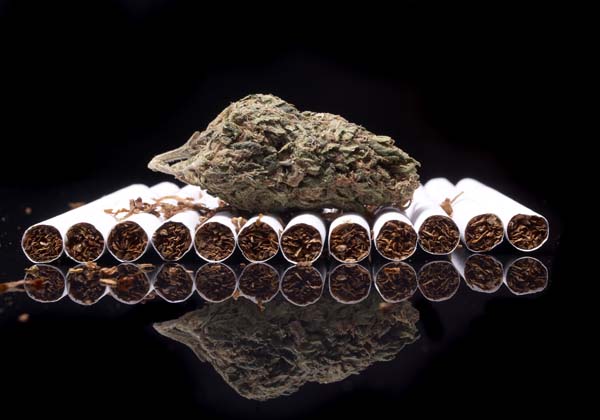
    A new study published in Tobacco Induced Diseases finds that cannabis use—both vaping and smoking—has increased over time, with more young adults initiating use than quitting, and high levels of co-use with nicotine and tobacco products. Researchers from Columbia University Mailman School of Public Health report that simultaneous cannabis and e-cigarette use is especially common among young adults who vape nicotine, with similar rates observed across genders. The findings highlight that cannabis consumption is not only growing but increasingly intertwined with nicotine use.

    Analyzing data from the VapeScan longitudinal study of 372 adults in the New York City area between 2021 and 2024, researchers found cannabis users often consume multiple product types, including vapes, edibles, smoked products, CBD, and topicals. By the second year of follow-up, nearly 60% of participants reported cannabis use, with cannabis vaping and smoking both rising. Notably, 21% of participants were new cannabis vape or smoke users over the study period, while only 6% of earlier users quit, underscoring a net increase in use.

    The authors say the expanding variety of cannabis products, rising frequency of use, and widespread cannabis–nicotine co-use pose growing public health and regulatory challenges.

  • Court Creates Split on Cannabis Landscape

    Court Creates Split on Cannabis Landscape

    A U.S. appeals court ruling last Friday (January 2) added fresh legal uncertainty to the regulated cannabis landscape, with potential implications for adjacent nicotine and tobacco industries. The Ninth Circuit Court of Appeals held that the dormant commerce clause does not apply to state-legal cannabis markets because marijuana remains illegal under federal law. The decision allows states within the Ninth Circuit to maintain residency-based licensing and other local protectionist measures, and directly conflicts with earlier rulings from the First Circuit (2022) and Second Circuit (2025), which extended constitutional commerce protections to legal cannabis despite federal prohibition—creating a clear circuit split.

    The case challenged residency requirements for retail marijuana licenses in Washington State and Sacramento, California, brought by an out-of-state applicant who argued the rules unfairly favored locals. Writing for the court, Judge Daniel A. Bress said federal courts are not required to “inaugurate free trade” in a market Congress has deemed illegal under the Controlled Substances Act. While the ruling strengthens state and local control—often tied to social equity frameworks—it increases regulatory fragmentation across the U.S., underscoring the uneven legal footing of cannabis compared with federally lawful tobacco and nicotine products and raising the likelihood of eventual U.S. Supreme Court review.

  • Florida AG Moves to Block Marijuana Legalization from Ballot

    Florida AG Moves to Block Marijuana Legalization from Ballot

    Florida Attorney General James Uthmeier urged the state Supreme Court to block a new recreational marijuana legalization initiative from reaching the ballot, calling it “fatally flawed,” misleading to voters, and unconstitutional. In a 75-page brief, Uthmeier argued the proposal—backed by Smart & Safe Florida and largely funded by medical cannabis operator Trulieve—violates Florida’s single-subject rule, misrepresents restrictions on public use, and conflicts with federal law under the Controlled Substances Act.

    Uthmeier’s position is supported by a coalition of business and anti-drug groups, which contend the initiative would improperly legalize and commercialize cannabis while obligating the state to license federally illegal activity. Opponents say the ballot summary falsely implies a broad ban on public consumption, lacks enforcement mechanisms, and bundles unrelated policy changes—such as advertising limits and business licensing—into a single constitutional amendment.

    The legal challenge comes as Smart & Safe Florida races to meet a February 1 deadline to submit nearly 880,000 valid signatures, amid disputes over tens of thousands of signatures invalidated by state officials. The measure follows a similar 2024 proposal that won a majority but failed to clear Florida’s 60% approval threshold. While polling continues to show strong public support for legalization, the Supreme Court’s ruling will determine whether voters get another chance to decide the issue in 2026.

  • Cannabis Co. Says NY’s Seed-to-Sale Regs Create Undue Costs

    Cannabis Co. Says NY’s Seed-to-Sale Regs Create Undue Costs

    Cannabis company Veterans Holdings, Inc filed a lawsuit this week in New York Supreme Court against the state, challenging its seed-to-sale tracking system, arguing it significantly increases operating and compliance costs for licensed businesses. The program, overseen by the Office of Cannabis Management, requires cannabis products to be tracked from cultivation through retail sale using the “Metrc” platform.

    According to the company, and echoed by other growers and processors, the program’s tagging, reporting, and data-entry requirements sharply increase compliance expenses, particularly for smaller operators. Businesses say costs associated with mandatory tags, system integration, staff training, and ongoing reporting could erode already thin margins in the state’s developing legal cannabis market.

  • Trump Reclassifies/Downgrades Marijuana

    Trump Reclassifies/Downgrades Marijuana

    President Donald Trump signed an executive order today (December 18) directing the reclassification of marijuana as a less dangerous drug, marking a significant shift in U.S. federal drug policy. The move would downgrade cannabis from a Schedule I substance—alongside heroin and LSD—to Schedule III, a category that includes ketamine and some anabolic steroids. While the change would not legalize recreational marijuana nationwide, it could ease regulations, lower tax burdens on the cannabis industry, and expand opportunities for medical research.

    The order is expected to accelerate a review process already underway at the Drug Enforcement Administration, which typically involves extensive public consultation. A similar reclassification effort was proposed under former President Joe Biden, but Trump’s decision has drawn mixed reactions within his own party. Some Republicans strongly oppose any change, arguing marijuana remains harmful to public health and safety, while public opinion has shifted sharply in favor of legalization, with recent polling showing more than two-thirds of Americans support a less restrictive approach.

    Trump’s order also calls for expanded research into cannabis and increased access to CBD products. While the president has emphasized a tough stance on drugs such as fentanyl, he has framed marijuana policy as an area where federal rules should better reflect state-level changes. More than 20 states have legalized recreational marijuana or allow medical use, though federal law has continued to impose stricter limits and potential criminal penalties.

  • Study Focuses on Tobacco and Cannabis Habits of Young Americans

    Study Focuses on Tobacco and Cannabis Habits of Young Americans

    A University of Michigan study of 8,722 Americans aged 12–34 who had used a tobacco, nicotine, and/or cannabis product within the last month found that traditional smoking remains prevalent even as vaping and edibles grow in popularity. Researchers identified six main usage patterns: combustible tobacco (31%), multiple forms of cannabis (27%), nicotine vaping (18%), combined use of nicotine, tobacco, and cannabis (14%), cannabis edibles only (5%), and multiple forms of nicotine and tobacco (5%).

    The study also highlighted narrowing gender differences and higher usage rates among Black and African American youth and young men, suggesting targeted prevention and cessation programs are needed. The study appears in the American Journal of Preventive Medicine and was funded by the National Cancer Institute and NIH.

  • Strategic Partnership to Elevate Cannabis Data Use

    Strategic Partnership to Elevate Cannabis Data Use

    Paradym Solutions and BDSA announced a strategic partnership designed to reshape how cannabis companies use data. At the core of the collaboration is the integration of Paradym’s advanced analytics and semantic AI with BDSA’s comprehensive market intelligence. This combination aims to move the industry beyond static reporting toward real-time, unified insights that can guide decision-making and growth.

    Technologically, the partnership focuses on building a new data ecosystem that mirrors the rigor of mature Consumer Packaged Goods markets. Paradym’s platform will enable clients to merge internal datasets with BDSA’s market data, producing sophisticated analytics that can be applied directly to business strategy. The companies plan to co-develop new metrics and standardized reporting attributes, setting a precedent for how cannabis businesses manage and interpret data.

  • Supreme Court Told Cannabis Ban is Outdated

    Supreme Court Told Cannabis Ban is Outdated

    Two libertarian advocacy groups — the Cato Institute and Pacific Legal Foundation — filed amicus briefs supporting a petition in Canna Provisions Inc. v. Bondi/Garland, which asks the U.S. Supreme Court to reconsider the federal marijuana ban under the Controlled Substances Act (CSA). They argue that the Court’s 2005 ruling in Gonzales v. Raich, which upheld federal authority over intrastate cannabis activity, is outdated given widespread state legalization and shifting federal enforcement.

    A third group, the Americans for Prosperity Foundation, has also filed a brief urging the Court to take the case, claiming the CSA’s application to state-regulated, intrastate marijuana markets exceeds Congress’s commerce-clause powers.

    A recent federal appeals court decision rejecting a similar challenge reaffirmed that Raich remains controlling — underscoring that only the Supreme Court can revisit the precedent.

    The justices will consider the petition at their December 12 conference and announce on December 15 whether they will hear the case. A ruling limiting federal authority over intrastate cannabis activity could have broader implications for federal-state regulatory power, potentially affecting future oversight of nicotine products, heated tobacco, and other controlled substances.