Tag: Malawi

  • Malawi Tobacco Market Rocked by Widespread Rejections

    Malawi Tobacco Market Rocked by Widespread Rejections

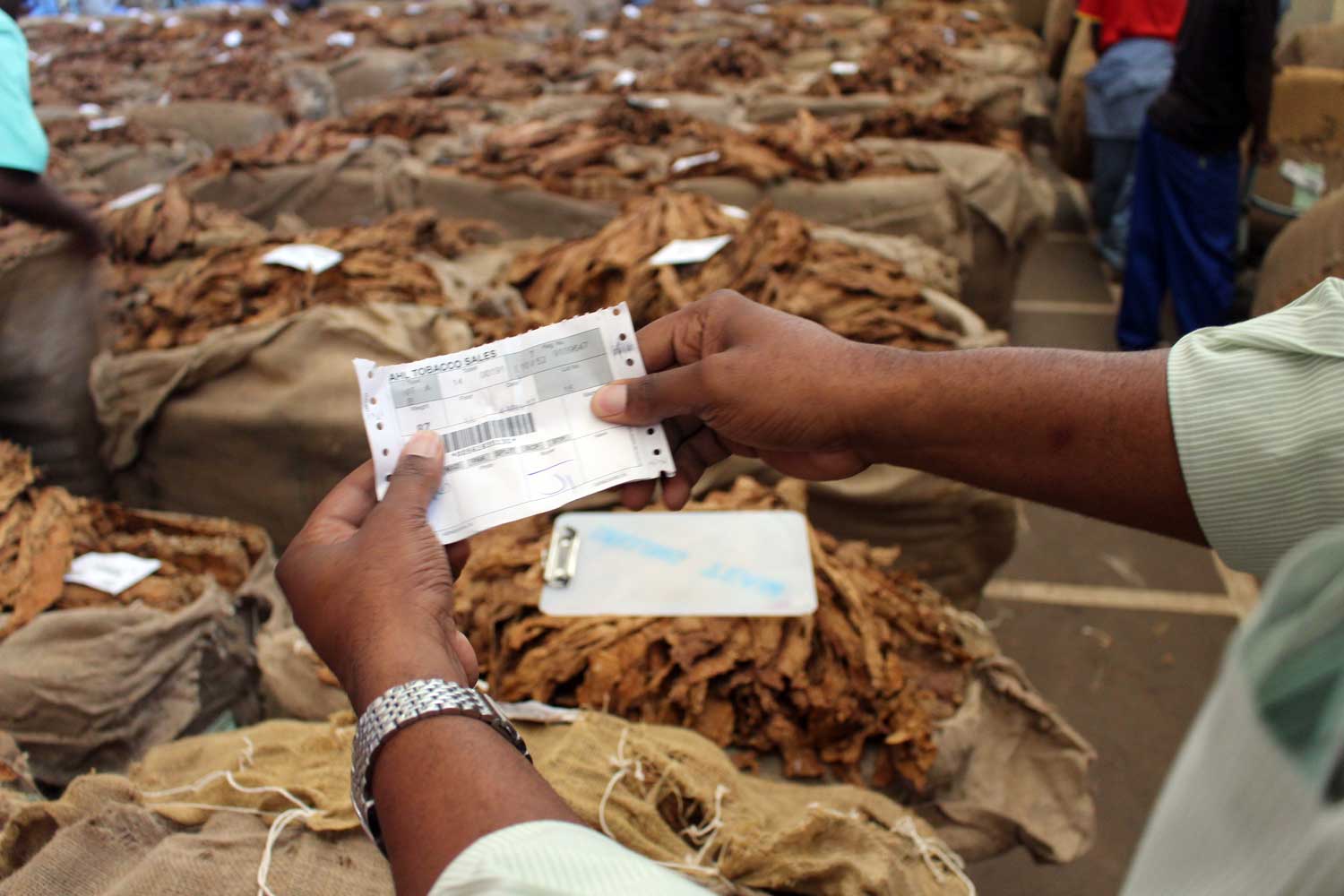
    Malawi’s 2026 tobacco marketing season opened with severe disruption, as growers report rejection rates as high as 96–100% at auction floors, driven by a widening gap between global supply and demand, according to The Nyasa Times. Officials say excess production has forced buyers to tighten purchasing volumes and quality standards, leaving many farmers unable to sell their crop, and raising concerns over income loss and loan repayment.

    The Tobacco Commission launched urgent talks with buyers and industry stakeholders to stabilize the market and improve uptake, as the situation threatens broader economic impacts. With tobacco remaining Malawi’s top foreign exchange earner, sustained disruptions could affect national revenue and economic stability if rejection rates persist.

  • Malawi Faces Oversupply as Tobacco Season Opens

    Malawi Faces Oversupply as Tobacco Season Opens

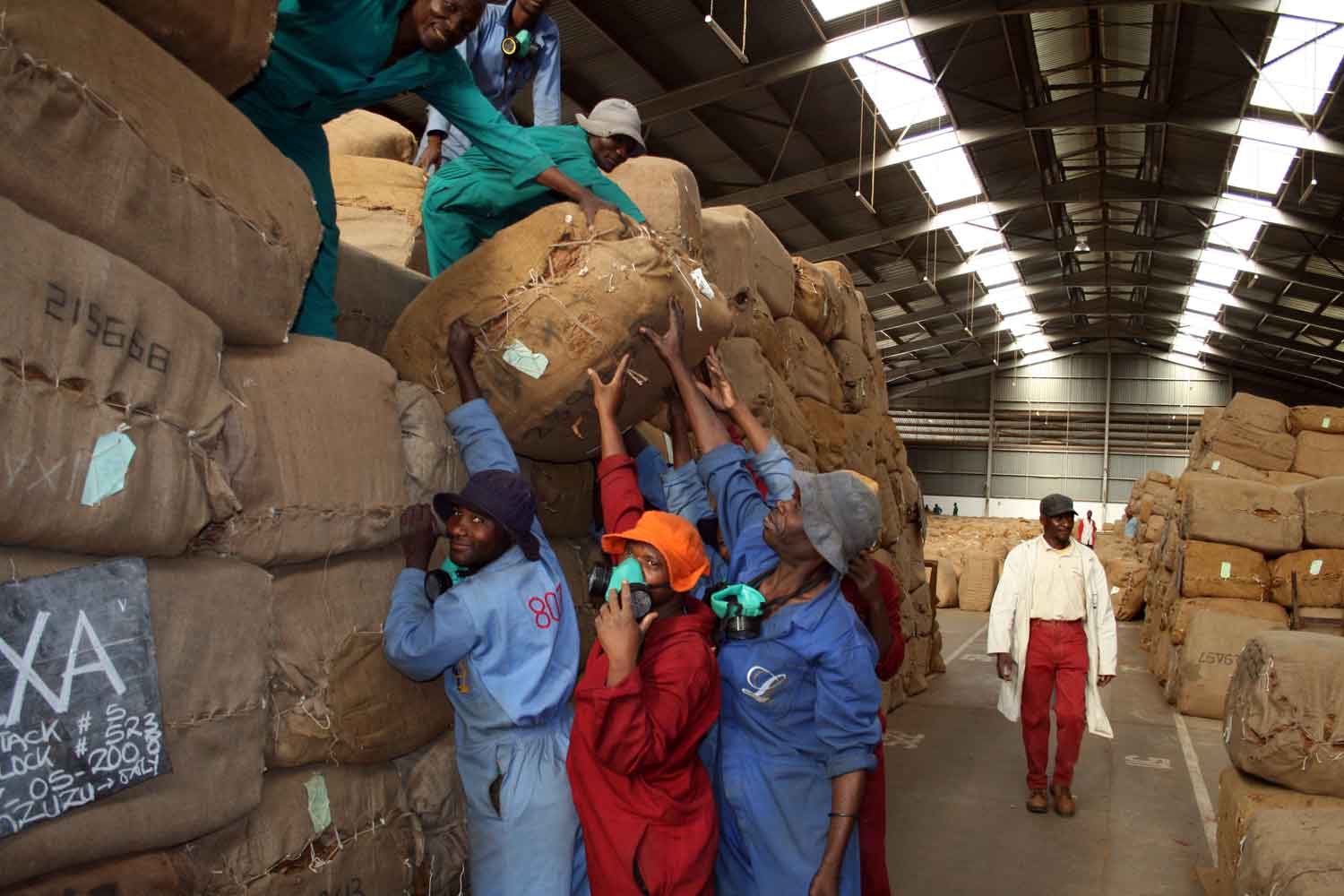
    Malawi’s 2026 tobacco marketing season has opened with a significant supply-demand imbalance, as production is projected at 197 million kg against buyer demand of just 170 million kg, leaving a surplus of about 27 million kg. Early signs at auction floors point to slow uptake, with less than half of delivered bales initially put up for sale, raising concerns over stock build-up.

    Industry participants say the gap reflects weaker global demand and excess supply, with buyers holding greater leverage and some still carrying unsold inventory from the previous season. Major buyers, including JTI Leaf, Alliance One, and Limbe Leaf, are collectively targeting volumes well below expected output, highlighting a shortage of purchasing capacity.

    The imbalance is expected to put downward pressure on prices and farmer incomes, following a similar pattern last year when oversupply led to price declines. With tobacco remaining a key source of export earnings, officials have urged fair pricing, though market conditions remain driven by the excess supply and limited buyer demand.

  • Malawi Tobacco Has Record Earnings Despite Falling Prices

    Malawi Tobacco Has Record Earnings Despite Falling Prices

    Malawi’s tobacco sector generated a record $540 million in 2025, driven by a sharp 66% increase in export volumes to 221,000 tons, according to Telephorus Chigwenembe, spokesperson for the Tobacco Commission. The volume offset a decline in average prices to $2.45 per kilogram from $2.98 a year earlier, as tobacco remains a key contributor to the economy, accounting for roughly half of foreign exchange earnings.

    Looking ahead, the 2026 season is expected to face pressure, with production forecast at 197,000 tons against demand of about 170,000 tons. The supply-demand imbalance is likely to weigh further on prices, raising concerns over revenue stability in a sector critical to Malawi’s economic outlook.

  • Malawi’s MNT Concerned Over CSR, Rogue Farmers  

    Malawi’s MNT Concerned Over CSR, Rogue Farmers  

    Malawi’s Media Network on Tobacco (MNT) raised alarm over what it describes as persistently low levels of corporate social responsibility among tobacco buying companies, urging them to take meaningful steps to support farmers and surrounding communities. Speaking during an interface meeting with journalists, MNT President Alfred Chauwa also condemned the growing practice of farmers selling their tobacco before the official market opening, warning that it exposes them to exploitation. He said some farmers are accepting prices as low as K4,000 ($2.32) per kg, a move he described as damaging to livelihoods and the broader tobacco value chain.

    Chauwa encouraged farmers to diversify into early maturing crops in line with the Tobacco Industry Act, which promotes agricultural diversification. He further highlighted the effects of climate change on farming, calling for increased participation in tree-planting initiatives to restore the environment. Expressing concern over declining tobacco quality in several areas, he urged farmers to adopt best agricultural practices to secure better prices. Chauwa also appealed to the government to deploy more extension workers to provide technical support, saying improved guidance is critical to boosting productivity, quality, and long-term sustainability in the tobacco sector.

  • Farmers, Economy in Jeopardy as Tobacco Remains Unsold in Malawi

    Farmers, Economy in Jeopardy as Tobacco Remains Unsold in Malawi

    More than 4 million kg of tobacco remain unsold at Mzuzu Floors in Malawi despite the Tobacco Commission (TC) extending the marketing season, a setback that farmers warn could push them into financial ruin. The unsold leaf, worth an estimated K17.2 billion ($9.8 million), represents both a personal crisis for farmers and a blow to Malawi’s economy, which depends on tobacco for over 50% of its foreign exchange earnings.

    Farmers say many took out loans expecting to repay them through sales, but with buyers pulling back and prices falling, they are now trapped in debt. “We can’t pay workers or send our children to school,” said Chitipa farmer Hazwell Chikakuda, whose buyers canceled contracts mid-season. “Buyers backed out, and I’ve been selling the remaining leaf at throwaway prices. We feel abandoned.”

    TC spokesperson Telephorous Chigwenembe confirmed large volumes of unsold leaf remain both on and off the market, citing an oversupply as the main challenge. Tama Farmers Trust CEO Nixon Lita added that demand has slowed as stocks pile up. While Malawi sold 218.9 million kg of tobacco this season, worth $539.4 million (up from $396 million last year) the glut now threatens foreign exchange inflows and economic stability.

    Economists warn that without intervention or diversification, the country risks deepening its dependence on the volatile crop. As one analyst put it, “Unsold tobacco means unpaid loans, empty pockets, and a weaker economy.”

  • Malawi: Agricultural Center Opens to Help Tobacco Farmers Diversify

    Malawi: Agricultural Center Opens to Help Tobacco Farmers Diversify

    Lilongwe University of Agriculture and Natural Resources in Malawi announced the opening of its new Global Action Agricultural Transformation Centre, designed to help smallholder farmers transition from tobacco cultivation to “more sustainable and profitable crops” like soybeans, groundnuts, and sunflowers. The facility was a gift from Global Action to End Smoking.

    Because Malawi is heavily dependent on tobacco, with the crop representing a significant portion of Malawi’s gross domestic product and roughly half of the country’s exports, farmers are particularly exposed to the negative impact of decreasing demand for tobacco as global smoking rates continue to drop, as well as the impact of volatile weather. Global Action estimates that 800,000 Malawian farmers have begun diversifying crops as a layer of insurance.  

    “Reducing demand for tobacco without supporting farmers would result in serious economic consequences,” said Dr. Candida Nakhumwa, vice president and country director for Global Action in Malawi. “That’s why Global Action’s approach includes agricultural transformation as a critical part of the global public health response.”

  • Malawian Tobacco Farmers Advised to Adhere to Quotas Next Season

    Malawian Tobacco Farmers Advised to Adhere to Quotas Next Season

    Tama Farmers Trust advised Malawian tobacco farmers to strictly follow Tobacco Commission (TC) quotas in the 2025/26 growing season to prevent overproduction and prolonging the selling process, which would potentially disrupt next season. The 2024/25 season, which opened in April, will close on October 24, making it one of the longest in recent years.

    Initial projections estimated Malawi would produce 174.4 million kg of tobacco this year, but because of favorable weather conditions was able to sell 214 million kg for $532 million, up from last year’s $396 million.

    Trust president Abiel Kalima Banda praised TC for ensuring that all produced tobacco was sold, with remaining volumes being purchased through the Smallholder Farmers Fertiliser Revolving Fund of Malawi to guarantee full sales.

  • Malawi Moves to Protect Forex Gains Beyond Tobacco Season

    Malawi Moves to Protect Forex Gains Beyond Tobacco Season

    Reserve Bank of Malawi (RBM) announced new measures to shield the kwacha and sustain foreign exchange reserves as tobacco sales taper off. RBM spokesperson Boston Maliketi Banda said the strategy aims to reduce Malawi’s reliance on seasonal inflows by formalizing mineral revenue, linking banks with exporters, and cutting the mandatory export surrender requirement from 30% to 25%. An electronic forex tracking system and tighter compliance checks on authorized dealer banks are also being introduced to curb illicit trade.

    The announcement follows a strong mid-year performance, with July’s trade deficit narrowing to $173 million and reserves climbing to $607.7 million, equal to 2.4 months of import cover. Tobacco alone has earned $525.4 million in 24 weeks, but RBM figures show the country’s cumulative trade deficit for January–June reached $1.6 billion, up 15% year-on-year. Economists caution that the gains could quickly erode once the season ends.

    “This is temporary relief,” said Scotland-based economist Velli Nyirongo, warning that without structural reforms and export diversification Malawi risks sliding back into wider deficits.

  • Malawi Leaf Hits New High 

    Malawi Leaf Hits New High 

    Nyasa Tobacco Company (NTC), Malawi’s leading tobacco buyer, made headlines this week by purchasing tobacco at $3.30 per kilogram on the auction floors, the highest so far this season. Fleetwood Haiya, Director of Nyasa Tobacco, praised farmers for consistently delivering high-quality leaf since the marketing season opened in April.

     “This $3.30 is not just a number, it’s a recognition of the sweat, dedication, and hard work that our farmers invest in producing quality tobacco,” said Haiya. “As a proudly local company, we believe in rewarding excellence, and today’s pricing is a direct result of that belief.”

    Haiya emphasized that this price was not from contract farming, but achieved on the open auction floor, making it a true milestone in farmer empowerment and transparent pricing. He also urged farmers to maintain good grading practices, stressing that proper grading significantly enhances the value of their product. “Grading is key. When the leaf is well-graded, we’re more than willing to pay top dollar,” he said. “We want to ensure that every kilogram reflects a fair return on the farmer’s effort.”

  • Malawi Confiscates 170 “Nested” Tobacco Bales

    Malawi Confiscates 170 “Nested” Tobacco Bales

    Malawi’s Tobacco Commission (TC) confiscated at least 170 nested tobacco bales in the three weeks of sales. Nesting is the concealment of stems, scraps, loose leaves, or any object within a bale to deceive a buyer on quality or quantity.

    “Out of 170 bales, 140 have been confiscated at Lilongwe Floors, 25 at Chinkhoma, and two at Limbe Floors,” TC public relations officer Telephorus Chigwenembe said.  

    Chigwenembe said the confiscated bales have been sent to grading companies for rehandling. Proceeds from the sale of the rehandled bales will be forfeited to the Commission, whereas in years past, the TC split the money with the tobacco owners.