Tag: trump

  • Trump Reclassifies/Downgrades Marijuana

    Trump Reclassifies/Downgrades Marijuana

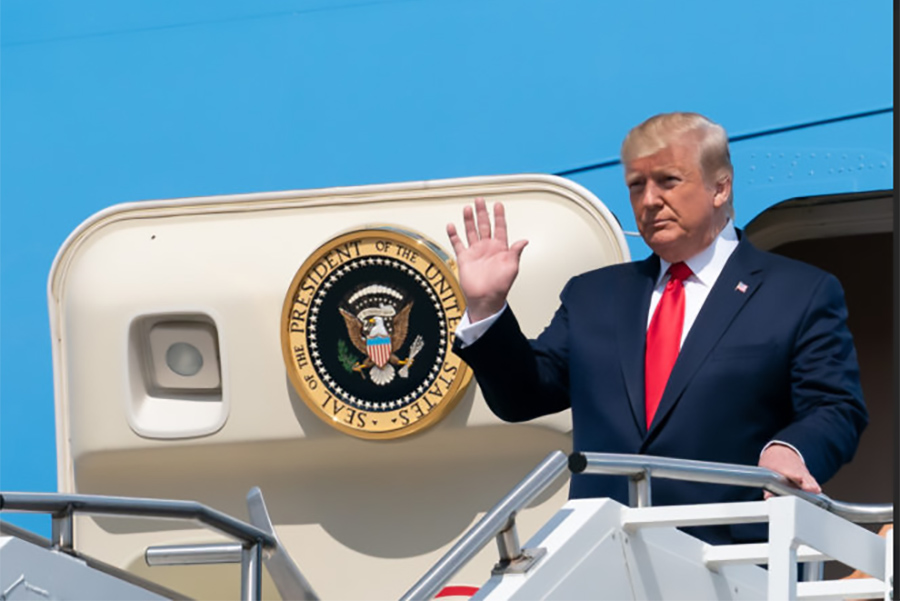
    President Donald Trump signed an executive order today (December 18) directing the reclassification of marijuana as a less dangerous drug, marking a significant shift in U.S. federal drug policy. The move would downgrade cannabis from a Schedule I substance—alongside heroin and LSD—to Schedule III, a category that includes ketamine and some anabolic steroids. While the change would not legalize recreational marijuana nationwide, it could ease regulations, lower tax burdens on the cannabis industry, and expand opportunities for medical research.

    The order is expected to accelerate a review process already underway at the Drug Enforcement Administration, which typically involves extensive public consultation. A similar reclassification effort was proposed under former President Joe Biden, but Trump’s decision has drawn mixed reactions within his own party. Some Republicans strongly oppose any change, arguing marijuana remains harmful to public health and safety, while public opinion has shifted sharply in favor of legalization, with recent polling showing more than two-thirds of Americans support a less restrictive approach.

    Trump’s order also calls for expanded research into cannabis and increased access to CBD products. While the president has emphasized a tough stance on drugs such as fentanyl, he has framed marijuana policy as an area where federal rules should better reflect state-level changes. More than 20 states have legalized recreational marijuana or allow medical use, though federal law has continued to impose stricter limits and potential criminal penalties.

  • U.S. Tobacco Groups Urge Targeted Relief Amid Export Downturn

    U.S. Tobacco Groups Urge Targeted Relief Amid Export Downturn

    Fourteen U.S. agricultural and tobacco-sector organizations sent joint letters to President Donald Trump, Secretary Brooke Rollins, and Secretary Scott Bessent thanking the Administration for expressing willingness to support flue-cured tobacco farmers facing severe trade disruptions. The letters highlighted urgent challenges, including a 20–25% drop in exports, 15–20% decline in farm-gate prices, and shrinking demand from key markets like China. Rising input costs are also adding financial pressure as growers plan for 2026.

    “On May 29th, China wrote to the U.S. leaf merchants that it would not honor its purchase as much as 60 million pounds of flue-cured leaf in 2025. This exit resulted in adverse impacts on prices and values as the season progressed. The surplus created a soft demand that caused a market downturn of 27 cents per pound on average.”

    While the Administration recently announced the $12 billion Farm Bridge Assistance Program, tobacco is currently excluded. The coalition urged targeted relief, citing precedent from the first Trump Administration when tobacco was included in market facilitation programs. The groups emphasized the risk of lost family farms and the need for prompt inclusion of tobacco in relief measures.

    Tobacco Associates disseminated the letters to industry members and encouraged growers to contact local, state, and federal representatives to share personal experiences and the real impact of the downturn, stressing that these voices carry significant weight in shaping policy responses.

  • Ispire, IKE Tech Applaud FDA’s Illicit Vape Market Mandate

    Ispire, IKE Tech Applaud FDA’s Illicit Vape Market Mandate

    Ispire Technology Inc. and IKE Tech LLC issued statements welcoming the U.S. FDA’s newly funded mandate to crack down on the illicit vape market, following the passage of a continuing resolution signed by President Trump. The legislation directs the FDA to allocate at least $200 million toward electronic nicotine delivery system enforcement, including $2 million for a multi-agency task force with the DOJ and DHS to block illegal imports.

    IKE Tech President John Patterson called the strengthened enforcement a critical response to a market where “nine out of 10 vapes on shelves are illegal.” He said current border controls and tracking systems are failing, and highlighted the company’s development of blockchain-secured authentication tags and AI-driven age-verification tools to help regulators and manufacturers instantly verify product legitimacy.

    Ispire co-CEO Michael Wang said enforcement must be paired with proactive technology to protect consumers and level the playing field for compliant companies. He noted that Ispire and IKE Tech have submitted a blockchain-enabled age-verification System-on-a-Chip to the FDA as part of a PMTA, offering a potential framework for secure, verifiable, and interoperable compliance across the U.S. vape market.

  • Shutdown End Puts Hemp on the Clock

    Shutdown End Puts Hemp on the Clock

    This week, President Donald Trump signed a funding bill to end the government shutdown, but, according to Forbes and other industry experts, tucked inside the legislation is an amendment that has the potential to dismantle the country’s $28 billion hemp industry. The provision rewrites the federal definition of hemp, and, after a 12-month grace period, would effectively outlaw most hemp-derived THC products, including the booming market for THC beverages and edibles.

    Since the 2018 Farm Bill legalized hemp and its derivatives, hemp-derived intoxicating products have proliferated nationwide, sold online and in mainstream retailers without the restrictions placed on marijuana. The new amendment closes that loophole by banning synthetic cannabinoid conversion (such as CBD-to-THC processing) and capping THC content at 0.4 mg per package—far below the levels in virtually all current hemp products, many of which contain at least 5 mg and some up to 1,000 mg per package.

    “This is an extinction-level event for the CBD products industry, and the greater hemp and hemp beverage industry,” said Jim Higdon, cofounder of Louisville-based Cornbread Hemp. “If we can’t stop it, and we don’t pivot, it will destroy our business. Every product that we make currently will become a Schedule I narcotic when it is implemented.”

    Industry leaders, including beverage manufacturers and multistate cannabis operators, warn that the measure would wipe out companies built around hemp-derived THC and plan to lobby aggressively for revised regulations during the one-year window. The amendment has ignited political tension as well, with Senator Mitch McConnell—architect of the 2018 hemp legalization push—now leading efforts to curb intoxicating hemp products amid rising concerns about youth exposure.

    “Mitch McConnell, the man who gave us the seeds to grow hemp, now wants to burn the crop and salt the ground,” said Thomas Winstanley, the executive vice president of Georgia-based Edibles.com. “[We see] it as not one year to ban, it’s one year to regulate. We do not see this as the end. The clock started, but there’s still runway for better policy here. It was a tough battle to lose, but it’s not the end of the war.”

  • FDA to Allocate $200M Toward Combating Illicit Vapes

    FDA to Allocate $200M Toward Combating Illicit Vapes

    As part of the continuing resolution passed by Congress and signed yesterday (November 12) by US President Donald Trump to reopen the government, the Food and Drug Administration (FDA) will be required to allocate at least $200 million of its $712 million in user fees toward enforcing regulations on electronic nicotine delivery systems (ENDS). Of this amount, $2 million will support a multi-agency task force, including the Justice Department and Homeland Security, aimed at cracking down on illegal ENDS products imported from China and other countries.

    The FDA is also required to update its 2020 ENDS enforcement guidance within one year to include flavored disposable vapes and clarify the definition of disposable ENDS products. In addition, the law updates the Imports and Exports section of the Food, Drug, and Cosmetic Act to include tobacco products, strengthening the FDA’s authority to regulate their import alongside food, drugs, devices, and cosmetics.

    The agency must provide semi-annual reports to Congress on efforts to remove illegal ENDS products from the market, with the first report due within 180 days of enactment (November 12). The FDA is also expected to submit a report detailing its work to educate retailers on which products are legally allowed for sale.

  • Former CTP Director Says Tobacco Control Burden Shifts to States

    Former CTP Director Says Tobacco Control Burden Shifts to States

    Former director of the FDA’s Center for Tobacco Products Dr. Brian King, said the Trump administration’s reductions in federal funding, including millions of dollars previously allocated to tobacco control and prevention programs, have shifted the responsibility for such efforts to state and local governments. King, who is now the executive vice president of the Campaign for Tobacco-Free Kids, highlighted the implications during a keynote address at the Coalition for a Tobacco-Free Hawai‘i annual meeting, urging local leaders to document tobacco’s impacts and advocate for continued public health protections.

    King pointed to cuts affecting major agencies, including the CDC, NIH, and FDA, which traditionally provide funds for state-level tobacco control initiatives. Hawai‘i Public Radio said the CDC’s Office on Smoking and Health was eliminated, resulting in a loss of $70 million annually for tobacco control programs and $15.1 million for state quitlines. While the full impact of these federal cuts has yet to be felt, King warned that once programs lose funding entirely, many initiatives may face staffing reductions or elimination.

  • FDA Launches Pilot to Fast-Track Nicotine Pouch Reviews

    FDA Launches Pilot to Fast-Track Nicotine Pouch Reviews

    The U.S. Food and Drug Administration is set to fast-track reviews of nicotine pouches from Philip Morris International, Altria, Reynolds American, and Turning Point Brands in a pilot program launching Monday, according to Reuters. According to transcripts of an agency meeting last Friday, the agency aims to complete assessments by December, providing a quicker path to market for products like Zyn, on!, Velo, Fre, and Alp. The initiative comes amid pressure from the Trump administration to accelerate approvals and streamline the review process for the fastest-growing category of U.S. tobacco alternatives.

    The pilot program will reportedly feature reduced and expedited reviews, more frequent communication between FDA staff and companies, and a focus on essential scientific and safety data, including product characterization, manufacturing consistency, and abuse-liability information. For products already on the market without full authorization, the process could remove uncertainty over legality and potential enforcement actions. Tobacco firms have long lobbied for a faster FDA authorization route, noting that lengthy reviews have allowed competitors to capture market share in the meantime.

    “Adult nicotine and tobacco consumers are increasingly seeking nicotine pouches as a smoke-free alternative, and the industry is rapidly growing in response,” said Laura Leigh Oyler, vice president of U.S. Regulatory Affairs at Haypp Group, who will be speaking at GTNF 2025 in Brussels on the U.S. regulatory landscape. “These consumers deserve a marketplace of FDA-reviewed product choices to support their journey away from more harmful products. 

    “It makes sense that our government should also work to meet the demands of citizens, supporting a regulatory regime that quickly reviews well-designed and well-tested products from responsible and compliant manufacturers. This is a positive step not just for the regulator and the regulated industry, but for the millions of American adults looking for products they can trust.”

  • Tariffs, Executive Orders and Cuts: The Trump Administration’s First Six Months

    Tariffs, Executive Orders and Cuts: The Trump Administration’s First Six Months

    By Freddie Dawson, Senior editor, Tamarind Intelligence

    The first six months of the second Trump administration can be defined by tariffs, executive orders and no further action on reforming the issues facing the American vaping market.

    President Donald Trump embarked on his second term as president having promised to “save flavored vaping” in the U.S. in the lead up to the election. This has not yet happened despite a flurry of executive orders – at least 157 that have been published in the U.S. Federal Register as of May 23. (More have been announced but that was the date of the last one published at the time of writing.)

    Many vaping advocates had hoped he might use an executive order to reset or reassess the U.S. Food and Drug Administration (FDA) Pre-Market Tobacco Application (PMTA) process. Thus far this has not happened and, instead, there have been some comments that could be construed as concerning.

    There was the U.S. Supreme Court decision in the long-running case with the vaping company Wages and White Lion Investments – doing business as Triton Distribution – and the vaping company Vapetasia. The Supreme Court unanimously decided to vacate and remand the appealed Fifth Circuit Court decision that had been in favor of the companies over whether the FDA had been right to issue market denial orders (MDOs) to the them.

    This was a disappointment for vaping advocates. The companies had argued the FDA had been arbitrary and capricious in the changes it made to PMTA requirements while also being unclear about those changes and what minimum requisites would need to be included to successfully be granted a market authorization and be considered a legal product able to be sold in the American market. Advocates hoped a decision in favor of the vaping companies would confirm the FDA approach had been wrong and pave the way for the new administration to implement a new policy.

    Instead, the Supreme Court mostly rejected the vaping companies’ arguments. It did not arbitrate on all issues presented and returned the case to the lower court for further work, making the decision not a total defeat. However, it was a pretty galling blow for those wanting to see a change. Many of them hoped the Department for Health and Human Services (HHS) – now under new management – would even decline to continue to argue the case following the change in leadership.

    Instead, they appeared to fully embrace the prior approach. A HHS spokesperson welcomed the Supreme Court decision. They said it represented confirmation that the approach taken by the FDA – including under the administration of former Democratic president Joe Biden – was the correct one. “The recent Supreme Court ruling supports the FDA’s efforts to regulate e-cigarette products in line with the standards outlined in the Tobacco Control Act,” a spokesperson said.

    Beyond this, comments by the new HHS secretary – Robert Kennedy Jr and head of the FDA – Marty Makary could also be construed to be viewed as negative takes on vaping from major administration figures.

    Both have been questioned by Florida Republican Senator Ashley Moody on what they will do to combat Chinese vaping products illicitly on the U.S. market. Makary told Moody he agreed that vaping products were proliferating on the American market and that this was due to the Chinese flooding it with cheap supplies.

    He said public health research would never be able to properly study them as the market moved faster than the science could but that the FDA could collaborate with other U.S. government departments to increase enforcement actions. “The Office of Inspections and Investigations has a lot of people with guns, and they do enforcement and raids,” he said.

    Several vaping commentators did not react well to this – particularly on the semi-serious threat of armed enforcement raids. However, it could also be theoretically read that Makary was implying the enforcement action would be directed at imported Chinese vaping products and that emphasis was placed on revamping the FDA’s approach to PMTAs.

    Kennedy Jr’s later comments in answer to questions from Senator Moody could potentially support such a reading. He told her that the FDA had created its own backlog and had deliberately dragged its feet on approvals for American vaping companies, which had been acting responsibly by putting age verification chips in vaping devices, providing information on addiction and were making labels not attractive to children.

    Chinese products had flooded the opening in the market provided by them obeying the law and that these were the products that were responsible for youth attraction issues with flavors, colors and youth-aimed enticements such as cartoon like imagery as well as features such as gaming capabilities on devices. He told Senator Moody that he promised to “wipe them out”.

    Despite being a complete misreading of the nicotine alternatives history – and almost certainly being a ‘barn door shut after the horse has already bolted’ sort of promise, it does at least show some favor for American vaping companies and a potential desire to address issues facing it in the future.

    That marks something of a change from Kennedy Jr’s initial nomination hearings where vaping did not come directly come up. However, his potential use of an Alp nicotine pouch during the sessions did draw a few headlines and suggested the new secretary may have a sympathetic stance on nicotine alternatives.

    But although the administration has not addressed the U.S. vaping regulatory situation through any means – such as the use of executive orders – it has taken other actions through those means that have had an impact on the industry.

    This includes several orders trimming resources for government entities that have some impact on vaping and other nicotine alternatives – including the HHS, the Center for Tobacco Products (CTP) itself and aspects of the Centers for Disease Control (CDC) such as the Office on Smoking and Health (OSH). This has resulted in redundancy or resignation for myriad groups of former federal employees in these organizations up to and including the former head of the CTP, Brian King and – allegedly – the entirety of the OSH.

    The impact of these actions will likely take some time to properly be felt. In the short term it presumably has increased the disorder and delay already present in organizations such as CTP that would have had primary responsibility for PMTA assessment. Further in the future the decisions could potentially benefit vaping and other nicotine alternatives – depending how important intervening steps turn out.

    For example, significantly more will be revealed on the future direction of PMTA assessment by who becomes the next head of CTP. A new head and new staff could perhaps be more efficient in assessing and processing PMTAs – though it is hard to see where new staff with the requisite expertise will suddenly materialize from. Similarly, much will be implied about the administration’s opinion of, and the potential future of, nicotine alternatives by what is done with the former activities of the OSH. For example, maintaining the collection and publication of smoking-related datasets but dropping things like preferential access to data or provision of OSH opinions on issues could create a more vaping-amenable atmosphere in the U.S..

    Setting that aside, more immediately, the action taken through executive orders that has had the most impact on vaping and other nicotine alternatives has been the imposition of tariffs on goods imported into the U.S. from China. Primarily this has affected vaping hardware – though has also had an impact on other product which rely on specialist or mass-produced items that are hard to find from other sources at economically viable prices.

    Theoretically this activity could be considered taking action against the proliferation of illicit Chinese vaping products on the market – as promised by Kennedy Jr and Makary. There is some evidence this is happening with reports of limits placed on maximum purchase numbers for disposable vaping products from wholesalers and decreases in registered imports of vaping products from China.

    Data from the FDA showed only 71 shipments this May, compared to 996 in January 2025, before the additional new Trump tariffs started to be announced. It also compares to the 1158 shipments recorded last May.

    But without a viable domestic vaping manufacturing sector in the U.S., the move risks worsening public health. There previously was little evidence of other nicotine alternatives leaching numbers away from vaping. There is perhaps a little more of that – primarily through dual use driven by situational advantages. This, for example, could be using pouches in scenarios where more discretion is required. But primarily the trend appears to still be for dual or poly use of products rather than switching entirely.

    If vaping products continue to be limited by supply constraints brought about by tariffs, this trend may increase, or people may instead choose to move back to conventional cigarettes. There is little evidence domestic vaping will be able to spring up to fulfil the need. A couple of companies have announced they were transferring manufacturing capacity to the U.S. Many more are moving capacity out of China to third-party countries partly at least to get around U.S. tariffs.

    But there will be no major transference of vaping capacity to the US simply because of the continuing PMTA situation. No company will take the time, effort, and capital it would require setting up manufacturing in the U.S. with no guarantee the product would ever be approved to be sold on the domestic market.

    Meanwhile it is also unclear whether there has definitely been a reduction in Chinese vaping imports. Several manufacturers were already in the process of moving vaping manufacturing capacity out of the Shenzhen region in China due to rising costs driven by competition. Tariffs will have accelerated that trend – though President Trump’s “Liberation Day” spread of tariffs will have gone some way to reducing the advantage such a move would gain in terms of exports to the USA.

    But it has been noted that imports of vaping products from countries such as Indonesia have already outstripped their totals for the entirety of last year (3,139 thus far this year compared to 3,102 for all of 2024). And there remains significant speculation that the vast majority of Chinese vaping imports – particularly for disposable vaping products – do not enter the U.S. under the proper registration. U.S. officials have alleged that they are often deliberately labelled as products such as shoes to get around restraints. Though this claim has been repeated many more times than evidence backing it has been produced.

    One potential support of vaping products entering the U.S. market through some means aside from in registered shipments is the 90% discrepancy between the reported value of Chinese vaping exports to the U.S. ($3.6bn for 2024) and Chinese vaping imports registered with U.S. authorities ($333m for the same time period).

    So thus far there has not been much help for vaping in the first six months of the second Trump administration. But there is the potential of future promise. Appointments and reassignments for the OSH and – primarily – the CTP could theoretically change the approach to vaping regulation in America. Further policing of illicit vaping products entering the market could lead to domestic uptake – if PMTA conditions were first sorted. So not much for vaping or wider nicotine alternatives in the first six months. But perhaps the groundwork for something more to be built later.

  • House Working with Trump’s $6.8B FDA Budget

    House Working with Trump’s $6.8B FDA Budget

    House appropriators advanced a bill to fund the FDA for fiscal 2026 on a party-line vote out of a subcommittee yesterday (June 5)— but, according to Politico, the bill has a long path ahead before it potentially becomes law. The topline number from the House bill aligns with President Donald Trump’s budget proposal, which sought $6.8 billion for the FDA.

    The budget calls for $3.2 billion in direct appropriations, with the rest coming from user fee revenue. It also represents a $300 million cut in taxpayer funding compared to what the House Appropriations subcommittee sought last year for fiscal 2025.

    According to Politico, the Senate is likely to fund the agency at a higher level than the House. Sen. John Hoeven, the Republican senator in charge of FDA appropriations, said Trump’s proposal is a starting point.

    “We now have the president’s budget proposal,” Hoeven said. “But we’re going through our process now, and it will be different. … I think that you’ll see when we bring it out that we adequately fund FDA.”

  • FDA Scores Win, but Industry Eyes PMTA Denial Challenge

    FDA Scores Win, but Industry Eyes PMTA Denial Challenge

    On April 2, 2025, the U.S. Supreme Court issued its decision in the Wages and White Lion Investments (d/b/a Triton Distribution) Premarket Tobacco Product Application (PMTA) Marketing Denial Order (MDO) challenge. In a 9-0 unanimous ruling, the Supreme Court held that the FDA did not act arbitrarily and capriciously when it denied the PMTA for Triton’s flavored electronic nicotine delivery systems (ENDS) under the “fatal flaw” review standard. While the decision reaffirmed the deference owed to FDA under the Administrative Procedure Act (APA), at least with respect to the agency’s ability to change its position on PMTA requirements, the Court left open several critical issues, including whether the agency committed a potentially prejudicial error by failing to consider applicants’ marketing plans, according to an article published by Keller and Heckman LLP.

    “As previously reported, Triton’s MDO challenge in the U.S. Court of Appeals for the Fifth Circuit attracted significant attention within the vaping industry’s broader efforts to secure market access for flavored ENDS products,” Keller and Heckman wrote. “In the lead-up to the Supreme Court’s review, numerous manufacturers had filed petitions in circuit courts across the country challenging FDA’s issuance of boilerplate MDOs for millions of flavored ENDS products. To date, FDA has denied or refused virtually all (>99%) of applications for flavored ENDS products and has only authorized two menthol-flavored products. The MDO appeals yielded conflicting outcomes: the Fifth and Eleventh Circuit held that certain MDOs were arbitrary and capricious under the APA, while the D.C., Second, Third, Fourth, Ninth, and Tenth Circuits upheld the denials. The Supreme Court’s decision to review Triton’s case was widely regarded as pivotal for the regulated industry, public health stakeholders, and FDA, as it promised to resolve the circuit split.”

    Justice Samuel Alito’s narrowly focused 46-page opinion ultimately fell short of the broader expectations many in the industry had for the Court’s review. Rather than addressing the full range of legal and regulatory questions raised by the parties, the Supreme Court confined its analysis to the APA’s “change-in-position” doctrine—specifically, whether FDA had assured applicants like Triton, through its guidance documents and other public statements, that it would apply one evidentiary standard, only to apply a different one during PMTA review. As Justice Alito framed it, the question was whether FDA “told [Triton] in guidance documents that it would do one thing and then turned around and did something different.” While the ruling provided clarity on this narrow issue, it left several critical questions unresolved.

    “Although the ruling was unanimous for FDA with respect to whether the agency arbitrarily changed its position on the PMTA requirements for flavored products, the Supreme Court avoided addressing several significant APA and constitutional issues raised in both the parties’ and amici briefs,” Keller and Heckman wrote. “The Court did not address, for example, the constitutional right to due process or the applicability of the major questions doctrine. Nor did it engage in a deeper examination of FDA’s PMTA review process, sidestepping key concerns such as the absence of appropriate tobacco-flavored comparators for companies like Triton, or the lack of clarity regarding the level of benefit required to satisfy the agency’s comparative efficacy standard. Although it vacated the en banc decision, the Supreme Court has remanded the case back to the Fifth Circuit, specifically to consider whether FDA’s refusal to consider Triton’s marketing plans during the application review process was a harmless error, especially given FDA’s prior characterization of such marketing plans as being ‘critical’ to the PMTA.

    “The remand focusing on FDA’s failure to consider Triton’s marketing plans takes on added weight in light of the Eleventh Circuit’s 2022 decision in Bidi Vapor LLC v. FDA, where the court held that a similar omission by the agency rendered the MDO arbitrary and capricious. Furthermore, the Supreme Court declined to reach (and expressed no view on) Triton’s argument that FDA erred in evaluating its PMTA under standards developed in adjudication rather than standards promulgated in notice-and-comment rulemaking. The Fifth Circuit’s resolution of these issues could have sweeping implications for how FDA must evaluate future PMTAs and respond to procedural challenges under the APA. The remand also presents the vaping industry with a renewed opportunity to advance alternative administrative law claims in a court that has historically viewed FDA’s approach to flavored ENDS products with skepticism.”

    Whether these challenges move forward, however, may ultimately depend on FDA’s litigation strategy under a new Administration that has forced out many of the leaders and staff at the FDA Center for Tobacco Products, and previously signaled support for flavored vaping products. All eyes now turn to the Fifth Circuit, as both sides consider their next moves in this closely watched case.