Blog

  • Malaysia’s Illicit Cigarette Market at ‘Critical Stage’

    Malaysia’s Illicit Cigarette Market at ‘Critical Stage’

    Malaysia’s illicit cigarette market is approaching a “critical stage,” with illegal products now accounting for roughly 50% of total consumption, according to industry representatives. Philip Morris International and Japan Tobacco International executives said the country’s illicit rate is among the highest in the region, far exceeding levels in markets such as Singapore and Thailand, and warned that widespread availability has normalized illegal purchasing among consumers.

    Industry speakers linked the surge to a sharp excise tax increase in 2015, which widened the price gap between legal and illicit products and drove illegal market share to as high as 63% at its peak. Officials and stakeholders emphasized that addressing the issue will require a coordinated approach combining stronger enforcement, policy adjustments and greater public cooperation, as smuggling networks continue to adapt and exploit regulatory gaps.

  • Makary Resigns, Diamantas New Interim FDA Head 

    Makary Resigns, Diamantas New Interim FDA Head 

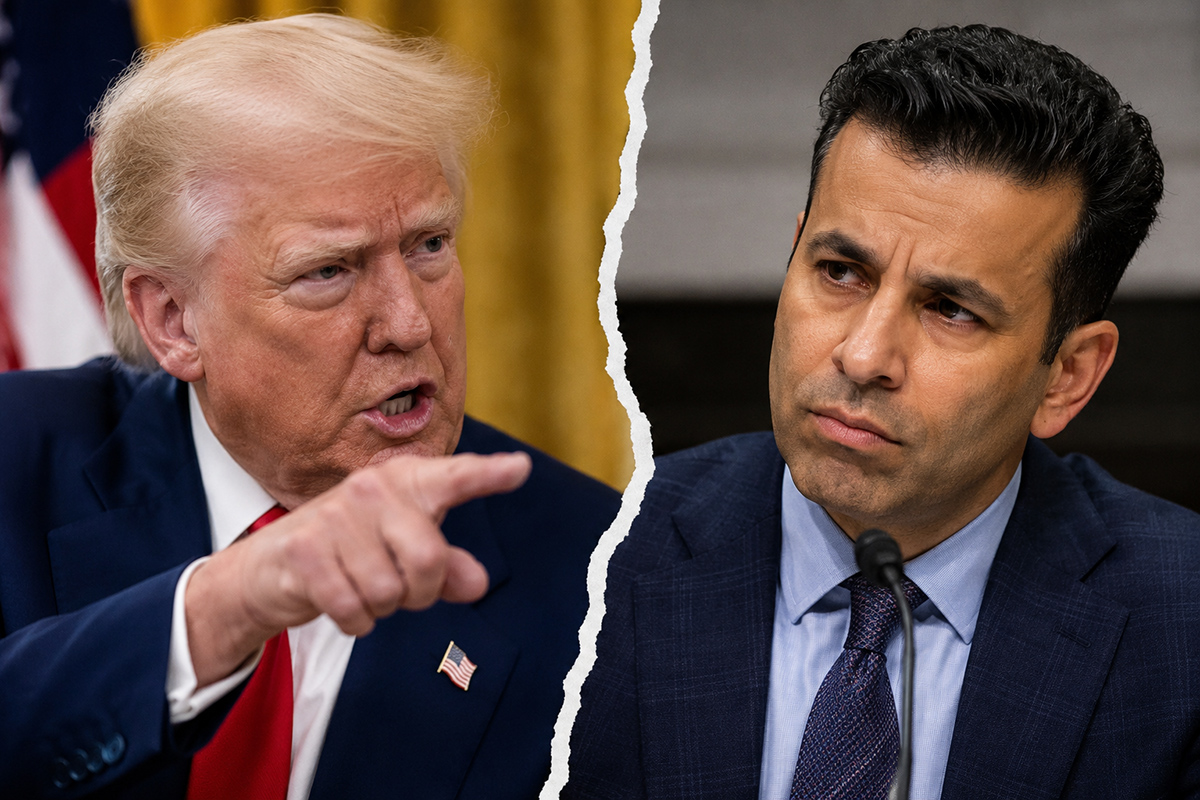
    Today (May 12), President Donald Trump confirmed earlier reports from White House officials that FDA Commissioner Dr. Marty Makary was stepping down after just over a year in the role, following a turbulent tenure that included growing friction over tobacco and nicotine policy. A White House official said the resignation was tied to “process at the FDA” rather than a single issue, though pressure had been building around the agency’s pace on key decisions, including flavored vape authorizations. Reports in recent weeks indicated frustration within the administration that the FDA had moved too slowly on advancing nicotine-related priorities, with one official bluntly stating: “What a mess Makary turned out to be.” He will be replaced on an interim basis by FDA food chief Kyle Diamantas.

    Makary’s leadership coincided with heightened scrutiny over the FDA’s handling of next-generation nicotine products, particularly flavored vapes, which have remained largely blocked pending extensive scientific review. The issue became a flashpoint within the administration, with critics arguing the agency had failed to align with broader policy goals aimed at expanding alternatives for adult smokers. At the same time, the FDA maintained its stance on requiring strong evidence of public health benefit, leaving the market tightly restricted and contributing to ongoing tension between regulators, industry stakeholders, and policymakers.

    His tenure was also shaped by broader political battles that indirectly impacted tobacco regulation, including disputes over drug approvals and internal agency direction, which critics said created uncertainty around regulatory timelines. For the tobacco and nicotine sector, Makary’s departure could signal a potential shift in FDA priorities, particularly as pressure mounts to accelerate decisions on reduced-risk products and flavored alternatives. The leadership change comes at a critical moment for the industry, with regulatory direction expected to play a central role in shaping market dynamics and product innovation in the years ahead.

    Since the news broke, interested observers have been responding in what is generally seen as a positive for the industry.

    “We have been disappointed by the pace of nicotine product reviews at the Center for Tobacco Products,” said Laura Leigh Oyler, VP of Regulatory Affairs at Nicokick.com. “If recent reporting is accurate, Commissioner Makary’s removal should be treated as an opportunity to refocus the FDA on timely, evidence-based decision-making. Adult consumers, responsible manufacturers, and retailers need a regulatory process that produces decisions, not indefinite uncertainty.

    “CTP already has the scientific expertise needed to evaluate nicotine product applications and make appropriate determinations under the law. The next FDA commissioner should remove unnecessary bottlenecks and make clear that pending reviews will be decided by FDA scientists, not politicians.”

    Vapor Technology Association Executive Director Tony Abboud said he met with Makary last week and felt the Commissioner realized the PMTA process needed to improve quickly.

    “The VTA now looks forward to continuing its constructive engagement with Acting FDA Commissioner Kyle Diamantas and whoever is ultimately selected to permanently lead the agency moving forward,” Abboud said. “For years, VTA has advocated for a regulatory framework that provides clear scientific requirements, transparent standards, and consistent enforcement against bad actors and illicit products.

    “We remain committed to working with FDA leadership, the Administration, and policymakers to modernize the PMTA process, strengthen responsible marketing standards, and ensure the United States leads with a balanced regulatory approach grounded in science, harm reduction, and common sense.”

    One of the bluntest responses came from Ross Marchand, Executive Director of the Taxpayers Protection Alliance, who said, “At long last, Makary is out. Since taking the helm of the agency last April, the Commissioner has made it far more difficult than it needs to be to bring new therapies to market. Millions of Americans have paid the price for this soap opera of suddenly spurned approvals, goalpost shifting, and even apparent violations of trade secret law.

    “The FDA needs a leader who will stand up for patients and allow access to new and innovative therapies. Makary’s successor must embrace market innovation and break with the prohibitionary policies of the past.”

  • FDA Files MRTP Renewal for Two 22nd Century Products

    FDA Files MRTP Renewal for Two 22nd Century Products

    Today (May 12), FDA filed two modified risk tobacco product (MRTP) renewal applications for scientific review for 22nd Century Group Inc. products VLN King and VLN Menthol King. Both products are combusted, filtered cigarettes that contain a reduced amount of nicotine compared to typical commercial cigarettes.

    The renewal follows MRTP orders first granted in 2021, which are set to expire in December 2026, requiring FDA reauthorization for continued marketing with reduced-risk claims. The agency has begun releasing redacted application materials for public access and has opened a docket for public comment, allowing stakeholders to submit data and feedback as part of the review process.

  • South Africa: 80% of Smokers Back Risk-Based Regulation

    South Africa: 80% of Smokers Back Risk-Based Regulation

    A new survey among adult smokers in South Africa found strong support for risk-based tobacco regulation, with eight in 10 respondents backing policies that differentiate between cigarettes and less harmful alternatives. The research suggests that while 71% of smokers currently plan to continue smoking, improved access to accurate information and appropriately regulated smoke-free products could more than double switching rates, potentially enabling up to 3.3 million smokers to move away from cigarettes. The research was commissioned by Philip Morris International and conducted by a U.S. research firm, Povaddo.

    The findings also highlight significant awareness gaps, with up to 70% of smokers unfamiliar with alternatives such as nicotine pouches, and many citing health concerns and cost as barriers to switching. More than 80% said affordability, availability, and access to clear risk-reduction information would influence their decisions, while roughly three-quarters warned that overly restrictive policies could push consumers toward illicit products, underscoring the role of balanced regulation in shaping market outcomes.

  • Imperial Posts 1.8% Growth in First Half of 2026

    Imperial Posts 1.8% Growth in First Half of 2026

    Imperial Brands reported modest first-half 2026 growth, with tobacco and next-generation product (NGP) net revenue rising 1.8% to £14.7 million and overall revenue up 0.8%, supported by pricing gains that offset declining cigarette volumes. NGP revenue increased 7.5%, driven by strong performance in Asia, Africa, and Eastern Europe, and continued market share growth across all categories. Adjusted operating profit rose slightly, while reported profit declined significantly due to one-off costs tied to a legal settlement and strategic transformation initiatives.

    Cash generation remained strong, with £2.6 billion in free cash flow and a 98% conversion rate, supporting £809 million in share buybacks and a 4% dividend increase. The company said it remains on track to meet full-year guidance and is progressing with its 2030 strategy, targeting £320 million in annual cost savings while investing in transformation efforts to improve efficiency and expand its NGP portfolio.

    “While staying laser-focused on in-year delivery, we are also making progress on self-help activities to drive efficiency and our long-term transformation to build the capabilities which will underpin our future growth,” Chief Executive Lukas Paravicini said. “We are making good progress on focusing our supply chain footprint and have begun implementing our strategic partnership with Capgemini.”

  • BAT’s Case for Violating North Korean Sanctions Dropped

    BAT’s Case for Violating North Korean Sanctions Dropped

    A U.S. federal judge dismissed the government’s criminal case against British American Tobacco after the company fulfilled the terms of a three-year deferred prosecution agreement related to sanctions violations involving North Korea. The U.S. Department of Justice said BAT complied fully with the 2023 agreement, including strengthening compliance systems and paying approximately $630 million in penalties, one of the largest sanctions-related fines tied to North Korea.

    The case stemmed from allegations that BAT continued supplying tobacco products to North Korea between 2007 and 2017 through a third-party entity after publicly exiting the market. With the dismissal granted by the court, the matter concludes following the company’s settlement and compliance measures.

  • Ispire Partners to Expand into Nicotine Pouch Market

    Ispire Partners to Expand into Nicotine Pouch Market

    Ispire Technology announced that it entered into a joint venture with Shandong Jincheng Pharmaceutical Group to manufacture and commercialize nicotine pouch products, marking its expansion into the oral nicotine segment. The partnership combines Jincheng Pharma’s manufacturing capabilities and pharmaceutical expertise with Ispire’s regulatory infrastructure and global distribution network, enabling rapid entry into a category projected to grow significantly in the coming years.

    The move diversifies Ispire’s portfolio beyond vaping hardware and positions the company to tap into a fast-growing market estimated at $7 billion in 2025. The company said the joint venture will support near-term production and commercialization, while forming part of a broader strategy to build a multi-category nicotine platform focused on reduced-risk products.

  • German Study Finds Strict Laws Don’t Equate to Cessation Success

    German Study Finds Strict Laws Don’t Equate to Cessation Success

    An international study by the German Cancer Research Center analyzing more than 50,000 smokers across 29 countries found that while stronger tobacco control policies—such as taxes, warning labels, and smoking bans—significantly increase quit attempts, long-term success is driven largely by individual and social factors. The research showed that smokers living with other smokers or exhibiting higher nicotine dependence were substantially less likely to quit successfully, regardless of policy environment.

    Researchers said the findings highlight a gap between policy impact and behavioral outcomes, indicating that regulatory measures can prompt quitting efforts but do not guarantee cessation. The study concludes that outcomes are heavily influenced by personal environment, including household smoking behavior and addiction levels, suggesting that cessation success varies widely even in markets with strict tobacco control frameworks.

  • Imperial Says Middle East Impact Won’t Be Seen Until 2027

    Imperial Says Middle East Impact Won’t Be Seen Until 2027

    Imperial Brands said ongoing conflict in the Middle East could raise costs and weigh on consumer demand if prolonged, though the company has not yet seen a material impact and maintained its full-year guidance. CEO Lukas Paravicini told reporters that any disruption—particularly to inputs such as filters and plastics and to logistics—would likely affect financial performance from 2027 onward, as energy and supply chain pressures build.

    For the first half, Imperial reported small growth slightly below expectations, as cigarette volume declines and competition in next-generation products weighed on performance. The company also reported a 16-basis-point decline in market share across key markets, reflecting a strategic focus on profitability over volume.

  • Filtrona Report Touts ESG Progress

    Filtrona Report Touts ESG Progress

    Filtrona announced the release of its 2025 Sustainability Report, highlighting a shift from environmental, social, and governance (ESG) commitments to measurable performance across its global operations. The company reported a 51% reduction in Scope 1 and 2 emissions in line with its Science Based Targets, alongside achieving zero waste to landfill across its sites and increasing the share of sustainable or plastic-free products to 24% of its portfolio. Filtrona also strengthened responsible sourcing, with 88% of wood-based materials certified or controlled, and continued investment in workforce development and governance practices.

    The company said its progress reflects a broader transition toward embedding sustainability into day-to-day operations, supported by external recognition, including EcoVadis Gold status and CDP “B” ratings across climate, forests, and water. Filtrona reported no substantiated incidents related to corruption, discrimination, or human rights violations during the period, and emphasized that ESG is now being operationalized as a core component of long-term business performance and value creation.