Category: News This Week

  • Denver Vape Shops File Suit Against Flavor Ban

    Denver Vape Shops File Suit Against Flavor Ban

    A group of Denver vape shop owners filed a lawsuit on January 23 challenging the city’s flavored tobacco ban, which took effect on January 1 after being approved by voters in November, arguing the ordinance is unconstitutional, inconsistently enforced, and harmful to small businesses. Filed by the Rocky Mountain Smoke Free Alliance, the complaint asks a Denver court to halt enforcement and declare the sale of separate flavor additives legal, claiming the ban violates equal protection, due process, and commercial speech rights by prohibiting flavored vaping products while exempting hookah tobacco and allowing continued cigarette sales.

    The plaintiffs say vague definitions tied to marketing and packaging create uncertainty for retailers and have already led to store closures, job losses, and an estimated $13 million decline in tax revenue, while city officials counter that the ban is aimed at reducing youth tobacco use and say enforcement will include education as well as public-facing and undercover compliance checks. Public health advocates maintain the law is legally sound and necessary, noting courts have repeatedly upheld similar flavored tobacco restrictions.


  • Indonesia Looking to Tighten Tobacco Control

    Indonesia Looking to Tighten Tobacco Control

    Indonesian Health Minister Budi Gunadi Sadikin outlined plans to strengthen national tobacco control through legislative reform, citing proposed revisions to expand graphic health warnings, tighten advertising restrictions, ban the sale of loose cigarettes, and regulate e-cigarettes. Speaking virtually at the 8th Asia-Pacific Cities Alliance for Health and Development (APCAT) Summit in Jakarta today (January 26), Sadikin said the measures are aimed at reducing both tobacco supply and demand through coordinated partnerships.

    Sadikin said that tobacco is Indonesia’s third-largest risk factor for death, with around 70 million adult smokers and 9.1% of children having tried smoking. The government also plans to expand smoke-free areas and increase access to smoking cessation services at community health centers, while health officials emphasized cross-sector and community-based efforts to address tobacco use and related non-communicable diseases.

  • Azerbaijan Bans All Vape; HTPs Excluded

    Azerbaijan Bans All Vape; HTPs Excluded

    Azerbaijan officially enacted a comprehensive ban on electronic cigarettes following amendments to the country’s tobacco legislation approved by President Ilham Aliyev, to take effect on April 1. Under the revised law, the import, export, production, storage, wholesale and retail distribution, sale, and use of electronic cigarettes and their components—including devices, cartridges, refills, and e-liquids—are prohibited nationwide.

    The amendments classify nicotine-containing e-cigarettes as tobacco products and define electronic cigarettes broadly as any device that delivers vapor, with or without nicotine, through inhalation, regardless of format. Heated tobacco products are explicitly excluded from this definition and will continue to be regulated separately. The legislative changes are accompanied by amendments to the Tax Code and advertising law, removing disposable e-cigarettes and e-liquids from the list of excisable goods and updating advertising restrictions to align with the new classifications.

  • German Tobacco Use Drops, as ‘Substitutes’ Rise 18%

    German Tobacco Use Drops, as ‘Substitutes’ Rise 18%

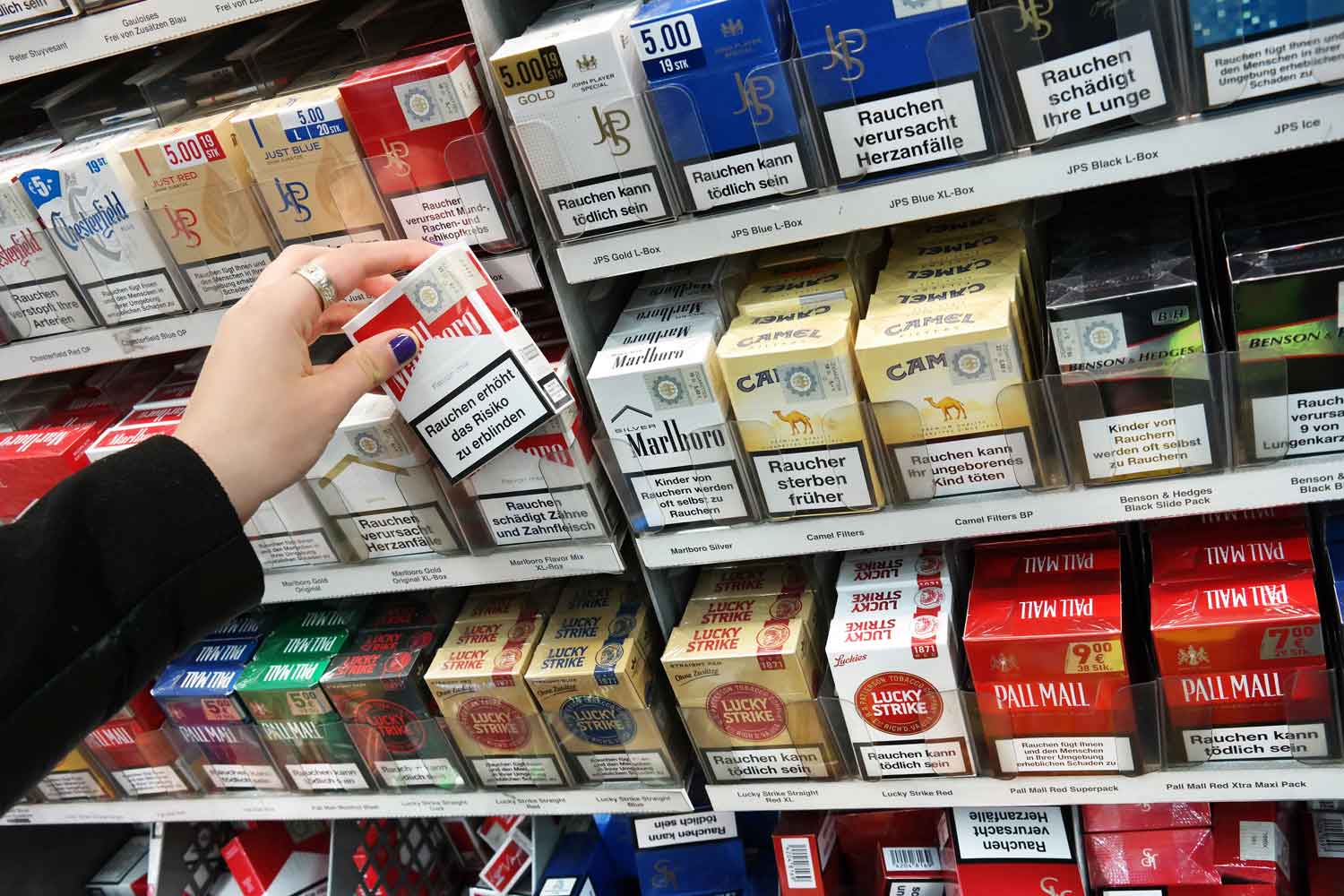
    Germany’s taxed cigarette volumes edged higher in 2025, even as long-term tobacco consumption continued to decline, according to preliminary data from the Federal Statistical Office (Destatis). A total of 66.4 billion cigarettes were taxed during the year, up 0.2% (0.1 billion cigarettes) from 2024, but less than half the 146.5 billion recorded in 1991. Per capita cigarette consumption stood at 795 cigarettes in 2025, compared with 1,831 in 1991. Sales of fine-cut tobacco fell 1.2% year on year to 24,864 tons, while cigars and cigarillos declined 6.6% to 2.1 billion units. Hookah tobacco sales dropped 8.8% to 1,162 tons, despite regulatory changes allowing larger pack sizes again, while pipe tobacco rose 2.9% to 323 tons. In contrast, taxed volumes of tobacco substitute products such as e-cigarette liquids increased sharply, rising 18.2% year on year to 1.5 million liters, reflecting continued growth in non-combustible alternatives under Germany’s evolving tobacco tax regime.

  • Walgreens Begins Selling Vapes Again

    Walgreens Begins Selling Vapes Again

    Walgreens began selling vape products in many of its U.S. stores, marking a notable reversal of its 2019 decision to pull e-cigarettes amid concerns over youth use, according to Crain’s Chicago Business. The move comes after the struggling pharmacy chain was acquired by private equity firm Sycamore Partners last year and reflects efforts to open new revenue streams as the retail pharmacy sector faces pressure from online competition and lower reimbursement rates.

    Juul Labs said its products are, or will soon be, available in about 6,000 of Walgreens’ nearly 8,500 locations, while Altria-owned NJOY also lists Walgreens as a retail partner. Walgreens said it is offering “compliant products” for adult consumers, citing changes in the regulatory landscape after the FDA authorized several vaping products starting in 2021.

    Many Walgreens locations still sell cigarettes, though some states and local governments prohibit such products in “pharmacies.”

  • Court Rules Korean Vape Juice Taxes Excessive

    Court Rules Korean Vape Juice Taxes Excessive

    The Seoul Administrative Court has partially ruled in favor of vape juice importers in a lawsuit challenging the Ministry of Health and Welfare’s imposition of National Health Promotion Charges, according to The Korea Herald, finding that while vape juices should be legally classified as cigarettes, the charges applied were excessive and violated principles of proportionality and equality.

    The court noted there was no evidence the importers intentionally misled authorities when declaring their products as derived from tobacco roots and stems, and highlighted that the levies—ranging from 278 million won to 1 billion won ($192,000 to $691,000)—exceeded sales revenue by up to 3.5 times, making payment effectively impossible. The ruling also criticized the flat-rate charge of 525 won ($0.36) per milliliter regardless of nicotine content, saying it failed to reflect differing health risks or serve the law’s public health objectives, while reaffirming that vape juices fall under the Tobacco Business Act’s definition of cigarette products.

  • CAPHRA Tells Aussie Senate to Look at New Zealand

    CAPHRA Tells Aussie Senate to Look at New Zealand

    In response to recent announcements across Australia about increasing enforcement in its battle against illicit tobacco and nicotine products, the Coalition of Asia Pacific Tobacco Harm Reduction Advocates (CAPHRA) submitted evidence to Australia’s Senate directly comparing New Zealand and the Philippines—both with regulated vaping markets and declining smoking rates—to India and Thailand, where total bans have created underground markets with zero safeguards and rampant youth access.​ 

    CAPHRA said Australia and New Zealand are taking sharply different approaches to tobacco control, with contrasting outcomes reflected in recent data. New Zealand, which allows regulated access to vaping products alongside smoking-cessation support, has reduced adult daily smoking to 6.8%, among the lowest rates globally, while youth smoking has fallen to 3.2%, down from 19.2% a decade ago. Australia, by contrast, has maintained strict prohibitions on nicotine vaping products and focused heavily on enforcement against illicit tobacco, spending about A$157 million ($105 million) on policing and regulatory measures, including appointing a national illicit tobacco coordinator. Despite these efforts, authorities estimate Australia lost A$6.7 billion ($4.5 billion) in tobacco excise revenue in 2023–24, and the illicit tobacco market is valued at roughly A$4 billion ($2.7 billion).

  • Osaka Tightening Public Smoking Ban

    Osaka Tightening Public Smoking Ban

    Osaka, Japan, is weighing additional measures to curb illegal street smoking after a municipal survey revealed diverging views between smokers and nonsmokers following the citywide ban introduced in January 2025. According to the survey, nearly half of nonsmokers surveyed supported raising the current 1,000-yen ($65) fine and strengthening patrols and public awareness, while about 60% of smokers called for more designated smoking areas. In response, the city plans to add 65 new smoking zones on top of the 195 already in place, increase enforcement staff beyond the current 85 officers and assistants, and focus resources on high-incidence areas, especially those in entertainment districts. Osaka reported a 40% year-on-year decline in street smoking, as it continues efforts to balance compliance with public comfort ahead of the Osaka Kansai Expo.

  • JTI Announces Flores as GM of Global Travel Retail

    JTI Announces Flores as GM of Global Travel Retail

    Japan Tobacco International named Olesja Flores as general manager of Global Travel Retail, according to The Moodie Davitt Report. Flores, a JTI veteran with over 25 years of experience across Europe—including roles in Lucerne, Geneva, Copenhagen, and Vilnius—most recently served as general manager for JTI Switzerland for more than three and a half years. Based in Dubai, she will now lead JTI’s global travel retail operations, citing the city’s innovation and fast-paced environment as ideal for the dynamic travel retail channel.

  • BAT Japan Launching Two New Velo Flavors

    BAT Japan Launching Two New Velo Flavors

    BAT Japan is set to expand its Velo nicotine pouch lineup with two new flavors: Velo Smooth Peppermint Medium and Velo Breezy Mango Intense. Smooth Peppermint Medium, aimed at beginners, offers a sweet peppermint aroma with a light cooling effect at 4 mg nicotine strength, while Breezy Mango Intense features tropical notes of mango, passion fruit, and orange at 6 mg strength for a stronger experience. Both products come in 15-pouch cans priced at 360 yen ($2.30) and will be available from February 2, through the official glo and Velo online store, glo Store Ginza, and nationwide tobacco retailers, with trial initiatives offered at select outlets and online.