Category: FDA

  • FDA Allows Fontem to Continue Selling Pouches Amid Court Battle

    FDA Allows Fontem to Continue Selling Pouches Amid Court Battle

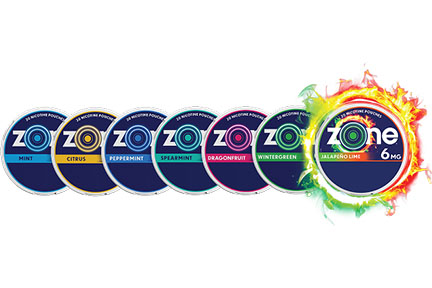
    The U.S. Food and Drug Administration confirmed it will not block production or sales of Fontem US’s Zone nicotine pouches while a lawsuit over the product’s pending premarket tobacco product application proceeds, Law 360 reported. Fontem argued that the agency unlawfully delayed reviewing its application, leaving the product in regulatory limbo.

    The FDA said it will not take enforcement action during the litigation, allowing the pouches to remain on the market. Fontem recently voluntarily dismissed its suit in Texas and plans to refile in Washington, D.C. The case underscores ongoing tension between regulators and manufacturers over PMTA backlogs and the treatment of newer oral nicotine products, which differ from traditional cigarettes and vapes.

    According to Law 360, industry observers believe the court battle could set a precedent for how the FDA handles delayed applications and exercises enforcement discretion in the growing nicotine pouch sector.

  • FDA’s Pouch Fast-Track Scheme Stalling Over Youth Worries

    FDA’s Pouch Fast-Track Scheme Stalling Over Youth Worries

    A fast-track review program at the U.S. Food and Drug Administration aimed at accelerating authorizations for nicotine pouch products has stalled, as agency scientists weigh concerns about youth uptake and risks to non-users against potential harm-reduction benefits for smokers, according to sources cited by Reuters. Reuters said applications tied to pouch brands from Philip Morris International (Zyn) and British American Tobacco (Velo) remain under review despite expectations that decisions would be made by the end of 2025 under the pilot scheme. The FDA has already authorized six products under Altria Group’s on! brand, but reviewers are said to be taking a more cautious stance on other applications where evidence of net public-health benefit is viewed as less clear-cut.

    While FDA data shows pouch use among middle- and high-school students remains relatively low, it has been rising, prompting heightened scrutiny. Tobacco companies argue the pilot program is critical for restoring legal market competition amid a surge of unregulated products, while public-health advocates warn that rapid authorizations could fuel new addiction trends. The FDA said decisions continue to be guided by science and statutory standards rather than external pressure.

  • FDA Outlines Risk-Based Approach to ENDS Flavors

    FDA Outlines Risk-Based Approach to ENDS Flavors

    Yesterday (March 9), the U.S. Food and Drug Administration (FDA) issued a draft guidance outlining how it will evaluate flavored electronic nicotine delivery systems (ENDS) under the Premarket Tobacco Product Application (PMTA) process. The document clarifies the agency’s current thinking on determining whether such products are “appropriate for the protection of the public health” (APPH), the legal standard under the Federal Food, Drug, and Cosmetic Act. Although non-binding, the guidance emphasizes that applicants must demonstrate a net public health benefit, meaning any potential benefits to adult smokers, such as helping them switch from or reduce combustible cigarette use, must outweigh the risks to non-users, particularly youth.

    The guidance adopts a “risk-proportionate” approach based on the level of youth appeal associated with different flavors. According to the FDA, high-risk flavors such as fruit, candy, dessert, and other sweet varieties face a particularly high evidentiary burden. They must demonstrate significant added benefits for adult smokers compared with tobacco-flavored products. Lower-risk flavors, including menthol, mint, and some novel flavors such as spices, may require a smaller demonstrated adult benefit to meet the APPH standard. Applicants are encouraged to provide scientifically valid evidence, including sensory perception studies, consumer response assessments, and population-level data, to evaluate both youth appeal and potential adult benefits.

    The agency also addressed mitigation strategies designed to reduce youth access, including device access restrictions such as fingerprint authentication or geofencing. While these technologies may form part of a broader youth-prevention strategy, the FDA said they are generally insufficient on their own to offset the risks associated with highly youth-appealing flavors. The guidance reinforces the agency’s product-specific, evidence-based review process, with the most scrutiny applied to flavored products that present the greatest risk of youth initiation.

  • Manufacturers Tell FDA They Need Benchmarks, Communication

    Manufacturers Tell FDA They Need Benchmarks, Communication

    During yesterday’s (Feb. 10) afternoon session of the U.S. Food and Drug Administration’s “Roundtable on Premarket Tobacco Application Submissions for Electronic Nicotine Delivery Systems Products,” Dr. Lynn Hull, acting senior science advisor in the Office of Science at FDA’s Center for Tobacco Products (CTP), moderated the Pharmacological Panel along with the FDA’s supervisory pharmacologist in CTP’s Division of Individual Health Science, Dr. Carolina Ramôa.

    Manufacturers warned that conducting studies has been prohibitively expensive and unpredictable without clear performance benchmarks. They also urged the FDA to allow greater use of modeling and data-bridging approaches, though regulators signaled that such alternatives would face strict validation requirements and may not replace product-specific clinical testing.

    “How can we simplify and have more communication and lean more toward product characteristics to model and understand abuse liability?” Dr. Willie McKinney, founder and CEO of Mckinney Regulatory Sciences asked. “How do we have more meetings regardless of where our application is in the process to understand what you are currently thinking?”

    The agency maintained that measuring nicotine delivery and addiction potential is essential when determining whether products meet public health standards, highlighting clinical pharmacokinetic (PK) data as the most reliable evidence.

    “I absolutely understand where you’re coming from,” said Dr. Ramôa, “where you want to make it as efficient as possible, but understand where I’m coming from, where I have a duty to the American public to make sure I make the correct decision that does not impact them negatively.”

  • FDA PMTA Roundtable Being Held

    FDA PMTA Roundtable Being Held

    Today (February 10), the U.S. Food and Drug Administration is hosting its much-anticipated “Roundtable on Premarket Tobacco Application Submissions for Electronic Nicotine Delivery Systems Products.”  Center for Tobacco Products (CTP) director Dr. Matthew Farrelly offered his opening remarks, which led into the “product characterization” panel moderated by deputy director Dr.  Todd Cecil.

    Dr.  Matthew Walters, Dr. Karen Coyne, Dr. Lynn Hull, and Dr. Carolina Ramôa rounded out the early sessions for FDA. Industry representatives said that unclear product characterization standards are limiting the long-term viability for smaller ENDS manufacturers, argued that the absence of objective, measurable benchmarks create uncertainty around PMTA compliance, and raised questions about defining testing ranges for open-system products and the ability to update long-pending PMTAs. FDA said it wants to create a dialogue with manufacturers, but statutory requirements constrain its regulatory flexibility.

    The afternoon panels were led by Cecil, Dr. Benjamin Apelberg, Dr. Mollie Miller, Dr. Amy Gross, Dr. Mary Irwin, and Dr.  Hans Rosenfeldt, and were still being held at the writing of this article. Tobacco Reporter will update the proceedings as the information becomes available.

  • FDA to Host Discussion on PMTAs Feb. 10

    FDA to Host Discussion on PMTAs Feb. 10

    FDA issued a reminder today regarding the Federal Register notice (FRN) roundtable discussion it is hosting tomorrow (February 10) for small tobacco product manufacturers (fewer than 350 employees). The discussion aims to solicit input on premarket tobacco product application (PMTA) submissions for electronic nicotine delivery systems (ENDS) products and will be held from 9 a.m.–5 p.m. ET.

    The topics to be discussed will include certain components of ENDS PMTAs, such as product characterization, manufacturing controls, pharmacological profile (e.g., pharmacokinetic studies), studies of adult benefit (e.g., longitudinal cohort/randomized controlled trial (RCT) studies), and toxicological profile (e.g., estimated lifetime cancer risk).

    FDA has also established a docket for public comment on this roundtable discussion. All electronic comments must be submitted on or before March 12. The regulations.gov electronic filing system will accept comments until 11:59 p.m. Eastern Time at the end of March 12.

  • FDA Posts New Materials in Zyn MRTP Applications

    FDA Posts New Materials in Zyn MRTP Applications

    The FDA posted new materials today (Feb. 2) related to the modified risk tobacco product (MRTP) applications submitted by Swedish Match USA, Inc. for 20 Zyn nicotine pouch products. The documents are available on the Swedish Match USA, Inc. MRTP application webpage. This is the final set of application materials.

    Accordingly, FDA is establishing the closing date for the public comment period on these MRTP applications. Public comments must be submitted to Docket Number FDA-2025-N-0835-0001 by 11:59 p.m. ET on March 4 to be considered. 

    Read the application materials here.

  • PMI Positive After FDA’s Zyn Hearing

    PMI Positive After FDA’s Zyn Hearing

    Philip Morris International (PMI) believes it moved a step closer to securing permission to market its Zyn nicotine pouches as a reduced-risk alternative to cigarettes in the United States, following a full-day public hearing convened by the U.S. Food and Drug Administration (FDA) yesterday (January 22). At the meeting, PMI scientists presented evidence to the FDA’s Tobacco Products Scientific Advisory Committee (TPSAC) in support of a Modified Risk Tobacco Product (MRTP) application that would allow the company to tell adult smokers that switching completely to Zyn lowers the risk of major smoking-related diseases. FDA briefing materials and staff presentations suggested regulators are leaning toward approving the proposed claim, with the agency stating that “the evidence suggests the proposed modified risk claim is scientifically accurate.”

    “The FDA’s Center for Tobacco Product’s mission is to make smoking-related disease and death a part of America’s past,” said Keagan Lenihan, Chief External Affairs Officer for PMI U.S. “Smoke-free products, like Zyn, play a critical role in helping CTP achieve this mission and provide adults who smoke with important information to guide their choices and a real opportunity to change.”

    The proposed language would allow PMI to say that using Zyn instead of cigarettes reduces the risk of mouth cancer, heart disease, lung cancer, stroke, emphysema, and chronic bronchitis. FDA scientists said the “totality of the evidence” shows Zyn contains substantially lower levels of harmful chemicals than cigarettes, and that consumer research suggests the claim increases awareness of reduced risks without misleading users into believing the product is risk-free. The agency also noted that youth nicotine pouch use remains relatively low, at 2.4% of U.S. high school students in 2024, and that exposure to the proposed claim did not increase young adults’ intentions to use Zyn. PMI executives argued that clearer communication of relative risk could help smokers move away from combustible products, drawing comparisons to Swedish snus, which received an MRTP designation in 2019 and has been linked to Sweden’s low smoking rates.

    However, members of the independent TPSAC panel raised concerns about gaps in long-term data and whether reduced-risk marketing would meaningfully accelerate smoking cessation in the U.S. Public health advocates also warned about the potential appeal of flavored pouches, discreet use, and social-media promotion to underage users. While panelists generally agreed that Zyn is far less harmful than cigarettes, they questioned whether the evidence shows that marketing claims will drive widespread switching. The FDA is not bound by the panel’s non-binding recommendations and has not set a deadline for its final decision, which will determine whether PMI can formally promote Zyn as a reduced-risk product to adult smokers.

    “While the relatively expedited timeline for this MRTP review is encouraging, the fact that the TPSAC did not vote on a recommendation makes me question the reason for these meetings moving forward,” said Laura Leigh Oyler, VP of Regulatory Affairs for Haypp Group, whose subsidiaries sell nicotine pouches online. “The science, and the many public speakers who supported the authorization were clear: Americans deserve honest messaging around these products and their impacts on harm reduction.”

  • FDA Releases Meeting Materials for Zyn’s MRTP Application  

    FDA Releases Meeting Materials for Zyn’s MRTP Application  

    Today (January 20), the U.S. Food and Drug Administration released meeting materials ahead of a virtual meeting of the Tobacco Products Scientific Advisory Committee (TPSAC) to review modified risk tobacco product (MRTP) applications submitted by Swedish Match USA, Inc. for 20 Zyn nicotine pouch products. The materials include a draft agenda, background documents from both the applicant and the FDA, and draft questions for committee consideration, and are available on the FDA’s 2026 TPSAC Meeting Materials and Information page.

    The virtual TPSAC meeting is scheduled for January 22. FDA opened Docket No. FDA-2025-N-0835-0020  for public comments related to the meeting, with submissions due by 11:59 p.m. ET on January 21. Comments specific to the ZYN MRTP applications may also be submitted under a separate docket, Docket No. FDA-2025-N-0835-0001, which was established on June 18, 2025.

    Visit the event webpage to learn more about attending the meeting online

  • FDA Extending Info Collection for Smokeless Products

    FDA Extending Info Collection for Smokeless Products

    The U.S. Food and Drug Administration (FDA) has submitted a proposed extension of an existing information collection to the Office of Management and Budget (OMB) for review under the Paperwork Reduction Act, covering warning plans for certain smokeless tobacco products. The collection, assigned OMB Control Number 0910-0671, relates to statutory requirements that smokeless tobacco packaging and advertising carry one of four mandated health warnings, randomly displayed and rotated quarterly in accordance with FDA-approved warning plans. FDA said manufacturers, importers, distributors, and retailers must submit these plans for review, either electronically via the Center for Tobacco Products (CTP) Portal or in paper form.

    Public comments on the proposal must be submitted through reginfo.gov within 30 days of Federal Register publication, and FDA noted that two comments received during an earlier 60-day notice period were not related to paperwork burden issues.