Category: FDA

  • FDA Denies Marketing of Bidi Stick

    FDA Denies Marketing of Bidi Stick

    Image: tashatuvango

    The U.S. Food and Drug Administration issued a marketing denial order to Bidi Vapor for its Bidi Stick Classic e-cigarette. This product is a closed-system, disposable, tobacco-flavored e-cigarette device.

    “FDA has a key role to protect the public from the dangers of tobacco use,” said Matthew Farrelly, director of the Office of Science within the FDA’s Center for Tobacco Products (CTP). “Integral to that role, our tobacco application review process relies on scientific evidence that demonstrates a product provides a net benefit to public health that outweighs the known risks. The science in this application did not show that.”

    The FDA evaluates premarket tobacco product applications (PMTAs) based on a public health standard that considers the benefits (e.g., benefit from adult users of more harmful tobacco products completely switching) and risks (e.g., initiation among youth) of the product to the population as a whole. After reviewing the company’s PMTA, the FDA determined that the application lacked sufficient evidence to demonstrate that permitting marketing of the product would be appropriate for the protection of the public health, which is the standard legally required by the 2009 Family Smoking Prevention and Tobacco Control Act. Specifically, evidence submitted by the applicant did not demonstrate an overall net benefit to people who use tobacco products and lacked sufficient evidence to address health risks.

    “Bidi Vapor is disappointed by the FDA’s decision and is currently reviewing the opinion based on its merits,” said Niraj Patel, CEO of Bidi Vapor. “In the meantime, the decision only affects our Classic, or tobacco-flavored, product. Our remaining 10 flavors are still under scientific review and available for sale. At this time, we are investigating legal remedies and expect to have updates in the coming days. For now, we ask that our wholesale and retail partners direct their questions to our sales representatives.”

    “The center has made considerable progress in reviewing the massive volume of tobacco product applications submitted to the agency, thanks to the tireless efforts of our dedicated legion of civil servant scientists,” said Brian King, director of the CTP. “The center remains committed to processing submitted applications as expeditiously as possible while ensuring the utmost scientific integrity of the reviews.”

    To date, the FDA has authorized 23 tobacco-flavored e-cigarette products and devices. The distribution or sale of unlawfully marketed products is subject to compliance and enforcement action.

  • Smok Appeals Marketing Denial Orders

    Smok Appeals Marketing Denial Orders

    Image: Wasan

    China-based Shenzhen IVPS, the parent to Smok brand vaping devices, has appealed the U.S. Food and Drug Administration’s marketing denial orders (MDOs) for six of the company’s open-system vaping devices.

    IVPS filed the appeal with the New Orleans, Louisiana-based U.S. Court of Appeals for the 5th Circuit and was joined in the suit by a Dallas, Texas-based distributor of the Smok products that were denied marketing.

    The FDA claimed that it had issued the MDOs for the premarket tobacco product applications (PMTAs) for the Smok products because the applications “failed to provide sufficient data to characterize constituent delivery, product stability and product abuse liability.” The agency also stated that Smok failed to provide a specific e-liquid, and consumers could use any e-liquid in the devices.

    Shenzhen IVPS challenges those assertions, saying it “invested more than $30 million in its applications, which totaled well over 600,000 pages in all, and collaborated with the world’s leading laboratories to conduct robust harmful and potentially harmful constituent aerosol testing, in vitro toxicology testing and toxicological analysis, accelerated and 24-month storage and stability testing, and rigorous clinical pharmacokinetic studies to test the products’ potential abuse liability profiles,” according to a press release.

    “FDA is using isolated data from testing of the devices with e-liquid formulations that the products’ instruction manuals specifically warn are not compatible with these devices and ignoring the overwhelmingly positive toxicological and safety profile of these products,” said Shenzhen IVPS CEO Welfer Ouyang.

    On Jan. 3, the U.S. Court of Appeals for the 5th Circuit ruled that the FDA acted “arbitrarily and capriciously” in rejecting PMTAs of Wages and White Lion Investments, doing business as Triton Distribution, and Vapetasia for approval to sell their products in the United States.

    The 9-5 decision by the New Orleans-based 5th U.S. Circuit reversed a July 2022 decision by a three-judge panel of that court.

    The agency “sent manufacturers of flavored e-cigarette products on a wild goose chase,” telling them what would be needed to approve their products and then denying all applications, the court said in an opinion by Judge Andrew S. Oldham. The FDA “never gave petitioners fair notice that they needed to conduct long-term studies on their specific flavored products,” Oldham wrote.

  • VTA: MDOs Continue ‘De-Facto’ Flavor Ban

    VTA: MDOs Continue ‘De-Facto’ Flavor Ban

    Tony Abboud
    Tony Abboud, director of the Vapor Technology Association.

    When the U.S. Food and Drug Administration’s Center for Tobacco Products (CTP) issued marketing denial orders (MDOs) for Suorin and Blu PLUS+ e-cigarette products, Tony Abboud, executive director of the Vapor Technology Association (VTA), said the decision was just the latest installment of the FDA and CTP’s efforts to implement its de-facto ban on e-cigarettes in the U.S.

    “The constant refrain from CTP is that e-cigarette manufacturers are not providing ‘sufficient scientific evidence’ in their PMTAs, yet CTP refused to answer the Reagan-Udall Foundation’s most fundamental criticism of CTP’s entire regulatory process: that CTP has not clearly articulated what is required to prove what is appropriate for the protection of the public health (APPH) or how it is interpreting what is APPH,” Abboud stated in a release.

    He stated that the FDA has failed to objectively define the APPH standard while simultaneously using it to deny marketing authorization to critical smoking cessation and harm-reduction products, which is a “gross overreach” for any governmental institution whose mandate is to follow the science.

    “Courts have found that the process has become ‘arbitrary and capricious’ in practice, with CTP leadership choosing on a case-by-case basis how the standard ought to be defined,” he stated. “Meanwhile, companies are simply trying to do the right thing by complying with and adhering to the PMTA process set forth by the FDA.”

    Abboud stated that the actions of the FDA and CTP do nothing to protect public health or help Americans who smoke. “VTA once again calls on CTP to reverse course on its misguided actions and restore scientific integrity to its regulatory and decision-making process. Enough is enough,” he wrote.

  • FDA Denies Marketing of Suorin, Blu Plus+

    FDA Denies Marketing of Suorin, Blu Plus+

    The U.S. Food and Drug Administration has issued marketing denial orders (MDOs) to Shenzhen Youme Information Technology Co. Ltd. for two Suorin brand e-cigarette products. It also issued Fontem US, LLC MDOs for its Blu PLUS+ brand e-cigarette products.

    “Thorough scientific review of tobacco products applications is a key pillar of FDA’s comprehensive regulatory approach,” said Brian King, director of FDA’s Center for Tobacco Products (CTP). “It is the applicant’s responsibility to ensure that sufficient scientific evidence is included in an application to meet the necessary public health standard required by law. In these cases, such evidence was lacking.”

    The companies must not market or distribute these products in the United States or they risk FDA enforcement action. The companies may submit new applications for the products that are subject to these MDOs, according to an agency press release.

    The FDA denied Suorin Air refillable vaporizers in various colors and an empty refillable cartridge. The FDA stated that Suorin Air’s empty cartridges would allow consumers to fill the cartridge with an e-liquid purchased separately.

    “The applications submitted by Shenzhen Youme Information Technology Co. Ltd. lacked sufficient evidence regarding abuse liability, which is the ability of a tobacco product to promote continued use and the development of addiction and dependence,” the release states.

    SMOK recently had 22 products denied, including devices, pods, atomizers, and cartridges. It was the first time the agency has denied strictly hardware products from one company en mass. The products were denied because they were submitted without a specific e-liquid to be used with the devices, according to the FDA

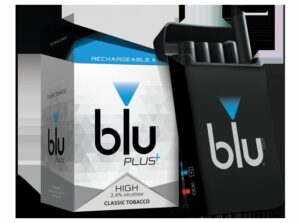
    The denied Blu PLUS+ products include a battery and several prefilled e-liquid pods:   

    • blu PLUS+ Battery  
    • blu PLUS+ Carolina Bold 2.0%  
    • blu PLUS+ Classic Tobacco 1.2%  
    • blu PLUS+ Classic Tobacco 2.4%  
    • blu PLUS+ Gold Leaf 1.2%  
    • blu PLUS+ Gold Leaf 2.4%  
    • blu PLUS+ Menthol 1.2%  
    • blu PLUS+ Menthol 2.4%

    “Among other deficiencies in their applications, Fontem US, LLC failed to include sufficient ingredient information, harmful and potentially harmful constituent (HPHC) yield quantities, and abuse liability information.,” the FDA stated. “In addition, the applicant did not provide sufficient evidence demonstrating that the flavored new products have a potential to benefit adult smokers, in terms of complete switching or significant cigarette use reduction, that would outweigh the risk to youth.
    The FDA also issued MDOs for additional blu PLUS+ products not listed above. The regulatory only publicly names products that the FDA or the manufacturer has confirmed to be currently marketed to avoid the release of confidential commercial information.

  • U.S. FDA Issues MDOs for SMOK

    U.S. FDA Issues MDOs for SMOK

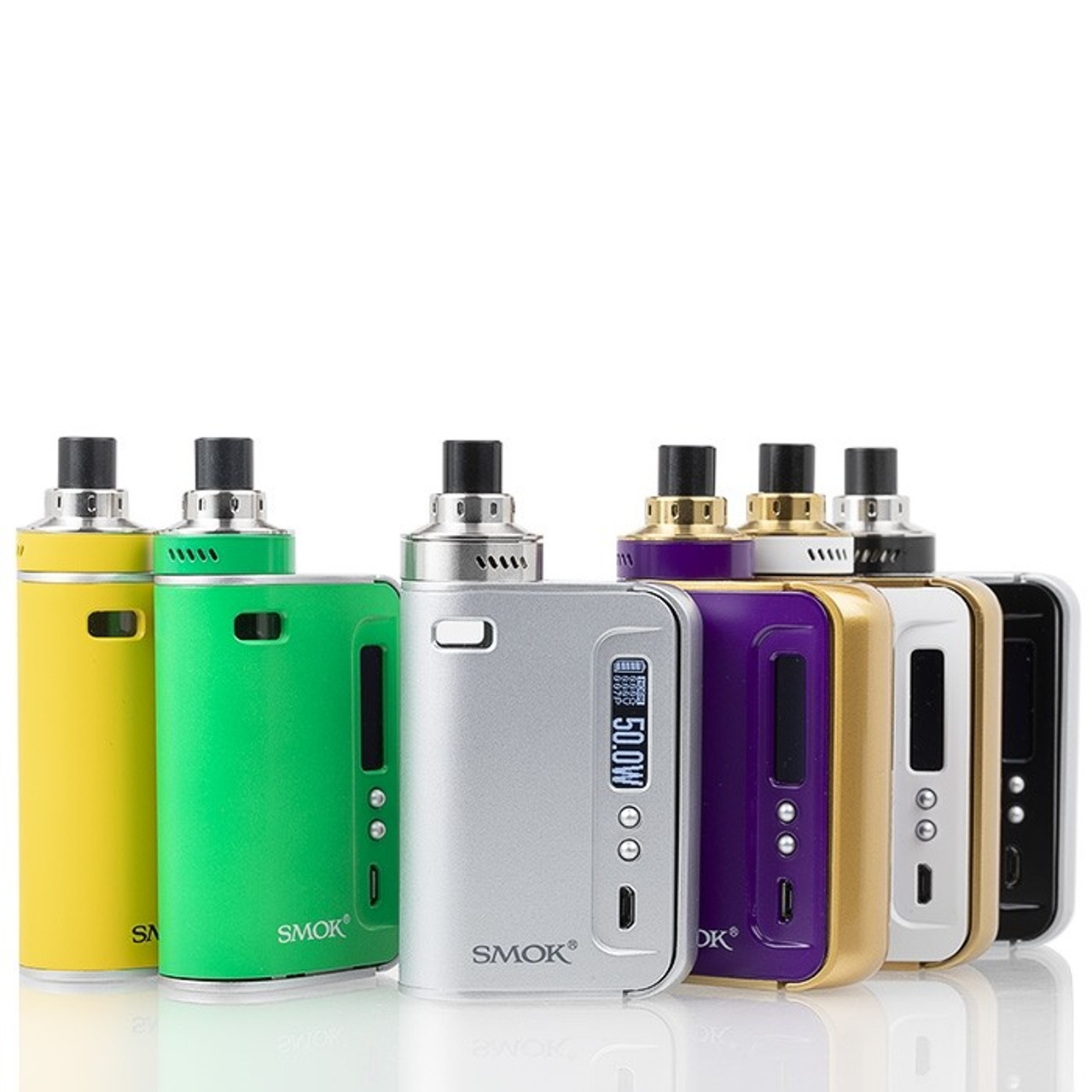
    The U.S. Food and Drug Administration issued marketing denial orders (MDOs) to Shenzhen IVPS Technology Co., Ltd for 22 SMOK vaping hardware products.

    The denied products include devices, pods, atomizers, and cartridges. It’s the first time the agency has denied strictly hardware products from one company en mass.

    The products were denied because they were submitted without a specific e-liquid to be used with the devices, according to the FDA. “The denied SMOK e-cigarette products are not sold with an e-liquid. A consumer instead adds their separately purchased e-liquid into the device,” the agency wrote. “Therefore, these SMOK products have the potential to be used with any e-liquid on the market and available to the consumer, which could include tobacco-flavored and non-tobacco-flavored e-liquids.”

    The products receiving MDOs include:

    • SMOK OSUB ONE Device
    • SMOK OSUB ONE RPM Cartridge
    • SMOK RPM DC 0.8 Ω MTL Atomizer
    • SMOK OSUB ONE RPM Cartridge 3 Pack
    • SMOK RPM DC 0.8 Ω MTL Atomizer 5 Pack
    • SMOK Nfix Device
    • Nfix DC 0.8 Ω MTL Pod
    • SMOK POZZ Device
    • SMOK POZZ DC 0.8 Ω Pod
    • SMOK RPM 40 Device
    • SMOK RPM Empty Standard Cartridge
    • SMOK RPM Empty Nord Cartridge
    • SMOK RPM Mesh 0.4 Ω Atomizer
    • SMOK Nord DC 0.8 Ω MTL Atomizer
    • SMOK SCAR-P3 Device
    • SMOK SCAR-P3 Empty RPM 2 Cartridge
    • SMOK SCAR-P3 Empty RPM Cartridge
    • SMOK PRM 2 Mesh 0.16 Ω Atomizer
    • SMOK RPM Mesh 0.4 Ω Atomizer
    • SMOK Nord 2 Device
    • SMOK Nord 2 RPM Cartridge
    • SMOK Nord 2 Nord Cartridge

    After reviewing the company’s PMTAs, the FDA determined that the applications lacked sufficient evidence to demonstrate that permitting the marketing of the products would be appropriate for the protection of public health, which is the standard legally required by the 2009 Family Smoking Prevention and Tobacco Control Act. More specifically, the applicant failed to provide sufficient data to characterize constituent delivery, product stability, and product abuse liability.

    “Science is a cornerstone of FDA’s tobacco product review process, and CTP remains committed to evaluating applications based on a public health standard that considers the risks and benefits of the tobacco product to the population as a whole,” said Brian King, director of FDA’s Center for Tobacco Products. “It is the applicant’s responsibility to provide sufficient scientific evidence to demonstrate that marketing a new tobacco product is appropriate for the protection of the public health. In this case, the applicant failed to provide this evidence.”

  • U.S. Crackdown on Youth Appealing Vapes Continues

    U.S. Crackdown on Youth Appealing Vapes Continues

    Image: iCheer

    The U.S. Food and Drug Administration issued warning letters to seven online retailers for selling and/or distributing unauthorized e-cigarettes packaged to look like youth-appealing toys and drink containers, including milk cartons, soft drink bottles and slushies, according to the FDA. The agency stated that the products’ designs may also help youth conceal the e-cigarettes from adults or be confused with an everyday object and the contents accidentally ingested by young children.

    “As we continue into the school year, it’s critical that parents, teachers and other adults are aware of illegal e-cigarettes deceptively packaged to look like everyday items,” said Brian King, director of the FDA’s Center for Tobacco Products. “These types of products can be easily concealed and contain nicotine, which is highly addictive and can harm the developing adolescent brain.”

    The seven retailers that were issued warning letters were given 15 working days to respond with the steps they will take to correct any violations and to prevent future violations. Failure to promptly correct the violations can result in additional FDA actions such as an injunction, seizure and/or civil money penalties.

  • FDA Sends More Warnings                                              

    FDA Sends More Warnings                                              

    Image: Mucahiddin

    The U.S. Food and Drug Administration sent warning letters to seven online retailers for selling unauthorized e-cigarette products. The warning letters cite the sale of popular and youth-appealing disposable e-cigarette products marketed under the brand names Elf Bar, EB Design, Bang, Cali Bars and Lava.

    These warning letters were informed by the FDA’s ongoing monitoring of multiple surveillance systems to identify products that are popular among youth or have youth appeal, according to the agency. Findings released last week from the 2023 National Youth Tobacco Survey found that more than half of current youth e-cigarette users reported using the disposable e-cigarette brand Elf Bar; earlier this year, the manufacturer of Elf Bar began marketing the product under the name EB Design. In addition, the brands Bang, Cali Bars and Lava were identified as popular or youth appealing by the agency following review of retail sales data and emerging internal data from a survey among youth.

    “FDA’s robust surveillance of the e-cigarette landscape helps us to identify youth-appealing products and to act quickly to protect public health,” said Brian King, director of FDA’s Center for Tobacco Products. “The goal is to identify, prevent and reduce these risks to our nation’s youth before they escalate further.”

    The retailers receiving warning letters sold or distributed e-cigarette products in the United States that lack authorization from the FDA in violation of the Federal Food, Drug and Cosmetic Act. Warning letter recipients are given 15 working days to respond with the steps they’ll take to correct the violation and to prevent future violations. Failure to promptly correct the violations can result in additional FDA actions, such as an injunction, seizure and/or civil money penalties.

    To date, the FDA has authorized 23 tobacco-flavored e-cigarette products and devices. The distribution or sale of unlawfully marketed products is subject to compliance and enforcement action. For retailers looking for information on which e-cigarettes are legal to sell, the FDA created a printable, one-page flyer of these authorized products. This information is also available on the FDA’s website.

  • FDA Warns Nic Nac ‘Nicotine Mints’

    FDA Warns Nic Nac ‘Nicotine Mints’

    Image: FDA

    The U.S. Food and Drug Administration issued a warning letter to Nic Nac Naturals for the marketing of their unauthorized dissolvable nicotine products, which the company describes as “nicotine mints” and which resemble a pack of mints. These products are of particular concern because of their resemblance to popular candies and the potential to cause severe nicotine toxicity or even death if accidentally ingested by young children, according to the FDA.

    “FDA remains steadfast in our commitment to actively monitor the marketplace and to crack down on companies selling unlawful products, particularly those that can appeal to youth,” said Brian King, director of the FDA’s Center for Tobacco Products (CTP). “Our goal is to identify and prevent these emerging threats to our nation’s youth before they become mainstream.”

    The manufacturer markets these tobacco products in a variety of mint and fruit flavors, all of which come in two nicotine strengths (3 mg or 6 mg). The packaging states the products contain nontobacco nicotine. The FDA regulates tobacco products containing nicotine from any source, including nontobacco nicotine. Nic Nac Naturals does not have a marketing authorization order from the agency to sell or distribute these products in the U.S.

    One container of 15 of these mints can have as much as 90 mg of nicotine total. According to research, the FDA stated, ingesting 1 mg to 4 mg of nicotine could be toxic or severely toxic to a child under 6 years old, depending on body weight. This means ingesting one mint could be severely toxic to a child under 6 years old. Nicotine toxicity among youth of any age can lead to nausea, vomiting, abdominal pain, increased blood pressure and heart rate, seizures, respiratory failure, coma and even death. The FDA also stated that nicotine is highly addictive and exposure during adolescence can harm the developing brain.  

    “Today’s action is another example of our ongoing efforts against illegal nontobacco nicotine products,” said Ann Simoneau, director of the CTP’s Office of Compliance and Enforcement. “We remain unwavering in our use of compliance and enforcement resources to curb unlawful marketing of tobacco products, particularly those that youth could easily confuse with something that they consume regularly—like candy.”

    The company has 15 working days to respond to the FDA with steps they will take to correct and prevent future violations. Failure to respond and correct violations may result in addition FDA action, such as an injunction, seizure and/or civil money penalties.

  • Cigar Group Wants Better Justification for U.S. Flavor Rule

    Cigar Group Wants Better Justification for U.S. Flavor Rule

    Image: razoomanetu

    The Premium Cigar Association (PCA) testified before the White House Office of Management and Budget’s Office of Information and Regulatory Affairs (OIRA) as part of the administration’s review of the U.S. Food and Drug Administration’s draft Final Rule “Tobacco Product Standard for Characterizing Flavors in Cigars.”

    PCA President Scott Regina provided several examples of the impact that the rule would have on specialty tobacco retail, emphasizing that the FDA had not conducted a proper small business impact analysis. The PCA also outlined how the rule would directly affect regulatory matters outside of the FDA’s jurisdiction, including law enforcement, international trade and foreign policy.

    “It’s questionable whether FDA has the authority to issue standards that result in a product ban, especially when they are acknowledging that the regulation does not address a specific risk,” said Regina in a statement.

    “Ultimately, we asked OIRA to consult with a host of affected federal agencies and to remit the draft Final Rule back to FDA for better justification of authority, cost-benefit analysis and small business impact,” said Scott Pearce, executive director of the PCA.

    The OIRA has scheduled meetings with additional stakeholders throughout the month as well as proponents of the characterizing flavor product standard for cigars.

    The PCA published a full list of recommendations on the draft Final Rule.

  • Supreme Court Declines to Hear Avail Vapor Case

    Supreme Court Declines to Hear Avail Vapor Case

    Image: Clinton

    The U.S. Supreme Court declined on Oct. 10 to hear Avail Vapor’s objections to the Food and Drug Administration’s regulatory authorization process.

    In 2021, the regulatory agency denied Avail Vapor’s request to approve fruit-flavored and dessert-flavored e-cigarettes. The company protested that the agency had made the application process intentionally difficult.

    In a Supreme Court brief filed Aug. 3, Avail claimed the FDA failed to inform companies of a change in policy that would only allow for approval if the applications included data from studies conducted over time comparing the effectiveness of the multi-flavored products to that of tobacco-flavored products as an aid in adult smoking cessation.

    Avail Vapor had asked the U.S. Supreme Court to examine a lower court’s refusal to review a marketing denial order issued by the FDA to Avail products.

    In its petition, Avail asked the Supreme Court to consider the lower court’s legal reasoning and decision.

    Among other things, Avail argues that the FDA’s decision-making was arbitrary and capricious; that another court sided with a different petitioner against the FDA on the same basic arguments; and that the case is significant not only for Avail but for the entire industry and its customers.