Category: Global Regulation

  • Singapore to Treat Vaping as a Drug Offence, CAPHRA Objects

    Singapore to Treat Vaping as a Drug Offence, CAPHRA Objects

    Singapore will impose tougher nationwide enforcement against vaping, treating it as a drug issue with severe penalties with offenders facing possible jail sentences, Prime Minister Lawrence Wong said during his National Day Rally on Aug 17. Wong said the government is acting due to rising cases of e-vaporizers laced with harmful substances, particularly etomidate, which has been linked to seizures and erratic behavior.

    Authorities reported a sharp rise in seizures, with the Health Sciences Authority (HSA) confiscating S$41 million ($32 million) worth of e-vaporizers between January 2024 and March 2025, compared to just S$95,460 ($74,500) in 2019. This includes 28 cases of etomidate-laced pods in the first half of 2025, nearly triple the number detected in 2024.

    Under the planned changes, etomidate will be listed as a Class C controlled drug, subjecting users to mandatory rehabilitation programs and repeat offenders to jail terms. Sellers and importers face penalties of up to 20 years in prison and caning.

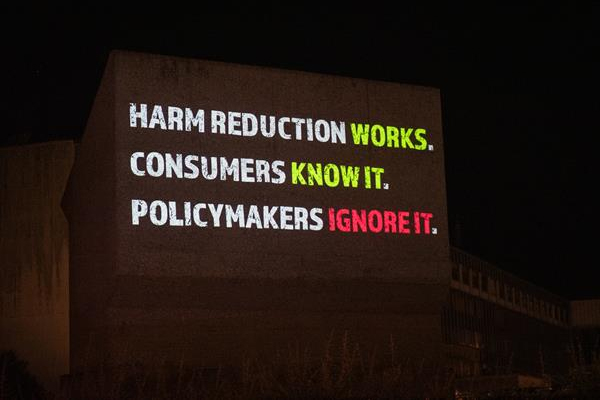
    The Coalition of Asia Pacific Tobacco Harm Reduction Advocates (CAPHRA) criticized Singapore’s decision to treat vaping as a drug offence, warning that harsher penalties and jail terms risk undermining global evidence on tobacco harm reduction.

    CAPHRA executive coordinator Nancy Loucas said the policy conflates contaminated black-market products with legitimate nicotine devices. “This is like banning all alcohol because some criminals sell methanol-laced spirits,” she argued, adding that prohibition will only fuel underground markets while denying smokers access to safer alternatives.

    Singapore banned e-cigarettes in 2018, yet smoking rates have remained stagnant at 10–16% for over a decade despite strict tobacco control. CAPHRA said countries regulating safer nicotine products, including the UK, Sweden, Japan, and New Zealand, are seeing steep declines in smoking-related deaths, urging Singapore to embrace regulation over prohibition.

  • Türkiye Launches First Smoke-Free City in Artvin

    Türkiye Launches First Smoke-Free City in Artvin

    Türkiye designated the Black Sea town of Artvin as the country’s first pilot “smoke-free city” in its latest effort to curb tobacco use, Health Minister Kemal Memişoğlu announced. The initiative will ban smoking in public institutions, expand support for the national quit-smoking hotline ALO 171, and provide free medication for those trying to quit. Authorities also plan strict enforcement against electronic cigarettes and puff products.

    The project is expected to be rolled out nationwide if successful. According to the Turkish Anti-Smoking Association, Türkiye spends about $20 billion annually on cigarettes, while tobacco-related diseases account for roughly 9% of health expenditures.

  • BAT France Wants Coordinated EU Approach on Nicotine Pouch Regulation

    BAT France Wants Coordinated EU Approach on Nicotine Pouch Regulation

    In response to the European Commission’s proposal last month to include nicotine pouches under the Tobacco Excise Duty Directive, BAT France said it welcomed the initiative, marking the first time these tobacco-free alternatives were recognized in EU taxation. However, while acknowledging the move as a positive step for adult smokers seeking reduced-risk products, BAT France warns against two major risks: disproportionate taxation that could limit access, and the possibility of some member states, including France, acting unilaterally to ban these products.

    “It is important that nicotine pouches are recognized in European law,” said Sébastien Charbonneau, director of public affairs at BAT France. “But it is essential to adopt a differentiated tax approach that reflects their potential role in reducing risks for smokers.”

    BAT France highlighted Sweden’s experience, where nicotine pouches have contributed to one of the lowest smoking rates in Europe. The company stressed that excessive excise duties and unilateral bans could undermine public health goals, create trade barriers, and fuel illicit markets.

    The company called for risk-proportionate taxation, transparent parliamentary debate in France, and a coordinated EU-wide regulatory approach to support reduced-risk alternatives while respecting the single market and democratic process.

  • Malaysia Rules Out Generational Endgame, Focuses on Regulation

    Malaysia Rules Out Generational Endgame, Focuses on Regulation

    Malaysia’s Health Ministry confirmed it has no plans to reinstate the Generational Endgame (GEG) policy, which would have banned tobacco and vape sales to those born after 2007. Instead, the ministry said its focus is on enforcing strict regulatory measures under the Smoking Products Control for Public Health Act 2024.

    These measures include mandatory product registration, bans on advertising and sponsorship, tighter sales controls, and expanded smoke-free zones. Officials said the priority is to shield young people from smoking harms through regulation rather than a generational ban. The GEG policy, first proposed in 2022, was dropped before the bill passed Parliament.

  • Roanoke Weighs $20K Annual Fee for Vape, Tobacco Shops

    Roanoke Weighs $20K Annual Fee for Vape, Tobacco Shops

    The City Council in Roanoke, Virginia, is considering a $20,000 annual operational fee for specialty tobacco and vape shops operating within the city limits. The fee would specifically target businesses primarily profiting from vape, tobacco, THC, and related products, meaning gas stations and convenience stores would be exempt.

    Councilman Phazon Nash says the measure would promote public health and fund economic development programs, while Councilman Peter Volosin cautions against possible discrimination if minority-owned businesses are disproportionately affected.

    The proposal is under review by the city manager and city attorney, with Nash confident it will gain enough support to pass.

  • Belgium Extends Plain Packaging to All Tobacco Products from 2026

    Belgium Extends Plain Packaging to All Tobacco Products from 2026

    Belgium will require cigars, cigarillos, cigarette papers, filters, tubes, and all other “herbal products intended for smoking” to adopt standardized green-brown packaging with uniform fonts and health warnings, Health Minister Frank Vandenbroucke announced. Effective June 1, 2026, the measure expands existing plain packaging rules for cigarettes and rolling tobacco, in place since 2020, to close loopholes that allow tobacco companies to market via other products. “Small retailers” would receive a one-year exception until June 2027.

    Vandenbroucke said the move aims to curb youth appeal and counter industry tactics, such as packaging cigarillos to resemble old cigarette packs. The government is also considering a ban on smoking on terraces from January 2026.

  • Nigeria Urged to Double Tobacco Tax

    Nigeria Urged to Double Tobacco Tax

    Nigerian advocacy group CAPPA has urged the government to raise excise taxes on tobacco products to 100%, saying the move could save thousands of lives and recover ₦526 billion ($347 million) annually in health and productivity losses.

    CAPPA said the tobacco industry continues to target youths with cigarettes, vapes, and e-cigarettes despite nearly 30,000 tobacco-related deaths a year. The group called for swift action on a delayed 50% tax proposal and alignment with stronger tobacco controls seen in other African countries.

  • Malaysia Moving Toward Vape Ban

    Malaysia Moving Toward Vape Ban

    Malaysian Health Minister Datuk Seri Dr Dzulkefly Ahmad said he will present an expert committee’s recommendation to ban electronic cigarettes and vape to the Cabinet once its study is complete. He said the move is “no longer a matter of if” and follows the enforcement of the Control of Smoking Products for Public Health Act 2024, which has cut the number of smoking product variants in the market by nearly 60%.

    “With strict enforcement, I am confident we can effectively regulate cigarette and vape sales,” Dzulkefly said. “Most importantly, we must protect non-adults, students, and our children from exposure to vape. The Act will be enforced firmly to regulate all smoking products, including vape, for public health.”

  • NSW Introduces Harshest-Ever Crackdown on Illicits

    NSW Introduces Harshest-Ever Crackdown on Illicits

    The New South Wales government today (August 6) introduced sweeping new legislation to Parliament aimed at tackling the illegal tobacco and vaping trade, including some of the toughest penalties in Australia. Under the proposed laws, selling tobacco without a license could result in fines of up to A$660,000 ($429,000) for individuals and A$880,000 ($572,000) for corporations.

    Other key measures include:

    • New offenses for commercial possession or sale of illicit tobacco, carrying maximum penalties of over A$1.5 million ($975,000) and seven years’ imprisonment.
    • Closure orders for up to 90 days (short-term) or 12 months (long-term) for premises violating the laws.
    • Offenses for breaching closure orders, including entering or operating from sealed premises.
    • Lease termination powers for landlords and proposed penalties for those knowingly leasing to illegal sellers.
    • New laws against impersonating licensed sellers, resisting product seizure, or attempting to reclaim confiscated goods.

    The crackdown follows the recent rollout of a tobacco licensing scheme, designed to improve regulatory oversight and reduce black market activity.

  • Federal Judge Rules FDA Tobacco Penalties Unconstitutional Without Jury Trial

    Federal Judge Rules FDA Tobacco Penalties Unconstitutional Without Jury Trial

    On Friday (August 1), in a landmark ruling, a federal judge sided with vape company Wulferic, LLC in its lawsuit against the U.S. Food and Drug Administration (FDA), declaring the agency’s civil penalties process unconstitutional under the Seventh Amendment.

    Wulferic, which operates as Vapor Lab, had been fined by the FDA for selling unauthorized e-liquids. The company challenged the penalty, arguing it was entitled to a jury trial. U.S. District Judge Reed O’Connor agreed, ruling that the FDA’s administrative process for assessing fines violated the constitutional right to a jury in civil cases. The decision could significantly weaken the FDA’s enforcement powers over tobacco and nicotine products.

    “The Wulferic decision is the first case to find that the FD&C Act’s CMP provision for tobacco products is unconstitutional — but the catch is that it didn’t actually order FDA to stop carrying on as usual with respect to anybody else,” Andrew J. Hull and Peter G. Dickos wrote for the FDA Law Blog. “Wulferic threatens to significantly dismantle FDA’s arsenal of actions to enforce compliance with the FD&C Act’s tobacco provisions, and we expect many more similar challenges to follow if FDA stays on its current course.”