Category: Global Regulation

  • Belgium First in EU to Ban Disposable Vapes

    Belgium First in EU to Ban Disposable Vapes

    Belgium will ban the sale of disposable electronic cigarettes as of Jan. 1 on health and environmental grounds in a groundbreaking move for European Union nations.

    Health minister Frank Vandenbroucke said the inexpensive e-cigarettes had turned into a health threat since they are an easy way for teenagers to be drawn into smoking and get hooked on nicotine.

    “Disposable e-cigarettes is a new product simply designed to attract new consumers,” he said in an interview, according to NPR.

    Because they are disposable, the plastic, battery and circuits are a burden on the environment. On top of that, “they create hazardous waste chemicals still present in what people throw away,” Vandenbroucke said, adding that he wants tougher tobacco measures in the 27-nation bloc.

    “We are really calling on the European Commission to come forward now with new initiatives to update, to modernize, the tobacco legislation,” he said.

    There is an understanding of Belgium’s decision, even in some shops selling electronic cigarettes, and especially on the environmental issue.

    Once the cigarette is empty, “the battery is still working. That’s what is terrible, is that you could recharge it, but you have no way of recharging it,” said Steven Pomeranc, owner of the Brussels Vapotheque shop. “So you can imagine the level of pollution it creates.”

    A ban usually means a financial loss to the industry, but Pomeranc thinks it will not hurt too much.

    “We have a lot of alternative solutions which are also very easy to use,” he said. “Like this pod system, which are pre-filled with liquid, which can just be clipped into the rechargeable e-cigarette. So we will simply have a shift of clients towards this new system.”

  • On Jan. 1, New Illinois Vape Laws go Into Effect

    On Jan. 1, New Illinois Vape Laws go Into Effect

    New Illinois laws that go into effect Jan. 1, will place more restrictions on electronic cigarettes.

    One law prohibits the advertising, marketing or promoting of an electronic cigarette in a manner that is likely to cause a person to mistake it for an object that is anything other than what it is, a tobacco product.

    State Sen. Julie Morrison, D-Lake Forest, said some e-cigarettes are designed to look like school supplies, like highlighters, erasers and pencil sharpeners.

    “This law will prohibit tobacco companies from pulling the wool over the eyes of educators and guardians whose job it is to keep kids safe,” said Morrison.

    Elizabeth Hicks with the Consumer Choice Center said the assault on vaping may push some Illinoisans back to regular combustible cigarettes, leaving taxpayers to pick up the tab, according to media reports.

    “Taxpayers unfortunately also suffer in addition to consumers,” said Hicks. “The annual Medicaid costs for smoking-related illnesses in Illinois is over $2 billion, which is one of the highest throughout the country.”

    Another law prohibits electronic cigarettes purchased by mail, online or through other remote sale methods from being shipped to anyone in the state other than a distributor or retailer.

  • FDA Warns 9 More for Illegal Vape Sales

    FDA Warns 9 More for Illegal Vape Sales

    The U.S. Food and Drug Administration issued warning letters to eight online retailers and one manufacturer for selling and/or distributing unauthorized flavored, disposable e-cigarettes.

    Some of the unauthorized products cited in the warning letters are marketed under brand names for disposable products, including Geek Bar and Lost Mary, according to the FDA. Other unauthorized products cited feature the names and/or images of celebrities.

    The firms receiving these warning letters sold and/or distributed e-cigarettes in the United States that lack authorization from FDA to be legally marketed in the U.S., which is in violation of the Federal Food, Drug, and Cosmetic Act.

    In addition to the violations mentioned in the warning letters, the firms were warned to address any violations that are the same as, or similar to, those stated in the warning letter and to promptly take necessary actions to comply with the law.

    Failure to promptly correct the violations can result in additional actions such as an injunction, seizure, and/or civil money penalty.

  • EU Pushing Again for Stricter Smoking Rules

    EU Pushing Again for Stricter Smoking Rules

    Credit: Doganmesut

    EU countries agreed Tuesday on a push for stricter anti-smoking rules, backing bans on smoking and vaping in many outdoor areas, including playgrounds and cafe patios.

    Health ministers from the bloc’s 27 nations meeting in Brussels adopted a recommendation inviting member states to crack down on secondhand smoke and vapor.

    “Today’s agreement is a crucial step towards our goal of a tobacco-free generation in Europe and is critical in protecting our children and young people from the harmful effects of second-hand smoke,” said the EU’s health commissioner, Oliver Varhelyi.

    The recommendation is non-binding, as health is the responsibility of individual member states. However, it indicates the policies governments could pursue in the future as they seek to reduce smoke-related deaths and ailments.

    It passed with all countries voting in favor apart from Germany and Greece, which abstained, underscoring some political divisions. Last week, the European Parliament voted against a similar text, according to media.

    The document approved on Tuesday calls on EU countries to extend restrictions in place for cigarettes to cover “emerging products”, such as heated tobacco devices and electronic cigarettes that are increasingly popular with young people. Governments should “provide effective protection” from aerosols emitted by these in indoor environments such as offices and public buildings.

    Following an initial proposal put forward by the European Commission in September, the text says such protection should also be granted in some outdoor areas. This, in practice, entails that all smoking should be banned in locations including swimming pools, beaches, zoos, rooftop bars, and restaurant terraces.

  • Korea Seeks to Restrict Synthetic Nicotine

    Korea Seeks to Restrict Synthetic Nicotine

    South Korea is working to restrict the use of synthetic nicotine e-cigarettes, reports The Korea Times.

    Korea’s current law defines tobacco products as those made from the leaves of tobacco plants. Some companies saw this as an opportunity to sell products using synthetic nicotine created in a lab rather than from tobacco leaves.

    Recently, BAT Rothmans Far East, launched its synthetic nicotine vape product, Nomad Sync 5000, which currently does not meet the definition of “tobacco-leaf products” and thus avoids multiple taxes and special charges.

    In recent months, lawmakers have filed more than a dozen bills to amend the law.

    The latest bill, proposed by lawmakers of the opposition Democratic Party of Korea on Nov. 26, aims to redefine what constitutes tobacco products, seeking to include vapes that use synthetic nicotine.

    Another group of lawmakers are attempting to require sellers to put warnings on vape packaging just as cigarette sellers do, in addition to the expansion of the legal tobacco definition.

     The Ministry of Health and Welfare has vowed to support such legislation efforts.

    .

  • Robert Kennedy, Jr. Tapped to Lead Trump’s HHS

    Robert Kennedy, Jr. Tapped to Lead Trump’s HHS

    President-elect Donald Trump has nominated Robert F. Kennedy, Jr. to serve as the new secretary of the Department of Health and Human Services (HHS). The effects Kennedy will have on the nicotine market remain unclear. Kennedy must still be confirmed by Congress.

    “For too long, Americans have been crushed by the industrial food complex and drug companies who have engaged in deception, misinformation, and disinformation when it comes to Public Health,” Trump posted. “The Safety and Health of all Americans is the most important role of any Administration, and HHS will play a big role in helping ensure that everybody will be protected from harmful chemicals, pollutants, pesticides, pharmaceutical products, and food additives that have contributed to the overwhelming Health Crisis in this Country.”

    As the leader of HHS, Kennedy will oversee the FDA, which regulates vaping, nicotine pouches, and all other nicotine and tobacco products through its Center for Tobacco Products.

    Kennedy’s position on vaping, nicotine, and tobacco harm reduction (THR) remains an unknown. During the presidential campaign, Trump promised that, if elected, he would “save vaping” after meeting with Tony Abboud of the Vapor Technology Association.

    “I saved Flavored Vaping in 2019, and it greatly helped people get off smoking,” Trump said on his Truth Social platform in September. “I raised the age to 21, keeping it away from the ‘kids.’ Kamala and Joe want everything banned, killing small businesses all over the country. I’ll save Vaping again!”

  • FDA Renews MRTPs for General Snus

    FDA Renews MRTPs for General Snus

    After a scientific review, the U.S. Food and Drug Administration issued a renewal of modified risk granted orders to Swedish Match USA, Inc., for eight General Snus products.

    With the renewal, the products may continue to be marketed – as they have been authorized to do so since 2019 – with the following modified risk claim: “Using General Snus instead of cigarettes puts you at a lower risk of mouth cancer, heart disease, lung cancer, stroke, emphysema, and chronic bronchitis.” 

    The products receiving modified risk granted orders are: General Loose, General Dry Mint Portion Original Mini, General Portion Original Large, General Classic Blend Portion White Large-12ct, General Mint Portion White Large, General Nordic Mint Portion White Large-12ct, General Portion White Large, and General Wintergreen Portion White Large.

    The modified risk granted orders issued by FDA are specific to the products as mentioned above and expire Nov. 7, 2032. If the agency determines that, among other things, the continued marketing of the products no longer benefits the health of the population as a whole, the agency may withdraw the orders.

    “The FDA’s review determined that this modified risk claim is supported by scientific evidence, that consumers understand the claim, and that consumers appropriately perceive the relative risk of these products compared to cigarettes,” the FDA stated in a release. “FDA found that these modified risk products, as actually used by consumers, will significantly reduce harm and the risk of tobacco-related disease to individual tobacco users and benefit the health of the population as a whole.

    “In particular, the available scientific evidence, including long-term epidemiological studies, shows that relative to cigarette smoking, exclusive use of these products poses lower risk of mouth cancer, heart disease, lung cancer, stroke, emphysema, and chronic bronchitis. The available evidence does not indicate significant youth initiation of these products.”

    The modified risk granted order does not permit the company to market the product with any other modified risk claim that conveys or could mislead consumers into believing that the products are endorsed or approved by FDA, or that the agency deems the products to be safe for use by consumers.

  • Thailand: Push to Ban Smoking in Cars

    Thailand: Push to Ban Smoking in Cars

    Image: andranik123

    Thailand’s Tobacco Products Control Committee wants to ban smoking in private cars to protect passengers from secondhand smoke, reports The Nation.

    Speaking at a seminar on Nov. 5, Rerngruedee Pathanwanit of the Ramathibodi Medical School at Mahidol University said that approximately 70 percent of Thais are affected by secondhand smoke and an average of 20,688 Thais die of health complications caused by secondhand smoke each year.

    She also pointed out that Thailand stands fifth in the list of countries where women aged 15 to 49 are affected by secondhand smoke.

    Suwanna Ruangkanchasetr, deputy director of the Tobacco Control Research and Knowledge Management Center, told the seminar that recent research found that up to 55 percent of families with children in the one-five age group had smokers in the house.

    Researchers also found unsafe levels of nicotine in the hair of children in homes with smokers, she added.

  • FDA Warns Companies For Selling ‘Smart’ Vapes

    FDA Warns Companies For Selling ‘Smart’ Vapes

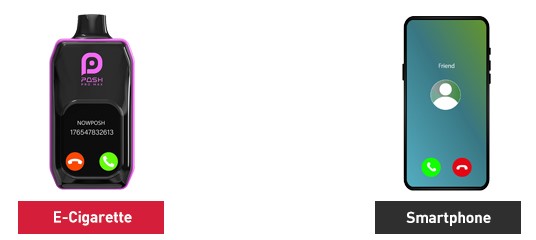
    The U.S. Food and Drug Administration issued warning letters to nine online retailers and one manufacturer for selling or distributing unauthorized disposable e-cigarettes designed to resemble smart technology, including smartphones and gaming devices.

    The products mentioned in the warning letters are promoted as having various designs and functions that might attract young people, according to an agency press release. These include features like playing games, connecting to smartphones, receiving text or call notifications, playing music, and customizing products with personalized wallpaper.

    “These products may resemble smart devices, but there’s nothing smart about them,” said Brian King, director of the FDA’s Center for Tobacco Products (CTP). “They’re illegal to sell and a flagrant attempt to target kids.”

    The agency states that the designs of the unauthorized products cited in the warning letters are likely to appeal to youth because they help conceal the nature of the products as tobacco products from parents, teachers or other adults. Example images of unauthorized products cited in the warning letters compared to electronic devices on the consumer market, such as smartphones and gaming devices.

    “The firms receiving these warning letters sold and/or distributed e-cigarettes in the United States that lack authorization from FDA to legally market a new product, which is in violation of the Federal Food, Drug and Cosmetic Act,” the release states.

    In addition to the violations mentioned in the warning letters, the retailers and manufacturer were warned to address any violations that are the same as, or similar to, those stated in the warning letter and promptly take any necessary actions to comply with the law. Failure to promptly correct the violations can result in additional FDA actions such as an injunction, seizure and/or civil money penalty.

    “FDA is steadfast in our commitment to enforce the law,” said John Verbeten, director of the CTP’s Office of Compliance and Enforcement. “We will continue to take appropriate measures, working hand in hand with our federal enforcement partners, to address unauthorized tobacco products, especially those most appealing to youth.”

  • FDA to Review 2ONE Marketing Application

    FDA to Review 2ONE Marketing Application

    The U.S. Food and Drug Administration has accepted for review 2ONE Labs’ premarket tobacco product application (PMTA) for 2ONE brand nicotine pouches.

    According to 2ONE Labs CEO Vincent Schuman, this means that the company’s application will now enter the next critical phase of the FDA review process. “Our company will continue to fully fund this application through to its successful completion, and our wholesale, retail and sponsorship partners should view this ‘acceptance’ as a sign of our ability to navigate this complex PMTA process and our unwavering commitment to support the long-term availability of the 2ONE brand in the U.S. market,” Schuman said in a German-language statement.

    “We have developed 2ONE nicotine pouches for adult consumers—21 and older—who find it difficult to switch from combustible or traditional oral tobacco products. The availability of the 2ONE brand in the market over the past five years and the interest and growth our brand has achieved through strong retail partnerships, such as with Circle K, have shown that it is possible even for innovative companies to identify and introduce unique brands that truly offer adults the perfect transition product.”

    Earlier this month, 2ONE Labs filed a trademark infringement lawsuit and a preliminary injunction against Imperial Brands subsidiaries’ Zone nicotine pouch trademark. The suit alleges that Imperial’s Zone products willfully infringe the 2ONE nicotine pouch brand.