


Category: Illicit Trade
-

Drone Used to Smuggle Smokes Into Prison

Credit: Adragan Three men were arrested in Malaysia for attempting to smuggle tobacco products using a drone into the Machang Prison, according to the New Straits Times.
The trio aged between 35 and 39 were arrested after the Machang district criminal investigation division received a report involving a drone being flown above a compound near the prison at Jalan Kuing Indah, Kampung Pangkal Meleret, at 1:05 a.m.
Kelantan Police Chief Datuk Muhamad Zaki Harun said the prison, which is equipped with tracking device technology, detected the drone near the premises.
The police deployed a team to the location before the three men sped off in a Honda CRV. “A chase ensued between the police and the three men before they were arrested near the main Kuala Krai-Kota Baru road in Kampung Bukit Belah,” Zaki said in a statement, according to media reports.
Zaki said police also found an RC123 drone remote control device, 13 packets of tobacco and 41 small compressed packages believed to contain tobacco.
-

England’s Ports Seeing Boost in Fake Vapes
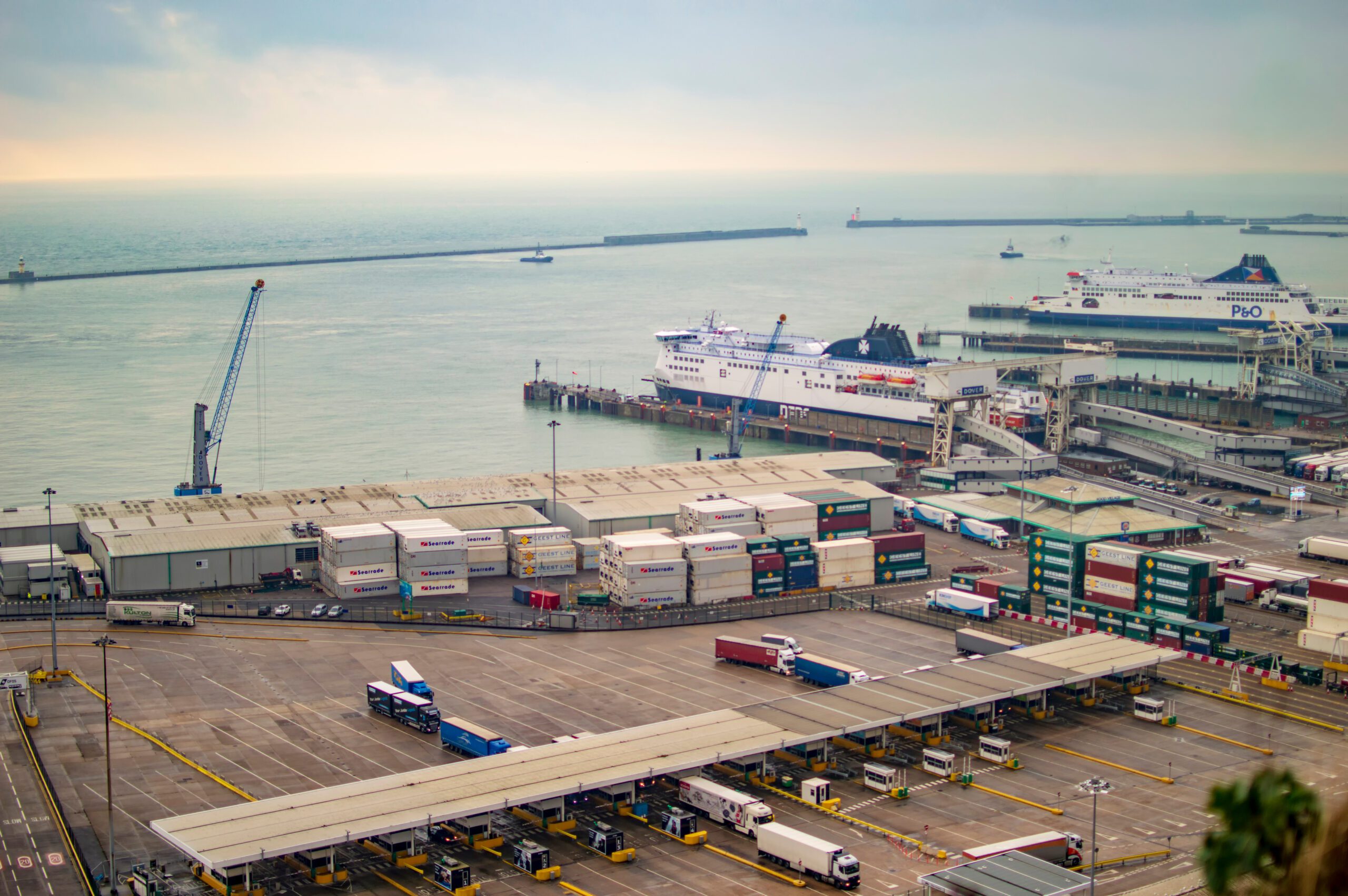
The number of potentially unsafe disposable vapes being seized at English Channel ports has risen “dramatically,” according to trading standards.
More than 300,000 of the counterfeit products had been seized during December, Kent Trading Standards said, according to the BBC.
“A lot of our work has been focused on retail outlets, but this is now higher up the supply chain,” James Whiddett, spokesperson for KTS, said. “We’re stopping these devices, which may have about 10 times the legal limit of nicotine in them.”
He said the current legal limit on the tank on disposable vapes is 2 mL, which is the equivalent of 600 puffs.
“The products which we’re seeing coming into the country at the moment have 3,500 puffs on them and some have 7,000 puffs, so they are illegal and cannot be supplied to anyone,” he said.
Whiddett said the demand for disposable vapes had risen dramatically over the last nine months.
“The flavors, the fact that people don’t have to put their own liquids in, means it’s convenient and easy,” he said. “We’re not sure where these illegal vapes were going, and our investigations are ongoing.”
Gillian Golden, CEO of the Independent British Vape Trade Association, said noncompliant vape products are also associated with noncompliant sales, “often to underage consumers.”
She said the association would continue to assist trading standards over noncompliant vaping products.
-

Black Market Thrives in Bosnia and Herzegovina
Image: butenkow | Adobe Stock About 49 percent of citizens in Bosnia and Herzegovina buy tobacco products from the black market, according to 2020 research data published by the Center for Policies and Management, a Sarajevo think tank organization that deals with European integration and public administration reform, reports the Sarajevo Times.
The legal sale of cigarettes decreased by 7.6 billion cigarettes per year from 2008 to 2020, though the number of smokers did not significantly decrease. The Liberal Forum, a nongovernmental organization, suggests that that means smokers turned to the black market for cheaper products.
Illegal cigarettes and tobacco are often smuggled into Bosnia and Herzegovina from Montenegro, Serbia and Albania; Bosnia and Herzegovina is a transit country on the international smuggling route leading to European Union countries, according to the Indirect Tax Administration.
The Bosnia and Herzegovina prosecutor’s office filed indictments against 13 people this year for illegal tobacco product trade, three of whom were border police members.
-

Excessive Tax Rates Boost Illicit Markets
Photo: Tobacco Reporter archive Excessive tax rates on cigarettes induce substantial black and gray market movement of tobacco products into high-tax U.S. states from low-tax states or foreign sources, according to a new report by the Tax Foundation.
New York has the highest inbound smuggling activity, with an estimated 53.5 percent of cigarettes consumed in the state deriving from smuggled sources in 2020. New York is followed by California (44.8 percent), New Mexico (45.5 percent), Washington (41.5 percent), and Minnesota (34.8 percent).
New Hampshire has the highest level of net outbound smuggling at 52.4 percent of consumption, likely due to its relatively low tax rates and proximity to high-tax states in the northeastern United States. Following New Hampshire is Indiana (35.6 percent), Virginia (27.6 percent), Idaho (25.8 percent), Wyoming (24.4 percent), and North Dakota (18.6 percent).
Illinois and New Mexico significantly increased their cigarette tax rate from 2019 to 2020. Both states saw major increases in cigarette smuggling.
“Policymakers interested in increasing tax rates should recognize the unintended consequences of high taxation rates,” the Tax Foundation wrote on its web site. “Criminal distribution networks are well-established and illicit trade will grow as tax rates rise.”
The authors stress that excessive taxation is not the only driver of illicit trade. Measures such as flavor bans and reduced-nicotine mandates, they argue, also have the potential to push tobacco sales into the illegal sphere.
-

Coalition Calls on Congress
Image: Vitalii Vodolazskyi | Adobe Stock The United to Safeguard America from Illegal Trade (USA-IT) coalition called on Congress to embrace new policies to combat illegal trade, including counterfeiting, smuggling, organized retail theft, drug trafficking and human trafficking, according to a press release following the coalition’s second annual national summit.
Opening the summit, Representative Bennie Thompson said, “Illicit trade not only damages our businesses and economy but can also pose health and safety risks for consumers and even undermines our security. When the government and private sector work together, hand in hand, we’re more efficient and effective at combating this threat. This is about protecting all of America.”
“Fighting these organizations for more than a decade, I’ve seen firsthand how the seemingly innocuous trafficking of illicit tobacco and nicotine products, like cigarettes and e-vapor products, has very serious consequences,” said Kristin Reif, director of government relations for Philip Morris International, at the summit. “But criminals don’t just traffic in one commodity; they will traffic in anything that earns them a dollar, whether that’s luxury purses or drugs or even human beings. That’s why USA-IT is so crucial—by bringing together such a diverse group of stakeholders, we can bring this pervasive problem into lawmakers’ focus and can more effectively counter the threat of illegal trade.”
The summit included five panel discussions from experts from companies, law enforcement, academia and policy.
USA-IT was launched in June 2021 and now works across 15 states facing illegal trade issues. USA-IT offers information and training programs for local officials and law enforcement and raises public awareness of the issues surrounding illegal trade.
-

BAT Donates Cigarette Destruction Machine

Photo: Taco Tuinstra BAT has donated a Hammermill cigarette destruction machine to the Uganda Revenue Authority (URA) to support the national fight against illicit cigarette trade, reports the PML Daily.
Receiving the machine at the URA head offices in Nakawa, acting Commissioner of Customs Okaka Godfrey said that the Hammermill will provide a more convenient and cost-efficient way to destroy illicit cigarettes compared with manual methods.
The acquisition of the machine follows a report by Kantar suggesting that nearly one-third of the cigarettes sold in Uganda are illicit. More than half of these illicit cigarettes are manufactured in Uganda for export, with the rest being manufactured in other countries before being smuggled into the country.
The government misses out on an estimated USH30 billion ($8.01 million) in tobacco tax revenues each year due to the illicit cigarette trade. BAT attributes a recent 41 percent drop in tax remittances to the URA to competition from the illicit market.
According to BAT Managing Director Mathu Kiunjuri, the illicit trade problem has become worse recently. This year, the share of the illicit market has increased to 27.5 percent from 23.8 percent in 2021 and 15.4 percent in 2020.
Between 2019 and 2022, URA enforcement teams seized more than 293,099 cartons of illicit cigarettes valued at $340,000. The major brand intercepted was Super Match made in Uganda for export, followed by high end brands such as Dunhill, Business Royal and Sportsman.
-

A Persistent Problem

Photo: ITC Iran’s large illicit tobacco market has gotten even larger in the wake of U.S. sanctions.
By Vladislav Vorotnikov
Despite efforts to crack down, Iran continues to struggle with rampant illicit trade. In 2021, nearly half of the Iranian tobacco market was controlled by illegal businesses, according to the Association of Tobacco Products Manufacturers and Exporters. The authorities are believed to consciously turn a blind eye to smugglers and underground workshops producing cigarettes of dubious quality.
Although domestic cigarette production expanded in recent years, nearly 5,000 tons of tobacco products, primarily cigarettes, are smuggled into the market each year, according to Mohammad Reza Tajdar, the head of the tobacco products manufacturers association. Domestic consumption is 12,000 tons while Iranian cigarette factories produced roughly 5,000 tons last year, Tajdar said.
Legal imports exist in negligible quantities, and the gap between production and consumption is filled through smuggling and illegal domestic production, according to Tajdar. The illicit trade has bedeviled Iran for more than a decade, but it picked up tremendously after U.S. President Donald Trump imposed harsh sanctions against the country in 2018.
Illegal cigarette workshops in Iran “spring up like mushrooms,” so the volumes illegally produced in Iran exceed even those supplied through smuggling, according to Hossein Ali Pouraqbali, the former head of the country’s tobacco production and standards department.
Occasionally, authorities raid underground workshops, but their campaign remains haphazard. Since the beginning of 2022, the average price of cigarettes in Iran has jumped by nearly 42 percent. Without the illegal workshops, the price would rise even further.
Meeting the Challenge
Since the introduction of sanctions, legal imports of most cigarette brands have nearly come to a halt. The Iranian government also discourages the import of Western goods to the domestic market, citing ideological reasons but mainly to preserve foreign exchange, which is in increasingly short supply.
Pouraqbali explained that smuggling is limited to a handful of brands that cannot be imported legally. He estimated that illegal import reaches 2,000 tons per year.
In the past years, the Iranian tobacco manufacturers association has been waging war on illegal cigarette suppliers but with little success. Tajdar claimed that a large share of goods supplied through illegal channels turn out to be counterfeit, which means that it doesn’t comply with any production standards.
One challenge the industry faces is ignorance; the average customer is unable to distinguish counterfeit cigarettes from legally produced cigarettes. And even if they could, it might not make much of a difference; opinion polls suggest that a significant share of customers would opt for illegal products even if they were aware of their status—as long as those products are less expensive than legal ones.
Bringing Order to the Market
To help bring the illegal tobacco trade to heel, lawmakers have been discussing the creation of an electronic tobacco product tracking system, but few expect it to be implemented in the foreseeable future. Iranians are very sensitive to price fluctuations of consumer goods, especially since Western sanctions have caused purchasing power to nosedive.
Iran is currently battling one of the worst political crises in its modern history, sparked by the Sept. 16 death of a 22-year-old woman after her detention by the country’s morality police. Initial protests have quickly grown into one of the largest upheavals since the 1979 Islamic Revolution. At least 328 people have been killed and 14,825 others arrested in the unrest, according to human rights activists in Iran.
In such an environment, authorities may hesitate to implement measures that are likely to increase cigarette prices and stoke further discontent.
Legal Business Facing Criticism
In addition to illegal traders, legal tobacco companies face several other challenges in Iran. Over the years, Iranian officials repeatedly expressed dissatisfaction with the dominance of the local tobacco market by Western manufacturers.
During a press conference in August, Hojjat-ul-Islam Syed Salman Zakir, a member of the Social Commission of the Islamic Council, complained that more than 75 percent of Iran’s legal tobacco market is controlled by Japan Tobacco International and BAT.
Such anti-Western rhetoric is common in Iran, especially since 2018. JTI and BAT often are targeted by government officials and lawmakers who frequently demand higher taxes and import duties. Some even question whether Western businesses should be allowed to continue operating in the country.
Hopes on the Local Factories
The Iran Tobacco Co. (ITC), the oldest and biggest local cigarette manufacturer, currently controls around 10 percent of the domestic market, a fact that Zakir described as “regrettable.” However, the authorities hope that the balance of power will soon swing in ITC’s favor.
“ITC is currently paying special attention to fulfilling its social duties and supporting the population’s health,” Zakir said, adding that foreign tobacco companies neglect to fulfill their social obligations. JTI and BAT, he noted, import tobacco from abroad while ITC in March of 2022 rolled out a comprehensive support program for Iranian tobacco farmers.
“This is a good incentive for farmers [to boost operation], and we hope for a rise in its [ITC] share on the market,” Zakir added.
Targeting the lower end of the market, ITC can produce 40 billion cigarettes annually to meet 50 percent of domestic demand. The actual production, however, dropped from 12 billion cigarettes in 2018 to 6 billion in 2021.
In the previous years, Iranian officials estimated that ITC purchased 15,000 tons of tobacco from local farmers, creating 20,000 jobs in the industry. The government estimated that the latter figure could be ramped up to 100,000 jobs with a corresponding increase in local raw tobacco production. However, this would require allocating state aid to tobacco farmers—a step the Iranian government has been reluctant to take in the past several years.
ITC Mulls Investment in Zimbabwe
The Iranian Tobacco Co. wants to invest in Zimbabwe to reduce the cost associated with buying tobacco through middlemen, reports The Sunday Mail. Among the areas the Iranians are targeting are irrigation, curing and mechanization. They also want to contract with farmers and set up factories in Zimbabwe.
The investments were discussed during a visit to Tehran by a delegation led by Zimbabwe’s First Lady Auxillia Mnangagwa.
“We get our needs through agents, and prices go higher for us and also causing Zimbabwean farmers to have little profit,” said Iran’s vice president of commerce and economy, Hamid Gharesheikh, during the meeting.
“We want to get companies to work with directly in Zimbabwe and do away with middlemen. We are under sanctions, and it’s difficult for us to import from other Western countries, but with Zimbabwe, we have a better understanding and for that, our cooperation will be helpful to both of us. We can also supply you with equipment such as tractors and implements for production. We can also supply dryers for curing and processing,” he said.
The proposed cooperation dovetails with Mnangagwa’s passion to economically empower Zimbabwe’s citizenry, especially women and youths, in the effort to attain upper middle-income status for the country by 2030.
During the meeting, Gharesheikh said Iran would prioritize women in its investments.
-

Elfbar Warns of Fake Vapes

Photo: Elfbar Potentially dangerous counterfeit disposable vaping products are flooding into the U.K. market, according to an investigation by Elfbar, a Chinese manufacturer. The company warns retailers and consumers that the illegal products are produced in “squalid Chinese factories with no license for manufacturing and regard for product safety.”
Since June 2021, Elfbar has cracked down on more than 120 counterfeit production and sales targets, including factories, warehouses, logistics and foreign trade companies. Its actions have resulted in the seizure of more than 2 million finished counterfeit Elfbar products, millions of packaging boxes, anti-counterfeit codes, semi-finished vaping pipes and other accessories, according to the company.
Elfbar CEO Victor Xiao said consumers would be horrified if they saw the conditions in which these products are made. “The criminals behind these counterfeit products care nothing about product safety or the health of consumers, and they cut every corner possible to maximize their profits,” he said in a statement. “Quite frankly, the conditions in these factories are absolutely squalid, where workers man production lines in filthy conditions with no regard to hygiene at all.”
Elfbar said that manufacturers and retailers have an important role in protecting consumers.
“While it can be hard to tell a fake product from the real thing just by looking at it, there is no excuse for any retailer to sell a counterfeit Elfbar product. Retailers can scan a code on the packaging to check the authenticity of the product, and we urge them to do this for every product they sell,” Xiao said.
John Dunne, director general of the U.K. Vaping Industry Association, applauded Elfbar for standing up against the counterfeiters.
“They pose a significant risk to the harm reduction reputation of the global vaping industry,” he said. “It’s why we have called for a retail licensing scheme here in the U.K. to prevent the sale of illicit products and much higher penalties of at least £10,000 [$12,058] per instance for retailers who break the law in this way,” he said. “Similarly, the counterfeiters and those who trade fake vapes along the supply chain need dealing with in a way by the relevant authorities that put them off from doing it ever again.”
-

Slovakia: Illegal Cigarette Factory Closed
Photo: Europol Slovakian authorities uncovered an illegal cigarette factory while inspecting a poultry farm in Ubrez, reports the Slovak Spectator.
The Financial Administration detained 20 people from various Eastern European countries. Some had been charged for running illegal cigarette businesses before, according to police in Belgium, the Netherlands and Italy.
The Slovak operation, which produced pirated Marlboro, Richmond and Lambert & Butler cigarettes, had avoided an estimated €6.2 million ($6.42 million) in tax payments, according to authorities. In addition to millions of illegal cigarettes, law officials seized 32,000 kg of raw tobacco, production machinery and materials such as filters, tubes, adhesives, foils and packaging.