Category: Top News

  • FDA Renews MRTPs for General Snus

    FDA Renews MRTPs for General Snus

    After a scientific review, the U.S. Food and Drug Administration issued a renewal of modified risk granted orders to Swedish Match USA, Inc., for eight General Snus products.

    With the renewal, the products may continue to be marketed – as they have been authorized to do so since 2019 – with the following modified risk claim: “Using General Snus instead of cigarettes puts you at a lower risk of mouth cancer, heart disease, lung cancer, stroke, emphysema, and chronic bronchitis.” 

    The products receiving modified risk granted orders are: General Loose, General Dry Mint Portion Original Mini, General Portion Original Large, General Classic Blend Portion White Large-12ct, General Mint Portion White Large, General Nordic Mint Portion White Large-12ct, General Portion White Large, and General Wintergreen Portion White Large.

    The modified risk granted orders issued by FDA are specific to the products as mentioned above and expire Nov. 7, 2032. If the agency determines that, among other things, the continued marketing of the products no longer benefits the health of the population as a whole, the agency may withdraw the orders.

    “The FDA’s review determined that this modified risk claim is supported by scientific evidence, that consumers understand the claim, and that consumers appropriately perceive the relative risk of these products compared to cigarettes,” the FDA stated in a release. “FDA found that these modified risk products, as actually used by consumers, will significantly reduce harm and the risk of tobacco-related disease to individual tobacco users and benefit the health of the population as a whole.

    “In particular, the available scientific evidence, including long-term epidemiological studies, shows that relative to cigarette smoking, exclusive use of these products poses lower risk of mouth cancer, heart disease, lung cancer, stroke, emphysema, and chronic bronchitis. The available evidence does not indicate significant youth initiation of these products.”

    The modified risk granted order does not permit the company to market the product with any other modified risk claim that conveys or could mislead consumers into believing that the products are endorsed or approved by FDA, or that the agency deems the products to be safe for use by consumers.

  • Canada’s  Tobacco Deal not ‘Doomed’: Judge

    Canada’s Tobacco Deal not ‘Doomed’: Judge

    An Ontario judge says any outstanding issues regarding a proposed $32.5 billion settlement between three major tobacco companies and their creditors should be solvable in the coming months. Ontario Superior Court Chief Justice Geoffrey Morawetz released his reasons for approving a motion last week to have creditors’ representatives review and vote on the proposal in December.

    One of the companies, JTI-Macdonald Corp., said last week it objects to the plan in its current form and asked the court to postpone scheduling the vote until several issues were resolved. The other two companies, Rothmans, Benson & Hedges and Imperial Tobacco Canada Ltd., didn’t oppose the motion but said they retained the right to contest the proposed plan.

    The proposal announced last month includes $24 billion for provinces and territories seeking to recover smoking-related healthcare costs and about $6 billion for smokers across Canada and their loved ones.

    If a majority of creditors accept the proposed deal, it will move on to the next step: a hearing to obtain the court’s approval, tentatively scheduled for early next year. In a written decision released Monday, Morawetz said it was clear that not all issues had been resolved at this stage of the proceedings.

    He pointed to “outstanding issues” between the companies regarding their respective shares of the total payout and debate over the creditor status of one of JTI-Macdonald’s affiliate companies. In order to have creditors vote on a proposal, the court must be satisfied the plan isn’t “doomed to fail” either at the creditors or court approval stages, court heard last week, media reports.

    Lawyers representing plaintiffs in two Quebec class actions, those representing smokers in the rest of Canada, and 10 out of 13 provinces and territories have expressed their support for the proposal, the judge wrote in his ruling. While JTI-Macdonald said its concerns have not been addressed, the company’s lawyer “acknowledged that the issues were solvable,” Morawetz wrote.

    “At this stage, I am unable to conclude that the plans are doomed to fail,” he said. “There are a number of outstanding issues as between the parties, but there are no issues that, in my view, cannot be solved.”

    The proposed settlement is the culmination of more than five years of negotiations in what Morawetz has called one of “the most complex insolvency proceedings in Canadian history.”

  • KT&G Reports Results and Presents Growth Plan

    KT&G Reports Results and Presents Growth Plan

    Image: KT&G

    KT&G reported consolidated revenue for the third quarter of KRW1.64 trillion and operating profit KRW415.7 billion, up 2.2 percent year-on-year.

    The growth trend centered on the main business continued in the third quarter. Revenue of the three companies core growth businesses—overseas cigarettes, next generation products (NGP) and health-functional foods exceeded KRW1 trillion, achieving the highest-ever quarterly revenue, while the revenue of the tobacco business also reached a record high.

    Revenue in the tobacco business reached KRW1.048 trillion, up 7.7 percent from the same period last year, while operating profit grew 23.6 percent to KRW333 billion, outpacing the revenue increase.

    In the tobacco business, growth was particularly strong in overseas cigarettes. In the third quarter, revenue of the overseas cigarette business reached KRW419.7 billion, up 30.5 percent year-over-year, setting a new record in revenue for two consecutive quarters, while sales volume and operating profit also increased by 10.1 percent and 167.2 percent, respectively, achieving growth trifecta in sales volume, revenue and operating profit.

    While reporting its financial results, KT&G also announced a plan to achieve 15 percent return on equity (ROE) by 2027, to increase cash returns and to repurchase and cancel shares.

    Since the appointment of CEO Kyung Man Bang in March, KT&G has been working to increase its competitiveness and upgrade the group’s financial structure. In particular, the company has been prioritizing the group’s ROE enhancement project, which is based on profitability improvement, asset efficiency and financial optimization.

    Under the new corporate value-up plan, shareholder return will also be expanded in 2024. KT&G’s board of directors resolved to repurchase 1.35 million shares with KRW150 billion of the financial resources secured through the securitization of non-core and low-yield assets and to cancel them in full within the year.

    “We are in full swing in creating results by strengthening our business structure centered on our core business and upgrading our financial structure to become a ‘global top-tier’ company,” KT&G wrote in a press note. “We will continue to focus our resources and capabilities on our three core businesses to strengthen our intrinsic competitiveness and return the fruits of our achievements to our shareholders to achieve true value-up where corporate value and shareholder value grow together.”

  • Greece to Boost Penalties for Youth Vape Sales

    Greece to Boost Penalties for Youth Vape Sales

    Credit: Lefteris Papaulakis

    Greece is set to introduce a new bill in its Parliament that would impose stricter penalties for businesses supplying alcohol, electronic cigarettes, and vaping devices to minors in the government’s efforts to revamp alcohol laws in the country.

    This is a joint decision made by the ministries of Citizen Protection, Justice, and Health, and it comes after repeated incidents of selling alcohol to under-aged individuals.

    According to sources, violators who sell these harmful products to minors could be punished with imprisonment, financial fines, and other administrative penalties, including the immediate closure of the business involved, media reports.

    Ministerial officials report that past oversights have also been identified regarding the access minors have to these harmful products. Specifically, under the previous government, the number of police officers assigned to enforce the anti-smoking law, for example, had been drastically reduced, penalties had been minimized, and there was also a decision allowing for the use of alcohol by minors at private events.

    The Minister of Justice Giorgos Floridis commented on the new law, “Everything is now becoming stricter for the protection of minors, with increased enforcement.”

  • Rafael Targets Cuba’s Tobacco Regions

    Rafael Targets Cuba’s Tobacco Regions

    Image: lavizzara

    Cuba’s leading tobacco-producing regions were expected to take a direct hit as Hurricane Rafael slammed into the island’s southwest shore on Nov. 6, packing sustained winds of 185 kph, reports Reuters.

    Farmers in Artemisa and Pinar del Rio provinces had moved to protect 8,000 metric tons of tobacco in the area, according to Agriculture Minister Ydael Pérez Brito, as well as ripening fruits and vegetables.

    The U.S. National Hurricane Center warned of a “life-threatening storm surge, damaging hurricane-force winds and flash flooding” across much of western Cuba. The region, including Havana, remained under a hurricane warning.

    Cuba’s state-run grid operator said the high winds had caused the country’s electrical system to collapse. State-run television reported the entire population of 10 million people was without electricity—the second such incident in less than a month on the island.

    The hurricane is the latest blow to the country’s already precarious grid and infrastructure. Cuba’s obsolete oil-fired power plants reached a full crisis this year as oil imports from Venezuela, Russia and Mexico dwindled.

  • Thailand: Push to Ban Smoking in Cars

    Thailand: Push to Ban Smoking in Cars

    Image: andranik123

    Thailand’s Tobacco Products Control Committee wants to ban smoking in private cars to protect passengers from secondhand smoke, reports The Nation.

    Speaking at a seminar on Nov. 5, Rerngruedee Pathanwanit of the Ramathibodi Medical School at Mahidol University said that approximately 70 percent of Thais are affected by secondhand smoke and an average of 20,688 Thais die of health complications caused by secondhand smoke each year.

    She also pointed out that Thailand stands fifth in the list of countries where women aged 15 to 49 are affected by secondhand smoke.

    Suwanna Ruangkanchasetr, deputy director of the Tobacco Control Research and Knowledge Management Center, told the seminar that recent research found that up to 55 percent of families with children in the one-five age group had smokers in the house.

    Researchers also found unsafe levels of nicotine in the hair of children in homes with smokers, she added.

  • Dutch Flavor Ban Lawful: Court

    Dutch Flavor Ban Lawful: Court

    Image: promesaartstudio

    The Dutch ban on flavored vapes is lawful, a court in The Hague ruled, arguing that the harmfulness of e-cigarettes and the “attractive effect” of sweet flavors on young people have been sufficiently established, reports The NL Times.

    The verdict came in response to a legal challenge brought by British American Tobacco and Nicoventures.

    In 2020, the government prohibited all vape flavors other than tobacco, citing not only the receptiveness of young people to such tastes, but also the risk that sweet-tasting e-cigarettes would encourage people to transition to regular cigarettes.

    According to the court, any gateway effect does not need to be scientifically proven to justify a ban. The harmfulness vaping and the appeal of sweet flavors to young people are sufficient to justify the measure, the judges noted.

    In their appeal, BAT and Nicoventures argued that the measure disrupts the free traffic of goods within the European Union. They also said there was no evidence to suggest that the ban would benefit public health, and they warned that it would discourage smokers from trying to quit cigarettes with the help of e-cigarettes.

    The court, however, ruled that the state has the “political discretion to give more weight to the interests of the youth and of a future smoke-free generation in the context of public health.”

    And while acknowledging that the ban infringes on the free movement of goods, the court noted that this is permitted to protect public health if it is “appropriate, necessary and proportionate.”

  • VTA Celebrates Impact of U.S. Vaper Voters

    VTA Celebrates Impact of U.S. Vaper Voters

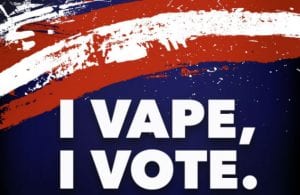
    The Vapor Technology Association (VTA) celebrated the political currency and success of vaper voters in critical 2024 battleground election states and districts during the recent U.S. elections. According to the trade group, vaper voters helped secure electoral victories for Conservative candidates up and down the ballot.

    VTA says its “I Vape I Vote” campaign activated over 360,000 low-propensity voters to support Conservative principles and candidates, including President-elect Donald Trump, in key battleground states and districts in Arizona, Michigan, Nevada, Ohio, Pennsylvania, Virginia and Wisconsin. 

    “Vaper voters showed up in droves to support Conservative candidates who will protect and preserve the rights of Americans to use flavored vaping products,” said VTA Executive Director Tony Abboud.

    “VTA’s I Vape I Vote campaign made clear that vaper voters had their voices heard at the ballot box and ensured that Conservative candidates would deliver full-throated endorsements of Americans’ right to use flavored vapes and, critically, use that support to establish a voter currency which propelled several Conservative candidates into office.

    “While we are proud to have engaged in the process with several of these Conservative candidates, we are now ready to see their campaign promises committed to action as they work with President-elect Trump and the relevant federal agencies to fix the broken regulatory process by implementing a streamlined regulatory process that ensures access to flavored vapes is protected and companies and distributors have transparent, rational and affordable rules of the road when it comes to this regulatory framework.”

  • School Makes Students Wear Vest While Smoking

    School Makes Students Wear Vest While Smoking

    Image: Seetwo

    A  high school in the Netherlands has banned smoking and vaping unless students have written permission from their parents and wear a yellow high-visibility vest while doing it, reports DutchNews.

    The measure is aimed at discouraging unhealthy habits and at involving parents in school policy.

    “It’s one of the things that used to be part of the parents’ responsibilities but are now being left to the school,” school board Chairman Hans van Beekum told De Telegraaf. “And the image of all those kids vaping in front of the school was horrible. We needed to do something,” he said.

    So far, only nine parents at the 1,300-pupil Lyceum aan Zee school in Den Helder said their children could vape or smoke during breaks. Some parents objected to the yellow vest and even made comparisons to the yellow Star of David that the Nazis required Jews to wear during the WWII occupation of the Netherlands.

    School Director Hielke ter Veld said the vests are simply meant to identify those who can smoke from the rest of the pupils.

    Ter Veld hopes the measure will also discourage smoking and vaping among students. “Most pupils won’t want to ask permission from their parents and wear the vest,” she said. “They will smoke less and that will hopefully become part of the school culture. If we only get a few pupils to stop smoking then it’s worth it.”

  • Tobacco Stocks Rally

    Tobacco Stocks Rally

    Image: Paul Tama

    Tobacco stocks rose in the wake of Donald Trump’s victory in the U.S. presidential election, reports The Wall Street Journal.  

    BAT stocks were up 4 percent this morning; its Reynolds American subsidiary was a large donor to the Make America Great Again action committee, which supported the former president’s bid for reelection. Reynolds has been pushing back against the Biden administration’s proposed menthol ban, which was delayed earlier this year. Under another Trump administration, it is likely that a menthol ban would be completely dismantled.

    BAT, Altria and Imperial Brands all have sizable U.S. menthol businesses as the products make up more than a third of the U.S. cigarette market by volume.

    Another Trump administration may also lead to a crackdown on illicit imports of disposable vapes, which primarily come from China. During his first term as president, Trump enthusiastically erected barriers to Chinese imports Such measures could boost some tobacco companies’ e-cigarette brands.

    Expectations that a Trump presidency will strengthen the dollar, however, could be troublesome for Philip Morris International as the multinational makes around 90 percent of sales in other, primarily emerging market, currencies. A possible increase in inflation could also harm tobacco stocks since they are heavily exposed to price-sensitive, low-income consumers.