Blog

  • Brazil Attacking its Own Farmers, Critics Say

    Brazil Attacking its Own Farmers, Critics Say

    The International Tobacco Growers’ Association (ITGA) criticized Brazil for sending an “anti-tobacco” delegation to COP11, pointing out the hypocrisy for the third-largest tobacco grower in the world. In contrast, it pointed to Poland, which reportedly defended its 30,000 growers who held protests in Warsaw ahead of the conference.

    “Farmers also highlighted the hypocrisy of reducing European production only to replace it with imports,” the ITGA wrote in its daily update. “In Geneva, Poland’s delegation reinforced these concerns with strong statements defending growers and calling for balanced policymaking.

    “In stark contrast, Brazil—where more than 133,000 farming families rely on tobacco—has sent one of the most aggressively anti-tobacco delegations, showing little regard for the livelihoods at stake in its own domestic sector.”

    Romeu Schneider, vice president of Afubra (the Tobacco Growers’ Association of Brazil), voiced his opposition to the Brazilian government’s tobacco policy. “Brazil should never have ratified the FCTC, as it compromises national sovereignty and threatens Brazil’s tobacco market, which is valued for its quality and volume and has promoted many social and environmental initiatives in rural communities,” he said. “Tobacco is economically and financially crucial for a developing country like Brazil, yet current policies risk ceding this market to other countries. These measures are deeply concerning and place Brazilian producers in a difficult position, prompting strong indignation from our side.”

  • Greece Utilizing Technology to Shield Minors

    Greece Utilizing Technology to Shield Minors

    Greece rolled out three new digital tools this week designed to strengthen enforcement of its bans on selling tobacco and alcohol to minors, following legislation passed in July 2025. The first two tools are registers: one for businesses hosting events with minors and the second, a national register for all tobacco and alcohol retailers. The third tool is a secure digital age-verification mechanism for both in-store and online sales, where buyers verify age via a mobile-scanned QR code, using technology adapted from Greece’s KidsWallet system.

    Under the stricter law, businesses selling or offering tobacco to minors face fines of €500–€10,000 and potential license suspension or permanent revocation for repeat violations. Individuals can face fines and up to three years in prison for offenses including selling tobacco to minors or using children to sell tobacco. Advertising restrictions on tobacco products—including vapes—also carry fines of €500–€10,000.

  • Shisha Sales Included in Offenses of Latest Taliban Floggings

    Shisha Sales Included in Offenses of Latest Taliban Floggings

    The Taliban carried out a new wave of public floggings across six provinces in Afghanistan over the past three days, including punishments tied to the sale of tobacco-related products such as shisha. According to multiple statements from the Taliban Supreme Court, 11 individuals in Kabul were publicly flogged on Monday (November 17) for trafficking and selling narcotic tablets, alcoholic beverages, and shisha. Each received 39 lashes and prison sentences of up to one year. Additional public floggings took place on charges ranging from “illicit relationships” to theft.

    A recent U.N. report documented 242 public floggings between July and September, reflecting a sharp rise in corporal punishment since the Taliban’s 2021 return to power. The enforcement actions highlight the Taliban’s tightening controls over all intoxicant-related products, which remain prohibited under their interpretation of Sharia law.

  • CAPHRA Releases White Paper on THR in Asia Pacific

    CAPHRA Releases White Paper on THR in Asia Pacific

    The Coalition of Asia Pacific Tobacco Harm Reduction Advocates (CAPHRA) unveiled a new white paper, Harm Reduction Denied in Asia Pacific, during the “Asia Day” event at Good Cop 2.0 in Geneva, coinciding with FCTC COP11. The paper examines inconsistencies in WHO’s tobacco control approach across the SEARO and WPRO regions, drawing on official WHO data such as the Global Report on Trends in Tobacco Use 2000–2030 and the Global Health Observatory. It calls for reform in the application of harm reduction under the FCTC, proposing evidence-based policy solutions that align with public health objectives while respecting human rights principles. Among its recommendations are regulation rather than prohibition of safer nicotine products, inclusion of consumers and independent scientists in policymaking, and greater transparency and accountability in FCTC processes.

    CAPHRA emphasizes that denying harm reduction perpetuates preventable disease, encourages illicit trade, and undermines trust in public health systems. The white paper urges WHO member states at COP11 to reaffirm Article 1(d) of the FCTC by recognizing harm reduction as a key pillar of tobacco control and to adopt pragmatic, science-driven policies that protect lives. The full report is available here.

  • Georgia Tobacco Tax Reform Protects Domestic Production

    Georgia Tobacco Tax Reform Protects Domestic Production

    Georgia’s excise tax will increase by 85 tetri ($0.31) per pack for imported cigarettes, reaching 2.75 GEL ($1.02) per 20-cigarette pack beginning January 1, 2026. Outlined in a draft law proposed by Georgian Dream MPs, taxes on locally produced cigarettes will be reduced to 1.30 GEL ($0.48) per 20-cigarette pack for the first 35 million packs annually, and 2.75 GEL thereafter. Also, the ad valorem component for local production drops from 30% of retail price to 15% for the first 35 million packs, and 20% for production exceeding that amount.

    The legislation aims to protect and promote local tobacco production, increase competitiveness, and stabilize market share while maintaining fiscal and public policy objectives. Officials highlight that the new structure is expected to create a healthier competitive environment, support domestic producers, and sustain budget revenues.

  • Cambodia Issues Strict Nicotine Ban in Tourism Sector

    Cambodia Issues Strict Nicotine Ban in Tourism Sector

    Cambodia’s Ministry of Tourism issued a stringent directive to all tourism service establishments, warning that, beginning today (November 20), businesses distributing, selling, storing, advertising, producing, or importing electronic smoking devices, vaping substances, and shisha will face penalties including written warnings, suspension, or revocation of tourism business licences.

    The warning applies to civil servants, contracted officials, and owners or managers of tourism-related businesses nationwide, prohibiting the import, distribution, sale, advertising, use, possession, production, or storage of these devices.

  • JTI No Longer Sponsoring The British Museum

    JTI No Longer Sponsoring The British Museum

    The British Museum told The Guardian that it did not renew its 15-year sponsorship deal with Japan Tobacco International after government officials raised concerns that the partnership could breach the WHO Framework Convention on Tobacco Control, which prohibits promotion of smoking products. The deal expired in September and JTI’s name was removed from the museum’s website.

    The move follows years of criticism from campaigners, including a 2016 open letter signed by 1,000 people calling the sponsorship “morally unacceptable.” A report by the University of Bath’s Tobacco Control Research Group described the deal as part of JTI’s lobbying strategy, which still sponsors the Royal Academy of Arts and the London Philharmonic Orchestra. Critics, including Labour MP Dr Simon Opher, said cultural institutions should not “legitimize an industry that profits from harm.”

    The museum said it was grateful for JTI’s support, noting sponsorship helps secure financial stability and accessibility. However, the decision underscores ongoing controversies over corporate funding in UK cultural institutions, with the museum’s £50m deal with BP in 2023 still drawing protests from climate activists and scrutiny from the sector’s new code of ethics. Members of the Museums Association, an industry body, voted last month to adopt a code of ethics that expects museums to transition away from sponsorship by “organizations involved with environmental harm (including fossil fuels), human rights abuses, and other sponsorship that does not align with the values of the museum.”

  • Opinion: WHO Wants 9x More Money to Control Tobacco. Don’t Pay!

    Opinion: WHO Wants 9x More Money to Control Tobacco. Don’t Pay!

    In an opinion piece published today (November 19) by The Kingston Whig Standard in Canada titled The WHO Wants Nine Times More Money to Control Tobacco. Don’t Pay!, economics professor Ian Irvine criticizes the World Health Organization’s COP11 for pursuing what he calls “nicotine authoritarianism” and seeking an 800% budget increase to eliminate nicotine use.

    “The WHO’s tobacco budget is just over $1 billion, much of it provided by a normally wonderful philanthropist, Michael Bloomberg,” Irvine writes. “But the WHO has been advertising it really needs $9 billion to do its job properly: eliminate nicotine use.

    “The WHO does not need this money. Regarding nicotine, it is a reactionary organization. It refuses to recognize the benefits of ‘new generation products’: e-cigarettes, oral pouches, and heated tobacco products.”

    The piece contends that WHO and many advocacy groups wrongly demonize NGPs, treating them as dangerous as cigarettes, while smoking rates are already plummeting in developed countries. Irvine urges harm-reduction strategies instead of prohibition,

    Irvine, who has had research funded by Global Action to End Smoking, concludes that empowering adults to choose reduced-risk products would accelerate declines in smoking, save lives, and expose the WHO’s restrictive approach as more about sustaining bureaucracy than advancing public health.

    “The challenge for scientists is twofold: speaking up for harm reduction at COP11, even at the risk of verbal bludgeoning by the sinecured interest groups,” Irvine wrote, “and continuing the struggle domestically against a dominant culture policed by self-appointed moral guardians whose harassment of all forms of nicotine serves primarily to delay more smokers’ transition to low-toxicity products.

    “As smoking declines dramatically … we could start distributing pink slips at the WHO.”

  • SKE Shows Continued Growth in Korea

    SKE Shows Continued Growth in Korea

    SKE Korea told The Manila Times that it is replicating the “strong trajectory” the company achieved as it continues to grow in the UK and Europe. The company said it remains focused on building a long-term ecosystem in South Korea that supports channel partners through consistent supply capabilities, high-performing products, and strong sell-through potential.

    SKE partnered with 7-Eleven Korea, and over the last six months has placed its products in more than 5,700 stores nationwide—about half of the chain’s outlets—demonstrating rising consumer demand and brand recognition. Beyond convenience stores, SKE has also strengthened its presence in specialty vape channels via collaborations with OG9 and online with Most Vape.

    The company said flagship products such as the SKE Crystal Bar TB1000 continue to resonate with Korean shoppers, while the SKE Cloud Zero introduces industry-first features like Vaporless Mode, a dual-mode system, and a patented Mobius Strip display, appealing to Korea’s trend-driven market.

  • Cyprus Kiosk Owners Ask for Tobacco Exemption

    Cyprus Kiosk Owners Ask for Tobacco Exemption

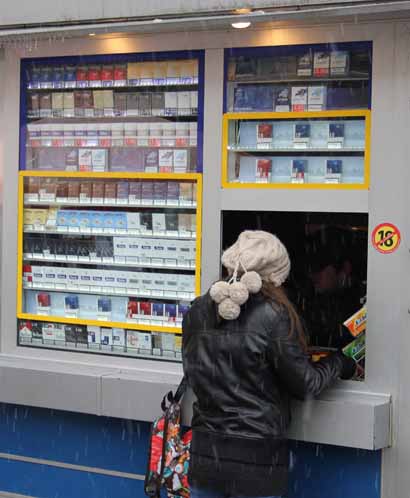
    Kiosk owners in Cyprus urged the finance ministry to seek an exemption from the EU’s planned tobacco tax hike, warning the measure would devastate small businesses and fuel smuggling across the island’s divide. Under the directive due in January 2028, cigarette prices would rise from €4.70 to €7 per pack, rolling tobacco from €7 to €13, and, for the first time, e-cigarettes, heated tobacco, and nicotine pouches would be taxed, effectively doubling their prices.

    The kiosk owners’ association, Sykade, told parliament’s commerce committee that half of kiosk revenues come from tobacco sales. It estimates 126 million cigarettes and 162 tons of tobacco are already smuggled annually from the north, costing the state at least €50 million in lost tax revenue. With 600 kiosks closed in the past decade, Sykade warned further hikes would mean closures, unemployment, and declining state income.

    Cyprus has one of Europe’s highest smoking rates at 34%, compared to the EU’s goal of reducing prevalence below 5% by 2040.