Blog

  • Modern Oral Sales Surge 651% in Turning Point’s Strong Q2 Report

    Modern Oral Sales Surge 651% in Turning Point’s Strong Q2 Report

    Turning Point Brands, Inc. reported robust second-quarter results, with Modern Oral net sales skyrocketing 651% Y-Y to $30.1 million, now making up 26% of total revenue. Total net sales rose 25.1% to $116.6 million, while net income increased 11.3% to $14.5 million. Adjusted EBITDA grew 14.8% to $30.5 million, and adjusted net income hit $18 million.

    The Stoker’s segment, boosted by Modern Oral, posted a 62.9% sales increase, while Zig-Zag declined 6.9% due to product mix shifts. Despite that, the company increased its full-year 2025 Modern Oral sales forecast to $100–110 million, up from $80–95 million.

    CEO Graham Purdy credited the strong results to aggressive growth in Modern Oral and resilience in legacy brands. “Our consolidated second quarter results were better than expected,” he said.

    TPB ended the quarter with $190.1 million in net debt and $176.4 million in liquidity. The company also raised its 2025 Adjusted EBITDA guidance to $110–114 million.

    A replay of the earnings call can be found at turningpointbrands.com.

    The company also declared a regular quarterly dividend of $0.075 per common share. The dividend is payable October 10, to shareholders of record on the close of business on September 19.

  • Universal Reports Solid Start to FY26 Driven by Improved Tobacco Mix

    Universal Reports Solid Start to FY26 Driven by Improved Tobacco Mix

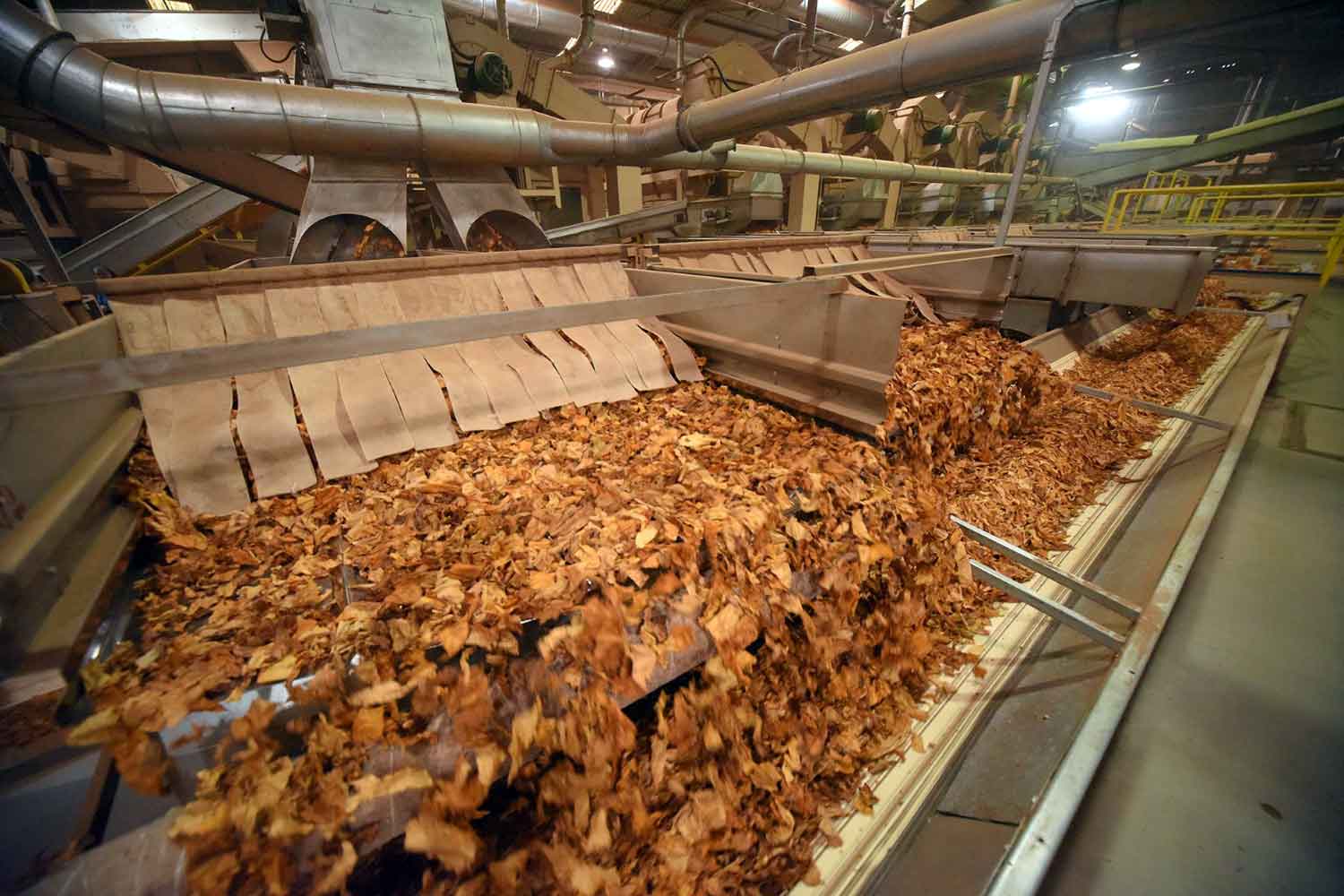
    Universal Corporation announced solid first-quarter results for fiscal 2026, highlighting gains in its Tobacco Operations segment and continued interest in its Ingredients business. Despite a modest revenue dip of $3 million to $594 million, operating income rose by $17 million to $34 million, primarily due to a favorable product mix in Asia within the Tobacco segment. While tobacco sales volumes dropped 8%, sales prices rose 2%, reflecting stronger demand and better product quality.

    CEO Preston D. Wigner emphasized the return to more typical global tobacco buying patterns, with low uncommitted inventory (11%) and larger flue-cured and burley crops underway. “Customer demand remains firm following years of short supply,” he said.

    In the Ingredients segment, sales volumes rose, but operating income was affected by a weaker product mix, tariff-related demand concerns, and higher fixed costs tied to an expanded facility. Still, Universal noted sustained customer interest in its new value-added ingredients offerings.

    The company ended the quarter with $178.4 million in cash, $355 million in available credit, and net debt down $47.1 million quarter-over-quarter.

    The company’s board of directors also declared a quarterly dividend of $0.82 per share on the shares of the company, payable November 3, to shareholders of record at the close of business on October 13.

  • Pyxus Reports Sluggish Q1, But Reaffirms Full-Year Guidance

    Pyxus Reports Sluggish Q1, But Reaffirms Full-Year Guidance

    Pyxus International announced fiscal Q1 2026 results, reporting revenue of $508.8 million, down from $634.9 million a year earlier, primarily due to accelerated shipments into Q4 FY2025. Despite the decline, CEO Pieter Sikkel said results were in line with expectations and aligned with the company’s “normalized cycle” of buying early and selling later in the fiscal year.

    Operating income was $21 million, down from $40.5 million Y-Y, while net loss reached $15.8 million versus a $4.6 million profit last year. Adjusted EBITDA dropped to $29.5 million, reflecting lower sales volumes but was supported by strong global demand and improved pricing.

    The company noted a tobacco inventory of $1.1 billion, reflecting larger crop availability in Africa and South America. Uncommitted inventory remained low at 2.4% of processed stock, signaling sustained demand.

    Despite the early numbers, Pyxus reaffirmed its FY2026 guidance of $2.3–$2.5 billion in revenue and $205–$235 million in adjusted EBITDA.

  • KT&G Posts Strong Q2 Results, Raises Dividend Amid Global Growth

    KT&G Posts Strong Q2 Results, Raises Dividend Amid Global Growth

    KT&G reported strong second-quarter earnings with revenue up 8.7% Y-Y to KRW 1.55 trillion ($1.1 billion) and operating profit rising 8.6% to KRW 349.8 billion ($252 million). The gains mark the third consecutive quarter of growth and a new milestone, with first-half revenue exceeding KRW 3 trillion ($2.2 billion) for the first time.

    Driven by global demand for its tobacco products, especially in Asia and Latin America, KT&G also saw strong results in its next-generation products and health food segments. Global cigarette sales rose 9.1%, reaching 16.7 billion sticks.

    The company raised its interim dividend to KRW 1,400 ($1.008) per share and announced a KRW 300 billion ($216 million) share buyback and cancellation starting August 8, part of its ongoing KRW 3.7 trillion ($2.7 billion) Value Up plan to boost shareholder returns.

    KT&G reaffirmed its goal of achieving double-digit profit growth for 2025.

  • 22nd Century to Release Financials Aug. 14

    22nd Century to Release Financials Aug. 14

    22nd Century Group, Inc. announced today (August 7) that it will host a webcast on Thursday, August 14, at 8 a.m. ET to discuss its 2025 second quarter results, which are to be reported in a press release two hours earlier.

    During the webcast, Larry Firestone, chairman and CEO, and Dan Otto, CFO, will review financial results, discuss progress made in the recent months, and update plans for the 2025 year.

    The live and archived webcast will be accessible on the events web page in the Investor Relations section of the company’s website, at https://ir.xxiicentury.com/events.

  • Kenya’s Health Secretary Pushes to Regulate Miraa and Shisha

    Kenya’s Health Secretary Pushes to Regulate Miraa and Shisha

    Kenyan Health Cabinet Secretary Aden Duale told the Senate that the country currently lacks laws regulating the use of miraa and shisha, and called on Parliament to enact necessary legislation to control their consumption. Appearing before the Senate Delegated Legislation Committee during deliberations on the Graphic Health Warnings for Tobacco Products, Duale said the Tobacco Control Bill, sponsored by Nominated Senator Catherine Mumma, offers a vital opportunity to introduce such controls.

    “The Ministry of Health fully supports the Bill,” Duale said. “We have submitted our proposed amendments and urge senators to pass it.” He also revealed that “powerful individuals” had tried to pressure the ministry into approving harmful tobacco products but insisted the entire government must safeguard public health.

    Mombasa Senator Mohammed Faki raised the alarm over the lack of regulations for miraa, muguka, and shisha, calling them as dangerous as tobacco. He warned that the tobacco industry would likely attempt to influence lawmakers to block the Bill.

  • Seatca Urges UN to Ban Plastic Cigarette Filters

    Seatca Urges UN to Ban Plastic Cigarette Filters

    The Southeast Asia Tobacco Control Alliance (Seatca) is urging the United Nations to impose a global ban on plastic-based cigarette filters, as final negotiations for a global plastic pollution treaty take place in Geneva this week. Seatca warned that 460 billion cigarette butts are discarded annually in ASEAN countries alone, contributing to a global total of 4.5 trillion. “The filters, made of cellulose acetate, degrade slowly, releasing toxic microplastics, nicotine, and heavy metals into ecosystems,” the organization said.

    Calling cigarette filters “a health fraud and an environmental hazard,” Seatca demanded the treaty enforce the polluter-pays principle, reject industry lobbying, and require mandatory cleanup systems for tobacco waste. They also criticized so-called “eco-filters” and “green butts” as greenwashing tactics, insisting that no sustainable alternatives exist for cigarette filters and calling for a complete ban on all types.

    Seatca estimates that ASEAN countries currently spend $10 billion annually to clean up cigarette filter waste.

  • VOOPOO Unveils “Futuristic” ARGUS Matrix

    VOOPOO Unveils “Futuristic” ARGUS Matrix

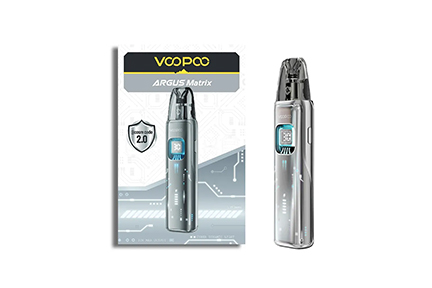
    VOOPOO launched what it calls the company’s most advanced pod device yet: the ARGUS Matrix, “a bold leap into the future of vape design and performance.”

    VOOPOO says the ARGUS Matrix features the “world’s first curved full-screen display on a pod system, creating a cyber-futuristic visual experience that’s as immersive as it is stylish,” using enhanced IML film technology and dynamic lighting that mimics circuit boards.

    According to the company, the Matrix delivers substance through iCOSM CODE 2.0 technology in the ARGUS Top Fill Cartridge V2, “ensuring leak-proof usage and up to 30 days of consistent flavor delivery. With a 100 mL e-liquid endurance capacity, it’s designed for convenience and longevity.” Vapers can fine-tune their experience with adjustable wattage (up to 30 W), a 1350 mAh battery, and a three-level precision airflow system that caters to both MTL and RDL users.

    Fully compatible with the ARGUS Pod Family, the Matrix offers seamless cartridge switching, blending style with versatility.

  • NSW Introduces Harshest-Ever Crackdown on Illicits

    NSW Introduces Harshest-Ever Crackdown on Illicits

    The New South Wales government today (August 6) introduced sweeping new legislation to Parliament aimed at tackling the illegal tobacco and vaping trade, including some of the toughest penalties in Australia. Under the proposed laws, selling tobacco without a license could result in fines of up to A$660,000 ($429,000) for individuals and A$880,000 ($572,000) for corporations.

    Other key measures include:

    • New offenses for commercial possession or sale of illicit tobacco, carrying maximum penalties of over A$1.5 million ($975,000) and seven years’ imprisonment.
    • Closure orders for up to 90 days (short-term) or 12 months (long-term) for premises violating the laws.
    • Offenses for breaching closure orders, including entering or operating from sealed premises.
    • Lease termination powers for landlords and proposed penalties for those knowingly leasing to illegal sellers.
    • New laws against impersonating licensed sellers, resisting product seizure, or attempting to reclaim confiscated goods.

    The crackdown follows the recent rollout of a tobacco licensing scheme, designed to improve regulatory oversight and reduce black market activity.

  • Ireland’s Crackdown on Vape Sales to Minors Sees Few Consequences

    Ireland’s Crackdown on Vape Sales to Minors Sees Few Consequences

    Nearly 15% of retailers across Ireland have been caught violating laws banning the sale of vapes to children, with only a fraction facing legal consequences, according to new figures from the Health Service Executive (HSE). Enacted in December 2023, the law makes it illegal to sell nicotine-inhaling products to those under 18 years old. Since then, the HSE’s National Environmental Health Service has carried out 699 test-purchase inspections and found 102 to be non-compliant.

    Of the 52 cases of non-compliance recorded in 2024, just 19 resulted in court proceedings to date. Only 12 led to convictions and fines, while six were resolved under the Probation Act, and one was dismissed.

    Social Democrats TD Aidan Farrelly said the low number of prosecutions undermines the law’s credibility: “A law is only as strong as its enforceability. We have to make sure retailers are complying.”