
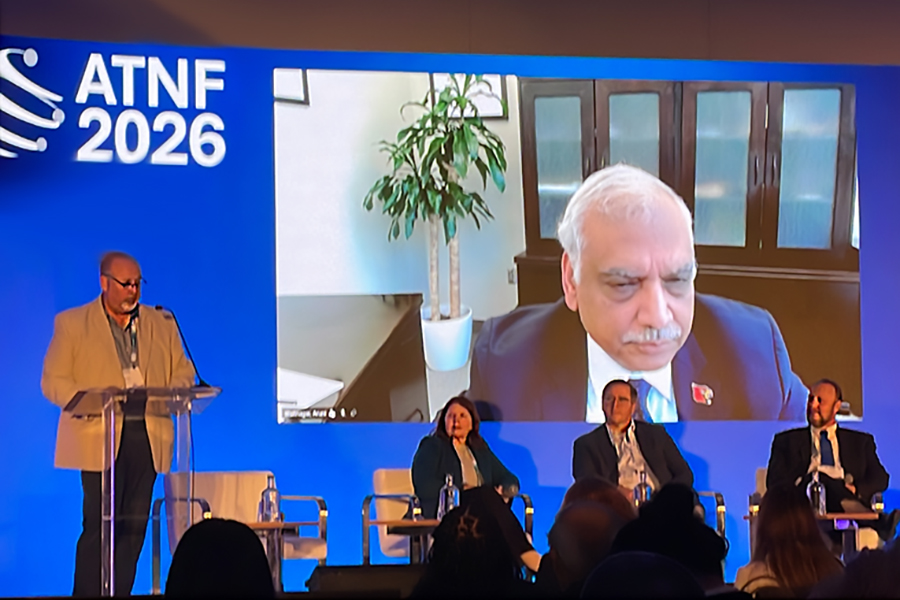
At the American Tobacco and Nicotine Forum (ATNF), a panel titled “Streamlining Product Reviews Through Smokefree Product Standards” brought together regulators, consultants and scientists to examine how standardized frameworks could improve the efficiency of FDA product reviews. Moderated by Dean Cirotta, president of EAS Consulting Group, the discussion centered on whether clearer product standards could reduce uncertainty in the PMTA process, shorten timelines, and create more predictable pathways for bringing reduced-risk products to market.
Andrew Joyce, the co-founder and president of Sanova, emphasized the need for earlier engagement with regulators and clearer guidance on expectations, arguing that companies are often navigating an unclear “playing field” when designing studies and preparing submissions. Dr. Aruni Bhatnagar, the director of the Christina Lee Brown Envirome Institute at the University of Louisville, framed the issue more broadly, noting that regulation must account for product design, user behavior, and market dynamics, and that product standards could serve as “guardrails” to define acceptable risk thresholds. Rachael Schmidt, a senior consultant for ALINC, highlighted the political and practical challenges, pointing out that PMTA approvals can take five to eight years and span multiple administrations, creating uncertainty that discourages innovation and investment. She stressed the need for interim solutions, such as consensus standards, to avoid prolonged delays that can keep compliant products off the market.
Dr. Todd Cecil, deputy director of the Office of Science at the FDA’s Center for Tobacco Products, provided detailed views into the agency’s perspective, underscoring both the importance and complexity of establishing formal product standards under Section 907, which gives the FDA authority to do so. He explained that the process is resource-intensive, requiring the agency to review and respond to thousands of public comments, and can take years to finalize, but once implemented, such standards would become non-negotiable benchmarks for applications. Cecil made clear that while FDA supports faster approvals, the agency has yet to receive a submission that is complete and ready for approval at the outset, reinforcing the need for higher-quality applications. He also encouraged greater collaboration with industry groups like CORESTA and stressed that better communication from manufacturers—who understand their products best—could improve review efficiency. While acknowledging industry frustration, Cecil noted that FDA leadership is committed to advancing improvements and that draft standards could provide valuable interim guidance.
A key tension throughout the discussion was the balance between innovation and regulation. Panelists agreed that while product standards could streamline approvals, they also introduce rigidity that may slow innovation or require costly adjustments. Cecil addressed this directly, warning against trying to “solve everything at once” and suggesting incremental progress may be more realistic. Schmidt added that without clear pathways to modify products post-approval, companies risk being locked out of the market for years if standards shift. Overall, the panel highlighted cautious optimism that clearer standards and improved dialogue between FDA and industry could reduce bottlenecks, but also underscored that meaningful change will require time, coordination, and sustained effort across stakeholders.