Tag: ASEAN

  • Philippine Authorities Pushing for Tougher Penalties in Illicit Tobacco Fight

    Philippine Authorities Pushing for Tougher Penalties in Illicit Tobacco Fight

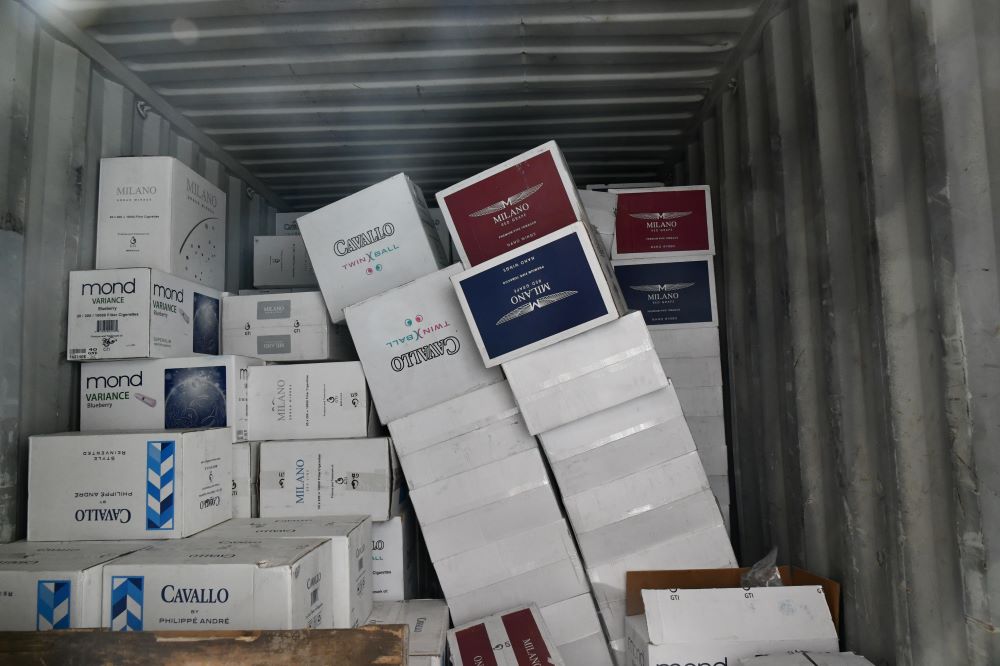
    Philippine lawmakers and prosecutors are calling for stronger prosecution efforts to combat the country’s growing illicit tobacco trade, arguing that product seizures alone have failed to deter organized criminal networks. Speaking at the Third International Tobacco Summit, House Public Order and Safety Committee Chair Rolando Valeriano urged law enforcement to prioritize securing convictions, while noting that illicit trade remains highly profitable if offenders are not held accountable. The push comes as a recent EU-ASEAN Business Council and Euromonitor International study estimated the Philippines lost about ₱141 billion ($2.3 billion) in tax revenue over the past two years due to illicit tobacco products, with illegal products accounting for roughly one-quarter of cigarette sales and more than 80% of vape sales.

    Officials also highlighted proposals for an Anti-Illicit Trade law that would strengthen prosecutions, improve interagency coordination, and introduce track-and-trace technology, while prosecutors acknowledged that many existing cases require additional evidence before they can proceed to trial.

  • CAPHRA Calls New Bloomberg Program ‘Philanthropic Colonialism’

    CAPHRA Calls New Bloomberg Program ‘Philanthropic Colonialism’

    The Coalition of Asia Pacific Tobacco Harm Reduction Advocates criticized a new Bloomberg Philanthropies-funded tobacco cessation grant program administered by Vital Strategies, arguing that it risks undermining national sovereignty over public health policy in nine priority countries across Asia-Pacific and other regions. CAPHRA described the initiative as an example of “philanthropic colonialism,” claiming that donor-funded tobacco control frameworks can shape regulatory policies before meaningful domestic debate occurs, discourage consideration of tobacco harm reduction products, and drive consumers toward illicit markets while prolonging cigarette use.

    CAPHRA executive coordinator Nancy Loucas called on governments to disclose foreign-funded tobacco control partnerships, maintain regulatory independence, and evaluate the full range of evidence — including safer nicotine alternatives — rather than relying solely on donor-backed approaches.

  • ASEAN Countries Feeling Illicit Cigarette Pressures

    ASEAN Countries Feeling Illicit Cigarette Pressures

    A new report by the EU-ASEAN Business Council estimates that illicit tobacco products accounted for 23.6% of tobacco consumption across six major ASEAN markets in 2025, with the share projected to rise to 27.8% by 2028. The report estimates illicit cigarettes reached 85 billion sticks in 2025, resulting in $6.3 billion in lost government revenue across the region. In Thailand, illicit cigarettes represented 23.6% of the market in 2025, up from 22.6% a year earlier, contributing to an estimated $1.4 billion (45 billion baht) in lost tax revenue over 2024-2025. Most illicit products are believed to be imported from neighboring countries or are counterfeit products entering through land borders.

    The report identifies price disparities between legal and illicit products, cross-border smuggling, and growing online sales through e-commerce and social media as key factors contributing to the illicit market. It also notes that while Thailand uses QR code-enabled tax stamps, track-and-trace systems remain uneven across the region, creating enforcement gaps. The report recommends strengthening border controls, expanding track-and-trace systems, improving international cooperation, and enhancing enforcement to curb illicit trade while supporting public health and protecting government revenues.

  • Philippines Urged to Lead ASEAN Effort Against Growing Illicit Tobacco Trade

    Philippines Urged to Lead ASEAN Effort Against Growing Illicit Tobacco Trade

    The Philippines has been urged to spearhead a coordinated ASEAN response to illicit tobacco trade as it assumes the bloc’s chairmanship, with government and industry representatives warning that tobacco smuggling has evolved into a sophisticated regional criminal enterprise. Speaking at the Third International Tobacco Summit in Pasig City, participants called for harmonized enforcement and regulatory strategies across Southeast Asia to prevent transnational syndicates from exploiting gaps between national markets.

    According to Euromonitor International, illicit tobacco in the ASEAN-6 markets—comprising the Philippines, Indonesia, Malaysia, Vietnam, Thailand and Singapore—resulted in an estimated $12.6 billion in lost government revenue over the past two years, with illicit volumes projected to grow from 145 billion sticks in 2025 to 170 billion sticks by 2028. Domestically, the Philippine Tobacco Institute estimated the country’s illicit tobacco market at P141 billion ($2.3 billion) and called for stronger regional collaboration to combat increasingly sophisticated smuggling networks. Industry representatives also advocated greater use of artificial intelligence tools to improve cargo screening and identify suspected tobacco smuggling operations. Japan Tobacco International regional anti-illicit trade director Valentin Dinca said the Philippines ranks among the strongest markets globally in combating illegal tobacco trade, while noting further opportunities to enhance enforcement capabilities and reduce illicit market activity.

  • Philippines Hosting Third International Tobacco Summit

    Philippines Hosting Third International Tobacco Summit

    The Philippines will convene the Third International Tobacco Summit on June 18 in Pasig City with the stated goal of strengthening coordination against the illicit tobacco and nicotine trade. Citing an EU–ASEAN Business Council and Euromonitor study, officials estimate the country lost about ₱141 billion ($2.4 billion) in revenue from illicit tobacco between 2024 and 2025, with 85.6% of e-vapes sold in the Philippines classified as illegal.

    The summit will focus on enforcement gaps, taxation issues, regulatory coordination, and regional cooperation among ASEAN states, alongside a planned joint commitment by government agencies to intensify action against illicit operators. The Department of Agriculture and the National Tobacco Administration, along with the Bureau of Customs, Philippine National Police, Department of Justice, and other agencies, are expected to participate.

  • PM India Calls to Disrupt Illicit Tobacco Ecosystem

    PM India Calls to Disrupt Illicit Tobacco Ecosystem

    A new industry update from the EU-ASEAN Business Council highlights the continued scale of illicit tobacco trade in India and across Southeast Asia, underscoring growing concerns over smuggling, counterfeit products, and unregulated nicotine markets. According to the Tobacco Institute of India (TII), illicit cigarettes account for nearly one-quarter of India’s domestic cigarette market, resulting in estimated annual revenue losses of around Rs. 23,000 crore ($2.4 billion). The report coincides with World Anti–Counterfeiting Day remarks from Philip Morris India, which reiterated calls for stronger enforcement and industry collaboration to combat illegal tobacco flows.

    Broader regional data from EU-ABC and Euromonitor International show the illicit tobacco market across ASEAN-6 generated an estimated $12.6 billion over 2024–2025, with illicit cigarette volumes rising 14% and illicit e-vape sales increasing 24% in the past year. Additional intelligence cited in the update points to a rapidly expanding global illicit nicotine ecosystem, including a multi-billion-dollar illegal e-cigarette market, alongside continued enforcement actions in India such as large-scale seizures of prohibited vaping devices and cigarette shipments. PM India said the findings reinforce the need for stronger track-and-trace systems, cross-border enforcement, and coordinated policy responses to curb the growing black market.

  • PMI Warns Middle East Conflict Will Spur Illicit Trade in Asia

    PMI Warns Middle East Conflict Will Spur Illicit Trade in Asia

    Philip Morris International warned that the continuing conflict in the Middle East could disrupt supply chains and drive a surge in illicit cigarette trade across Southeast Asia. The company said past disruptions, such as during the COVID-19 pandemic, led to sharp increases in illegal market share, with illicit trade in the Philippines rising from 6% to 17%. PMI estimates governments in the ASEAN region are already losing around $4 billion annually in cigarette excise revenue, with an additional $2 billion lost from illegal vaping products.

    PMI called for stronger regional coordination to address the issue, including real-time sharing of customs data among ASEAN countries to better track illicit flows. The company said supply constraints and regulatory gaps create opportunities for illegal operators, and urged policymakers to adopt more unified enforcement strategies as the Philippines chairs ASEAN this year.

  • Philippine Health Groups Want Full Tobacco, Vape Ban

    Philippine Health Groups Want Full Tobacco, Vape Ban

    Public health groups in the Philippines are urging the government to impose a total ban on e-cigarettes, heated tobacco products (HTPs), and other nicotine delivery systems, citing their health risks and rising youth uptake. The renewed push follows Myanmar becoming the eighth ASEAN country to enforce a vape ban, while Philippine lawmakers continue to debate tax rates for tobacco and vape products. Data show that around 14% of Filipino youth and 2% of adults use e-cigarettes.

    HealthJustice board member Dr. Jaime Galvez Tan said a comprehensive ban would offer the strongest public health protection, ensure regulatory clarity, and complement calls for higher, uniform tobacco taxes. Dr. Ulysses Dorotheo of SEATCA noted that a total ban would also help address tax administration challenges, curb illicit trade, and align with the Philippines’ obligations under the WHO Framework Convention on Tobacco Control.

  • Counterfeit Tobacco Makes up 50% of Cambodian Market

    Counterfeit Tobacco Makes up 50% of Cambodian Market

    Tobacco industry experts in Cambodia warn that the presence of illicit products in the market are increasing at “an alarming pace,” climbing close to 50% of the market, closing in on neighboring Malaysia’s 60% in the Asean region. The scale of the problem is measured through discarded cigarette pack surveys, which reveal a growing trend of untaxed and unregulated products.

    Representatives say that the government is losing more than $38 million annually in tax revenue, noting that the true impact is even greater as the legal industry’s growth is stifled. Authorities destroyed 70 tons of counterfeit cigarettes last year, seizing 23 types of illegal products from a factory inside the Kingdom.

  • ASEAN Could Lose $11B to Illicit Tobacco Trade by 2028

    ASEAN Could Lose $11B to Illicit Tobacco Trade by 2028

    A policy brief by the Center for Market Education (CME) warns that Southeast Asian governments may lose more than $11 billion to illicit tobacco trade by 2028, averaging $3.7 billion annually.

    Key national losses include:

    • Malaysia: $770 million/year, nearly matching projected petrol subsidy savings.
    • Philippines: $440 million/year, exceeding its $370 million disaster preparedness fund.
    • Thailand: $560 million/year, with illicit products making up 28% of the market.
    • Indonesia: $5 billion lost across three years, with illicit trade above 10% of the market.

    CME notes these figures are conservative due to underreporting and uneven enforcement. CEO Dr. Carmelo Ferlito called for stronger cross-border collaboration, policy alignment, and transparency to reclaim lost revenue. Hayley van Loon, CEO of Crime Stoppers International, highlighted the link between illicit tobacco and organized crime, including narcotics, human trafficking, and counterfeit goods.