Tag: growers

  • Brazil Attacking its Own Farmers, Critics Say

    Brazil Attacking its Own Farmers, Critics Say

    The International Tobacco Growers’ Association (ITGA) criticized Brazil for sending an “anti-tobacco” delegation to COP11, pointing out the hypocrisy for the third-largest tobacco grower in the world. In contrast, it pointed to Poland, which reportedly defended its 30,000 growers who held protests in Warsaw ahead of the conference.

    “Farmers also highlighted the hypocrisy of reducing European production only to replace it with imports,” the ITGA wrote in its daily update. “In Geneva, Poland’s delegation reinforced these concerns with strong statements defending growers and calling for balanced policymaking.

    “In stark contrast, Brazil—where more than 133,000 farming families rely on tobacco—has sent one of the most aggressively anti-tobacco delegations, showing little regard for the livelihoods at stake in its own domestic sector.”

    Romeu Schneider, vice president of Afubra (the Tobacco Growers’ Association of Brazil), voiced his opposition to the Brazilian government’s tobacco policy. “Brazil should never have ratified the FCTC, as it compromises national sovereignty and threatens Brazil’s tobacco market, which is valued for its quality and volume and has promoted many social and environmental initiatives in rural communities,” he said. “Tobacco is economically and financially crucial for a developing country like Brazil, yet current policies risk ceding this market to other countries. These measures are deeply concerning and place Brazilian producers in a difficult position, prompting strong indignation from our side.”
  • Pakistan’s Tobacco Farmers Say Delayed Quotas Spark $23M Loss

    Pakistan’s Tobacco Farmers Say Delayed Quotas Spark $23M Loss

    Tobacco growers in Pakistan claim delayed quota announcements and reduced allocations have triggered overproduction, a price crash, and losses exceeding Rs6.56 billion ($23 million). According to the Dawn, the government normally sets quotas by October, but this year’s lower quota was delayed until December, forcing farmers to sell surplus tobacco at the minimum indicative price (MIP) of Rs548 ($1.92) per kg—far below the market average of Rs720 ($2.52). Growers accuse multinational and local companies of exploiting the situation by purchasing surplus cheaply.

    According to the Dawn, industry figures warn that farmers are being squeezed between rising production costs and falling incomes, with many unable to recover expenses. According to the Tobacco Growers Association, companies have failed to meet quota commitments, while export figures tell a different story—Virginia tobacco exports jumped 129% to 48 million kilograms in 2024-25, even as domestic quotas were cut, the newspaper said. Farmers claim losses of up to Rs3 million ($10,500) per hectare under current pricing.

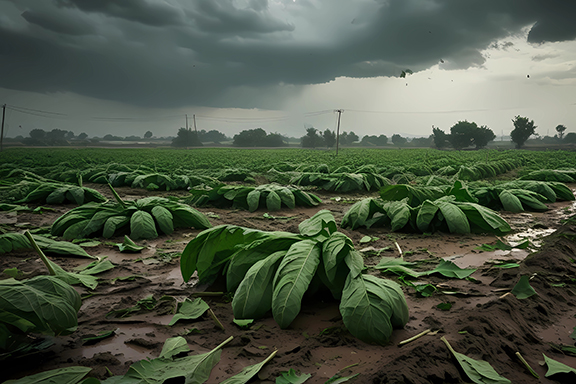
    The downturn threatens broader economic impacts, including reduced government revenue, falling exports, and job losses in tobacco-producing regions. Growers also point to climate-related crop damage this year, for which they have received no compensation. The National Assembly’s standing committee on tobacco is set to meet in Islamabad on September 23 to discuss possible relief measures, though farmers remain skeptical about immediate action.

  • ITGA Meeting Focuses on Sustainability, Eyes COP11

    ITGA Meeting Focuses on Sustainability, Eyes COP11

    The International Tobacco Growers’ Association (ITGA) held its Annual General Meeting (AGM) last week, with discussions covering market trends, regulation, and sustainability. Growers expressed concern over oversupply pressures and shrinking profitability, while new analysis from Euromonitor International suggested global leaf tobacco demand will remain stable in the medium term. ITGA stressed that advocacy must start with farmers’ lived experiences, which provide credibility and balance in regulatory debates.

    Looking ahead to COP11, ITGA warned of insufficient agricultural expertise in global policymaking and vowed to press for more inclusive dialogue. The AGM also reaffirmed its commitment to securing a living income for farmers, with ITGA President José Aranda cautioning that ignoring this issue could threaten entire markets.