Tag: José Javier Aranda

  • ITGA Elects New President at Annual Meeting

    ITGA Elects New President at Annual Meeting

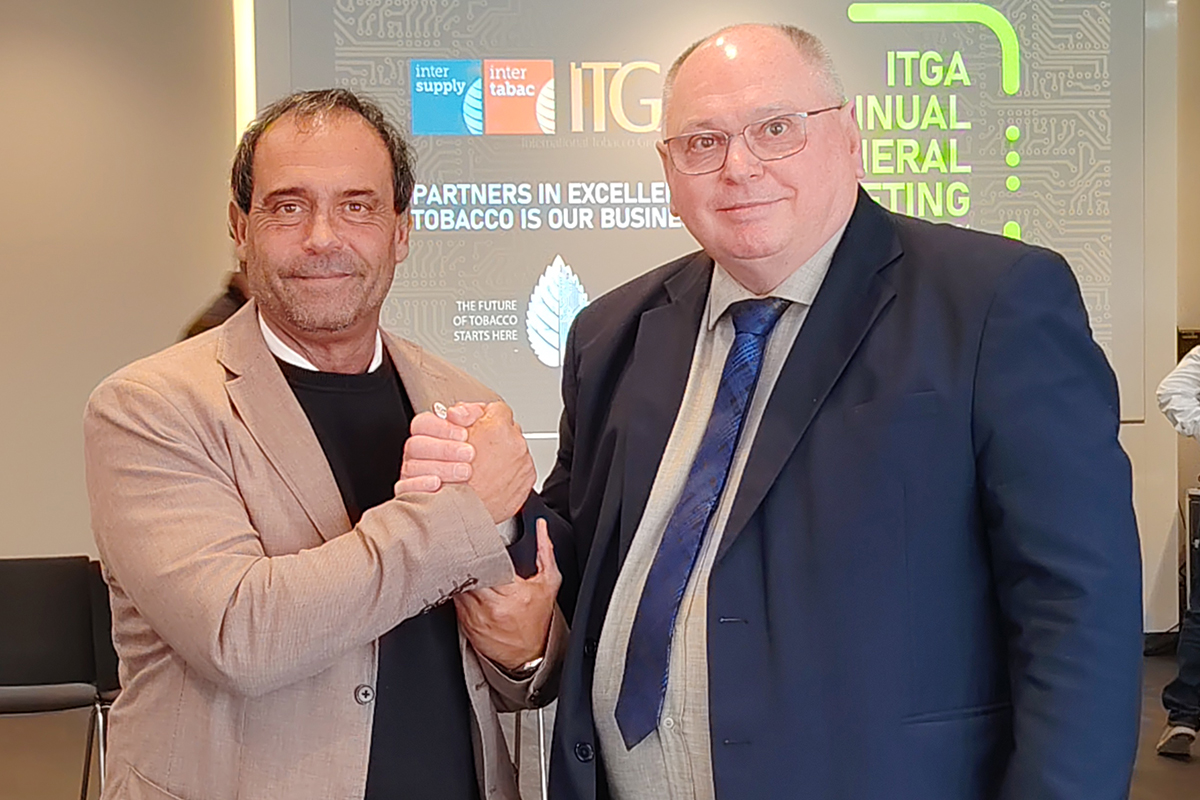
    The International Tobacco Growers’ Association (ITGA) concluded its 2026 Annual General Meeting at Messe Dortmund, Germany, during InterTabac, bringing together representatives of tobacco growers and grower organizations from major producing regions. The meeting marked a leadership transition, with Marcílio Drescher, president of Afubra in Brazil, elected ITGA president, succeeding José Javier Aranda. Members recognized Aranda’s four-year presidency and his work on advocacy, regional coordination, and engagement with international regulatory processes.

    Discussions at the meeting focused on global leaf production and market developments, grower economic sustainability and living income, regulatory developments, traceability, and environmental stewardship, changing nicotine-consumption trends, and regional advocacy coordination. ITGA said its work during 2026 included stronger member and partner engagement, expanded regional coordination, cooperation with InterTabac and InterSupply, an Americas Regional Meeting, continued regional activity in Africa, and living-income research involving more than 700 growers.

    Drescher said his priorities for the next mandate would include strengthening growers’ representation in international discussions, advancing understanding of growers’ economic realities and supporting the long-term viability of tobacco-growing communities.

  • ITGA Demands Inclusion Ahead of WHO COP11

    ITGA Demands Inclusion Ahead of WHO COP11

    On World Tobacco Growers’ Day, global tobacco farmers raised concerns over their continued exclusion from international policymaking, calling for transparency and inclusion ahead of next month’s WHO Framework Convention on Tobacco Control (FCTC) Conference of the Parties (COP11) in Geneva. International Tobacco Growers’ Association president José Javier Aranda sent a letter saying the FCTC process has become increasingly opaque, with decisions made behind closed doors and little agricultural representation—fewer than 5% of delegates have expertise in farming. He warned that measures discussed at COP11 could impact millions of livelihoods across tobacco-producing nations.

    “We understand the concerns about the negative impact of tobacco consumption, and we support policies that are genuinely aimed at reducing harm,” Aranda said. “But what we cannot understand is why tobacco growers and their representatives are given such a fundamentally different treatment compared to other sectors.

    “As representatives of tobacco growers, we cannot remain silent. We raise our voice today to condemn this misconduct of the WHO FCTC Secretariat. Our governments must stand with us. I have already sent a letter to the WHO and the WHO FCTC, calling for transparency and inclusion. We expect to be heard.”