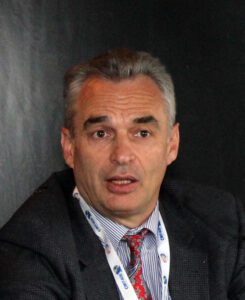
Odiri Erewa-Meggison reflects on the significance of BAT’s Ibadan factory in Nigeria as it celebrates its 20th anniversary.
Contributed
This year, BAT celebrates the 20th anniversary of its Ibadan factory in Nigeria. To mark the occasion, Precise Platform, a PR agency, interviewed Odiri Erewa-Meggison, external affairs director of BAT West and Central Africa.
Precise Platform: Please tell us about the significance of celebrating 20 years of manufacturing excellence for your organization.
Odiri Erewa-Meggison: Celebrating 20 years of manufacturing excellence holds immense significance for BAT West and Central Africa on several fronts. Firstly, it marks a significant milestone in our journey, showcasing two decades of dedication, innovation and resilience in the manufacturing industry within the region. This achievement underscores our commitment to quality, responsible and sustainable business practices in all aspects of our operations.
[We are] celebrating our two decades of quality output, impacts and milestones despite the economic challenges and regulatory changes that have made a lot of foreign companies quit their investments in the country. We are able to adapt to the market dynamics and impact on our operating environment with over 350,000 job opportunities and boost the economy of the nation through our export operation.
From the excellent productions in our Ibadan factory, we export to 11 West and Central Africa countries and recently to the USA, with $110 million annual foreign exchange from export, among other socioeconomic impacts. These achievements, which are worth celebrating, speak volumes of our strong contributions and the vital roles British American Tobacco has played in driving economic growth with social progress in our operating environment and also provide an opportunity for us to express gratitude to our employees, partners and stakeholders, whose unwavering support and dedication have been instrumental in our success. Their commitment and passion have been integral to our journey toward manufacturing excellence.
In essence, celebrating 20 years of manufacturing excellence is not just about looking back at past achievements but also about looking forward with optimism and determination toward a future of continued success and positive impact as BAT Nigeria is here for the long haul.
How has BAT Nigeria’s Ibadan factory evolved and grown its manufacturing capabilities while achieving sustainability milestones over the past two decades?
British American Tobacco Nigeria has undergone substantial evolution and growth in terms of its manufacturing capabilities, reflecting its commitment to meeting the dynamic needs of the market and its stakeholders. BAT Nigeria has continually invested in upgrading its manufacturing facilities with cutting-edge technologies. These advancements have enhanced production efficiency and quality control measures, enabling the company to stay competitive in the manufacturing industry.
Also, BAT Nigeria places a strong emphasis on maintaining high-quality standards across its manufacturing operations. The company adheres to stringent quality control protocols and certifications to ensure that our operations meet or exceed both regulatory requirements and consumer expectations for safety.
We have also integrated sustainability practices into our manufacturing processes, aiming to minimize environmental impact and promote social responsibility. In order to reduce our carbon footprint, in 2022, we transitioned from diesel[-powered] to gas-powered generation, and in 2023, we installed our 1.4-megawatt solar plant in our manufacturing facility, which was recently launched by the executive governor of Oyo State, Seyi Makinde, during our 20th anniversary celebration. We also installed a wastewater treatment plant with a 30,000-cubic-meter storage capacity to recycle and reuse all wastewater. This earned us the Alliance for Water Stewardship (AWS) certificate. These initiatives encompass our evolution and efforts to reduce energy consumption, minimize waste generation [and] support local communities, to promote responsible business practices within the manufacturing sector.
The success of BAT Nigeria’s manufacturing operations, particularly at the Ibadan factory, can be attributed to several key strategies and initiatives that have been instrumental in achieving milestones, beginning with our investment in the state-of-the-art manufacturing facility and sustainable technologies that enable efficient resource utilization and minimize environmental impact. These strategies have led to 100 percent waste recycling and transitioning from diesel to gas operation at our Ibadan facility.
BAT fosters a culture of continuous improvement, where employees are encouraged to identify opportunities for optimization and innovation across all aspects of manufacturing operations. We also work closely with our suppliers and partners to promote responsible sourcing practices and ensure the integrity of our supply chain. This proactive approach enables the implementation of cost-saving measures, quality enhancements and sustainability initiatives.
Another factor that has contributed to the success we are celebrating is our large investments in human capital training and development programs to equip employees with the skills and knowledge necessary to excel in their roles and contribute to manufacturing excellence. This includes technical training on operating equipment, safety protocols and environmental stewardship practices.
How does BAT Nigeria guarantee the highest quality standards in its manufacturing processes while simultaneously prioritizing sustainability and environmental considerations, as outlined by the AWS and the International Renewable Energy Certificates (IREC)?
We implement rigorous quality control measures at every stage of the manufacturing process, from sourcing raw materials to packaging finished products. This includes comprehensive testing, inspections and audits to ensure that our products meet or exceed regulatory requirements and consumer expectations for safety, consistency and quality.
By adhering to internationally recognized certifications and standards for quality management, environmental management, and occupational health and safety, we foster a culture of continuous improvement, where employees are empowered to identify opportunities for enhancing quality, efficiency and sustainability in manufacturing operations. This includes implementing lean manufacturing principles, conducting root cause analyses and investing in training and development to drive continuous improvement initiatives.
By prioritizing quality, sustainability and environmental considerations in our manufacturing practices, we not only meet regulatory requirements and consumer expectations but also contribute to the long-term viability and resilience of our business and the well-being of the communities and environments in which we operate.
BAT Nigeria prioritizes maintaining the highest quality standards in its manufacturing processes while adhering to sustainability and environmental principles outlined by the Alliance for Water Stewardship and the International Renewable Energy Certificates.
Our dedication to sustainability extends beyond energy efficiency and waste reduction. We prioritize responsible water management practices, evident in our state-of-the-art wastewater treatment plant. This impressive facility boasts a 30,000-cubic-meter storage capacity, allowing us to capture and treat all effluent wastewater generated during production. This commitment to water stewardship ensures no untreated wastewater is released into the environment.
More importantly, we don’t simply treat the wastewater; we reuse it. In 2023 alone, we successfully recycled a significant amount—17,388 cubic meters of treated wastewater. This recycled water is likely used for noncritical processes within the factory, reducing our dependence on freshwater resources.
This approach exemplifies our commitment to minimizing our environmental impact and operating responsibly. By effectively managing our wastewater, we not only conserve precious freshwater resources but also demonstrate our alignment with the principles set forth by the AWS certification that we hold.
The IREC compliance translates to our using energy-efficient machinery and exploring renewable energy sources in line with the recently commissioned 1.4 MW solar plant. This reduces the factory’s dependence on fossil fuels and lowers our carbon footprint.
This multifaceted approach allows BAT Nigeria to be a leader in manufacturing excellence. We believe this commitment to quality, sustainability and responsibility sets us apart and contributes to a brighter future.
As BAT Nigeria celebrates two decades of manufacturing excellence in a multi-category industry, how will you leverage your achievements to further enhance and sustain your competitive advantage? Additionally, how does your annual environmental, social and governance (ESG) forum contribute to this strategy, fostering collaboration and innovation for a sustainable future?
As we celebrate 20 years of manufacturing excellence, we are committed to further enhancing and sustaining our organization’s competitive advantage in the industry through strategic initiatives and forward-thinking plans. Here are some of our key plans:
We will continue to invest in cutting-edge technologies beyond what we have achieved so far and innovation to optimize our manufacturing processes, improve efficiency and enhance product quality.
We will reinforce our commitment to sustainability and environmental stewardship by implementing additional initiatives to minimize our environmental footprint, reduce waste generation and promote responsible sourcing practices. With a steadfast commitment to sustainability, we will sustain our recycling cigarette butts initiative and annually hold our private sector ESG forum to continually drive our advocacy for a sustainable environment in alignment with the sustainable development goals.
By implementing these plans and initiatives, we aim to further enhance and sustain our organization’s competitive advantage in the industry, ensuring continued success and growth for the next 20 years and beyond.
Our annual ESG forum plays a critical role in these strategies by fostering collaboration and innovation for a sustainable future. The forum brings together industry stakeholders, experts and thought leaders. This allows BAT Nigeria to share its own sustainability journey and learnings while also gaining valuable insights from others.
Added to this, by facilitating open discussions on key ESG challenges and solutions, the forum fosters collaboration across the industry. This can lead to the development of innovative approaches to tackling environmental and social issues.
The ESG forum allows BAT Nigeria to stay abreast of emerging trends and best practices in sustainability. This ensures we can continuously adapt and improve our strategies to maintain a competitive edge in a future increasingly focused on ESG performance.
Is there any message or reflection you would like to share with the employees, stakeholders and customers who have been a part of this 20-year journey of manufacturing excellence?
I would like to extend my appreciation to all our employees and stakeholders, who have been integral to our 20-year journey of manufacturing excellence. The BAT Nigeria team’s unwavering support, dedication and commitment have been instrumental to our success and achievements over the years.
As we reflect on this milestone, we are reminded of the collective efforts, resilience and passion that have propelled us forward, even in the face of challenges and uncertainties. Together, we have overcome obstacles, embraced opportunities, and [we] continuously strive for excellence in everything we do.
As we embark on the next phase of our journey, we remain committed to upholding the highest standards of excellence and sustainability in all aspects of our operations. Together, we will continue to innovate, collaborate and lead the way toward a future of continued success and positive impact.
Thank you for being a part of our 20-year journey of manufacturing excellence. Here’s to many more years of partnership, growth and shared achievements ahead.