Tag: Pakistan

  • Pakistan Tobacco Farmers in Crisis as PTB Surplus Order Flouted

    Pakistan Tobacco Farmers in Crisis as PTB Surplus Order Flouted

    Tobacco farmers in Khyber Pakhtunkhwa and Punjab are struggling as local companies fail to comply with the Pakistan Tobacco Board’s (PTB) September directive to purchase 40 million kilograms of surplus crop, according to Business Reporter. While some major firms have met their obligations, most local companies have delayed or refused purchases, leaving thousands of farmers with unsold tobacco and mounting financial losses, the article said.

    Farmers report that companies are buying tobacco below the Minimum Indicative Price and failing to honor payment terms, forcing growers to sell at throwaway prices to middlemen. In Swabi, for example, flue-cured Virginia tobacco remains in storage with no buyers in sight.

    Experts warn that issuing surplus orders without a monitoring framework or penalties has left farmers exposed. Compliant companies face liquidity and storage constraints, while non-compliant firms distort market dynamics. Industry analysts suggest that a second surplus order may be considered, but without stricter oversight, its impact could be limited.

    The crisis comes amid broader challenges for Pakistan’s legal tobacco industry, including falling domestic demand and economic pressures. Farmers emphasize that tobacco is a family livelihood, and the government’s lack of enforcement risks eroding trust in regulatory safeguards.

  • Pakistan to Ban Sale of Vapes to Minors

    Pakistan to Ban Sale of Vapes to Minors

    A new bill has been submitted in Pakistan’s Senate aiming to ban the sale of e-cigarettes, vapes, and e-shisha to consumers under the age of 18, reports Bloom Pakistan. The bill also calls for a ban on use of these products in public places and for restrictions on advertising, promotion, and sponsorship.

    Those caught violating the ban will face a fine of PKR50,000 ($176.82) for a first offense and PKR100,000 for a second offense. Those caught selling these products within 50 meters of educational institutions will face fines of PKR200,000, and repeat violations could face up to PKR500,000 in fines.

  • Philip Morris Voluntarily Delists from Pakistan Stock Exchange

    Philip Morris Voluntarily Delists from Pakistan Stock Exchange

    The Pakistan Stock Exchange (PSX) has accepted the voluntary delisting request from Philip Morris from its index, reports Dawn.

    Philip Morris is one of the leading tobacco companies operating in Pakistan. The company was voluntarily delisted under PSX Regulation 5.14 and Section 19(5) of the Securities Act, 2015. The delisting is effective Oct. 6.

    “The shareholders of the company, who may desire to avail the opportunity of buy back of shares by the sponsors, are advised to approach Topline Securities,” according to a press release. “The purchase agent and sponsor of the company have already submitted an undertaking to purchase the remaining shares held by the minority shareholders at a price of PKR1,300 ($4.58) per share, which is valid up to September 29, 2026.”

  • Illicit Cigarettes Grip Majority Share in Pakistan

    Illicit Cigarettes Grip Majority Share in Pakistan

    Pakistan’s tobacco industry is facing a mounting crisis as illicit cigarettes now account for an estimated 56–58% of the market, costing the government more than Rs400 billion ($1.4 billion) annually in lost tax revenue. Legal tobacco companies, which contribute nearly Rs270 billion ($945 million) in taxes each year, have seen their market share plummet amid growing competition from counterfeit and untaxed products.

    Industry experts point to weak enforcement of Pakistan’s Track & Trace system, a digital tax-stamp program meant to monitor production and sales. While Prime Minister Shehbaz Sharif has directed authorities to accelerate its rollout, implementation remains inconsistent, allowing fake and unregistered brands to flourish and evade minimum pricing rules and taxation.

    Analysts warn that without decisive action, illicit trade will continue to destabilize the economy and undermine legitimate businesses. They recommend tighter border controls, stronger retailer-level enforcement, and harsher penalties for smuggling and counterfeiting. “Educating retailers on how tax stamps work and how to verify legal products is also crucial in preventing the spread of untaxed goods,” said macroeconomic analyst Osama Siddiqui.

  • Pakistan’s Tobacco Farmers Say Delayed Quotas Spark $23M Loss

    Pakistan’s Tobacco Farmers Say Delayed Quotas Spark $23M Loss

    Tobacco growers in Pakistan claim delayed quota announcements and reduced allocations have triggered overproduction, a price crash, and losses exceeding Rs6.56 billion ($23 million). According to the Dawn, the government normally sets quotas by October, but this year’s lower quota was delayed until December, forcing farmers to sell surplus tobacco at the minimum indicative price (MIP) of Rs548 ($1.92) per kg—far below the market average of Rs720 ($2.52). Growers accuse multinational and local companies of exploiting the situation by purchasing surplus cheaply.

    According to the Dawn, industry figures warn that farmers are being squeezed between rising production costs and falling incomes, with many unable to recover expenses. According to the Tobacco Growers Association, companies have failed to meet quota commitments, while export figures tell a different story—Virginia tobacco exports jumped 129% to 48 million kilograms in 2024-25, even as domestic quotas were cut, the newspaper said. Farmers claim losses of up to Rs3 million ($10,500) per hectare under current pricing.

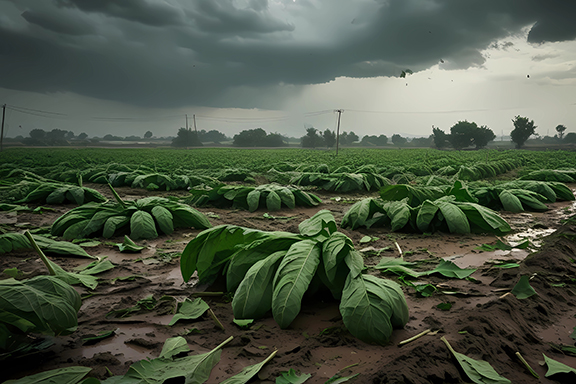
    The downturn threatens broader economic impacts, including reduced government revenue, falling exports, and job losses in tobacco-producing regions. Growers also point to climate-related crop damage this year, for which they have received no compensation. The National Assembly’s standing committee on tobacco is set to meet in Islamabad on September 23 to discuss possible relief measures, though farmers remain skeptical about immediate action.

  • Pakistan’s Illegal Cigarette Market Surges to 42.4%

    Pakistan’s Illegal Cigarette Market Surges to 42.4%

    The illegal cigarette trade in Pakistan surged to 42.4% of the market, leading to major losses for the national exchequer, according to an ARY News report. The market for illicit cigarettes has grown 171% since 2019, outpacing the 154% increase in taxes and duties on legal cigarettes. The highest shares of illegal consumption were recorded in Lahore, Kasur, Sheikhupura, and Nankana.

    Experts attribute the growth in smuggling and illegal sales to the rising Federal Excise Duty on legal cigarettes, which has pushed consumers toward cheaper, unregulated alternatives.

  • Pakistan Tobacco Board Criticized over Multinational Quota

    Pakistan Tobacco Board Criticized over Multinational Quota

    Leaders of the Ittehad Kashthkaran Khyber Pakhtunkhwa (IKKP) said a multinational tobacco company was instructed by the Pakistan Tobacco Board (PTB) to purchase 1.5 million kg of flue-cured Virginia (FCV) from Swabi growers, guaranteeing a minimum price of Rs743 ($2.60) per kg, according to an article published today by the local e-paper Dawn.

     “An official of a multinational national company said on condition of anonymity that the quota which was given to Philips Morris International (PMI) Pakistan was actually agreed with the Swabi growers under the agreements executed with them as it was purchased by the PMI in Shergar, Mardan district, but the PTB officials bound them to buy the 1.5 million kg tobacco in Swabi,” the article credited to an unnamed correspondent said.

    In the article, IKKP leaders criticized government inaction and PTB policies, urging that remaining tobacco be purchased promptly to prevent financial losses for farmers, who rely heavily on this crop for their yearly income. They said with a large quantity remaining unpurchased, the PTB should also oblige other companies to buy the crop from the farmers on time and give up the policy of declaring the remaining tobacco surplus to be purchased from the farmers at low price.

    “The PTB has not played its due role,” Daud Jan Khan, central vice-chairman of the IKKP, was quoted. “The companies have also left no stone unturned to cause as much financial damage to tobacco growers as they could.”

  • Court Orders the Reopening of 26 Cigarette Factories in Pakistan

    Court Orders the Reopening of 26 Cigarette Factories in Pakistan

    Pakistan’s Peshawar High Court has directed the Federal Board of Revenue (FBR) to de-seal 26 cigarette factories in Khyber Pakhtunkhwa that were shut for failing to install CCTV cameras under a directive that was issued August 18 and enforced August 25. Petitioners, including Universal Tobacco Company, argued the order was discriminatory as multinationals were exempted, despite already complying with tracking-and-tracing regulations. Their lawyer contended the new CCTV requirement was excessive, with factories already under electronic monitoring and tax office supervision.

    A bench led by Justice Wiqar Ahmad and Justice Mohammad Ijaz Khan ruled that no further action be taken against the petitioners until the next hearing on September 11.

  • Pakistani Tobacco Farmers Need Protection Amid Export Boom

    Pakistani Tobacco Farmers Need Protection Amid Export Boom

    Muhammad Ameen, chairman of Pakistan’s Fair Trade in Tobacco (FTT), called on authorities and the Pakistan Tobacco Board (PTB) to intervene and safeguard smallholder farmers, citing delayed payments and illegal underpricing of crops. He said that continued mishandling of the current crop by the local companies will damage the domestic economy and threaten Pakistan’s credibility as a reliable exporter.

    “Tobacco farmers are being pushed to the brink,” Ameen said. “They are being forced to sell their crop at prices Rs. 200 ($0.70) below the legally mandated weighted average, and the payments they are owed are being delayed. If we allow local crops to be spoiled or go unsold, our international buyers will look elsewhere. We risk losing markets just as we’re beginning to gain ground.”

    Ameen warned that non-compliance with PTB purchase quotas threatens the sector’s backbone, despite a 158% surge in tobacco exports in FY 2024–25, from $64.4 million to $166.5 million.

  • Pakistani Tobacco Growers Struggle to Sell Surplus Crop

    Pakistani Tobacco Growers Struggle to Sell Surplus Crop

    Tobacco farmers in Pakistan’s Khyber Pakhtunkhwa’s Swabi district are enduring three to four days in open-air queues to sell flue-cured Virginia tobacco to multinational companies, as a surplus crop creates a buyers’ bottleneck.

    While those with purchase agreements secure better prices, many growers without contracts are left waiting with no guaranteed sale. Officials estimate this year’s production at over 100 million kilograms, 20 million kg above the announced combined demand declared by 80 purchasing companies. Farmers say selling to smaller national buyers often means delayed payments, sometimes for months or years. A parliamentary sub-committee will visit tobacco-growing districts to address the crisis, which follows crop losses from hail and storms.

    Last fiscal year, the federal government collected Rs300 billion ($1.1 billion) in taxes from the sector, mostly from two multinational firms, Pakistan Tobacco Company and Philip Morris International, raising concerns about market imbalance and buyer accountability.