
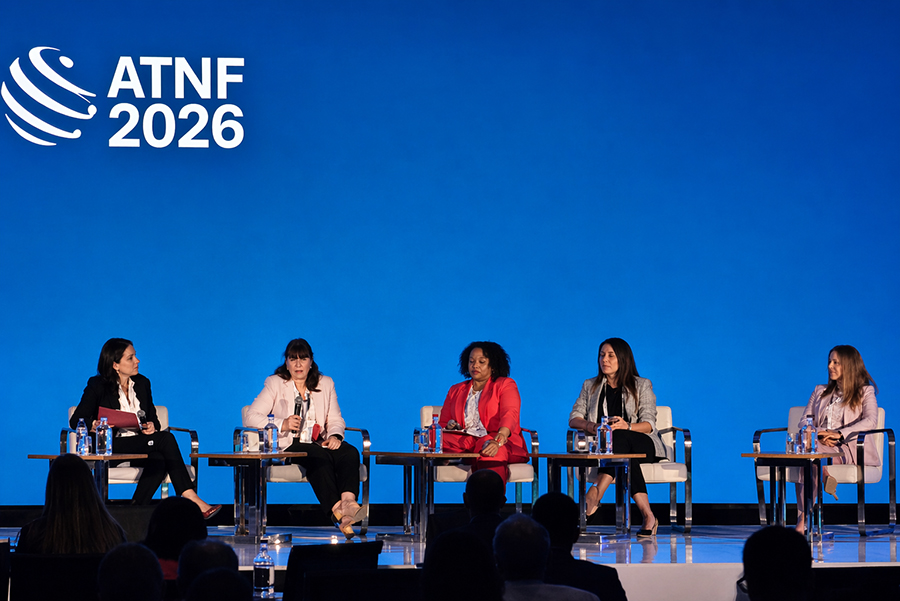
The panel on the FDA’s nicotine pouch pilot program, moderated by Roxana Weil from McKinney Specialty Labs, was a great discussion between the FDA’s Cristi Stark, Reynolds American’s Carolina Garcia-Canton, Altria Client Service’s Sydana Rogers Hollins, and Kleinfeld, Kaplan, and Becker’s Stacy Ehrlich about the status of the pilot program and what both the FDA and the industry have learned from in the process.
The pouch pilot program was introduced in 2025, and according to Stark, it started with four applicants and is ending with the same four applicants. She stated that the program aimed for more communication and that the program started at filing. Stark noted that one of the biggest changes the FDA made in the pilot program versus the normal authorization pathway was that the regulatory body followed up with the four pilot companies via email rather than just the more formal letters. The panel participants all noted that the use of email communication was a huge benefit because it allowed for more communication, and more informal communication that helped them to get a better understanding of what the FDA is looking for in their applications.
One of the biggest points of discussion and agreement was that the pilot program has been successful in creating better lines of communication between the FDA and the industry when it comes to market authorization applications and what is expected and needed to help move the review process along and get product authorized. According to Garcia-Canton, the biggest success has been communication, not necessarily increasing the speed of the review process. Ehrlich agreed that the communication was much better but stated that the FDA needs to be substantially more transparent.
A point of contention has always been that applicants and the industry feel that the FDA takes too long to review products—the process has taken much longer than the stated 180 days. Ehrlich stated that the process timing needs to be equal for the applicants and the regulatory body; the FDA takes lots of time to review the applications, but companies aren’t necessarily given the time they need to address issues. Stark’s response to the amount of time the process takes was to lay out the process the organization goes through and to emphasize utilizing the pre-submission process and meetings to avoid running into things like timing issues, especially for small companies as they may not have the resources or time to complete longer studies that the FDA may request.
In discussing the differences in the pilot program versus the normal submission process, Rogers Hollins noted that the FDA’s engagement and tone in the pilot program has been “super helpful and impactful.” She noted that communicating via email was very different than her previous experience with the FDA and that it was helpful as well as being able to gain insights on the FDA’s preferences. In her words, “tone, tenor, and transparency” were the key positive differences.
According to Garcia-Canton, she noticed that in the beginning, especially, there was a lot of awkwardness between the scientists and the FDA. The idea that the scientists are worried about saying or doing the wrong thing in the FDA’s eyes was iterated by both Garcia-Canton and Stark, but Garcia-Canton emphasized that “this is the place for scientific debate.”
Stark was asked whether scientists are learning and taking information away from the program. “Change is hard for a lot of people,” Stark said. She noted that there was a lot of confusion over deficiency letters and what was expected from applicants. The FDA’s takeaway, according to Stark, was that it needs to reframe the deficiency letters to better communicate and clear up what the organization needs. She also noted that the scientists, through these communications, are learning that there may be other ways to do things.
One of the big questions to the panel was whether the FDA made expectations clear from the beginning of the program. Ehrlich was quick to say that they were not entirely clear in the beginning. Garcia-Canton noted that she can sympathize with the FDA reviewers and that both sides can do better with communicating information. “I was not surprised by the request for information,” she said. Adding on to Stark’s notes on deficiency letters, Garcia-Canton noted that she did not always understand what the FDA was asking for and even used AI to ask what the letters meant; she received different answers from different AI programs. However, she noted that she believes the program will help with focus and clarity for future submissions. Rogers Hollins was honest that having gone through it, “I still can’t explain the whole process.” She said that getting more insight would be really helpful and that it would be useful to have more information more easily available in a more informal manner.
The conversation turned to many of the misperceptions of the pilot program, which Stark cleared up by discussing the theory that the companies in the pilot program are just being pushed through and rubber stamped. She stated that the organization has “not given up on scientific rigor” and that “100% of what was submitted was reviewed” and that the companies heard about any questions that the organization had. Rogers Hollins confirmed that the FDA has been “upholding the scientific standard,” and Garcia-Canton said that the FDA is “keeping up scientific content” and upholding a very high quality.
An audience member asked if the pilot program is something that can be realistically sustained, to which Stark answered, “Yes, with some changes.” She noted that the FDA needs engaged interaction and increased communication with industry to continue moving forward.
Another valid question for Stark was what small companies can do to prepare for the submission process. “The standard is the same whether small, medium, or large,” she said. Small businesses may need a little bit more development time or may need to use consultants, though. Stark recommended utilizing the pre-submission review process and meeting with the FDA prior to submissions. Her advice was to plan early, communicate with the FDA, and give time to apply guidance before submission.
The question of what the biggest challenge is for the existing applicants that are still waiting was asked. Ehrlich stated that applicants “want to know what the noise is—what don’t we need to do?” She also asked whether the wheel needs to be reinvented every time or if there is a way to rely on the existing data for these, very similar, products to help streamline the process. Her takeaway from that question was one of her own: “What is essential and what are the different ways of getting to that, and what is just noise?”
Stark responded that the FDA is looking at four focused areas for pouches: product characterization, consistent manufacturing, adult benefit, and preventing youth use.
The panel seemed to agree that the definition of “benefit” in this regard concerns relative risk. Stark noted that she does “not personally agree” with the recent media reports on pouches. The FDA is always concerned about youth access, she said.
Stark outlined the many meetings with different groups involved in the review of products that help ensure consistency of applications. This also helped to explain part of why the review process takes so long currently. “Is it changing?” she said. “Yes.” She went on to note that “We don’t need to have six meetings a week anymore.” That being said, she emphasized that they are looking over all information and trying to fill in any holes that may exist as they review product applications.
The panel ended with appreciation of the open conversation and communication. “I’m incredibly excited to be here,” Stark said. “We have a shared effort.” She noted that the pilot program is currently expanding to other programs as well. ENDS is actively progressing, she said. It is no longer a pilot. “We can’t control everything, but we’re looking to learn every step of the way,” Stark said.