Tag: PMTA

  • A Drop in the Ocean

    A Drop in the Ocean

    Photo: digieye

    The FDA’s first premarket approval of a mentholated vape product reflects poorly on the agency’s authorization process.

    By Stefanie Rossel

    Lindsay Stroud

    On June 21, the U.S. Food and Drug Administration for the first time authorized nontobacco-flavored vape products through its premarket tobacco product application (PMTA) pathway. The agency issued marketing granted orders (MGO) for two Njoy Ace menthol flavor pods and two disposable e-cigarettes, Njoy Daily Menthol 4.5 percent and Njoy Daily Extra Menthol 2.4 percent. The news was hailed as a “significant decision” and a “watershed moment for the sector” that will have a “huge and significant impact” on the global reduced-risk products market.

    Upon closer inspection, however, the authorization is less of a breakthrough than these superlatives suggest. Instead, it again highlights the many problems with the agency’s authorization process for electronic nicotine-delivery systems (ENDS) and novel nicotine products.

    Lindsey Stroud, senior fellow with the Taxpayers Protection Alliance, describes the recent FDA authorization as a small step in the right direction in what has otherwise been a regulatory nightmare. “While allowing the sale of a nontobacco-flavored ENDS, FDA seems to understand that adults who use menthol-flavored combustible cigarettes should have access to products which are significantly less harmful,” she says. “Unfortunately, the FDA still continues to deny the sale of all other flavored ENDS, despite their effectiveness in helping adults quit smoking and remain smoke-free.”

    Stroud is also concerned about the informal market. “Despite FDA not having issued authorization orders for flavored ENDS, a large, unregulated marketplace exists in the United States—99.9 percent of which are nontobacco flavored,” she says. “FDA must recognize the role that other flavors play in tobacco harm reduction because denialism isn’t stopping the flourishing non-FDA-authorized ENDS marketplace.”

    Jeffrey Smith

    Jeffrey Smith, a senior fellow in harm reduction at the R Street Institute, says he welcomes any action by the FDA Center for Tobacco Products (CTP) that supports reduced-risk options for those who smoke. “Unfortunately, in the grand scheme of things, the awarding of an MGO to the four Njoy menthol variants is unlikely to be a sign of a significant shift in the decision-making process at the CTP,” he says. “If the regulatory environment does not change through external pressures, it is unlikely that the actions of the CTP will evolve in a swift and effective manner.”

    Gray Market to Persist

    While optimists may detect a new willingness to approve reduced-risk products (RRPs) in the CTP’s recent product authorizations, few expect the regulatory floodgates to open to an avalanche of product approvals.

    “Since the awarding of the Njoy menthol products, there haven’t been any additional actions or signals that more may be coming,” says Smith. “The only additional communications I have seen from the CTP since the Njoy announcement was a letter from the FDA to the clerk of the Supreme Court informing the court that the CTP had granted a marketing order to four menthol-flavored e-cigarette products. The case is the Logic v. FDA, where Logic is arguing that the CTP had adopted a blanket policy of rejecting menthol-flavored products.”

    Stroud says the menthol announcement is a positive development but notes that the FDA remains opposed to any flavors that don’t exist in traditional tobacco products. “Dr. Brian King, director for the Center for Tobacco Products, is very anti-flavor, if not anti-vape,” she says. “Going back to at least 2015 and his time at the CDC [Centers for Disease Control and Prevention], King has been first to tout the Bloomberg party line that ‘flavors hook kids.’ This is in direct contrast to U.S. youth survey data, which finds flavors as one of the least-cited reasons why youth vape. FDA must recognize the role of flavors, their appeal to adults who smoke and how flavors help to reinforce a negative taste—literally—associated with combustible cigarette smoke. Until FDA recognizes this, the U.S. ENDS market will remain a large gray market.”

    Unlike most other vape products that have received FDA authorization to date, the Njoy menthol variants are technologically up to date and relatively popular with consumers. “According to Altria’s first-quarter 2024 report, Njoy made up 4.3 percent of the U.S. retail market, but this will likely grow as Njoy is now the only menthol-flavored—and nontobacco-flavored—ENDS product legally permitted to be for sale in the U.S.,” says Stroud.

    She is undecided about the FDA decision’s potential impact on the global RRP landscape. “I would imagine that with FDA recognizing the importance of menthol, most countries would follow the agency’s findings,” she says. “Unfortunately, due to a de facto flavor ban in the U.S., there is precedent for countries to restrict flavors, despite them not experiencing a huge surge in youth vaping as the U.S. did in 2019.”

    “The awarding of a marketing granted order to the four Njoy menthol variants is unlikely to be a sign of a significant shift in the decision-making process at the CTP.”

    Depressing Number

    Nicotine companies have long lamented the FDA’s product authorization process, which they say is needlessly time-consuming and costly and favors deep-pocketed players over less generously resourced applicants. Stroud and Smith believe the process can be streamlined only through external interventions.

    To illustrate the challenge, Stroud recalls the tremendous technological progress in ENDS products, which went from cigalikes to larger open systems, back to pods and then on to disposables. “The FDA’s draconian regulations don’t account for the technological improvement that has been applied to ENDS,” she says. “FDA and Congress could reform the Tobacco Control Act [TCA] in a huge way if they pushed the predicate date further ahead than February 2007. Requiring ENDS to undergo extensive testing and a massive bureaucratic application process is not only a farce to public health, but it restricts innovation and competition, which is very un-American.”

    With Congressional assistance and a reworking of the TCA, the FDA could establish a notification process for new products and then focus on post-market surveillance to monitor the public health effects of the new products, according to Shroud.

    “The FDA must also recognize what percentage of youth is permittable,” she says. “No other consumer good in America has been forced to deal with so much scrutiny that even one kid using the product is one kid too many. While youth vaping was a problem in 2019, it declined by more than 60 percent in the years since—all while the non-FDA-authorized ENDS market grew exponentially. FDA must recognize that adults are using these products and that their use is associated with a 10 percent decrease in cigarette units sold in America in 2023. That’s a win for public health. FDA must reform the process so we can accelerate even further declines in smoking.”

    As of June 21, the FDA had authorized more than 16,000 tobacco products—mostly cigarettes and cigars, according to Stroud. “Twenty-seven MGOs for ENDS is a depressing number and makes up less than 1 percent of authorized products,” she says. “Worse, only 49 products have been authorized by FDA using the PMTA pathway. FDA’s own budget is problematic; it’s entirely funded by user fees paid for by only six classes of tobacco products and not from e-cigarettes. There is more of an incentive to authorize the products that are paying for a $275,000 annual salary, as made by the CTP director in 2023, than authorizing products that pay nothing. While FDA has been asking Congress for years to be able to collect user fees on products including e-cigarettes, they refuse to issue orders—and instead denied tens of millions of products. That could have been a lot of fees and would have funded a significant amount of surveillance while also recognizing tobacco harm reduction. It is something the agency must recognize if the mission is to reduce smoking.”

    While optimists may detect a new willingness to approve reduced-risk products in the CTP’s recent product authorizations, few expect the regulatory floodgates to open to an avalanche of product approvals. | Photo: Tada Images

    Significant Ruling

    Smith says it is important to educate those affected by the failing 99.999 percent of all PMTA applications about the recent changes in the regulatory landscape and how those changes may lay a foundation for the significant changes necessary at the CTP.

    “The first is the recent announcement by the Supreme Court where the Chevron Deference has been overturned,” he says. “This action by the court will now require that regulatory agencies follow the letter of the law and that the regulators would now have little leeway in the interpretation of how to apply regulatory law.

    “The Chevron Deference has allowed the CTP to define the meaning of ‘appropriate for the protection of public health’ when conducting a review of the PMTAs and MRTPAs [modified-risk tobacco product applications]. Now, post-Chevron, if the Tobacco Control Act does not clearly outline the actions and process of enforcement of regulatory oversight in a manner that allows for the regulatory agency to action the law, the law will have to be amended to clarify the process, so legislators will have to work to make the law actionable … not the regulators that monitor the marketplace.”

    Second, according to Smith, the Supreme Court may review four relevant lawsuits—Triton, Magellan, Lotus and Logic. Such a review may trigger action to change the TCA. “If the court decides to hear at least one of these cases, then the likely outcome is a requirement that the TCA be clarified so that the CTP will only enforce actions defined in the TCA,” says Smith. “If the TCA isn’t clear as to how to enforce it, then the law should be amended. Depending on how the policies are modified by the legislative branch, we may see shifts in the way that CTP reviews all tobacco and nicotine products, leading to a more effective regulatory environment. However, how the legislators refine the TCA will determine if the regulatory environment improves in a manner that supports the reduced-risk product marketplace.”

  • Reynolds Files PMTA for Age-Gated Vuse Pro

    Reynolds Files PMTA for Age-Gated Vuse Pro

    R.J. Reynolds Vapor Co. has filed the final pre-market tobacco product application submissions with the U.S. Food and Drug Administration for its Vuse Pro age-gated device. The electronic nicotine delivery system device platform connects to a mobile application that verifies the consumer’s age through a third-party provider.

    Once verified, the device will unlock. It uses a unique design to only allow compatible Vuse Pro pods to be used. The technology and mobile application also enable features such as auto-lock and proximity lock to further secure device access.

    “Our PMTA submissions to the FDA underscore our commitment to both offering adult tobacco and vapor consumers choices as well as underage access prevention,” said Reynolds Executive Vice President of Scientific Research and Development Tim Nestor in a statement. “We don’t want our products in the hands of youth, period. The Vuse Pro ENDS platform provides a solution that limits access to adult consumers while also offering flavors that appeal to current adult smokers and a unique vapor experience.”

  • Altria Submits PMTA for ‘On! Plus’ Pouches

    Altria Submits PMTA for ‘On! Plus’ Pouches

    Image: maurice norbert

    Altria Group has submitted premarket tobacco product applications (PMTAs) to the U.S. Food and Drug Administration for its “On! Plus” oral nicotine pouch products. The PMTAs were submitted by Altria’s wholly owned subsidiary Helix Innovations.

    On! Plus is a spit-free, oral tobacco-derived nicotine (TDN) pouch product made from a proprietary “soft-feel” material to provide a more comfortable product experience. The On! Plus pouch is designed for adults who dip and adult dual users (i.e., adults who smoke and dip).

    According to Altria, On! Plus pouches are seamless and larger than the leading U.S. TDN brands. Similar to the currently marketed On! products, On! Plus packaging features a compartment to responsibly dispose of used product. Helix submitted PMTAs for three distinct On! Plus varieties: tobacco, mint and wintergreen. Each variety comes in three different nicotine strength options.

    “Helix’s submission of the On! Plus applications underscores Altria’s commitment to addressing consumers’ evolving preferences through innovation in potentially reduced risk products. We firmly believe that On! Plus is a transformative product that will meaningfully contribute to Helix’s growth in the U.S. market, upon timely FDA authorization,” said Nick MacPhee, managing director and general manager of Helix in a statement.

    “We’ve long believed in the value of a robust marketplace of authorized smoke-free products for adult tobacco consumers. We believe that these PMTAs demonstrate that responsibly marketed On! Plus pouches can provide a compelling alternative in the marketplace,” said Paige Magness, senior vice president of regulatory affairs, Altria Client Services.

    Upon authorization, Altria expects the products to be distributed by Altria Group Distribution Co.

    Helix currently sells On! nicotine pouches in the U.S. In the first quarter of 2024, On! shipment volume grew 32 percent versus the prior year and the brand achieved a 7.1 percent retail share of the total U.S. oral tobacco category.

    Altria entered the U.S. oral nicotine products market in 2019 after signing a deal with Burger Söhne to acquire an 80 percent ownership stake in some companies that commercialized On! Products, according to The Wall Street Journal. In December 2020 and April 2021, Altria subsidiaries concluded transactions to buy the remaining 20 percent stake of the global on! business for about $250 million.

    Altria’s PMTA announcement comes after Philip Morris International’s Swedish Match North America unit suspended nationwide sales on its U.S. website as local officials in Washington, D.C., investigate whether the company is in compliance with the district’s ban on the sale of flavored products.

  • Agencies Urged to Remove Unauthorized Products

    Agencies Urged to Remove Unauthorized Products

    Photo: ksena32

    Seventy-eight U.S. public health and other organizations urged the U.S. Food and Drug Administration, the U.S. Department of Justice and the U.S. Customs and Border Protection to utilize all the enforcement tools at their disposal to clear the market of unauthorized e-cigarette products, including flavored products.

    To date, the FDA has authorized the sale of only 23 tobacco-flavored e-cigarette products.

    “This means that virtually the entire e-cigarette market consists of unauthorized, illegal products, including a wide variety of flavored products—largely disposables—that FDA has found to be highly appealing to youth,” the groups wrote in a letter addressed to all three agencies.

    “This is a wholesale failure to enforce the Family Smoking Prevention and Tobacco Control Act by FDA and other government enforcement agencies. There must be an intensified and coordinated, multi-agency federal effort to enforce the law against these illegal products in an effective and equitable manner.”

    The groups urged the adoption of several concrete changes in tobacco enforcement policies and activities, including more frequent use of enforcement tools, such as civil monetary penalties; and prioritization of efforts to stop illegal importation of unauthorized products.

     “The failure to adequately enforce the law against unauthorized products has real, and significant public health consequences. We urge FDA, DOJ and CBP to respond with an ‘all hands on deck’ strategy that will use all enforcement tools at their disposal to protect the public health, and particularly the health of our young people, from the flood of illegal, unauthorized e-cigarettes,” the letter writers concluded.

  • Registry Bills Harmfully Limiting Options: Critics

    Registry Bills Harmfully Limiting Options: Critics

    Photo: Andrey Popov

    Premarket tobacco product application (PMTA) registry bills in the United States are harmfully limiting options for people seeking to quit cigarettes, according to critics.

    The bills, which restrict sales to products that have either been authorized by the Food and Drug Administration under the PMTA pathway or are undergoing that process, have been spreading rapidly around the nation, according to Filter.

    Alabama, Louisiana and Oklahoma already have PMTA registry bills in force while laws in Kentucky, Utah and Wisconsin are set to take effect in 2025.

    To date, the FDA has authorized only a handful of e-cigarettes, all of which are owned by tobacco companies. The remaining vapes on the market are sold unauthorized and often imported from China. Limited FDA enforcement has prompted many states to step in with registry bills.

    Tobacco harm reduction advocates have long condemned the PMTA process as excessively onerous. They point out that it’s easier to bring new cigarettes to market than it is to gain authorization for safer vapes that can replace them.

    Tobacco companies are supporting PMTA registry bills in what critics say is a bid to dominate the market at the expense of people who smoke.

    “Most legislators do not understand that PMTA registries aim to ban the sale of the vast majority of vaping products used by adults in their state,” said Greg Conley, director of legislative and external affairs for the American Vapor Manufacturers trade organization. “They think they are fighting Chinese scofflaws, but really they are making life worse for their own voters.”

  • Civil Money Penalties for 22 Elfbar Sellers

    Civil Money Penalties for 22 Elfbar Sellers

    Credit: Jeff McCollough

    The U.S. Food and Drug Administration today announced the issuance of complaints for civil money penalties (CMPs) against 20 brick-and-mortar retailers and two online retailers for selling unauthorized e-cigarettes, including Elf Bar, a popular youth-appealing brand.

    The regulatory agency previously issued warning letters to these retailers for selling unauthorized tobacco products. However, according to an FDA release, follow-up inspections revealed that the retailers had failed to correct the violations.

    Accordingly, the agency is now seeking a CMP of approximately $20,000 from each retailer.

    The approximately $20,000 CMP sought from each retailer is consistent with similar CMPs sought against retailers for the sale of unauthorized Elf Bar products over the last few months, including in Sept., Nov., Dec. and Feb.

    The retailers can pay the penalty, enter into a settlement agreement, request an extension to respond, or request a hearing. Retailers that do not take action within 30 days after receiving a complaint risk a default order imposing the full penalty amount.

  • FDA Denies Market Access to Yibo Products

    FDA Denies Market Access to Yibo Products

    Photo: Surendra

    The U.S. Food and Drug Administration on April 15 issued marketing denial orders (MDOs) to Shenzhen Yibo Technology Co. for 65 disposable e-cigarettes marketed as “MNGO Disposable Stick.”

    The products involved include flavors such as tobacco, menthol, pink lemonade, strawberry mango, watermelon freeze, iced banana, and others, with each flavor offered in a range of nicotine concentrations from 2 percent to 6 percent.

    According to the 2023 National Youth Tobacco Survey (NYTS), disposable e-cigarettes were the most commonly used device among current e-cigarette users, and almost 9 out of 10 current e-cigarette users reported using flavored e-cigarettes with fruit flavors being the most popular.

    The MDOs also include several “Clear” flavor products that were described by the applicant as flavorless or unflavored. However, data submitted in the company’s applications showed these products contained ingredients that are flavor enhancers or are known to impart a menthol or mint flavor, according to the FDA. Based on the entirety of evidence, the agency determined that the products have a characterizing flavor.

    “The onus is on tobacco companies to provide the evidence demonstrating that the necessary public health standard has been met, and when they fail to do so, FDA will appropriately deny the marketing authorization of new tobacco products,” said Brian King, director of FDA’s Center for Tobacco Products, in a statement. “In this case, the applicant did not meet the necessary bar.”

  • FDA Moves PMTA Finish Date to June 30

    FDA Moves PMTA Finish Date to June 30

    Credit: Postmodern Studio

    The U.S. Food and Drug Administration now states that it will complete all covered marketing applications by June 30. In its latest court-ordered status report, the agency stated that continued review is necessary in light of recent judicial decisions, including the D.C. Circuit’s decision in Fontem US.

    “Further, several of these remaining applications present complex scientific issues that require careful review and consideration.

    In the Fontem case, the court’s unanimous decision in Fontem US v. FDA upheld the regulatory agency’s denial of Fontem’s application to market flavored vaping products, in line with prior D.C. Circuit precedent but rejected the FDA’s denial of Fontem’s applications for unflavored products.

    The agency stated that it was also facing challenges from manufacturers that filed premarket tobacco product applications (PMTAs) that made amendments to their applications after several legal decisions were handed down by courts.

    “Many of these amendments contain substantial data and scientific explanation,” the agency wrote. “The amendments range from a few pages to hundreds of pages and were received on a rolling basis, with the most recent 2023 amendment being filed in December 2023.”

    Also, on Jan. 3, the U.S. Court of Appeals for the Fifth Circuit ruled that the FDA acted “arbitrarily and capriciously” in rejecting the premarket tobacco product applications (PMTA) of Wages and White Lion Investments, doing business as Triton Distribution, and Vapetasia for approval to sell their products in the United States.

    The 9-5 decision by the New Orleans-based 5th U.S. Circuit reversed a July 2022 decision by a three-judge panel of that court.

    The agency “sent manufacturers of flavored e-cigarette products on a wild goose chase,” telling them what would be needed to approve their products, and then denying all applications, the court said in an opinion by Judge Andrew S. Oldham. The FDA “never gave petitioners fair notice that they needed to conduct long-term studies on their specific flavored products,” Oldham wrote.

    The regulatory agency is under court order to file regular status reports on the agency’s review of pending PMTAs for new tobacco products that were on the market as of Aug. 8, 2016.

    For such new tobacco products to be lawfully marketed in the United States, the Family Smoking Prevention and Tobacco Control Act requires the FDA to complete a substantive review of the PMTA for each new tobacco product and issue a marketing granted order authorizing the sale of the product.

    The court order stems from litigation filed by health groups against the FDA seeking a court-imposed deadline for finalizing the review of the PMTAs that were filed with the agency by Sept. 9, 2020.

    The court-imposed deadline to complete the agency’s review was originally Sept. 9, 2021, which the FDA could not meet due to the extremely large number of PMTAs filed by manufacturers.

    The most recent and FDA’s seventh status report was filed on Oct. 23, 2023. Specifically, in these reports, the FDA provides an update on the progress to finalize the agency’s review of pending PMTA “covered applications.”

    A “covered application” is for new electronic cigarette/vapor products that were on the market as of Aug. 8, 2016, which had a PMTA filed with the FDA by Sept. 9, 2020, are sold under the brand names of Juul, Vuse, Njoy, Logic, Blu, Smok, Suorin, or Puff Bar, and reach 2 percent or more of the total retail sales volume in NielsenIQ’s various retail e-cigarette sales reports.

    The agency also stated that it now expects to take action on 94 percent of covered applications by March 31. The FDA stated that it would file another status report on or before April 22.

  • U.S. FDA Issues MDOs for SMOK

    U.S. FDA Issues MDOs for SMOK

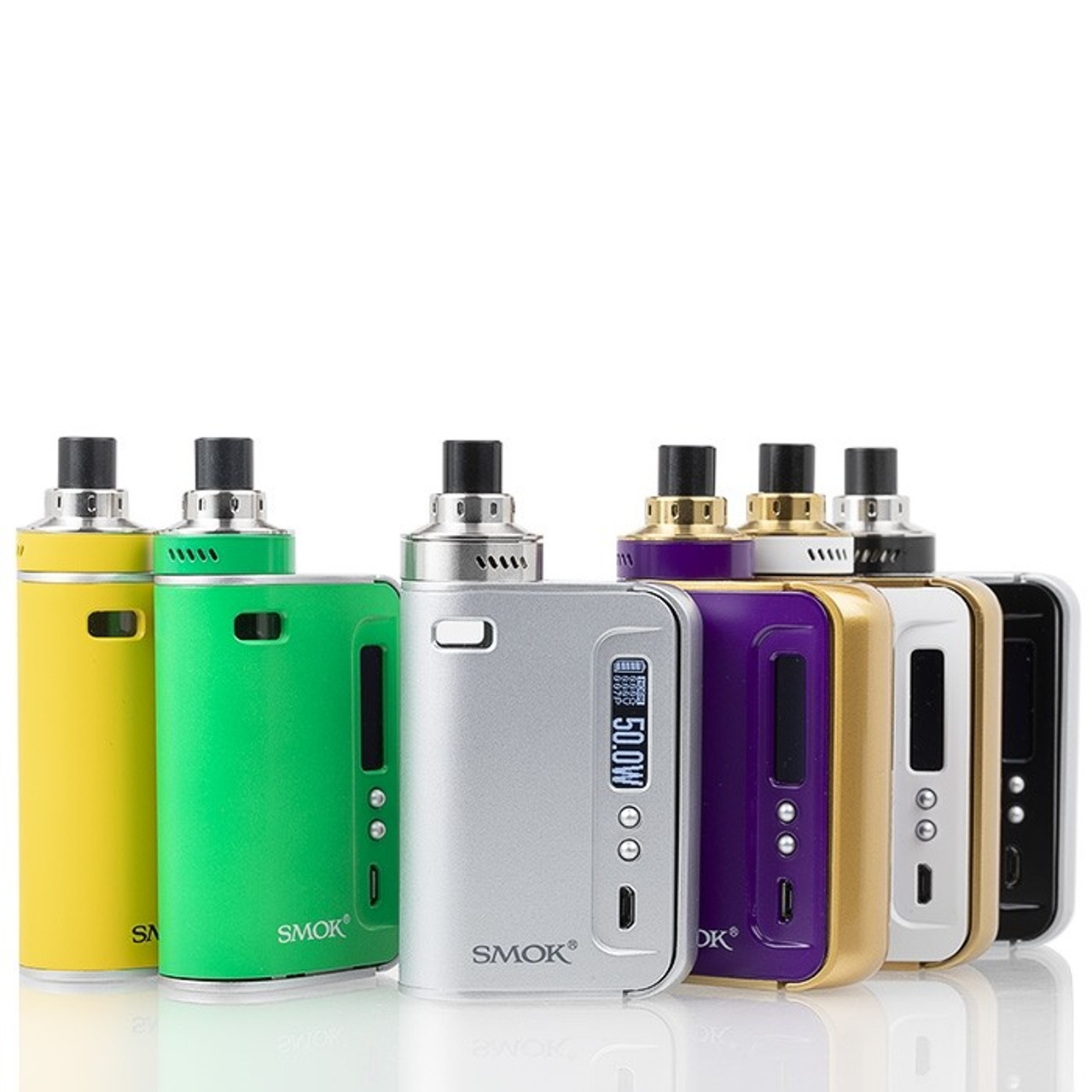
    The U.S. Food and Drug Administration issued marketing denial orders (MDOs) to Shenzhen IVPS Technology Co., Ltd for 22 SMOK vaping hardware products.

    The denied products include devices, pods, atomizers, and cartridges. It’s the first time the agency has denied strictly hardware products from one company en mass.

    The products were denied because they were submitted without a specific e-liquid to be used with the devices, according to the FDA. “The denied SMOK e-cigarette products are not sold with an e-liquid. A consumer instead adds their separately purchased e-liquid into the device,” the agency wrote. “Therefore, these SMOK products have the potential to be used with any e-liquid on the market and available to the consumer, which could include tobacco-flavored and non-tobacco-flavored e-liquids.”

    The products receiving MDOs include:

    • SMOK OSUB ONE Device
    • SMOK OSUB ONE RPM Cartridge
    • SMOK RPM DC 0.8 Ω MTL Atomizer
    • SMOK OSUB ONE RPM Cartridge 3 Pack
    • SMOK RPM DC 0.8 Ω MTL Atomizer 5 Pack
    • SMOK Nfix Device
    • Nfix DC 0.8 Ω MTL Pod
    • SMOK POZZ Device
    • SMOK POZZ DC 0.8 Ω Pod
    • SMOK RPM 40 Device
    • SMOK RPM Empty Standard Cartridge
    • SMOK RPM Empty Nord Cartridge
    • SMOK RPM Mesh 0.4 Ω Atomizer
    • SMOK Nord DC 0.8 Ω MTL Atomizer
    • SMOK SCAR-P3 Device
    • SMOK SCAR-P3 Empty RPM 2 Cartridge
    • SMOK SCAR-P3 Empty RPM Cartridge
    • SMOK PRM 2 Mesh 0.16 Ω Atomizer
    • SMOK RPM Mesh 0.4 Ω Atomizer
    • SMOK Nord 2 Device
    • SMOK Nord 2 RPM Cartridge
    • SMOK Nord 2 Nord Cartridge

    After reviewing the company’s PMTAs, the FDA determined that the applications lacked sufficient evidence to demonstrate that permitting the marketing of the products would be appropriate for the protection of public health, which is the standard legally required by the 2009 Family Smoking Prevention and Tobacco Control Act. More specifically, the applicant failed to provide sufficient data to characterize constituent delivery, product stability, and product abuse liability.

    “Science is a cornerstone of FDA’s tobacco product review process, and CTP remains committed to evaluating applications based on a public health standard that considers the risks and benefits of the tobacco product to the population as a whole,” said Brian King, director of FDA’s Center for Tobacco Products. “It is the applicant’s responsibility to provide sufficient scientific evidence to demonstrate that marketing a new tobacco product is appropriate for the protection of the public health. In this case, the applicant failed to provide this evidence.”

  • Liquid Makers Get Another Shot at PTMA

    Liquid Makers Get Another Shot at PTMA

    Photo: alexkich

    Two e-liquid companies will be able to resubmit their marketing applications to the U.S. Food and Drug Administration following a court ruling, reports Bloomberg Law.

    On Jan. 3, the U.S. Court of Appeals for the Fifth Circuit ruled that the FDA acted “arbitrarily and capriciously” in rejecting the premarket tobacco product applications (PMTA) of Wages and White Lion Investments, doing business as Triton Distribution, and Vapetasia for approval to sell their products in the United States.

    The agency “sent manufacturers of flavored e-cigarette products on a wild goose chase,” telling them what would be needed to approve their products, and then denying all applications, the court said in an opinion by Judge Andrew S. Oldham. The FDA “never gave petitioners fair notice that they needed to conduct long-term studies on their specific flavored products,” Oldham said.

    In a dissenting opinion, Judge Catharina Haynes said the agency “properly fulfilled its statutory mandate by considering the relevant portions of Petitioners’ PMTAs and coming to a reasonable conclusion that marketing Petitioners’ products is not appropriate for public health.”