

Registration for the 2027 Puro Sabor Festival in Nicaragua opens today (July 10) at 7 p.m. ET for the event, which will take place Jan. 25-30, 2027. The annual festival offers attendees an in-depth look at Nicaragua’s premium cigar industry through visits to tobacco farms, processing facilities, and more than 20 participating cigar manufacturers, including AJ Fernandez, Drew Estate, Joya de Nicaragua, My Father Cigars, Oliva, Padrón, Perdomo, Plasencia, and Scandinavian Tobacco Group. Tickets are priced at $3,000 for a single attendee or $5,600 for two sharing a room, covering accommodations, meals, local transportation, premium cigars, and festival activities, but excluding airfare.
Tag: premium cigars
-

FDA Faces $10M Lawsuit from Cigar Companies Over User Fees
Nine premium cigar manufacturers filed a lawsuit in the U.S. Court of Federal Claims seeking at least $10 million plus interest in refunds of FDA user fees paid between 2016 and 2023. The lawsuit follows the cigar industry’s victory in a separate legal challenge that resulted in premium cigars being exempted from FDA regulation, with the companies arguing they should not have been required to pay user fees on products the agency ultimately lacked authority to regulate.
Arturo Fuente, Ashton, CLE Cigar, J.C. Newman, Oliva, La Flor Dominicana, My Father Cigars, Padrón, and Rocky Patel contend they paid the fees despite premium cigars being excluded from most FDA requirements and are now seeking reimbursement after the FDA stopped collecting user fees on premium cigars following a key 2023 court ruling. Court filings in the earlier litigation suggested the government could face more than $100 million in past user fee refunds. The case has been assigned to Judge Edward H. Meyers, with the plaintiffs represented by Morgan Lewis, including attorney Michael Edney, who led much of the industry’s successful challenge to the FDA’s premium cigar regulations.
-

AI Search Favors Family-Owned Premium Cigar Brands: Research
Family-owned premium cigar manufacturers dominate recommendations generated by leading artificial intelligence search platforms, according to the newly released 2026 Cigar & Pipe AI Visibility Index from communications firm 5W. The study found that Padrón (11.5%) and Arturo Fuente (10.5%) topped the list with Davidoff (7.5%) a distant third, together accounting for nearly a third of the premium cigar brand citations across ChatGPT, Claude, Perplexity and Google AI Overviews. My Father Cigars (5.5%, Oliva (4.5%), Rocky Patel (4%), Drew Estate (3.6%), Perdomo (3.4%), Ashton (3%), and non-Cuban Cohiba (2.8% rounded out the top 10.
The report argues that AI systems disproportionately favor brands with strong family-ownership narratives, vertical integration and longstanding editorial recognition, particularly from Cigar Aficionado, whose rankings and retailer surveys are frequently cited in AI-generated responses. The study also found that U.S. restrictions on Cuban cigars create a structural advantage for non-Cuban versions of brands such as Cohiba, Montecristo, and Romeo y Julieta, which are more likely to be recommended in response to consumer queries. According to 5W, AI citation patterns increasingly mirror brand visibility and reputation in the premium cigar sector, making search prominence a growing competitive factor as consumers turn to AI platforms for product recommendations.
-

Illinois Caps Premium Cigar Taxes
Illinois is the latest U.S. state to implement a tax cap on premium handmade cigars after Governor JB Pritzker signed the state’s FY2027 budget legislation into law this week. The measure caps state tax on premium handmade cigars at $0.75 per cigar and applies to both in-state and remote sales, beginning January 1, 2027. Industry groups said the change is intended to reduce the tax burden on premium cigar retailers and consumers while improving tax parity within the category.
The legislation follows years of advocacy by the Premium Cigar Association, Cigar Rights of America, and the Cigar Association of America. Industry representatives said the successful campaign was supported by economic analysis developed by the PCA and CAA examining the projected effects of cigar tax caps.
-

New Article Highlights Premium Cigar Shift
A new feature article, The Future of Luxury: How Cigars Are Reinventing Tradition, examines how premium cigar culture is being repositioned within a broader shift in luxury markets toward craftsmanship, provenance, and experience over overt display. Author Daniel J. Voelker writes that luxury categories gaining momentum today are those that signal “confidence without excess,” adding that premium cigars are benefiting from renewed interest due to their blend of craftsmanship, cultural resonance, and ritual.
The piece argues that cigars are increasingly aligned with modern consumer preferences for discretion, expertise, and immersive hospitality environments, where atmosphere and ritual carry as much weight as the product itself.
The article notes that U.S. cigar lounge revenue is projected to reach around $1.2 billion by the end of 2026, reflecting continued investment in lounge formats across key urban and suburban markets, including Chicago and West Palm Beach. It highlights how cigar lounges are evolving from niche retail spaces into more established hospitality destinations centered on curation, sensory experience, and privacy.
The article frames this trend as part of a wider reordering of luxury priorities, where value is increasingly defined by context, restraint, and experiential depth.
-

Judge Issues Final Ruling on Decade-Long ‘Premium Cigar’ Definition
A U.S. federal court in Washington, D.C., issued what is said was “hopefully” a final ruling, vacating the FDA’s 2016 Deeming Rule as it applies to premium cigars, marking the conclusion of a decade-long legal battle over the agency’s authority. Judge Amit P. Mehta reaffirmed that premium cigars — defined by criteria such as being handmade, composed of natural tobacco, and free from characterizing flavors — should be treated as a distinct category and excluded from the broader regulatory framework applied to other tobacco products. The decision follows earlier rulings in 2023 and subsequent appellate review, which required the court to revisit and finalize the definition of “premium cigars.”
The court ultimately upheld its original eight-point definition, rejecting industry proposals to loosen certain requirements and agreeing with the FDA that any refinements should be addressed through formal rulemaking rather than judicial changes. The ruling provides regulatory clarity and removes premium cigars from key FDA oversight requirements, while leaving open the possibility of future changes through the agency’s policymaking process.
Industry groups welcomed the outcome as a major victory. The Cigar Rights of America (CRA) said the ruling confirms long-standing arguments that premium cigars differ fundamentally from mass-market tobacco products, with Executive Director Mike Copperman calling it “long-overdue clarity” after years of advocacy. Similarly, the Premium Cigar Association (PCA) said the decision brings needed certainty for manufacturers, retailers, and consumers, with CEO Joshua Habursky emphasizing that the outcome recognizes premium cigars as a distinct category warranting separate regulatory treatment.
The Cigar Association of America (CAA), which previously opposed parts of the ruling not because it disagreed with the exemption itself but because it sought a broader and more flexible definition of what qualifies as a “premium cigar,” did not return a request for comment.
-
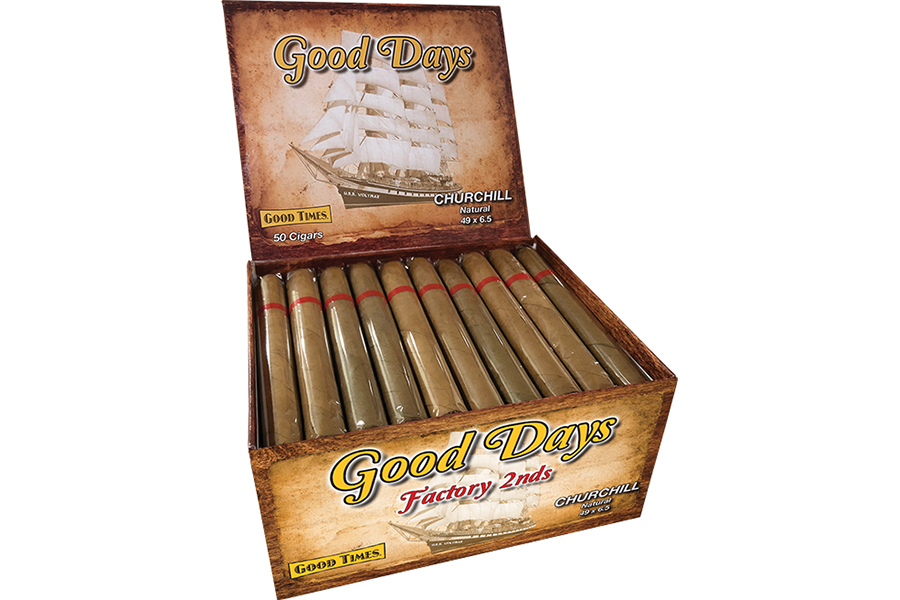
Good Times Opens Premium Cigar Division
Good Times Tobacco launched a new premium, handmade cigar division as it looks to expand beyond its core machine-made business, according to Halfwheel. The move includes plans for proprietary cigar brands, expanded distribution to existing retail partners, an e-commerce platform, and a walk-in humidor at its Tampa headquarters.
The company has already introduced its first handmade products under the GT One and Done line, with additional offerings planned across multiple price points and formats. Company executives said the strategy will target different retail segments while leveraging Good Times’ existing scale, which, according to the company, sold roughly one billion machine-made cigars last year.
-

Cigar Bar Bill Passes Iowa Senate
The Iowa Senate approved legislation that would allow premium cigar bars to operate despite the state’s public smoking ban, advancing a measure that could open a new hospitality segment for the cigar industry. Lawmakers voted 27–18 to pass Senate File 2444, which would amend the Iowa Smokefree Air Act to permit licensed establishments where customers can smoke premium cigars while being served alcoholic beverages. To qualify, venues would need to generate at least 35% of revenue from premium cigars and accessories, restrict entry to those 21 and older, maintain a walk-in humidor, and prohibit food service and other tobacco products. The bill now moves to the Iowa House of Representatives for further consideration.


