Tag: PTB

  • Pakistan Tobacco Farmers in Crisis as PTB Surplus Order Flouted

    Pakistan Tobacco Farmers in Crisis as PTB Surplus Order Flouted

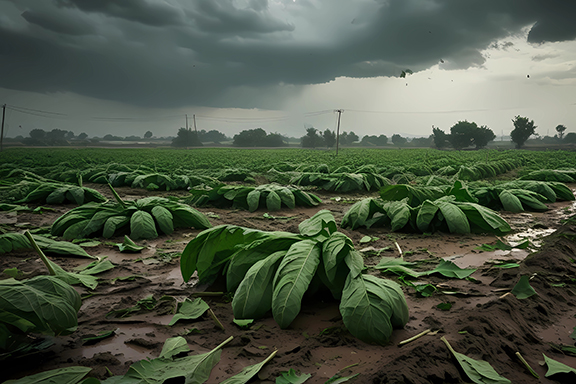
    Tobacco farmers in Khyber Pakhtunkhwa and Punjab are struggling as local companies fail to comply with the Pakistan Tobacco Board’s (PTB) September directive to purchase 40 million kilograms of surplus crop, according to Business Reporter. While some major firms have met their obligations, most local companies have delayed or refused purchases, leaving thousands of farmers with unsold tobacco and mounting financial losses, the article said.

    Farmers report that companies are buying tobacco below the Minimum Indicative Price and failing to honor payment terms, forcing growers to sell at throwaway prices to middlemen. In Swabi, for example, flue-cured Virginia tobacco remains in storage with no buyers in sight.

    Experts warn that issuing surplus orders without a monitoring framework or penalties has left farmers exposed. Compliant companies face liquidity and storage constraints, while non-compliant firms distort market dynamics. Industry analysts suggest that a second surplus order may be considered, but without stricter oversight, its impact could be limited.

    The crisis comes amid broader challenges for Pakistan’s legal tobacco industry, including falling domestic demand and economic pressures. Farmers emphasize that tobacco is a family livelihood, and the government’s lack of enforcement risks eroding trust in regulatory safeguards.

  • Pakistan Tobacco Board Criticized over Multinational Quota

    Pakistan Tobacco Board Criticized over Multinational Quota

    Leaders of the Ittehad Kashthkaran Khyber Pakhtunkhwa (IKKP) said a multinational tobacco company was instructed by the Pakistan Tobacco Board (PTB) to purchase 1.5 million kg of flue-cured Virginia (FCV) from Swabi growers, guaranteeing a minimum price of Rs743 ($2.60) per kg, according to an article published today by the local e-paper Dawn.

     “An official of a multinational national company said on condition of anonymity that the quota which was given to Philips Morris International (PMI) Pakistan was actually agreed with the Swabi growers under the agreements executed with them as it was purchased by the PMI in Shergar, Mardan district, but the PTB officials bound them to buy the 1.5 million kg tobacco in Swabi,” the article credited to an unnamed correspondent said.

    In the article, IKKP leaders criticized government inaction and PTB policies, urging that remaining tobacco be purchased promptly to prevent financial losses for farmers, who rely heavily on this crop for their yearly income. They said with a large quantity remaining unpurchased, the PTB should also oblige other companies to buy the crop from the farmers on time and give up the policy of declaring the remaining tobacco surplus to be purchased from the farmers at low price.

    “The PTB has not played its due role,” Daud Jan Khan, central vice-chairman of the IKKP, was quoted. “The companies have also left no stone unturned to cause as much financial damage to tobacco growers as they could.”

  • Pakistani Tobacco Farmers Need Protection Amid Export Boom

    Pakistani Tobacco Farmers Need Protection Amid Export Boom

    Muhammad Ameen, chairman of Pakistan’s Fair Trade in Tobacco (FTT), called on authorities and the Pakistan Tobacco Board (PTB) to intervene and safeguard smallholder farmers, citing delayed payments and illegal underpricing of crops. He said that continued mishandling of the current crop by the local companies will damage the domestic economy and threaten Pakistan’s credibility as a reliable exporter.

    “Tobacco farmers are being pushed to the brink,” Ameen said. “They are being forced to sell their crop at prices Rs. 200 ($0.70) below the legally mandated weighted average, and the payments they are owed are being delayed. If we allow local crops to be spoiled or go unsold, our international buyers will look elsewhere. We risk losing markets just as we’re beginning to gain ground.”

    Ameen warned that non-compliance with PTB purchase quotas threatens the sector’s backbone, despite a 158% surge in tobacco exports in FY 2024–25, from $64.4 million to $166.5 million.

  • Pakistan’s National Assembly Panel Calls for Reforms to Support Tobacco Growers

    Pakistan’s National Assembly Panel Calls for Reforms to Support Tobacco Growers

    Pakistan’s National Assembly Standing Committee on National Food Security met last week to address challenges facing tobacco growers, urging immediate reforms and greater inclusion of farmers in policymaking. Committee Chairman Syed Tariq Hussain emphasized the need to modernize agriculture and expand tobacco cultivation, citing global advances like drone technology.

    Officials revealed that general sales tax is applied to cigarettes but not raw tobacco, and that Rs949 million ($3.3 million) in research funds remain unused due to a key vacancy at the Pakistan Tobacco Board (PTB). The committee demanded swift appointments to all vacant PTB posts to unblock stalled development projects.

    Lawmakers also criticized the exclusion of tobacco growers from PTB committees overseeing local tax funds, corporate social responsibility programs, and crop development. The committee directed the ministry to ensure growers are included, calling their involvement essential for meaningful reform.

  • Pakistani Growers Demand Fair Prices

    Pakistani Growers Demand Fair Prices

    In a letter to the Pakistan Tobacco Board (PTB), farmers demanded that the minimum indicative price (MIP) be examined for the upcoming purchasing season. The letter said historically the Economic Coordination Committee kept MIP almost equal to the cost of production (COP), and thus there was virtually no return for the eight months of rigorous labor.

    “Tobacco growers are playing a critical role in the tobacco industry, generating employment for thousands, revenue for the federal government through taxes and foreign exchange from exports,” the letter said. “Therefore, time has come to realize the contribution and hardships of growers.”

    The letter further said there was a dire need for improving the economic condition of growers because if they fail the tobacco industry will collapse and cause unimaginable economic and social loss to the country.

    According to the requirements of tobacco marketing law MLO-487, the average market price should not be less than the previous year. However, the letter noted, that the tobacco marketing law had been flagrantly violated by the companies and that the PTB constantly sided with those companies over the growers.

    Officials of companies said they purchased tobacco according to the price set by the government.

  • PTB Dissolution Hurts Farmers, Opens Illicit Market

    PTB Dissolution Hurts Farmers, Opens Illicit Market

    The Pakistani government’s decision to dissolve the Pakistan Tobacco Board (PTB) and hand over the regulatory authority to provincial governments has sparked months of controversy, and will likely have severe economic, social, and regulatory consequences, said Osama Siddiqui, a macroeconomic expert.

    “The PTB has played a pivotal role in regulating tobacco production and the industry under a centralized system that benefits all stakeholders, including farmers and the legal tobacco sector,” Siddiqui said.

    He added that the dismantling of the system could lead to a surge in illegal tobacco cultivation and sales, which would undermine the legal industry. One of the PTB’s critical contributions has been ensuring fair prices for tobacco farmers, especially in Khyber-Pakhtunkhwa (K-P), where the majority of Pakistan’s tobacco is produced. By maintaining a balance between supply and demand, the PTB has safeguarded farmers’ interests, providing them with a stable income.

    The expert fears that provincial governments lack the capacity to manage this responsibility effectively. Without the PTB’s oversight, the farmers could face financial hardships due to falling prices and market instability. A decline in tobacco production will deprive the farmers of their livelihoods and leave them vulnerable to exploitation.

    The PTB’s centralized regulation has also fueled growth in tobacco exports, which increased from $42 million in 2019-20 to $108 million by the end of 2024. Additionally, legal tobacco sales have made a substantial contribution to the national treasury by generating Rs237 billion ($853 million) in revenue through the federal excise duty and sales tax.