
Japan’s Finance Minister Satsuki Katayama said the government’s industrial investment program would not be affected by Japan Tobacco’s decision to cut its annual dividend forecast by 25% following Russia’s seizure of its local subsidiaries. The Japanese government owns a 33.34% stake in JT (37.55% when JT’s treasury shares are excluded) and received 156 billion yen ($977 million) in dividend income for the fiscal year ended March 2026. Katayama said Friday that the dividend reduction would not hinder planned investments.
Tag: Putin
-
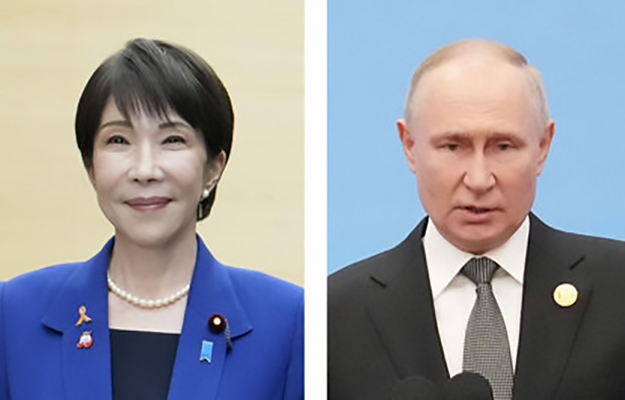
JT Forecasts $4.5B Loss from Russian Operations; PM Meets with Putin
Japan Tobacco expects to record a ¥1.38 trillion ($8.9 billion) loss after losing management control of its seven Russian subsidiaries, which were placed under temporary administration by Russian presidential decrees signed Nov. 5 and 6. JT will remove the subsidiaries from its consolidated financial statements effective Nov. 6, although it retains legal ownership. The affected companies include JTI Russia, Petro, JTI Donskoy Tabak, JTI Yelets, Cres Neva, Pereslavl-Tabak, and J.T.I. Innovative Products.
JT revised its 2026 forecast to a ¥724 billion ($4.5 billion) net loss, compared with its previous ¥662 billion ($4.1 billion) profit forecast. It now expects operating losses of ¥368 billion ($2.3 billion) and revenue of ¥3.84 trillion ($24.1 billion). The company also cut its annual dividend forecast from ¥272 ($1.71) to ¥204 ($1.28) per share. The chairman, deputy chairman, and three representative directors will take 50% cuts to monthly base compensation for two months and forgo 2026 executive bonuses. JT said its Russian operations strategy remains unchanged, and it will continue investing in heated tobacco products, including Ploom.
Japanese Prime Minister Sanae Takaichi met with Russian President Vladimir Putin Nov. 18 on the sidelines of the Asia-Pacific Economic Cooperation summit in Shenzhen, China, and raised concerns about the protection of Japanese companies and the detention of a Japanese national in Russia, Chief Cabinet Secretary Minoru Kihara said. The leaders agreed to maintain dialogue at various levels. The meeting comes after Russia placed all Japan Tobacco Group entities in the country under temporary administration on Nov. 5 and 6. The Japanese government owns 33.34% of Japan Tobacco’s issued shares, through the Ministry of Finance, as of Dec. 31, 2025.
-

JT Shares Hit Daily Limit Again After Russia Takeover
Shares of Japan Tobacco fell by the daily allowable limit for a second consecutive trading session Monday (Nov. 9) after Russia placed all of the company’s local entities under temporary administration, raising uncertainty about earnings from one of its most profitable overseas markets. The Tokyo Stock Exchange quadrupled the stock’s daily trading limit to 4,000 yen ($25.20), potentially allowing shares to fall as low as 1,269 yen ($8) Tuesday. The stock closed at 7,769 yen ($48.94) Thursday before Russian President Vladimir Putin signed the initial decree.
Russia accounts for about 25% of Japan Tobacco’s adjusted operating profit and 10% of revenue. The company said its Russian business continues to operate but that it is assessing the potential impact of the measures on its financial results. Putin expanded the original order over the weekend to include additional Japan Tobacco International subsidiaries.
The Japanese government, which owns about 37% of Japan Tobacco, received 156 billion yen ($982.8 million) in dividends for the fiscal year ended in March.
-
All JTI Russian Entities Under Temporary Administration
Japan Tobacco International (JTI) said three additional entities in Russia have been placed under temporary administration pursuant to Russian presidential decrees dated Nov. 5 and 6. The measures now cover all seven JTI entities in the country: Petro LLC, JTI Donskoy Tabak LLC, JTI Yelets LLC, Cres Neva LLC, JTI Russia LLC, JTI Innovative Products LLC, and one dormant entity. The company said its Russian business continues to operate.
Russia accounts for approximately 10% of JT Group’s consolidated reported revenue and 25% of its adjusted operating profit, based on the company’s revised 2026 forecast. As of Sept. 30, assets related to the Russian business, including goodwill, totaled approximately ¥1.5 trillion ($9.5 billion), including ¥360 billion ($2.3 billion) in cash and deposits. Related liabilities totaled approximately ¥200 billion ($1.3 billion). “As the impact of the temporary administration on its Russian operations remains under review, the JT Group continues to assess the potential impact on its financial results,” the company said. It added that it is monitoring the situation, gathering information, and evaluating available options and potential implications.
-
Japan, JTI Respond to Russian Seizure
After Russian President Vladimir Putin placed Japan Tobacco International (JTI) assets under temporary administration, the Japanese government formally protested to Moscow and demanded the immediate withdrawal of the measure. Chief Cabinet Secretary Minoru Kihara said Japan sent senior government officials to Moscow, where they joined the Japanese ambassador in protesting the takeover of four Japan Tobacco manufacturing subsidiaries. Kihara said the government wants to ensure that the legitimate interests of Japanese nationals and businesses are protected. Economy and Trade Minister Ryosei Akazawa said Japan would continue communicating with Russia to protect Japanese companies’ assets, while Finance Minister Satsuki Katayama said her ministry would coordinate with relevant government agencies and Japan Tobacco.
Japan Tobacco issued the following statement:
“The JT Group has continued its business operations in Russia in compliance with all applicable regulations and sanctions. However, we can confirm that, pursuant to a Russian presidential decree signed on November 5, among our entities in Russia, four manufacturing entities have been placed under temporary administration.
“The JT Group is currently gathering further information regarding this matter, considering the options available to the Group, and assessing the potential impact on the Group.”
-

Putin Seizes Control of JTI’s Russian Operations
Russian President Vladimir Putin placed the Russian assets of Japan Tobacco International (JTI) under temporary administration, transferring control of its stakes in four local businesses to Russian company Industrial Assets. The Nov. 5 decree did not provide a reason for the move. JTI, part of Japan Tobacco Inc., is Russia’s largest tobacco manufacturer by sales volume. The company did not immediately comment.
The move follows similar actions against foreign companies, including Nestlé, Metro AG, and Auchan, whose Russian assets were placed under temporary management in September. Moscow has increasingly used the measures against companies from countries it considers unfriendly because of sanctions imposed over the war in Ukraine. The decision also comes amid deteriorating relations between Russia and Japan, including Russia’s recent detention of a Japanese journalist on espionage allegations, which Tokyo has denied.
-

Russian Businesses Propose State Monopoly Over Vape Ban
Russian small business group Opora Russia and industry associations are urging federal authorities to abandon plans to ban the sale of electronic nicotine delivery systems and e-liquids, warning the move would push the market further into the shadow economy without reducing nicotine use. In an appeal to First Deputy Prime Minister Denis Manturov last week, the group argued that allowing regions to impose their own vape bans — an idea backed by President Vladimir Putin and already pursued in areas such as the Vologda, Penza, and Perm regions — would fragment the national market and drive legitimate retailers out of business. Industry representatives estimate around 20,000 outlets sell ENDS in Russia, serving 10–12 million consumers, while claiming 75–85% of current sales already occur in the gray market.
As an alternative to prohibition, associations, including the Union of Participants in the Circulation of Nicotine-Containing Products, have proposed creating a state-controlled monopoly on the production of base e-liquid under a concession model, allowing tighter oversight of product flows and taxation. They cite past excise hikes as evidence that restrictive policy has reduced legal sales and tax receipts while expanding illicit trade. The proposal has been referred to the Finance Ministry for review as the government continues work on draft legislation that could allow regions to experiment with retail bans between 2027 and 2032.
-

Russian Deputies Call for Complete National Vape Ban
A group of State Duma deputies proposed amendments to completely ban the sale of vapes and e-liquids in Russia, while also introducing stricter penalties for illegal trafficking and involving minors in nicotine use. The amendments, prepared by deputies led by Yaroslav Nilov, Yana Lantratova, and Nina Ostanina, have been submitted for consideration to relevant working groups and reviewed by RBC.
The proposal is linked to the second reading of a bill on licensing the retail trade in tobacco and nicotine products. Deputies highlighted that the ban aligns with President Vladimir Putin’s call for radical measures to protect children and young people from vaping risks. The amendments were sent to multiple inter-factional working groups focusing on public health, moral education, and the protection of traditional Russian values.
The initiative has been framed as a long-overdue measure to safeguard public health, according to Lantratova, who emphasized that partial restrictions are insufficient. The current bill, submitted by the government in September 2025, sets a licensing framework for retail sales of tobacco and nicotine products, with unlicensed sales prohibited from September 1, 2026, and a transition period until September 1, 2027. The Ministry of Finance has also proposed giving regional authorities the power to impose local bans on vape sales, notifying the Federal Service for Alcohol Tobacco Control accordingly.
-
Dagestan Proposes Retail Vape Ban as Part of Russian Pilot Project
The Republic of Dagestan may become one of the first regions in Russia to ban the retail sale of vapes, as part of an experimental pilot program. The proposal was made by the republic’s head, Sergey Melikov, in an address to the State Duma, according to the administration’s press service on Telegram.
“I believe that such a measure will reduce the level of diseases associated with the use of vapes,” Melikov said. He also noted that President Vladimir Putin has supported initiatives allowing regions to impose restrictions on vape sales, paving the way for Dagestan to participate in the program.
-

Putin Backs Regional Vape Bans in Russia
Russian President Vladimir Putin has endorsed a proposal to give regions the authority to ban the sale of vapes, following concerns over rising youth use. At a meeting in Sarov, Nizhny Novgorod Governor Gleb Nikitin suggested his region could serve as a pilot area for the ban. Putin called it a “good proposal” and signaled immediate support.
The move comes a day after the government expanded its mandatory labeling experiment to cover e-cigarettes and heated tobacco devices, tightening controls on the sector.