Tag: Russia

  • Ukraine is Opportunity to Transform Tobacco

    Ukraine is Opportunity to Transform Tobacco

    Photo: Hugo

    The crisis in Ukraine offers an opportunity to transform tobacco use across eastern and central Europe.

    By Derek Yach

    Vladimir Vorotnikov, writing in Tobacco Reporter’s August 2022 issue, outlined how Russia’s invasion of Ukraine has upended well-established supply chain and business relationships that have been in effect for decades. In fact, a careful read of Balkan Smoke by Mary C. Neuberger traces the roots of these relationships way back to Bulgaria in the 1920s. Vorotnikov discussed the impact of sanctions on Russian tobacco production, the emergence of illicit trade in the region, and more recently, the reestablishment of cigarette production in Ukraine.

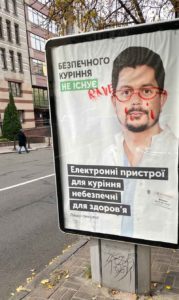
    He does not discuss the massive growth over the past few years in new reduced-risk nicotine products—led by IQOS—across eastern and central Europe. The editor makes the point that Russia is (was) one the largest markets for IQOS. My own observations during a visit to Kyiv in late October 2021 were that a range of vape products and heated-tobacco products were readily available across the city despite posters funded by Bloomberg Philanthropies near the Parliament proclaiming that they were dangerous.

    An anti-vaping poster in Kyiv
    (Photo courtesy of Derek Yach)

    This is a time of profound transition for the region. Amid the horrors of war and the human tragedies it continues to bring to the people of Ukraine are opportunities to reduce future deaths from the single largest cause of premature death in the region—and especially among men—combustible tobacco products. As rebuilding begins—as it inevitably will—government, business and health professionals need to grasp the chance to avoid rebuilding the tobacco industry in the image of the past and rather take the high ground of health and make reduced-risk products the easily available option while phasing out combustible sales.

    For governments, this means adopting risk-proportionate regulations that build on the approaches proposed by the recent Javed Khan report for the United Kingdom, and on the authorizations of a range of reduced-risk products by the U.S. Food and Drug Administration. Ukraine and the neighboring countries relied on FDA guidance in relation to Covid vaccine advice—now is the time to draw upon their guidance to accelerate access to reduced-risk products, citing the FDA’s comments that they are deemed “appropriate for the protection of public health.”

    Tax and other regulatory approaches could be applied to accelerate the transition. Further, governments of the region need to step up investments in customs and excise oversight to stop large-scale illicit trade taking hold—as it has in the occupied territories of Georgia following Russian invasion in 2008.

    The Russian government also has an obligation to protect the health of its people and take regulatory steps to ensure that the progress made by Philip Morris International, Japan Tobacco International and BAT is increasing their revenue from heated-tobacco products at the cost of combustibles. Slippage with regard to these gains will translate into a return to the very high smoking rates, and associated death rates, of the past.

    Government actions will be limited, though, unless the three leading tobacco companies (PMI, JTI and BAT) active in the region commit to take concerted efforts to accelerate their transition out of combustibles and publicly clarify what “withdrawing from Russia” means. Are they continuing to profit from Russian cigarette sales albeit through local companies? Are those companies obliged to push ahead with reduced-risk products, or will they revert to cigarettes?

    Outside of Russia, leading tobacco companies could communicate the benefits of switching, take measures to clamp down on illicit trade and tighten youth access to all nicotine products, through joint action. Such bold actions would give them a chance to show their seriousness to transformation—something investors should reward.

    United Nations agencies have a role to play at this time. Evidence emerging from inside Ukraine suggests that smoking rates have increased among those in the military and possibly among displaced peoples. This is understandable given the unprecedented stress to which people are exposed. The current U.N. response has been to ignore this reality and simply continue to support policies that ban cigarette sales during conflicts—something that is probably ignored. A far better way forward is to support people who smoke or seek nicotine to have ready access to nicotine-replacement products and approved reduced-risk nicotine products. This would mean that a generation of people may well emerge from the war with lower overall risks to their health.

    War and tobacco use are intimately linked and currently interacting in dangerous ways to the health of populations. We should not wait for the transition to peace and health to begin before taking steps to accelerate the transition of smokers away from combustibles.

  • In The Crossfire

    In The Crossfire

    Photo: Tabakprom

    Russia’s invasion of Ukraine has wreaked havoc on the regional tobacco market.

    By Vladislav Vorotnikov

    Russia’s invasion of Ukraine has wreaked havoc on the tobacco industry in the post-Soviet area, prompting the world’s largest cigarette companies to shut down Ukrainian factories and curtail investments and marketing activity in Russia. The current crisis is also likely to provoke a dramatic rise in the illegal segment of the tobacco market in this part of the world.

    Since the beginning of the conflict, BAT, Japan Tobacco International and Philip Morris International faced mounting public pressure to sever their ties with Russia.

    On March 23, Ukrainian Finance Minister Serhiy Marchenko appealed to Western tobacco companies to stop doing business in Russia. Marchenko wrote in a statement posted on his Facebook page that all cigarette manufacturers had pledged to suspend new investments, while BAT considered transferring business to a third party. However, he added, those steps were clearly not enough.

    “My conviction is that there can be no compromises and smoothing alternatives,” Marchenko wrote.

    Since Feb. 24, more than 1,000 multinational businesses have said they’re curtailing, suspending or severing ties to Russia compared to only the few hundred that abandoned South Africa over Apartheid,  research conducted by the Yale School of Management showed. The Russian government responded to the mass exodus of Western brands by threatening foreign firms leaving the country with forced nationalization of their production assets.

    On May 16, Russia went through with its threats and nationalized a major factory that belonged to French car maker Renault, sending a clear signal to all Western companies that curtailing operations in the current conditions would come at a heavy cost since it would mean losing their production capacities.

    The Russian authorities are keen to avoid a shortage of cigarettes on the domestic market as it would spark social unrest, something the country had already seen during the final days of the Soviet Union.

    “In 1990, a shortage of cigarettes led to massive strikes and even to plant and factory shutdowns,” said Ekaterina Pozdeeva, an analyst of the Moscow-based think tank Finam. “In Moscow, more than 100 cases of riots over tobacco were registered. The workers demanded at least two packs per hand. The USSR was forced to buy $300 million worth of cigarettes from the USA.”

    On the other hand, over the past 25 years, Western tobacco companies invested roughly $5 billion in the Russian tobacco industry, Pozdeeva said. Losing this money would be quite painful, so most companies opted for transferring their businesses to local market players.

    For instance, BAT has transferred business management to its Russian distributor and partner, SNS Group, which plans to maintain the same level of production and supplies. Philip Morris International also said it considered options for restructuring and transferring assets but has not yet made any concrete decisions.

    Imperial Brands said in a statement on April 21 that it had transferred its business in Russia, including its Volgograd factory, to local investors and would write off €225 million ($294 million) of its tobacco assets in the country. Japan Tobacco International also suggested that it would change the Russian owner of its local business.

    With annual sales ranging between 200 million and 230 million cigarettes, Russia is among the world’s largest tobacco markets. In 2020, the value of the Russian cigarette market was estimated at RUR1.4 trillion ($23 billion), bringing RUR600 billion of taxes to the federal budget, the Russian federal statistical service Rosstat estimated.

    Biting Sanctions

    The Russian cigarette industry, however, is likely to feel the sting of sanctions as all tobacco and almost all raw materials are imported to the country, according to Maxim Korolev, head of the Russian Tobacco informational agency, adding that it is not clear whether import replacement in this field is even possible.

    “On the one hand, paper-based aluminium foil supplied by a Russian company, after several years of quality improvement, has become widely used by many Russian tobacco factories,” Korolev said. “On the other, the domestically produced polypropylene film has not reached the required quality level in terms of some key parameters, and none of the tobacco companies uses it.

    “Factories also use domestic corrugated cardboard for master cases, but we do not make coated cardboard for the cigarette packs,” he said, adding that fast import replacement is not anticipated in this field.

    On top of that, Russia experiences problems with leaf tobacco imports. Over the past few months, Russian businesses complained about a lack of tobacco for homemade cigarettes.

    Igor Moiseev, chairman of the Pogar Cigarette and Cigar Factory, commented that the supply disruptions are primarily attributed to logistics issues. Moiseev said that before the Russia-Ukraine crisis, Germany, Denmark and the Netherlands were the main suppliers of tobacco for homemade products, and most tobacco was delivered by road through Belarus.

    “Today, even with an advance payment, no one can guarantee that the cargo will be delivered [from Europe to Russia],” Moiseev said. “Difficulties in making wire transfers also affect import. And the majority of suppliers operating in this segment of the tobacco market are small[-sized] and medium-sized companies with limited resources.”

    Korolev said that Imperial Tobacco was forced to stop the operation of its factory in Russia due to a lack of tobacco, estimating that other market players may have stocks of tobacco large enough to maintain operation for up to six months. On the other hand, Korolev added, most tobacco for cigarette production is imported into Russia from South American and African countries that have not publicly supported Western sanctions against the country, so there are good chances that the supply disruptions could eventually be sorted out.

    Oleg Barvin, a spokesperson for BAT, confirmed to the Russian newspaper Kommersant that all market participants experienced logistics problems with delivering tobacco and other raw materials for cigarette production to Russia. Barvin added that despite these challenges, the company ensured uninterrupted production and distribution of products.

    On the other hand, the sanctions are not expected to impact the Russian e-cigarette market. As explained by Kirill Plokhikh, director of the business faculty at Synergy University, Russia imports most e-cigarettes from China. Plokhikh added that some share of nicotine-containing liquids for vapes was supplied to Russia from Western countries, but in this segment, too, buyers could swiftly shift to Chinese suppliers.

    Tobacco Industry Bounces Back in Ukraine

    The Russian invasion forced all Ukrainian cigarette makers to pull the plug on operations, but several have already relaunched production, with some even eyeing restoring production performance to the pre-war level.

    Galina Vorobieva, director of Imperial Tobacco Production Ukraine, said that despite fears voiced by Western officials since October 2021 about the upcoming Russian invasion, nobody in Ukraine took it seriously.

    “Although we assumed such a course of events, we did not believe until the very end that it [the Russian invasion] could happen,” said Vorobieva. “We had a plan on how to act in the event of a real threat to the enterprise and personnel. And it is very good that we had it. In the early morning [of Feb. 24], we turned off the equipment, asked people to hop on buses and took them home.”

    Imperial Tobacco considered moving its Ukrainian factory to Western parts of Ukraine even though it would take at least six months to relocate equipment.

    “When we realized that the situation had become more or less controllable, we decided to resume production. It was not an easy decision because we understand that there are still risks,” Vorobieva said, estimating that the factory was out of service for 46 days.

    With much of Ukraine’s tobacco production offline, demand is met primarily by imports from the European Union, according to the Ukrainian tobacco association Ukrtabak.

    Illegal Market Flourishes

    The current crisis promises to dramatically boost the size of the illegal cigarette market in the region. A quarter of Russians have already switched to illegal cigarettes, a survey conducted by the analytical agency Ipsos in April showed. In early April, nearly 25 percent of respondents admitted buying illegal tobacco products, 8 percent more than in mid-March.

    Not only consumers and retailers suffer from illegal products. From 2016 to mid-2021, the federal budget “lost” almost RUR300 billion in tax revenues due to illegal tobacco products, the Russian Accounts Chamber calculated.

    The Moscow-based think tank Kantar TNS Russia estimated that the share of the illegal sector grew tenfold, from 1.1 percent to 10.7 percent, recently. In 2021, the share of illegal tobacco products on the market reached at least 11.5 percent, according to a study by the government’s National Scientific Competence Center.

    The main supplier of illegal tobacco products to Russia is Belarus. Before the adoption of the first Russian anti-tobacco law, Belarus produced 15 billion cigarettes a year with a population of 10 million. Today, the population remains about the same, but cigarette production has grown to 35 billion sticks.

  • Russia Exit Hits BAT Profits

    Russia Exit Hits BAT Profits

    Photo: BAT

    BAT took a £957 million ($1.15 billion) impairment charge related to the transfer of its Russian business, lowering its half-year earnings by a quarter.

    The London-based firm, which controlled almost a fourth of the Russian market, said earlier this year that it was in advanced talks with its distributor in the country to sell the business in the wake of Russia’s invasion of Ukraine.

    BAT reported a 25 percent drop in profit from operations on a reported basis to £3.68 billion for the six months to June 30 as a result of the charge. The company expects global tobacco industry volume to be down about 3 percent, partly because of the Russia-Ukraine crisis.


    In a press release announcing the half-year results, BAT emphasized the growth of its New Categories products and the performance of its combustible business, which continues to grow value share enabled by robust pricing.

    “I am very proud that our continued New Categories growth momentum is driving faster transformation, with revenue growth of 45 percent in the first half of 2022, on top of 51 percent growth in fiscal year 2021,” said BAT CEO Jack Bowles. “I am especially proud that the number of consumers using our noncombustible brands has passed the milestone of 20 million in the first half.”

    Noncombustible products now represent 14.6 percent of BAT’s revenue.

    While acknowledging the geopolitical and macroeconomic challenges, Bowles was upbeat about the outlook for BAT.

    “We are not immune, of course, to the increasing macroeconomic pressures, exacerbated by the conflict in Ukraine,” he said. “However, we are well positioned to navigate the current turbulent environment due to our powerful brands, operational agility and continued strong cash generation.”

  • ‘Bloody Complex’: PMI’s Tricky Exit From Russia

    ‘Bloody Complex’: PMI’s Tricky Exit From Russia

    Photo: Anton Gvozdikov

    Exiting Russia represents a considerable headache for Philip Morris International, according to an article in The Wall Street Journal. The process, begun in March shortly after Russia’s invasion of Ukraine, includes navigating Moscow’s shifting regulations, avoiding missteps that could prompt the government to seize the business and trying to protect employees from becoming targets for arrest.

    Russia’s February invasion triggered Western sanctions, and hundreds of businesses, including tobacco companies, have pledged to exit or cut back operations in Russia. In early March, PMI announced it would suspend its investment and scale down its manufacturing operations in Russia. Later that month, the company announced it would exit the market altogether.

    PMI is trying to sell its Russian business and has had talks with suppliers interested in buying it. However, from the outset, it hasn’t been clear which Russian authority would approve such a sale or what the process was for seeking that approval. “It’s so bloody complex,” The Wall Street Journal quoted PMI CEO Jacek Olczak as saying. “This one is really mind-blowing.”

    Russia is a significant market for PMI. In 2021, it accounted for almost 10 percent of PMI’s global volume of cigarette and heated-tobacco shipments and around 6 percent of its $31.4 billion in net revenue. At the beginning of this year, PMI had more than 3,200 employees in the country.

    The company entered the Soviet Union in 1977, when it signed a licensing agreement with the state-owned industry to manufacture Marlboros. It now has a factory in St. Petersburg and sales offices in about 100 cities.

    Because of the withdrawal, the company will meet a global sales goal for its smoke-free products a year later than expected, Emmanuel Babeau, the company’s chief financial officer, said at a conference in May.

  • Fortuna Possible New Owner Imperial’s Russian Business

    Fortuna Possible New Owner Imperial’s Russian Business

    Photo: ASDF

    Fortuna Cigar House (FCH) could become the new owner of Imperial Brands’ Russian business, according to an Interfax report citing the Kommersant newspaper.

    Following Russia’s military invasion of Ukraine, several tobacco companies said they would scale back their operations in Russia. On April 20, Imperial Brands announced the transfer of its Russian business to local investors, subject to finalization of the registration of the transaction with local authorities. The company estimates a noncash write-off of around £225 million ($279.86) for this transaction.

    Founded in Odessa in 1999, FCH has been operating in Russia since 2011 as a joint venture with the distributor Megapolis, which was previously associated with Russian tobacco mogul Igor Kesaev. The company sells cigars, tobacco, smoking accessories and materials and equipment. It also has its own retail outlet.

    According to SPARK-Interfax, 50.01 percent of FCH belongs to Megapolis, and 49.99 percent belongs to BVG Cigar House Fortuna of Cyprus. In 2021, FCH posted revenue of RUR4.09 billion ($67.12 million) and a net profit of RUR404 million.

    In March, Imperial Brands said it was suspending operations in Russia, including production at its factory in Volgograd, as well as sales and marketing. The company then began talks with a Russian legal entity on transferring the business.

    Imperial Brands operates in Russia through Imperial Tobacco Volga, the production entity, and Imperial Tobacco Sales and Marketing. The company has held around 5.5 percent of the Russian tobacco market, according to business analysts cited by Kommersant.

    Tobacco analysts Maxim Korolyov told Kommersant that Imperial Brands’ products will likely continue to be produced in Russia under a temporary license.

  • Russian Tobacco Mogul Faces Scrutiny

    Russian Tobacco Mogul Faces Scrutiny

    Photo: GAlexS

    Metro published a profile of Russian tobacco mogul Igor Kesaev, who has been sanctioned by the EU and the U.K. for aiding Russia’s invasion of Ukraine.

    Listed by Forbes as Russia’s 35th-richest person last year, Kesaev’s holdings have included a major stake in the V.A. Degtyarev factory, which makes machine guns, anti-tank and anti-aircraft weapons, some of which have been used in Ukraine, according to sources.

    Until recently, Kesaev was also the board chairman of Russia’s leading tobacco distributor, TC Megapolis. Kesaev resigned from the board on April 11, 2022, according to a Russian-language press release, which stressed that Megapolis was not subject to EU sanctions and Kesaev did not influence the company’s business.

    Kesaev’s involvement in tobacco dates to the early 1990s. As the Soviet Union broke up into its constituent republics, he started an importing business that worked with international tobacco companies eager to get their products into the Russian market, according to a 2014 profile of the magnate published on Forbes’ Russian website.

    Russia was—and continues to be—an attractive market for international tobacco companies, with its large population of around 145 million people and one of the highest smoking rates in the world. More than 40 percent of men there light up, according to the World Health Organization.

    According to the Forbes profile, Kesaev graduated from Russia’s prestigious Moscow State Institute of International Relations. In the 1990s, he lived in Switzerland, where he developed personal connections with executives at Philip Morris International’s regional headquarters in Lausanne.

    Over time, Kesaev built the largest tobacco distributor in Russia through acquisitions of regional competitors, according to Forbes’ Russian website. Today, Megapolis delivers to 160,000 retailers across the country, according to the firm’s website. In 2013, PMI and Japan Tobacco International both purchased 20 percent stakes in Megapolis’ holding company for $750 million each.

    Kesaev has also been involved with the tobacco business in Ukraine. Following the toppling of Ukraine’s pro-Russian president, Viktor Yanukovych, in 2014 and Russia’s subsequent annexation of Crimea, Ukrainian officials began scrutinizing the role of Russian companies in various sectors of its economy.

    At the time, Trading Company Megapolis-Ukraine controlled 99 percent of Ukraine’s tobacco distribution market, according to research from the Anti-Monopoly Committee of Ukraine.

    Kyiv sanctioned Kesaev in 2016 for unspecified actions that it said threatened Ukraine’s national security. A top Ukrainian prosecutor later accused Kesaev of supporting “terrorist organizations” by supplying arms to Russian-backed separatist groups that have been fighting for nearly a decade to carve out two independent states—Donetsk and Luhansk—in eastern Ukraine.

  • Imperial to Transfer its Russian Business

    Imperial to Transfer its Russian Business

    Photo: GerMann

    Imperial Brands today announced the transfer of its Russian business to investors based in Russia, subject to finalization of the registration of the transaction with local authorities, which is expected to take place shortly.

    The transaction aligns with the company’s desire to divest its entire Russian operation as a going concern in order to provide the best outcome for its 1,000 Russian employees.

    Imperial Brands’ Russian operations include a sales and marketing business, and a factory in Volgograd.

    “We continue to support our Ukrainian colleagues and their families, including with transport and accommodation to enable them to escape the areas most heavily affected by war, and resettlement assistance for those who have left Ukraine,” the company wrote in an update.

    Imperial Brands said its previous guidance on the financial impact of its exit from Russia and suspension of our Ukraine operations remains unchanged.

    In fiscal year 2021, Russia and Ukraine represented in total around 2 percent of Imperial Brands’ net revenues and 0.5 percent of adjusted operating profit. The company anticipates a non-cash write off of around £225 million ($293.78 million) for this transaction, which it expects to be treated as an adjusting item.

  • Russia Sanctions Target Tobacco Tycoon

    Russia Sanctions Target Tobacco Tycoon

    Photo: Zerophoto

    Tobacco tycoon Igor Kesaev is among the targets of the latest tranche of EU and U.K. sanctions against individuals believed to be supporting the Russian-backed breakaway regions of Luhansk and Donetsk in Ukraine, according to The Herald of Scotland.

    Kesaev reportedly controls 70 percent of the Russian cigarette market and is Russia’s 35th richest person.

    Other individuals on the sanctions list include the wife of Russian foreign minister Sergei Lavrov, Maria Lavrova; Alexander Ananchenko and Sergey Kozlov, self-styled Prime Minister and Chair of Government of the so-called Donetsk and Luhansk People’s Republics.

    Relatives of Russian oligarchs have been targeted as well, including Pavel Ezubov, cousin of Oleg Deripaska, and Nigina Zairova, Executive Assistant to Mikhail Fridman. 

  • Heading for the Exit

    Heading for the Exit

    Photo: Matvey Salivanchuk

    Following Russia’s invasion of Ukraine, tobacco companies to retreat from one of the world’s top cigarette markets.

    By Stefanie Rossel

    Amid growing pressure, the four leading international tobacco manufacturers have joined the exodus of U.S. and European companies that has followed Russia’s invasion of Ukraine. In early March, after the United States, the European Union and Great Britain imposed economic sanctions, all major cigarette makers announced that they would suspend operations or pull out of Russia altogether—although some did so less enthusiastically than others.

    After initially announcing it would merely suspend its planned capital investments in Russia, BAT quickly made a U-turn, signaling a far greater retreat. On March 11, the company announced that its ownership of the business in Russia was no longer sustainable in the current environment, which it described as “highly complex, exceptionally fast-moving and volatile.” BAT is in advanced talks to transfer its Russian business to the SNS group of companies, its distributor in the country since 1993. According to SNS, the level of production and the supply and distribution chain would be maintained with a transfer. As a result of the withdrawal, BAT reduced its annual revenue growth outlook to between 2 percent and 4 percent from the 3 percent to 5 percent announced in February.

    BAT’s move came a day after a Russian government commission approved the first step toward nationalizing the assets of departing foreign companies. On March 10, Russia’s economic development ministry published a draft bill that would give state-owned Vnesheconombank and the state export guarantee agency the right to seize the property of foreign firms that left Russian markets of their own accord. The proposed law would treat a corporate decision to exit the business as a criminal bankruptcy and empower authorities to initiate criminal justice proceedings against local management, BAT Chief Marketing Officer Kingsley Wheaton told Reuters in an interview.

    After announcing plans to scale down its operations in Russia on March 9, Philip Morris International in late March specified the concrete steps it would take, saying it was working on options to exit the Russian market “in an orderly manner.” The company stated that it had discontinued some of its cigarette brands offered in the market and suspended its marketing activities. Furthermore, it had canceled all product launches planned for this year in Russia, including the introduction of its new tobacco-heating product (THP), IQOS Iluma, and its plans to manufacture more than 20 billion Terea sticks, the consumables for IQOS Iluma. Production of the latter would have involved an ongoing investment of $150 million, which the company also canceled.

    JTI, meanwhile, limited its withdrawal from Russia to a suspension of all new investments and marketing activities along with the launch of its most recent THP, Ploom X.

    Imperial Brands, which has a relatively small footprint in Russia, announced on March 15 that it had started negotiations with a local third party about a transfer of its Russian assets of operations. “We believe that, in the current circumstances, an orderly transfer of our business as a going concern would be in the best interests of our Russian colleagues,” Imperial Brands wrote in a statement.

    In addition to their actions in Russia, all four cigarette manufacturers temporarily closed their production sites in Ukraine to protect their workforce and have pledged to continue paying the salaries of employees in the affected countries.

    The decision to leave Russia not only has financial consequences, but it also presents practical challenges. (Photo: Tobacco Reporter archive)

    Between a Rock and a Hard Place

    In deciding their course of action, cigarette manufacturers faced a dilemma of choosing either to leave and protect their reputations or to stay and continue to benefit from the world’s fourth-largest tobacco market.

    The decision to leave not only has financial consequences, but it also presents practical challenges, according to Jon Fell, partner at Ash Park Capital. “It’s one thing to say, ‘we’re no longer going to send our luxury handbags or fashionable training shoes to Russia,’ but if, in addition to factories or distribution centers, you have hundreds or thousands of employees in the country—who up until now have been seen as an integral part of your international company—then you have to take difficult and complex decisions, and there’s no obvious easy, right answer,” he says.

    “Sorting the mess out takes time, and you can’t just abandon employees,” adds Fell. “I don’t think the approach of the tobacco industry overall is very different to that of other consumer packaged goods companies, quite a few of whom are continuing to operate in Russia right now—and drawing criticism because of that.”

    Russian cigarette makers sold 206 billion cigarettes with an estimated value of $717 billion in 2020, according to Euromonitor International. The market has been declining at a 6 percent compound annual rate over the past 10 years and almost 7 percent over the past five years.

    At the same time, the country has developed into a promising market for THPs, which, according to Moningstar, accounted for 11 percent of the total tobacco market in 2021, making the country one of the largest markets for these products outside of Asia.

    With a volume share of 38 percent in 2021, JTI has the greatest exposure to Russia of the tobacco multinationals, according to Euromonitor. The company, which in 2018 acquired Donskoy Tabak, has four factories and 4,000 employees in the country. It has invested over $4.6 billion in the past 20 years. In 2020, its tax payments accounted for 1.4 percent of Russia’s state budget. Russia represented almost 16 percent of group volume in 2021, according to Morningstar.

    It’s one thing to say, ‘we’re no longer going to send our luxury handbags or fashionable training shoes to Russia,’ but if, in addition to factories or distribution centers, you have hundreds or thousands of employees in the country, then there’s no obvious easy, right answer.

    Costly Exits

    For PMI, Russia accounted for almost 10 percent of cigarette and THP unit shipment volume and around 6 percent of its total net revenues in 2021. With a market share of 26 percent, the company has three factories, more than 100 sales outlets and approximately 4,100 employees in the country. Ukraine, where PMI runs a factory in Kharkiv with around 1,300 employees, represents about 13 percent of PMI’s regional volume and contributed almost 2 percent to PMI’s total net revenues in 2021.

    Morningstar expects PMI’s tobacco volume from Eastern Europe to decline by 45 percent in 2022 with a slow recovery thereafter as the collapse of the ruble is likely to create translational foreign exchange pressure.

    Both Russia and Ukraine are important markets for IQOS, accounting for about 23 percent of PMI’s THP sales. PMI’s shipments of THP consumables in Russia increased from 13.6 billion units to 16.3 billion sticks in 2021 while shipments of cigarettes continued to fall. Considering Russia’s worsening economic outlook in the wake of international sanctions, however, a J.P. Morgan analyst doubted that PMI would still be able to achieve its next-generation product growth targets. Morningstar assumes that PMI’s write-down in case of a market exit could be approximately $7 billion, corresponding to 5 percent of the company’s market capitalization.

    Ukraine and Russia combined accounted for 3 percent of BAT’s group revenue in 2021 and a slightly lower proportion of adjusted profit, the company said on its website. Morningstar estimates that the bulk of net revenue from these two countries, 2.5 percent, was generated by Russia, where BAT, according to Euromonitor, held 25 percent of the market in 2021. Employing some 2,500 people in Russia, BAT has a factory in St. Petersburg and 75 regional offices. Since the company entered the market in 1991, it has invested more than $1 billion in Russia. Morningstar reckons that the value of BAT’s operations will depreciate by around $2.2 billion, or about 2.4 percent of its market capitalization, as a result of its withdrawal from Russia.

    Among the four players, Imperial Brands is a distant fourth, holding 8 percent of the Russian cigarette market. It operates a production site in Volgograd and has a workforce of 1,000. In 2021, the company said, Ukraine and Russia represented in total around 2 percent of net revenues and 0.5 percent of adjusted profits. Due to the limited profit contribution of the two markets, Imperial Brands explained it expected “a relatively small impact” on its constant currency adjusted profit.


    Seeking a Backdoor

    How the multinationals’ retreat will impact Russia’s illicit cigarette market is anyone’s guess. “It’s very hard to know how demand and supply of tobacco products will evolve in Russia given all that’s going on with sanctions, ownership of the industry and, presumably, local purchasing power,” says Fell. “I would certainly think that an increase in the size of the illicit market is a risk, and that’s also going to depend on how long this situation lasts.” Illegal cigarette sales represented 10.7 percent of the total Russian tobacco market in 2021, up from 4.6 percent in 2017, according to Statista.

    Much will depend on how long the conflict continues. Considering the large amounts invested in Russia over the past 20 years, it’s safe to assume that cigarette manufacturers will do their best to minimize their losses. The companies have built strong positions in the Russian market, and there is demand for their products.

    “I’d be surprised if any of the companies—not just the tobacco manufacturers—now exiting Russia are doing so in a way that would prevent their going back in the future, assuming that the war stops at some point, relations are normalized and reentry becomes conceivable,” says Fell. “But arranging that in a way which allows you to say you have exited the country for the time being is no doubt very tricky and is likely to be contributing to decisions taking some time to reach and to be implemented.”

  • PMI Scaling Down Russian Operations

    PMI Scaling Down Russian Operations

    Photo: Matvey Salivanchuk

    Philip Morris International today announced the concrete steps it has taken to suspend planned investments and scale down its manufacturing operations in Russia, following that country’s military invasion of Ukraine.

    PMI said it has discontinued a number of its cigarette products offered in the market and is reducing its manufacturing activities accordingly. It has also suspended marketing activities in the country and canceled all product launches planned for 2022 in Russia, including the launch of its flagship heated tobacco product IQOS Iluma, originally planned for March 2022. In addition, PMI has canceled its plans to manufacture more than 20 billion Terea sticks (for IQOS Iluma) in Russia and the related ongoing investment of $150 million.

    PMI’s board of directors and senior executives are working on options to exit the Russian market in an orderly manner, in the context of an increasingly complex and rapidly changing regulatory and operating environment.

    “Our focus and all our efforts over the last four weeks have been to ensure the safety and security of our Ukrainian colleagues. We stand in solidarity with the innocent men, women and children who are suffering,” said PMI CEO Jacek Olczak in a statement. “We employ more than 3,200 people in Russia. We continue to support them, including paying their salaries, and we will continue to fulfil our legal obligations. We will continue to make decisions with their safety and security as a priority.”

    Russia accounted for almost 10 percent PMI’s total shipment volumes and around 6 percent of PMI’s net revenues in 2021.