Tag: vape

  • FTC Warns Seven Vape Companies Making ‘Made in USA’ Claims

    FTC Warns Seven Vape Companies Making ‘Made in USA’ Claims

    The Federal Trade Commission issued warning letters to seven companies over potentially misleading U.S.-origin claims, including e-cigarette retailer My Vape Order Inc. The agency said the companies appear to have marketed certain products as “Made in the USA” or “Made in Texas” despite indications they were imported in whole or in significant part, warning that such claims must comply with the FTC’s Made in USA Labeling Rule.

    The FTC did not announce formal enforcement actions or penalties but cautioned that companies making unqualified U.S.-origin claims could face investigation if they fail to bring their marketing into compliance. Under FTC rules, products advertised as “Made in the USA” must be “all or virtually all” manufactured domestically. FTC Bureau of Consumer Protection Director Christopher Mufarrige said the agency will hold companies accountable for misleading origin claims that undermine consumer trust and disadvantage manufacturers that legitimately produce goods in the United States.

    The other companies receiving warning letters were A&F Drum Company LLC, Helmel Engineering Products Inc., Lucky Bar Holdings LLC, NebTech Inc., Vtron Inc., and Z-Tech Advanced Technologies Inc.

  • UKVIA Forum Targets Vaping Policy Challenges

    UKVIA Forum Targets Vaping Policy Challenges

    The UK Vaping Industry Association will unveil new research on the expected impact of the UK’s Vaping Products Duty at its July 13 forum, including findings on consumer behavior, smoking cessation, illicit trade, and stop-smoking services. The association will also release results from a survey of more than 3,500 consumers highlighting the importance of flavors, along with Freedom of Information data on flavor use in local stop-smoking services. UKVIA said the findings are intended to inform debate on upcoming vaping regulations, retailer licensing, and enforcement against illicit sales as the UK prepares to implement the Vaping Products Duty in October.

  • Cyclone Publishes Nicotine-Free Vape, Pouch Data

    Cyclone Publishes Nicotine-Free Vape, Pouch Data

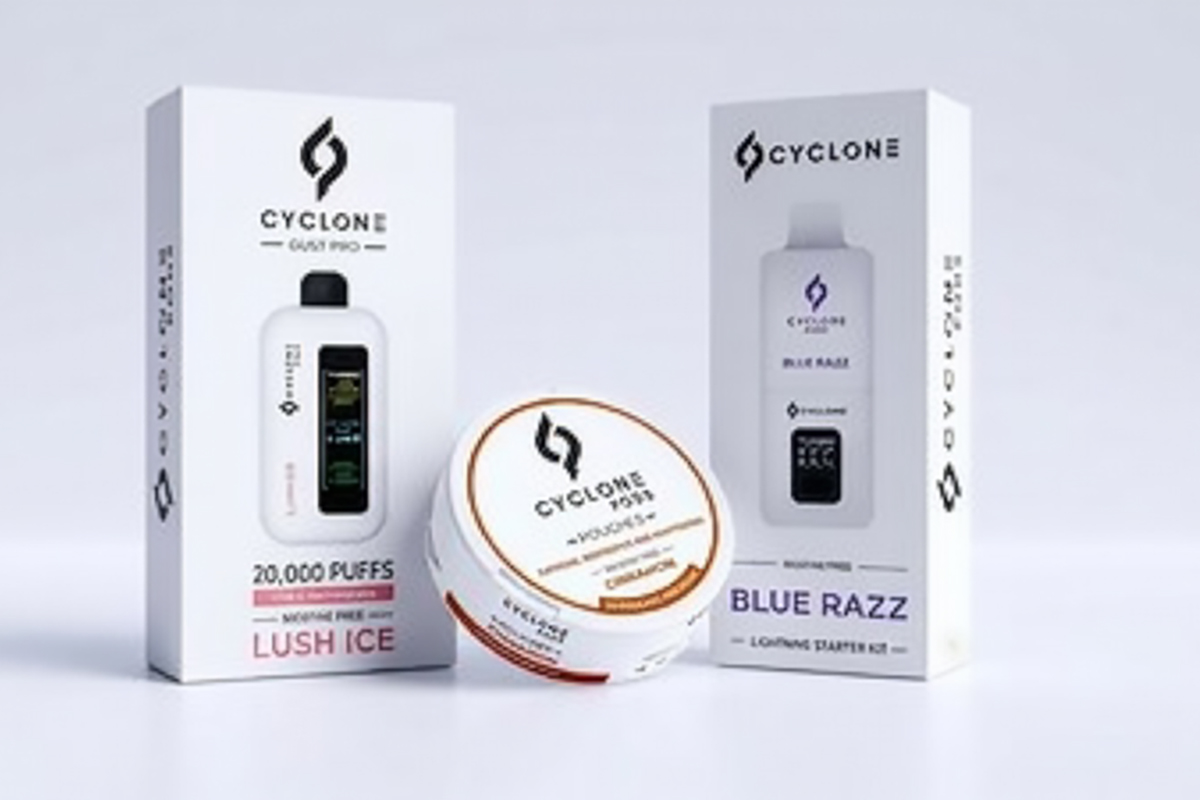
    Cyclone Pods published complete third-party laboratory test results for its nicotine-free vape and botanical pouch product lines, including the testing laboratories, analytical methods, and individual sample findings rather than summary data. The company said its Gust Pro and Lightning vape products were tested by ISO 17025-accredited Legend Technical Services using LC-MS/MS, with nicotine, diacetyl, and vitamin E acetate reported as not detected in 15 of 16 samples at the stated detection threshold. The company also disclosed the one sample in which a trace amount of nicotine was detected.

    Its Focus Pouches were tested by A2LA-accredited Certified Laboratories using ICP-MS and HPLC methods, with all pesticides and residual solvents reported as not detected, heavy metals measured at trace levels, and caffeine testing at 113% of the labeled amount. Cyclone Pods said the publication of complete laboratory reports, including methodologies and sample-by-sample results, is intended to provide greater transparency for retailers and consumers regarding its nicotine-free product portfolio.

  • Scientific Review Concludes Vaping ‘Likely’ Causes Cancer

    Scientific Review Concludes Vaping ‘Likely’ Causes Cancer

    A peer-reviewed report published in Carcinogenesis this week concluded that nicotine-based e-cigarettes are “likely” to cause lung and oral cancers, based on a synthesis of more than 100 studies covering animal experiments, chemical analyses, and human biomarker research. It said it has “reached the most unambiguous conclusion to date about the cancer risk posed by e-cigarettes: nicotine-based vapes are likely to cause cancers of the lung and oral cavity.”

    The paper was led by Adjunct Professor Bernard Stewart AM of University of New South Wales, with co-authors from several Australian institutions including the University of Queensland and University of Sydney. Rather than presenting new experimental data, the authors reinterpret existing literature to argue that converging biological and mechanistic evidence is already strong enough to support a causal cancer risk conclusion, even in the absence of long-term population mortality studies.

    However, the findings come from a synthesis paper, meaning conclusions depend heavily on which studies are included and how evidence is weighted, rather than new primary research.

  • Taiwan Estimates More Than 40,000 Teenagers Vape

    Taiwan Estimates More Than 40,000 Teenagers Vape

    Taiwan health authorities estimate that more than 40,000 teenagers nationwide use vaping products, prompting calls for stronger enforcement measures and potential amendments to existing tobacco control laws. According to the Health Promotion Administration (HPA), 3.7% of Taiwanese adolescents use e-cigarettes or vapes, including 2.1% of junior high school students and 5.1% of senior high school and vocational school students.

    Officials expressed particular concern over the growing use of vaping devices to consume illicit substances such as etomidate, an anesthetic linked to an increase in drug-impaired driving incidents. HPA Deputy Director-General Wei Hsi-lun said current legislation provides limited authority to regulate vape users and confiscate devices, leading the agency to consider legal changes that could strengthen enforcement powers and increase penalties for users and distributors.

  • Malaysian Police Want Vape Ban as Devices Used for Drugs

    Malaysian Police Want Vape Ban as Devices Used for Drugs

    Malaysia’s police leadership called for a nationwide ban on e-cigarettes and vaping products after authorities detected a new synthetic drug known as “Piu Piu” in vape liquids. Deputy Inspector-General of Police Ayob Khan Mydin Pitchay said criminal syndicates are increasingly using vape devices to distribute new psychoactive substances, raising concerns about youth uptake and drug abuse. He urged the government and the Health Ministry to consider stronger action, arguing that vaping has become increasingly popular among teenagers and is being exploited as a delivery system for illicit drugs. Police said the Narcotics Crime Investigation Department will continue monitoring vape retailers and conducting inspections to curb the spread of drug-laced products, while maintaining strict enforcement against any officers found colluding with drug trafficking networks.

  • CVA Touts Vaping as Path to Canada’s Smoke-Free Future

    CVA Touts Vaping as Path to Canada’s Smoke-Free Future

    Ahead of World Vape Day 2026 on May 30 and World No Tobacco Day on May 31, the Canadian Vaping Association said that declining youth vaping rates in Canada show that current regulations are working, while warning against proposed federal flavor bans. Citing data from Canada’s Third Legislative Review of the Tobacco and Vaping Products Act, the group noted past-30-day vaping among youth ages 12 to 17 fell from 13.2% in 2019 to 5.8% in 2024, a decline of nearly 60%.

    Association President Sam Tam said policymakers should rely on current evidence rather than “outdated statistics” when considering additional restrictions. The group also pointed to newly published studies supporting vaping as a smoking cessation tool for adults and argued that broad flavor prohibitions could undermine Canada’s goal of reducing smoking rates below 5% by 2035 while fueling illicit markets.

  • Indonesia Stepping Up Vape Surveillance

    Indonesia Stepping Up Vape Surveillance

    Indonesia’s National Food and Drug Monitoring Agency (BPOM) is set to gain oversight of vape distribution nationwide, working alongside the National Narcotics Agency (BNN) following reports of drug-laced e-liquids in the market. BPOM said it will develop technical regulations under the country’s recent health laws to determine which vape products are permitted and which will face sanctions, with decisions guided by scientific assessment.

    While BNN has proposed a total ban on e-cigarettes to combat narcotics risks, BPOM signaled a more targeted approach, focusing on stricter control of illegal products lacking excise stamps rather than blanket prohibition. Authorities noted that illicit vapes are the primary source of drug contamination.

  • Charlie’s Holdings Talks Opportunities as FDA Flavor Stance Shifts  

    Charlie’s Holdings Talks Opportunities as FDA Flavor Stance Shifts  

    Charlie’s Holdings said it is well-positioned to capitalize on potential regulatory changes in the U.S. flavored vape market, highlighting its portfolio of 678 PMTA-submitted products and its planned rollout of age-gated devices using AI-powered verification technology. The company said its ability to combine pending applications with advanced access-restriction systems could align with evolving FDA expectations around youth prevention, positioning it to bring new products to market if approvals expand.

    The company pointed to recent reports that President Donald Trump has urged the FDA to accelerate flavored vape authorizations, along with the agency’s approval of four new ENDS products—including its first flavored pod authorizations using age-gating—as signals of a possible policy shift. Charlie’s said these developments could support broader regulatory acceptance of flavored products and create new commercial opportunities for companies able to meet stricter access and compliance requirements.

  • Iowa Senate Passes 5-Cent Tax on Vapes, Nicotine Products

    Iowa Senate Passes 5-Cent Tax on Vapes, Nicotine Products

    The Iowa Senate has passed a bill establishing a new excise tax on alternative nicotine products, introducing a 5-cent per-unit tax on nicotine pouches and a 5-cent per milliliter tax on e-liquid used in vape products. The tax applies to both disposable vapes and refill cartridges, creating a standardized levy across emerging nicotine categories that have historically gone untaxed in the state.

    Lawmakers said the extra revenue would go toward pediatric cancer research. “I understand that the level of tax we’re looking at here is not likely to be enough to deter usage, but it is enough to create this investment in pediatric cancer research that we all want to get behind,” Sen. Kara Warme (R-Ames) said.