Tag: World Vapers Alliance

  • THR Advocates Criticize COP11 Transparency, Agenda

    THR Advocates Criticize COP11 Transparency, Agenda

    As the Eleventh session of the Conference of the Parties (COP11) to the WHO FCTC opened yesterday, many tobacco/nicotine industry and tobacco harm reduction advocates watched the livestream intently, as only parts of the first and fifth days are scheduled to be made available to the public and media, a fact that draws significant disapproval from the event’s critics. Dr. Tedros Adhanom Ghebreyesus, director-general of the WHO opened the event, saying, “We are so used to hearing ‘tobacco kills us’, it no longer shocks us… If tobacco were a virus, we would call it a pandemic.” According to his X account, he called upon Parties to advance implementation, be aware of “tobacco industry tactics,” and invited Parties to join the FCTC.

    Ghebreyesus’ speech was criticized on X by the World Vapers’ Alliance, which said, “First up, @DrTedros, first lie. He claims vapes and pouches are not harm-reduction products but harm production. Science and millions of former smokers strongly disagree. He further says there is no evidence for their net public health benefit. This is wrong. Every smoker who switches to less harmful alternatives gains clear health benefits. It’s not rocket science.”

    One of the more prominent critics of COP11 is Clive Bates, the director of Counterfactual Consulting Limited, an organization that attempts to bring information from the closed meetings to public view.

    “The FCTC COP has extremely poor openness, transparency, and viewpoint diversity,” Bates wrote on his website. “Delegates should welcome and demand a broader range of observers at COP meetings and greater transparency to avoid a situation where one billionaire funder can speak through dozens of ‘civil society’ organizations.”  

    Leading up to COP11, once the agenda was released, Bates offered a commentary on each section, which he summed up by saying, “In overview, the agenda is weak, with the greatest priority given to matters that fall outside the FCTC, and a contemptuous dismissal of Parties’ request for a balanced and objective discussion of the potential for tobacco harm reduction. The COP should focus on the big issue: How to drive down global smoking?”  

    Listed on the agenda for today (November 18), was the introduction of the Convention Secretariat report, titled “Implementation of measures to prevent and reduce tobacco consumption, nicotine addiction and exposure to tobacco smoke, and the protection of such measures from commercial and other vested interests of the tobacco industry in light of the tobacco industry’s narrative on ‘harm reduction’ (Articles 5.2(b) and 5.3 of the WHO FCTC) – proposed by Parties.”  

    “This is the worst FCTC COP paper I have ever read, and that is quite an achievement,” wrote Bates. “Two main issues should disturb Parties, whatever view delegates take on the substantive matters: 1. The contemptuous and dismissive attitude towards one or more Parties seeking a substantive discussion of a serious public health strategy. I have never seen a convention secretariat behave in this way in this or any other convention.  2. The quality of the analysis and understanding shown in the paper about the subject under discussion, tobacco harm reduction. This is dismissed as a form of tobacco industry interference. Yet, it has the support of several Parties, high-credibility organizations such as the Royal College of Physicians, and many of the world’s top independent experts.” 

  • EU Abstains from COP11 Vote Amid Internal Disagreements

    EU Abstains from COP11 Vote Amid Internal Disagreements

    “The European Union will not participate in a vote on a revised treaty at the WHO Framework Convention on Tobacco Control (COP11) in Geneva,” Brussels Signal reported today (November 17), highlighting deep divisions among member states over tobacco policy. Internal EU disagreements pit “progressive” countries that support stricter measures like flavor bans and plain packaging against more cautious states that advocate for harm-reduction tools and consumer choice. Attempts to reach a consensus under the Danish Presidency of the Council of the EU reportedly failed, despite a proposed compromise, the article said.

    The abstention has sparked mixed reactions. Public health advocacy groups expressed concern that a weakened EU position could embolden tobacco industry tactics, while harm-reduction proponents, including the World Vapers Alliance, welcomed the outcome as preserving space for evidence-based policies. Analysts warn that overly broad restrictions could drive consumers back to combustible cigarettes or underground markets, undermining public health gains.

  • Mexico Debates Vaping Ban Amid Constitutional Reform

    Mexico Debates Vaping Ban Amid Constitutional Reform

    Mexico is moving toward a decisive stance on e-cigarettes and vaping as lawmakers prepare to define whether the industry will be regulated or banned. A recent constitutional reform, supported by most major parties, criminalizes the production, distribution, and sale of electronic cigarettes, vape devices, and unauthorized toxic substances. Movimiento Ciudadano remains the only party opposing the measure.

    The reform modifies Articles 4 and 5 of the Constitution and frames vaping alongside fentanyl misuse, prompting critics to argue that it reflects a global prohibitionist approach rather than a domestic evidence-based policy. Secondary legislation under the General Health Law will now determine the practical scope of the ban or regulation.

    Public health experts and advocacy groups, including the World Vapers’ Alliance, argue that intelligent regulation could reduce illicit trade, protect adult consumers, and generate significant tax revenue—estimated at up to MX$6.94 billion ($374.8 million) annually.

    The debate also highlights the potential for vaping technology in medical applications, such as inhaled drug delivery for conditions like asthma, migraines, and pain management, though regulatory and consumer acceptance challenges remain.

  • WVA Holds Light Protest Ahead of COP11

    WVA Holds Light Protest Ahead of COP11

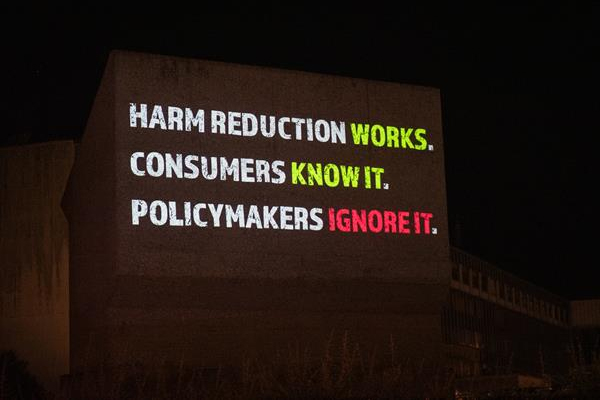
    The World Vapers’ Alliance (WVA) staged a light show protest by projecting messages on the Geneva International Conference Centre, home to the upcoming COP11 meetings that begin November 17. The WVA said it was drawing attention to what the group calls misinformation and exclusion of consumer voices in global tobacco control debates. The WVA criticized the World Health Organization’s stance on vaping and nicotine alternatives, arguing that restrictive policies could undermine harm reduction efforts, particularly in the Caribbean.

    The protest is part of the WVA’s “Voices Unheard – Consumers Matter” campaign, which urges Caribbean governments to pursue evidence-based approaches rather than blanket bans.

  • Vapers’ Alliance Challenges WHO Ahead of COP11

    Vapers’ Alliance Challenges WHO Ahead of COP11

    As the World Health Organization’s COP11 tobacco-control conference approaches, the World Vapers’ Alliance (WVA) is calling for consumers to be heard, projecting messages onto the venue demanding inclusion in policy discussions. WVA Director Michael Landl criticized the event as “an echo chamber stuck in outdated, anti-science thinking.”

    “Harm reduction isn’t a marketing ploy, it’s a public health necessity supported by hard data,” Landl said. “Consumers’ lives matter more than ideology or the views of wealthy WHO donors like Michael Bloomberg. It’s time consumers got a real seat at the table.”

    The group warned that WHO proposals to ban flavored vaping, cap nicotine levels, and raise taxes ignore scientific evidence that vaping and nicotine pouches are less harmful alternatives for smokers. WVA’s Liza Katsiashvili cautioned that bans and high taxes would only drive consumers to cigarettes or black markets, urging delegates to “listen to the facts, not ideology.” The WVA’s “Voices Unheard – Consumers Matter” campaign calls for governments to prioritize evidence-based regulation and give consumers a voice in global tobacco policy.

  • WCTC Gets Protestors Wanting Input

    WCTC Gets Protestors Wanting Input

    On the opening day of the World Conference on Tobacco Control (WCTC) in Dublin, the World Vapers’ Alliance staged a silent protest outside the venue, visually highlighting the exclusion of consumers from global tobacco and nicotine policy debates. Demonstrators with their mouths taped symbolized the ongoing marginalization of those most affected by regulatory decisions.

    The protest is part of the “Voices Unheard—Consumers Matter!” campaign, launched as delegates gathered inside to discuss the future of tobacco control without meaningful input from the consumers who are most impacted by these policies.

    Michael Landl, Director of the World Vapers’ Alliance, said outdated, ideologically driven policies, often influenced by powerful interests like Michael Bloomberg, threaten to reverse progress in reducing smoking rates. “Safer nicotine alternatives have the potential to save millions of lives, but only if they are supported by sensible, evidence-based regulation. We cannot afford to let ideology stand in the way of real progress,” he said.

    The campaign comes at a time when the World Health Organization is pushing for sweeping bans on flavored nicotine products, including e-cigarettes and nicotine pouches. Such measures would remove vital tools from adults seeking to quit smoking and could drive many back to combustible tobacco.

  • WVA Raises Alarm About Misperceptions

    WVA Raises Alarm About Misperceptions

    Photo: WVA

    The World Vapers’ Alliance (WVA) marked World Vape Day with a protest in front of the World Health Organization’s in Geneva today. Participants in the event urged the global health body to listen to consumers and acknowledge the scientific evidence supporting vaping, nicotine pouches and similar products as valid harm reduction tools.

    The consumper group says it is concerned about the rampant “misperception epidemic” surrounding tobacco harm reduction. Recent research by Ipsos for the think tank We Are Innovation shows that 74 percent of smokers worldwide wrongly believe that vaping is as harmful or more harmful than smoking. This misconception, fueled by misinformation, is preventing millions from switching to a scientifically proven less harmful alternative, according to the WVA.

    “The WHO [World Health Organization] has turned World No Tobacco Day into a propaganda day,” said WVA Director Michael Landl in a statement. “Sweden is about to become smoke-free thanks to alternative nicotine products.

    “The WHO needs to stop fighting alternative nicotine products and start backing them as keys to a smoke-free future. The WHO’s false claims are fueling a deadly misperception epidemic. Smokers deserve the truth: Vaping is significantly less harmful than smoking. Accurate knowledge could save millions of lives.”

  • EU Urged to Adopt Science-Based Strategy

    EU Urged to Adopt Science-Based Strategy

    Photo: yavdat

    Consumer representatives are urging European policymakers to adopt science-based tobacco harm reduction strategies as EU health ministers gather in Brussels for a two-day meeting to discuss Europe’s Beating Cancer Plan, among other topics.

    The Beating Cancer Plan presents several legislative initiatives to address cancer risk factors, including measures to reduce tobacco and alcohol consumption and improve healthy diets.

    “This meeting should mark the beginning of driving the EU towards a smoke-free future,” said Michael Landl, director of the World Vapers Alliance, in a statement. “Health ministers should take inspiration from Sweden, poised to become the first smoke-free country in the world, thanks largely to the adoption of safer and less harmful alternatives. It remains vital that the EU follow their example and enforce sensible regulation.”

    However, according to Landl, the EU Commission has thus far been “deaf” to the science of tobacco policies. “It is crystal clear that safer nicotine alternatives such as vaping or pouches are significantly less harmful than smoking and effectively aid in smoking cessation,” he said.

    “EU health ministers have a critical opportunity this week to advocate for sensible regulations that could prevent 700,000 unnecessary deaths annually due to smoking. The Beating Cancer Plan acknowledges that vaping can help smokers quit. Politicians must act accordingly. ”

  • Activists Lament EU Stance on THR

    Activists Lament EU Stance on THR

    Photo: Andrzej

    The European Commission’s approach to tobacco harm reduction is out of touch with EU citizens’ views, according to the World Vapers’ Alliance (WVA)

    A recent public consultation on the EU Tobacco Products Directive (TPD), analyzed by Snusforumet, reveals a substantial consensus among citizens, NGOs and scientific institutions on the effectiveness of harm-reduction products in assisting smokers to quit.

    A striking 77 percent of respondents recognize these products as helpful smoking cessation tools, while a mere 9 percent of EU citizens disagree. Furthermore, an overwhelming 82 percent of respondents refute the notion that new nicotine alternatives pose a risk to public health, with only 6 percent perceiving them as a threat.

    “The EU Commission’s current stance on harm reduction is not just out of touch; it’s a blatant disregard for consumer opinions and scientific evidence,” said WVA Director Michael Landl in a statement. “It’s high time the Commission responds to the reality that harm-reduction products are not the enemy but a vital ally in the fight against smoking.”

    According  to the WVA, countries like Sweden serve as living proof of the success of a consumer-friendly harm reduction approach, significantly outpacing the EU in reducing smoking rates. The EU Commission’s reluctance to embrace this approach is not only perplexing but also detrimental to public health efforts, the organization says.

    “Sweden’s success story is a testament to what can be achieved with a sensible harm reduction policy,” said Landl. “It’s baffling and frankly irresponsible for the EU Commission to continue its hostile approach towards these life-saving products. The Commission needs to align its policies with the clear evidence and public opinion, rather than clinging to outdated and ineffective methods.”

  • WHO Announcement Provokes Backlash

    WHO Announcement Provokes Backlash

    Photo: Maksym Yemelyanov

    Tobacco harm reduction advocates have vehemently criticized the World Health Organization’s call to crack down on e-cigarettes.

    On Dec. 14, the global health body issued a statement urging action to prevent the uptake of e-cigarettes and counter nicotine addiction. On the same day, it released a technical note with detailed information on the evidence and factors underpinning its guidance.

    “E-cigarettes as consumer products are not shown to be effective for quitting tobacco use at the population level,” the WHO wrote. “Instead, alarming evidence has emerged on adverse population health effects.”

    In its announcement, the WHO described e-cigarettes with nicotine as highly addictive and harmful to health. “Whilst long-term health effects are not fully understood, it has been established that they generate toxic substances, some of which are known to cause cancer and some that increase the risk of heart and lung disorders,” the organization wrote.

    “Use of e-cigarettes can also affect brain development and lead to learning disorders for young people. Fetal exposure to e-cigarettes can adversely affect the development of the fetus in pregnant women. Exposure to emissions from e-cigarettes also poses risks to bystanders.”

    To address the impact of e-cigarettes, the WHO encouraged national governments to ban vape flavors, limit the concentration of nicotine, and tax e-cigarettes.

    Tobacco harm reduction activists were aghast. “The WHO’s latest stance on vaping flavors is not just misguided, it’s dangerously out of touch with scientific reality,” wrote Michael Landl, director of the World Vapers’ Alliance, in a statement.

    “By pushing for a blanket ban, the WHO blatantly disregards a wealth of scientific evidence that underscores the benefits of vaping when compared to alternatives. Flavored e-cigarettes have been proven to increase the chances of successful smoking cessation by 230 percent compared to non-flavored alternatives. It’s appalling to see such a pivotal public health tool being dismissed by an organization that should be at the forefront of harm reduction.”

    The WHO’s attack on vaping is both inaccurate and misleading and will further discourage smokers from making the life-changing decision to quit.

    The U.K. Vaping Industry Association said the WHO announcement was based on discredited research and predicted that the measures would be “disastrous” for public health.

    “The WHO’s attack on vaping is both inaccurate and misleading and will further discourage smokers from making the life-changing decision to quit,” said UKVIA Director General John Dunne in a statement. “Vapes are 95 percent less harmful than cigarettes and are responsible for an accelerated drop in smoking in the U.K. in the past decade.”

    “The WHO’s criticism of vaping is based on discredited research and implying that vaping is in some way proven to be cancer-causing is wholly misleading, as is the claim that it harms brain development in young people, a scare story that is simply not true.

    “Banning flavored vapes would lead to more smokers and more smoking deaths. Indeed, 80 percent of vapers consider the availability of flavors to be a significant part of their quitting journey, according to One Poll in March 2023. 24 percent of respondents said that banning flavors would likely lead them to revert to smoking, potentially affecting over 1.1 million individuals in the UK.

    “Restricting adult access to vapes has had disastrous consequences around the world, such as in Australia, where it has resulted in a massive unregulated black market and a boost to smoking rates.”

    Earlier this month, tobacco harm reduction specialists raised concern about the FCTC’s direction of travel in a special report published by Forniche.