


Month: February 2024
-

Erik Augustson to Direct FSFW Programs

Image: Monster-Ztudio The Foundation for a Smoke-Free World (FSFW) has appointed Erik Augustson as vice president of programs, responsible for management and oversight of the foundation’s global grantmaking portfolio.
In this new role, Augustson is poised to elevate the grant program, ensuring the foundation’s strategic priorities are addressed by overseeing the strategy, development and implementation of all programmatic work, including research strategy and grant generation.
Throughout his career, Augustson has made contributions within academic, clinical medicine, federal government and private sector contexts. For the past two decades, he has been a driving force in advancing population-level and public health interventions on both domestic and international fronts.
Notably, Augustson played a pivotal role in the development and leadership of the large-scale U.S. Department of Health and Human Services mobile health and behavior change program, Smokefree.gov.
In addition to those achievements, Augustson is recognized as a mentor and senior leader, known for his human-focused management style. His commitment to research, intervention program development, evaluation and management has earned him accolades and positioned him as a respected figure in the field.
“I am delighted to welcome Erik as the leader of this new team at the foundation,” said FSFW CEO Cliff Douglas in a statement. We have ambitious objectives to elevate the strength of our grantmaking and to diversify our partnerships and sources of funding. Erik’s experience delivering the highest-quality programs for the public and private sectors will be a great help in those endeavors.”
An alumnus of the University of New Mexico, Augustson holds two master’s degrees and a doctorate in psychology. He also completed two postdoctoral fellowships—one in behavioral medicine at the University of Alabama School of Medicine and the other in epidemiology and cancer prevention at the U.S. National Cancer Institute.
-

COP10: Activists Demand Evidence-Based Approach

Nancy Loucas (Photo: CAPHRA) The Coalition of Asia Pacific Tobacco Harm Reduction Advocates (CAPHRA) has called on the World Health Organization and the Framework Convention on Tobacco Control (FCTC) to adopt a more transparent, open and evidence-based approach to tobacco harm reduction.
“This demand comes in light of the upcoming Conference of the Parties (COP10) in Panama, where governments will discuss global strategies to address the tobacco epidemic”, said Nancy Loucas, executive coordinator of CAPHRA.
CAPHRA’s critique aligns with the insights of Clive Bates, a renowned tobacco control expert, who has highlighted the WHO’s counterproductive stance on safer nicotine alternatives such as vaping and heated tobacco products. Bates argues that the WHO’s approach, which often leans towards prohibition, inadvertently protects the cigarette trade, fosters black markets, and prolongs the epidemic of smoking-related diseases.
“CAPHRA emphasizes the need for the WHO and FCTC to engage with all stakeholders, including consumer groups, and to consider the full spectrum of scientific evidence when formulating policies,” said Loucas.
“We believe that the focus should be on reducing the harm caused by smoked tobacco, which is the primary contributor to tobacco-related health issues.”
CAPHRA also calls for webcasting and public access to the entire COP10 meeting to ensure transparency and accountability.
“The positions adopted by delegates and observers should be open for all to see, fostering a more inclusive and evidence-driven dialogue”, said Loucas.
In the spirit of the 20th anniversary of the adoption of the FCTC treaty, CAPHRA advocates for a re-evaluation of the treaty’s approach to tobacco harm reduction, urging parties to consider the potential benefits of risk-proportionate regulations that protect public health while ensuring the availability of safer nicotine alternatives.
-

Taiwan Warnings to Cover Half of Pack

Photo: sharafmaksumov Beginning March 22, 2024, health warnings on cigarette packages in Taiwan must cover at least 50 percent of the packaging, up from 35 percent, according to the Taipei Times.
The Health Promotion Administration cited the World Health Organization Framework Convention on Tobacco Control Article 11, saying the article requires all contracting partier to ensure tobacco product packaging carries health warnings describing the harmful effects of tobacco use.
According to a 2024 Canadian Cancer Society report, 127 countries and territories require warnings to cover 50 percent or more of the packaging.
Those caught not following the health warning rule face fines of TWD10,000 ($319.23) to TWD50,000.
-

U.K. Authorities Seized Nearly 10 Tons of Illegal Vapes in 2023

Photo: APchanel The number of illegal vapes seized at the U.K. border quadrupled last year. Authorities confiscated more than 4.5 million vapes weighing nearly 10 tons over the past 12 months.
Figures released to the BBC show that Border Force seized just 4,430 vapes in 2021, rising to 988,064 in 2022 and 4,537,689 from January 2023 to October 2023.
Unlike legal vapes, illegal e-cigarettes are not registered with the Medicines and Healthcare products Regulatory Agency and do not pass through quality control processes. In addition, health activists worry that retailers prepared to flout product rules may not be scrupulous about observing the ban on selling to under-18-year-olds.
A Home Office spokesperson said the government would “not tolerate the sale of illegal products and … harmful goods, such as illegal or counterfeit vapes.”
-

FDA Denies Marketing of Flavored Blu Products
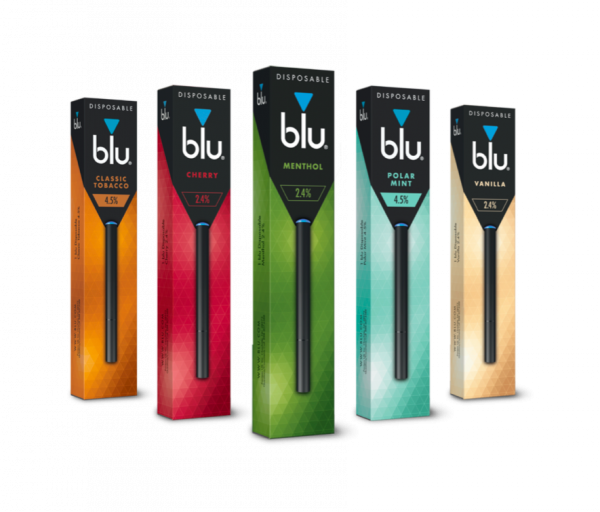
The U.S. Food and Drug Administration issued marketing denial orders (MDOs) to Fontem U.S. for four Blu disposable products and one MyBlu e-cigarette product.
The denied products include a closed menthol e-liquid and several flavored disposable e-cigarettes. As a result, the company may not legally market or distribute these products in the United States. However, the company may submit new applications for the products that are subject to these MDOs.
The products that received MDOs are Blu Disposable Menthol 2.4 percent; Blu Disposable Vanilla 2.4 percent; Blu Disposable Polar Mint 2.4 percent; Blu Disposable Cherry 2.4 percent; and MyBlu Menthol 1.2 percent.
After reviewing the company’s premarket tobacco product applications, the FDA determined that the applications lacked sufficient evidence to demonstrate that permitting marketing of the products would be appropriate for the protection of the public health, which is the standard legally required by the 2009 Family Smoking Prevention and Tobacco Control Act.
More specifically, the FDA said the application lacked sufficient evidence regarding harmful and potentially harmful ingredients in the aerosol for one product and battery safety for several products. Additionally, the applicant did not present sufficient data demonstrating that the new products have a potential to benefit adult smokers, in terms of complete switching or significant cigarette use reduction, that would outweigh the risk to youth, according to the agency.
-

North Carolina Launches Juul Depository

Photo: matousekfoto The attorney general for the U.S. state of North Carolina announced the launch of an online, searchable public depository that will contain nearly 4 million documents from the state’s lawsuit against e-cigarette manufacturer Juul Labs.
The depository was created and is being housed by the University of North Carolina at Chapel Hill’s (UNC) University Libraries and the University of California, San Francisco (UCSF). The first 50,000 documents are now available online in the UCSF Industry Documents Library, and additional documents will be added monthly, according to Attorney General Josh Stein.
“We insisted on a publicly accessible database of Juul’s documents to ensure transparency,” said Stein in a statement. “We want people to understand what Juul did so this never happens again. I’m grateful for the partnership with UNC and UCSF and appreciate their teams’ hard work to bring this document library to life.”
Stein sued Juul Labs in 2019 for unlawfully designing, marketing and selling its e-cigarettes to teenagers. In 2021, he reached a first-in-the-nation settlement with the pod vaping system manufacturer, winning $47.8 million and requiring the company to make significant business changes and publicize many of the documents it had produced during the lawsuit.
The documents include information about Juul Labs’ business practices, research, advertisement, marketing, and sales data, and, according to Stein, “they shine a light” on how the company marketed its products to youth.
The Juul Labs documents will be cross-searchable with more than 18 million other documents in the UCSF library’s tobacco, opioid, chemical, drug, food and fossil fuel industry archives.
Stein is also investigating Puff Bar and other e-cigarette manufacturers, distributors and retailers due to ongoing concerns about flavors, age verification and marketing.
-

COP10 Kicks Off

Tobacco growers demanding to be heard during COP4 (Photo: ITGA) The parties to the World Health Organization’s Framework Convention on Tobacco Control will meet this week in Panama for their 10th gathering (COP10). Originally scheduled for November 2023, the event was postponed to Feb 5-10, 2024, due to civil unrest in the host country.
Experts who have been following the preparations expect debates this week about the “tobacco endgame,” which includes nicotine reduction, retailer quotas and generational tobacco purchasing bans. They also anticipate talks on contents and emissions testing and measurements, filters and ventilation, and pricing and tax increases.
In the runup to the event, documents have been released for discussions about extending advertising/sponsorship restrictions to corporate campaigns and newer media; supporting anti-tobacco litigation; and discouraging industry diversification into pharmaceuticals and other areas. Also on the agenda: a proposal to redefine aerosol from tobacco-heating products as smoke—a move that critics have described as an attempt to rewrite basic scientific principles.
In addition, the COP delegates will consider recognizing tobacco control as fundamental to the right to health, clearing the way to attack the industry as a violator of human rights and subject it to additional liability. Participants in the Panama event will likely also debate emerging evidence on new products. They may push for e-cigarettes and tobacco-heating products to be regulated like combustible cigarettes, a development that critics say is not based on science and would discourage the tobacco harm reduction efforts that have been underway in many countries.
Industry officials, grower representatives and consumer groups have criticized the COP for its exclusionary practices and what they view as a prohibitionist agenda. While FCTC Article 5.3 instructs member states to protect policymaking from undue industry influence, critics say this provision has been used as an excuse to shut down all communications.
“The [FCTC] treaty, which came into force in 2003 and held its first COP in 2005, originally had the very legitimate aim of controlling tobacco consumption in order to counter its harmful effects on health,” said Jose Javier Aranda, president of the International Tobacco Growers Association, in a statement.
“Since then, its objectives have been radically modified. Throughout the treaty’s long history, tobacco growers and their legitimate representatives at global level, the International Tobacco Growers’ Association have observed an increase in the radicalization of the methods applied by the FCTC, in which exclusion and lack of transparency have set the tone.”
“At COP10, decisions are being made without the input of those most affected—the consumers. This exclusion is unacceptable. Harm reduction saves lives, and it’s imperative that this is recognized and integrated into global tobacco control policies, said Michael Landl, director of the World Vapers’ Alliance, in a statement.
“By sidelining the voices of those directly impacted, the WHO FCTC is ignoring a fundamental human rights issue,” said Nancy Loucas, executive coordinator of The Coalition of Asia Pacific Tobacco Harm Reduction Advocates. “Individuals seeking to protect their loved ones and themselves from the harms of smoking are being denied access to less harmful alternatives. This is not just a failure in policy but a failure in compassion.”
COP10 will be followed the third session of the Meeting of the Parties to the Protocol to Eliminate Illicit Trade in Tobacco, Feb 12-15.
-

BAT Nigeria Celebrates Factory Anniversary

From left to right: Chief Kola Karim, chairman of the BAT Nigeria (BATN) advisory board; Odiri Erewa-Meggison, director, external affairs for BAT’s West, and Central Africa business; and Yarub Al-Bahrani, managing director at BAT Nigeria and West and Central Africa. (Photo: BAT Nigeria) British American Tobacco Nigeria is celebrating the 20th anniversary of its Ibadan factory. Established in 2003, the Ibadan factory has been a cornerstone of BAT Nigeria’s operations in West and Central Africa, enabling exports to 11 countries in the West and Central Africa region, and recently exporting to the U.S.
“Two decades ago, we embarked on a journey to establish a world-class manufacturing facility in Nigeria, and today, we are proud to celebrate the Ibadan factory as a shining example of our commitment to excellence and sustainability in Nigeria,” said Yarub Al-Bahrani, managing director at BAT Nigeria and West and Central Africa.
“The factory has played a pivotal role in our success, contributing significantly to the Nigerian economy, creating employment opportunities across the value chain, and promoting environmental stewardship”, he added.
The Ibadan factory has implemented a comprehensive environmental management system, incorporating stringent measures to reduce its carbon footprint. According to BAT, these efforts have resulted in significant reductions in energy consumption, water usage and waste generation.
On Feb. 6, Ibadan will unveil its 1.4MWP grid-tied solar panel system. Its advocacy for water stewardship has been recognized with various certifications, including the prestigious Alliance for Water Stewardship core certification.
Speaking on the factory’s milestone, BAT’s director of external affairs for West and Central Africa, Odiri Erewa-Meggison, asserted that BAT Nigeria has remained steadfast in its commitment to driving ‘A Better Tomorrow,’ [the company’s corporate slogan] while prioritizing safety, sustainability and responsible business practices.
“The Ibadan factory is not just a manufacturing facility; it is an integral part of the Nigerian community and we are continuously committed to making a positive impact on the lives of those around us,” she said.
Erewa-Meggison stated that the anniversary celebration will serve as a tribute to the accomplishments and successes of the factory. “This is an opportunity to acknowledge the dedication and hard work of all employees, partners and stakeholders who have played a vital role in shaping our growth and journey,” she added. “We look forward to celebrating more milestones and positive contributions of the factory.”
-

Sampoerna Opens New Third-Party Facility
Photo: Sampoerna Sampoerna and Koperasi Karyawan Redrying Bojonegoro have opened a new third-party operator (TPO) production facility for hand-rolled kretek cigarettes in Dander, Bojonegoro Regency, East Java.
During the inauguration ceremony, East Java Governor Khofifah Indar Parawansa welcomed the investment and its impact on regional employment. “I hope MPS Dander will improve the welfare of not only its employees but also their families and the community in Bojonegoro. Amidst the digital ecosystem transformation era, the SKT industry and TPOs can be a solution, especially for workforce absorption,” she said in a statement.
“The multiplier effect of the SKT industry is extraordinary. I believe that TPO Dander will strengthen the economy of Bojonegoro Regency,” said Khofifah.
Khofifah also expressed satisfaction with the high level of female participation in the facility’s workforce. “Because women who have their own income will become mothers of the nation,” she noted. “Therefore, the recruitment of women as workers at TPO Dander affirms women’s participation in development.”
Sampoerna’s head of hand-rolled manufacturing, Sinta Hartanto, said his firm was committed to continued value creation. “As a company that has been operating for more than 110 years in Indonesia, our vision is to continue playing an active role in supporting the growth of the national economy by encouraging down-streaming in the tobacco industry, long-term investments, and workforce absorption to create sustainable value. This additional partnership is part of our efforts to realize that vision,” he said.
With the absorption of more than 3,000 workers in TPO Dander along with additional absorptions in various other factories and TPOs, Sampoerna currently has more than 80,000 direct and indirect employees, about 90 percent of whom are working in SKT production facilities.
“In addition to new partnerships with local entrepreneurs/cooperatives, as well as opening new employment opportunities for thousands of workers, Sampoerna’s new SKT manufacturing facilities and additional TPOs will also increase raw materials absorption of tobacco and clove from Indonesian farmers. Hand-rolled cigarettes require twice as much tobacco and cloves as machine-made cigarettes,” explained Sinta.
TPS Dander that is owned by Koperasi Kareb became the 39th TPO in Java and the fourth in Bojonegoro Regency that partners with Sampoerna. All TPOs are owned and operated by local entrepreneurs and/or local cooperatives to produce Sampoerna’s SKT brands. Sampoerna operates seven production facilities in several cities/regencies in Java, including four SKT production facilities in Surabaya, Malang, and Probolinggo, East Java.