Blog

  • Korean Lawmakers Advance Bill to Reclassify Synthetic Nicotine

    Korean Lawmakers Advance Bill to Reclassify Synthetic Nicotine

    South Korea’s National Assembly Judiciary Committee on November 26 approved an amendment to the Tobacco Business Act that would classify liquid and synthetic-nicotine e-cigarettes as tobacco, closing long-criticized regulatory gaps. The measure heads to a plenary vote on November 27 after nearly a decade of debate.

    The bill expands the definition of cigarettes to include products “manufactured from nicotine,” while excluding pharmaceutical nicotine products. To protect existing vape retailers from abrupt shutdowns, it grants a two-year suspension of distance rules for newly designated tobacco shops and urges government support for workers transitioning out of the sector.

    Lawmakers also recommended considering temporary tax relief as the new classification takes effect. Revisions made in committee shorten the rollout period to four months, require risk assessments for existing inventory, and set the taxable moment at manufacture or import.

    Finance Minister Koo Yoon-cheol said the government will begin risk assessments ahead of implementation to minimize disruption.

  • Geneva Meeting Boosts Action Against Illicit Tobacco

    Geneva Meeting Boosts Action Against Illicit Tobacco

    The fourth session of the Parties to the Protocol to Eliminate Illicit Trade in Tobacco Products wrapped up in Geneva on November 26, with 60 Parties agreeing to strengthen international cooperation and enforcement. Decisions include compiling and analyzing tobacco seizure data, forming working groups on research and best practices, and improving licensing fee monitoring. Illicit trade is estimated to account for 11% of the global tobacco market, costing governments billions.

    The meeting also welcomed Vanuatu as the Protocol’s 71st Party, reinforcing global efforts under the WHO Framework Convention on Tobacco Control.

  • WHO Urges Vietnam to Ban Vapes and HTP Investment

    WHO Urges Vietnam to Ban Vapes and HTP Investment

    The World Health Organization recommended that Vietnam explicitly classify e-cigarette and heated tobacco trade as prohibited sectors in its amended Investment Law, leaving no exceptions. The call comes as the law is under parliamentary review, with the draft currently not listing these products as banned.

    WHO warned that the omission contradicts National Assembly Resolution 173, effective January 2025, which already prohibits the production, trading, and import of these products. The agency stressed that a clear, comprehensive ban is essential to protect public health and prevent regulatory loopholes.

    Data from Bach Mai Hospital indicate a 70% drop in emergency visits related to new-generation tobacco since the ban. WHO and Vietnam’s Ministry of Health oppose proposals allowing production for export, citing risks of smuggling and enforcement challenges.

  • Luxembourg Snus Law Draws Criticism as ‘De Facto Ban’

    Luxembourg Snus Law Draws Criticism as ‘De Facto Ban’

    Luxembourg-based snus producer Heintz Van Landewyck criticized the country’s new anti-tobacco legislation, which effectively removes snus from the domestic market despite not explicitly banning it. The law, approved in late October, limits nicotine in snus pouches to just 0.048 mg per pouch—roughly the amount naturally found in two aubergines (eggplants)—making the product unappealing to consumers seeking nicotine.

    Georges Krombach, the company’s Chief Commercial Officer, warned that the legislation will push consumers to buy snus online, fueling the black market. He described the situation as an “industrial nightmare,” noting that the company had recently invested over €1 million in tax-compliant machinery for domestic production.

    Heintz Van Landewyck had supported age restrictions, warning labels, a nicotine range of 6–16 mg per pouch, and excise taxes, but the new limits force the company to relocate domestic production abroad, with a new factory planned in Trier, Germany.

    While the Alternative Democratic Reform Party (ADR) and Pirate Party echoed concerns about market disruption, other lawmakers, including CSV MP Françoise Kemp, stressed that nicotine is addictive and warned that flavored products pose risks to youth.

    Krombach expressed hope that Luxembourg might reconsider the nicotine limit to allow legal domestic sales, rather than driving consumers to foreign online sources.

  • Imperial Offers Video Series to Battle Public Misconceptions

    Imperial Offers Video Series to Battle Public Misconceptions

    Imperial Brands launched a new video series aimed at addressing the common misunderstandings associated with next-generation nicotine products (NGP) like vapes and pouches. The company’s Action on Smoking and Health (ASH) survey shows widespread confusion about the risks of NGP)s, with 63% of young people and 53% of adult smokers wrongly believing vaping is as harmful or more harmful than smoking.

    Imperial Brands Science says such misconceptions weaken the public-health potential of NGP and offers the series to tackle claims that vapes are unregulated, cause “popcorn lung,” or are as harmful as cigarettes, and clarifies differences between passive vaping and passive smoking.

    Dr. Thomas Nahde, Imperial’s Head of Harm Reduction and Engagement, said misinformation is discouraging some smokers from switching to potentially less harmful alternatives. The videos aim to make the science more accessible and promote evidence-based discussion.

    Find out more about NGP myths and misconceptions on the Imperial Brands Science website’s dedicated page.

  • JTI to Open New Romanian Factory in 2027

    JTI to Open New Romanian Factory in 2027

    JTI Romania announced it will build a new state-of-the-art factory in Ștefăneștii de Jos, Ilfov County, replacing its space-constrained Bucharest plant. Groundwork is scheduled to begin in the coming weeks, with completion slated for 2027.

    The Bucharest facility currently exports 75% of its output to more than 70 countries, making it one of JTI’s key European production hubs. Senior VP Philip Livingston said the investment supports JTI’s drive to optimize its global manufacturing footprint, while factory lead Klaus-Walter Thul highlighted continual upgrades since operations began in 1994.

    JTI has invested heavily in Romania, including €25m in 2012 and a €60m program launched in 2021. The company employs 630 staff at the Bucharest factory and more than 1,500 nationwide.

  • USA Vape Lab Sues FDA Over PMTA Delay

    USA Vape Lab Sues FDA Over PMTA Delay

    USA Vape Lab, maker of the Naked100 line of bottled e-liquids, filed suit against the Food and Drug Administration, alleging it unlawfully delayed action on its premarket tobacco applications for more than five years. The suit was filed November 21 in the U.S. District Court for the District of Columbia.

    In the complaint, the Huntington Beach, Calif.–based company says it submitted extensive PMTAs for its flavored and tobacco e-liquid products ahead of the September 9, 2020 deadline. Despite a Tobacco Control Act provision requiring FDA to issue decisions within 180 days, the agency has yet to act, the suit states. USA Vape Lab is asking the court to order FDA to issue final determinations.

    The company also argues FDA must consider what it describes as robust population-level evidence included in its submissions. According to the filing, a randomized controlled trial showed nearly one-third of participants achieved six-month cigarette abstinence when using Naked100 e-liquids—quit rates the company claims are two to three times higher than those reported for FDA-approved nicotine replacement therapies. USA Vape Lab further alleges that flavors such as Really Berry and Strawberry Pom demonstrate net public-health benefits that outweigh potential youth risks and exceed those of comparable tobacco flavors.

    “We felt that we had no choice but to initiate this lawsuit,” founder Huy Nguyen said in a statement, criticizing the agency for years-long delays while threatening enforcement actions against products lacking marketing orders.

    USA Vape Lab manufactures a range of popular e-liquids, including American Patriots, Crisp Menthol, and Lava Flow.

  • Mexico Committee Criminalizes Vape Sales

    Mexico Committee Criminalizes Vape Sales

    A congressional committee in Mexico approved an initiative that would impose prison sentences of one to eight years and fines of roughly 11,000 to 226,000 pesos ($594 to $12,204) for the “marketing and promotion of vapes and electronic cigarettes.” The ruling advanced with 27 votes in favor, eight against and one abstention, amid procedural complaints from opposition lawmakers.

    Opposition parties—PAN, PRI, and Movimiento Ciudadano—rejected criminal sanctions for people who purchase or possess vaping products, arguing the measure effectively criminalizes users and risks expanding the black market. PRI deputy Ana Isabel González warned that pushing vape sales underground would place youth at greater risk.

    Movimiento Ciudadano lawmakers went further, calling the proposal “one of the most punitive rulings” to date. Deputy Juan Ignacio Zavala noted that the initiative allows prison time even for those who acquire an e-cigarette. His colleague Amancay González argued that sentences of up to eight years would exceed penalties for selling drugs like cocaine.

    But Morena deputy Fernando Castro defended the reform, insisting it targets clandestine sellers rather than consumers and seeks to protect public health.

    The initiative now proceeds to the Lower House’s Board of Directors for further discussion.

  • ‘Cappuccino Strip’ Has Illicit Tobacco Hiding in Plain Site: Story  

    ‘Cappuccino Strip’ Has Illicit Tobacco Hiding in Plain Site: Story  

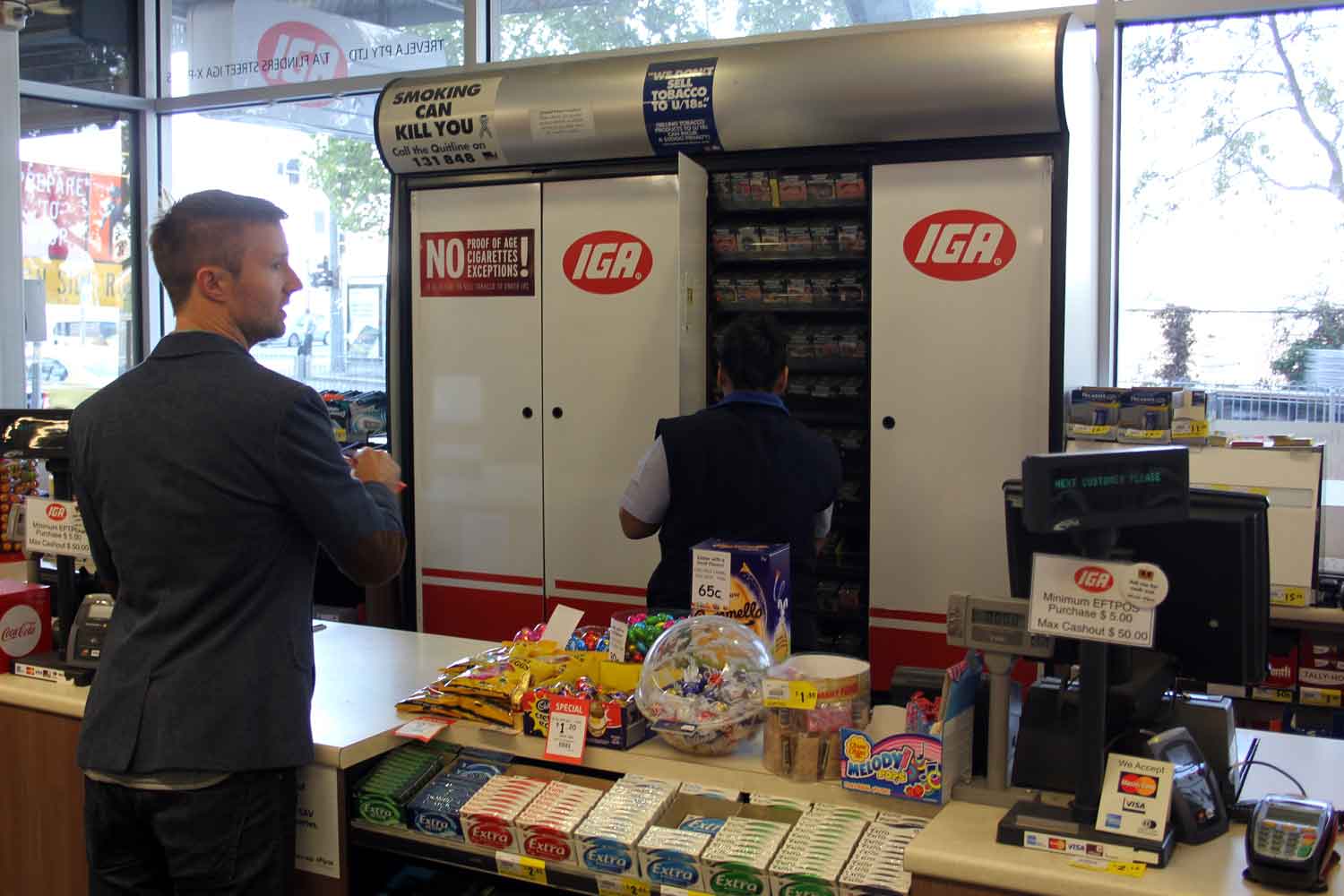
    Today (November 26), the Australian Broadcasting Corporation (ABC), published a story titled “Why convenience stores along Fremantle cafe strip are the front line of WA’s illegal tobacco trade,” highlighting how Australia’s famous “cappuccino strip” has become a hub for illegal tobacco sales, with dozens of convenience stores quietly selling unlicensed cigarettes and loose tobacco.

    The story says each store is a carbon copy of the others, with scant products on the shelves, with the illicit money-making products that keep the store open hidden in cabinets and under counters. Despite widespread concern, Western Australian authorities lack the legal power to immediately shut down offenders, allowing the trade to flourish in plain sight.

    The Australian Council on Smoking and Health (ACOSH) has long called for updated laws, pointing to South Australia and Queensland, where tougher enforcement and heavy fines have successfully curtailed illicit sales. ACOSH chief Laura Hunter described the problem as an enforcement issue, not a tax one.

    WA Health reports nearly one million cigarettes and 160 kg of loose tobacco seized in the past two years, but these figures pale in comparison to federal-level busts. Nationwide, tobacco excise revenue has fallen from A$16 billion ($10.4 billion) in 2019 to A$7.4 billion ($4.8 billion)  this year, while major retailers like Coles and Woolworths have lost over half their tobacco revenue, leaving the market open to criminal operators.

    Local leaders are exploring measures to curb the spread. Fremantle Mayor Ben Lawver noted that the city has 16 convenience-type shops in the CBD alone and is considering rezoning them as discretionary uses, giving the council some control over new openings.

    In the meantime, the illicit tobacco trade continues to thrive, with limited state resources available to enforce existing laws, the story concluded.

  • Half of Thai Smokers Have Undiagnosed Diabetes, Doctors Warn

    Half of Thai Smokers Have Undiagnosed Diabetes, Doctors Warn

    Doctors in Thailand have raised alarm that more than 700,000 smokers are living with diabetes, with nearly half unaware of their condition, according to last year’s Thai Health Examination Survey conducted by Ramathibodi Hospital alongside the Ministry of Public Health and other health agencies.

    The survey found 6.1 million Thais have diabetes. Of the 779,060 smokers with the disease, 377,542 are undiagnosed, and 42,099 know they have diabetes but are not receiving treatment. Only 133,027 are listed as maintaining good control of the disease.

    Dr. Prakit Vathesatogkit of the Action on Smoking and Health Foundation highlighted that smoking increases the risk of diabetes by 30–40% and worsens blood-sugar control, accelerating complications such as heart disease, kidney failure, nerve damage, vision loss, and poor circulation.