Blog

  • Stockholm to Show ‘How Sweden Quit Smoking’

    Stockholm to Show ‘How Sweden Quit Smoking’

    Image: stokkete

    The We Are Innovation team announced the upcoming avant-premiere of the documentary How Sweden Quit Smoking. Directed by Tomasz Agencki, the film delves into Sweden’s journey toward becoming a smoke-free nation.

    “This film deserves recognition to the unsung heroes—the unrecognized innovators who act to make our world healthier,” said Agencki in a statement. “Sweden’s remarkable smoke-free transformation was driven by cooperative creativity, personal initiative and a shared spirit of progress. I hope this film will inspire viewers to create positive change in their communities.”

    “We are incredibly thrilled to bring this important documentary to a wide audience,” added We Are Innovation’s CEO, Federico N. Fernandez. “Sweden’s smoke-free journey beautifully embodies innovation that solves problems and benefits society. By providing smokers with safer alternatives, their model is making smoking obsolete and freeing human potential previously hindered by tobacco-related disease and death. We hope the Swedish experience catalyzes similar lifesaving solutions worldwide.”

    The screening will take place on Feb. 13, 2024, at the GT30 space at Grev Turegatan 30 in Stockholm. The event is in-person only. It will begin with a reception followed by the screening and an expert panel dialogue.

    The official registration page can be found at https://bit.ly/SweQuitSmoking. Early reservations are highly recommended as seating is limited.

  • Sticking to its Guns

    Sticking to its Guns

    Photo: IRStone

    The U.K. government believes that vapes comprise an important tool for helping adults quit tobacco smoking, a position its delegation will put forward during COP10, according to Dame Andrea Leadsom, the parliamentary under-secretary of state for health and social care.

    Leadsom was speaking on Jan. 18 at Westminster during a backbench debate organised by MP Andrew Lewer and aimed at uncovering what stance the government would take at COP10, the 10th Conference of the Parties to the World Health Organization’s Framework Convention on Tobacco Control, which is due to be held in Panama on Feb. 5-10.

    Lewer, and others who spoke during the debate, were concerned that COP10 might resolve to establish equivalence in the regulation of combustible cigarettes and reduced-risk products, thus undermining the U.K.’s successful strategy of using vapes to help smokers quit their habit. Their concerns had been inflamed because previously they had been unable to wring from the government information about who would go to Panama as part of the U.K.’s delegation and what positions they would take.

    Leadsom said the U.K. delegation would be led by the U.K.’s deputy chief medical officer, Jeanelle de Gruchy, but gave only a rough overview of the U.K.’s position. Referring to the discussions that would take place about progress on tobacco control worldwide, she said the U.K. was an outlier on the topic of vapes, and would be putting forward its position that vapes were a very important tool for helping adults to quit. The U.K. government would welcome other parties going further on tobacco control, but it would be monitoring the negotiations to ensure that “nothing becomes mandatory.”

    On novel and emerging tobacco products, said Leadsom, different parties took different approaches. Currently, the U.K. was still looking at issues around heated tobacco, so the U.K. delegation would be in listening mode in this respect.

    She said the U.K. had no plans to implement further restrictions on advertising and sponsorship, and she said that it would be pressing for no increase to be made in assessed FCTC contributions.

    This last point was likely to have been in response to concerns expressed by some during the debate that while the U.K. was a major contributor to the FCTC, it seemed diffident in its approach to tobacco COPs. It was suggested that U.K. taxpayers might end up paying for policies that ran counter to their interests.

    This was perhaps something of a concern because the debate never got to grips with the issues of how COP proposals could be blocked by individual parties, and, if they were not blocked, whether they were binding on all parties. The latter issue would not be so worrisome currently because the U.K. government has shown itself to be relaxed in its approach to complying with international agreements and laws, but it might become more of an issue if the current government is replaced in this election year.–George Gay

  • COP Must Respect Science, Consumers

    COP Must Respect Science, Consumers

    Martin Cullip

    The Taxpayers Protection Alliance’s (TPA) Consumer Center accused the World Health Organization Framework Convention on Tobacco Control of ignoring science and the rights of consumers in its pursuit of restrictive tobacco control measures, as the global body prepares for its 10th Conference of the Parties (COP10) this year.

    Martin Cullip, an international fellow at TPA issued the statement criticizing the WHO FCTC’s focus on policies known as MPOWER, which rely solely on restrictions on the supply and demand of tobacco products while ignoring other proven measures to help smokers quit.

    “While the WHO has had some success in the past, it is far from effective,” Cullip said. “Twenty years ago, when the FCTC treaty was first implemented, there were around 1 billion smokers worldwide and this number is not changing meaningfully.”

    Cullip said that despite decades of WHO’s restrictive tobacco control policies, most countries are not reducing smoking fast enough and will miss the WHO’s target to reduce smoking rates by 30 percent.

    He said the current approach focusing on control and restrictions, hasn’t delivered on its intended outcomes. “International treaties should have three main aims: grow global membership, encourage parties to implement measures consistent with the aims of the treaty, and measure outcomes as a result of its actions,” he said. “The WHO FCTC does the first two effectively, but not the third one at all.”

    “It is the lack of regard for outcomes which has led to many, including former WHO health directors, to declare that its approach is ‘not fit for purpose,’” he added.

    Cullip said the WHO’s focus had shifted from tackling the harms of tobacco smoke to fighting nicotine itself. “It seems that reducing death and disease is not an objective for them,” he said. “Their approach has changed to an attack on nicotine, which on its own, causes very little harm, instead of combustible tobacco, which kills.”

    He blamed the WHO’s “anti-scientific position” for the rise in global smoking rates, which leave smokers confused and more likely to carry on smoking rather than considering safer products that don’t burn tobacco.

    Cullip also criticized the WHO’s alleged disregard for harm reduction strategies, which seek to reduce harm for those who won’t abstain from tobacco use.

    He said the WHO has consistently failed to respect article 1(d) of the FCTC which includes “harm reduction strategies” as one of the main pillars of tobacco control.

    “Instead, the WHO promotes prohibition. Despite the abject failure of the war on drugs and any other prohibition in modern history, the WHO chooses to wage the war on nicotine. These recommendations distract countries from implementing measures that can improve the lives of their populations,” he said.

    Cullip said the WHO’s process excludes public participation and disregards consumer rights, violating the spirit of the Ottawa Charter which emphasizes individual control over health choices.

    “It is well past time the WHO FCTC process listened to the public it is supposed to serve,” he said. “The evidence in favor of harm reduction is increasing, and the WHO cannot ignore stakeholders who are central to the debate forever.”

    Cullip called on the WHO FCTC to embrace all approaches in its policy discussions, honestly assess evidence and allow for greater public participation to achieve effective tobacco control strategies.

    He also suggested that countries explore alternative methods beyond those dictated by the WHO to address their individual smoking challenges.

    “Keeping doing more of the same and hoping for a different outcome is insanity. The number of smokers won’t go meaningfully down unless the WHO recognizes that a change is needed. Safer nicotine products are not the enemy, it is smoked tobacco,” he said.

  • Turkiye Tops Smoking League: Report

    Turkiye Tops Smoking League: Report

    Photo: lial88

    Turkiye leads the world in per-capita cigarette consumption, with smokers lighting up an average of 17.1 cigarettes per day, reports the Hurriyet Daily News, citing an EU Statistics Office Report.

    At least one out of every four people in the total population aged 15 years and above smokes, according to the Tobacco Control Plan 2018-2023. This means that about 20 million people in Turkiye are regular smokers.

    Other countries with high levels of per-capita cigarette consumption include Greece, with 15.7 cigarettes; Israel (15.5); Japan (15.5) and Austria (15.4), the report said.

  • Kutsaga Blacklists EDB Soil Fumigation Agent

    Kutsaga Blacklists EDB Soil Fumigation Agent

    Photo: Taco Tuinstra

    The Kutsaga Tobacco Research Board announced a ban on the use of ethylene dibromide (EDB) in Zimbabwe this year, citing health and environmental concerns, reports The Sunday Mail.

    “Ethylene dibromide has been a widely used method for soil fumigation on tobacco for many years,” said Kutsaga pesticide expert Chiyedza Nyamakura. “However, it is important to note that due to its highly hazardous properties and potential negative impact on human and environmental health, EDB will be phased out for use on tobacco by the end of 2024.”

    Nyamakura said that farmers have access to several alternative nematicides and soil fumigation formulations. “New active ingredients are currently being evaluated so as to give growers a wide variety to select from,” she added.

  • Malawi Licenses 250 Million Kg

    Malawi Licenses 250 Million Kg

    Photo: Taco Tuinstra

    The Tobacco Commission (TC) of Malawi has licensed the production of more than 248 million kg in the upcoming growing season, reports Malawi24.

    To give growers that missed the December registration an opportunity to participate in the crop, the TC recently extended the deadline to Jan. 31.

    TC Public Relations Officer Theophilus Chigwenembe said the commission has not encountered any major challenges affecting  the first round of crop estimates survey  for the 2023/2024 farming season, which started on 15th this month.

    Despite concerns about Malawi’s heavy economic reliance on tobacco production, the government continues to view the golden leaf as a critical resource for the economy.

    During a recent industry conference in Malawi, government representatives stressed the importance of compliance and data-driven strategies.

    “We believe that high quality data management will help all stakeholders not only track and trace our tobacco but also guide minimum performance levels that are expected of tobacco leaf suppliers in areas such as sustainable agriculture, environment and human rights,” Medrina Muloza Banda, principal secretary in the ministry of agriculture, was quoted as saying by the Nyasa Times.

    “Ultimately, this will make our tobacco compliant with international standards, thereby making our leaf more compliant to the global demand.”

  • VTA: MDOs Continue ‘De-Facto’ Flavor Ban

    VTA: MDOs Continue ‘De-Facto’ Flavor Ban

    Tony Abboud
    Tony Abboud, director of the Vapor Technology Association.

    When the U.S. Food and Drug Administration’s Center for Tobacco Products (CTP) issued marketing denial orders (MDOs) for Suorin and Blu PLUS+ e-cigarette products, Tony Abboud, executive director of the Vapor Technology Association (VTA), said the decision was just the latest installment of the FDA and CTP’s efforts to implement its de-facto ban on e-cigarettes in the U.S.

    “The constant refrain from CTP is that e-cigarette manufacturers are not providing ‘sufficient scientific evidence’ in their PMTAs, yet CTP refused to answer the Reagan-Udall Foundation’s most fundamental criticism of CTP’s entire regulatory process: that CTP has not clearly articulated what is required to prove what is appropriate for the protection of the public health (APPH) or how it is interpreting what is APPH,” Abboud stated in a release.

    He stated that the FDA has failed to objectively define the APPH standard while simultaneously using it to deny marketing authorization to critical smoking cessation and harm-reduction products, which is a “gross overreach” for any governmental institution whose mandate is to follow the science.

    “Courts have found that the process has become ‘arbitrary and capricious’ in practice, with CTP leadership choosing on a case-by-case basis how the standard ought to be defined,” he stated. “Meanwhile, companies are simply trying to do the right thing by complying with and adhering to the PMTA process set forth by the FDA.”

    Abboud stated that the actions of the FDA and CTP do nothing to protect public health or help Americans who smoke. “VTA once again calls on CTP to reverse course on its misguided actions and restore scientific integrity to its regulatory and decision-making process. Enough is enough,” he wrote.

  • Thailand Mulls Single Tax Rate

    Thailand Mulls Single Tax Rate

    Image: Jo Panuwat D

    Thailand’s excise department is considering whether it should implement a single tax rate or a weight-based tax for cigarettes, announced Ekniti Nitithanprapas, excise department director-general, reports Thaiger.

    The current tax structure is a two-tier system with a 25 percent tax applied to cigarette packs that retail up to THB72 ($2). This structure is aimed at reducing the impact on low-income consumers. Cigarette packs that retail higher than THB72 are taxed at 42 percent. An additional flat rate tax of THB1.25 per cigarette is also applied regardless of retail price.

    The current system has led to manufacturers selling cigarette packs for THB72 to avoid higher tax rates.

    If a single rate is decided upon, it would fall between 25 percent and 42 percent.

    In October 2021, a 40 percent flat tax rate was set to be implemented but the tobacco authority and tobacco farmers opposed the move due to the potential impact of the tax rate on both parties.

    The finance ministry has been tasked to study the cigarette tax structure for the medium-term and the long-term to determine a fair and appropriate single-tier tax rate.

  • Khyber Pakhtunkhwa Bans Vapes

    Khyber Pakhtunkhwa Bans Vapes

    Photo: SakhanPhotography

    The government of Pakistan’s Khyber Pakhtunkhwa province has banned the storage, sale and use of e-cigarettes for 60 days, according to the Associated Press of Pakistan.

    All deputy commissioners have been directed to impose a complete ban on the sale of e-cigarettes and vapes to those under age 21 and its sale and storage within a 50-meter radius of all educational institutions in the province.

    Those caught violating these orders will face legal consequences under Section 188 of the Pakistan Penal Code.

    The interim ban follows a series of meetings with the Provincial Alliance for Sustainable Tobacco Control, Blue Veins and KPTCC focused on the dangers of e-cigarettes and vapes and that examined global legislative and policy practices regarding the products’ sale and storage.

    “The decision has been taken in wake of alarming increase in use of electronic cigarettes (e-cigarettes) and vaping devices particularly among children and youth in the province,” said an official notification by the Home and Tribal Affairs Department of Khyber Pakhtukhwa, according to the Pakistan Observer.

    “This interim ban is a commendable step by the KP government, reflecting its proactive approach to public health,” said Qamar Naseem, civil society activist. “However, we must solidify this progress through comprehensive provincial legislation to ensure a permanent solution to this growing health concern.”

    “This ban is a significant victory for the health and well-being of our children and youth,” said Sana Ahmad, coordinator of the Child Rights Movement KP. “It prevents easy access to addictive substances and protects our future generations from the allure of harmful vaping products.”

    “We, the healthcare providers, appreciate the governor and chief secretary of Khyber Pakhtunkhwa for this decisive ban,” said Qazi Shahbaz, president of the Provincial Doctors Association. “It’s a step forward in the right direction, and we now urge the government to enact comprehensive legislation for a complete ban. This is not just a win for public health but a strong message that the health and safety of our citizens, especially our youth, are of paramount importance.”

  • FDA Denies Marketing of Suorin, Blu Plus+

    FDA Denies Marketing of Suorin, Blu Plus+

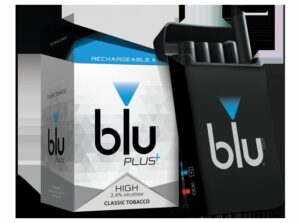
    The U.S. Food and Drug Administration has issued marketing denial orders (MDOs) to Shenzhen Youme Information Technology Co. Ltd. for two Suorin brand e-cigarette products. It also issued Fontem US, LLC MDOs for its Blu PLUS+ brand e-cigarette products.

    “Thorough scientific review of tobacco products applications is a key pillar of FDA’s comprehensive regulatory approach,” said Brian King, director of FDA’s Center for Tobacco Products (CTP). “It is the applicant’s responsibility to ensure that sufficient scientific evidence is included in an application to meet the necessary public health standard required by law. In these cases, such evidence was lacking.”

    The companies must not market or distribute these products in the United States or they risk FDA enforcement action. The companies may submit new applications for the products that are subject to these MDOs, according to an agency press release.

    The FDA denied Suorin Air refillable vaporizers in various colors and an empty refillable cartridge. The FDA stated that Suorin Air’s empty cartridges would allow consumers to fill the cartridge with an e-liquid purchased separately.

    “The applications submitted by Shenzhen Youme Information Technology Co. Ltd. lacked sufficient evidence regarding abuse liability, which is the ability of a tobacco product to promote continued use and the development of addiction and dependence,” the release states.

    SMOK recently had 22 products denied, including devices, pods, atomizers, and cartridges. It was the first time the agency has denied strictly hardware products from one company en mass. The products were denied because they were submitted without a specific e-liquid to be used with the devices, according to the FDA

    The denied Blu PLUS+ products include a battery and several prefilled e-liquid pods:   

    • blu PLUS+ Battery  
    • blu PLUS+ Carolina Bold 2.0%  
    • blu PLUS+ Classic Tobacco 1.2%  
    • blu PLUS+ Classic Tobacco 2.4%  
    • blu PLUS+ Gold Leaf 1.2%  
    • blu PLUS+ Gold Leaf 2.4%  
    • blu PLUS+ Menthol 1.2%  
    • blu PLUS+ Menthol 2.4%

    “Among other deficiencies in their applications, Fontem US, LLC failed to include sufficient ingredient information, harmful and potentially harmful constituent (HPHC) yield quantities, and abuse liability information.,” the FDA stated. “In addition, the applicant did not provide sufficient evidence demonstrating that the flavored new products have a potential to benefit adult smokers, in terms of complete switching or significant cigarette use reduction, that would outweigh the risk to youth.

    The FDA also issued MDOs for additional blu PLUS+ products not listed above. The regulatory only publicly names products that the FDA or the manufacturer has confirmed to be currently marketed to avoid the release of confidential commercial information.