Blog

  • King Reflects on CTP Priorities and Progress

    King Reflects on CTP Priorities and Progress

    Brian King (Photo: FDA)

    Throughout his first year as director of the U.S. Food and Drug Administration’s Center for Tobacco Products (CTP), the agency has maintained a steadfast commitment to its core principles of sound science, strategic partnerships, health equity and transparency, CTP Director Brian King said in a recent interview.

    King underscored the enduring importance of these principles. He emphasized that the center’s recent decisions and enforcement efforts have been grounded in comprehensive scientific analysis. This approach, he noted, ensures that product marketing and regulatory actions are well-informed and evidence-based.

    Furthermore, the director highlighted the importance of teamwork, a skill honed through his background as a scientist. Scientific thinking, rooted in objective evidence evaluation, plays a pivotal role in CTP’s work. This scientific approach is instrumental in addressing the complexities of tobacco product regulation effectively, according to King, who also emphasized the importance of effective communication in conveying scientific findings and messages.

    A significant focus of CTP’s work is promoting health equity in tobacco product regulation. King discussed efforts to address disparities in tobacco use, especially among youth and young adults. Notably, the CTP is working on product standards that would prohibit menthol as a characterizing flavor in cigarettes and all characterizing flavors in cigars. King views these standards as a major step toward reducing the appeal of these products, particularly among communities disproportionately affected, such as people of color, low-income populations and LGBTQ+ individuals.

    To further advance health equity, the CTP has undertaken initiatives like the “Next Legends” campaign to educate American Indian and Alaska Native youth about the harms of e-cigarettes and providing Spanish-language adult cessation education resources.

    During his tenure, the center welcomed Charlene Le Fauve as its first senior advisor for health equity, a crucial role in integrating health equity into the center’s programmatic plans and priorities, according to King.

    Looking ahead to the next three to five years, the director stressed the importance of having a clear vision. The CTP is in the process of creating a new strategic plan with the involvement of internal staff and external stakeholders to ensure the center’s continued growth and adaptation in a dynamic regulatory landscape. The plan, to be released by December 2023, will provide a roadmap for CTP’s future, aligning its actions with changing times and the goal of reducing tobacco-related diseases and deaths in the United States.

  • Czechia Bans HTP Flavors

    Czechia Bans HTP Flavors

    Photo: diy13

    The sale of flavored heated-tobacco products (HTPs) will be banned in the Czech Republic, effective today, reports Expats.cz. A European directive requires that EU member states incorporate the ban into their legal frameworks effective Oct. 23. The directive does not allow for a transitional period for sale of existing stock.

    Slightly more than half of HTP users prefer flavored tobacco, according to Jiri Sochor, spokesperson for JT International. Sochor noted that based on U.S. ban results, some people reverted to traditional combustible cigarettes.

    The ban will not take effect simultaneously in neighboring countries, Sochor said, noting that only Germany has introduced it. Due to this, people are likely to purchase flavored products abroad.

    Flavored heated-tobacco products generate about CZK2.9 billion ($125.16 million) in consumer taxes annually, according to Sochor.

    Companies are responding to HTP flavors ban by introducing new, tobacco-free products. British American Tobacco, for example, has begun selling heat sticks with nicotine-infused rooibos tea. Certain tobacco firms have also opposed the ban, and the legislation will be addressed by the EU Court of Justice due to complaints from Irish companies.  

  • Portugal to Increase Liquid Tax

    Portugal to Increase Liquid Tax

    Photo: alexlmx

    The government of Portugal wants to increase excise taxes on e-liquids in 2024. Nicotine e-liquids will have an excise tax increase of 4 percent, up to €0.351 ($0.373) per milliliter, and nicotine-free e-liquids will be subject to a €0.175/milliliter excise tax.

    Nicotine-containing and nicotine-free e-liquids will also be subject to a minimum tax corresponding to 25 percent and 12.5 percent of the tax applicable to traditional cigarettes, respectively.

    “Increasing the taxation of e-liquids in such a way will make vaping a less attractive option to consume nicotine and prevent low[-income] and middle-income groups from accessing the products,” said World Vapers Alliance Community Manager Alberto Gomez Hernande in a statement.

    “It risks pushing vapers back to smoking and preventing smokers from switching due to affordability reasons. Portugal should follow the steps of countries that are successfully reducing smoking rates by encouraging smokers to switch, such as the United Kingdom and Sweden; instead, Portugal has the highest excise tax rate on vaping products in the EU.”

    “The Portuguese government should follow a risk-based approach to the taxation of e-liquids,” said Hernandez. “Since the risk of vaping is 95 percent lower, taxes should be 95 percent lower too.”

    “If Portugal wants to meet the goals proposed in its National Plan Against Cancer and the European Cancer Plan, it needs to keep alternatives to smoking available and affordable,” Hernandez said. “Sweden is becoming the first smoke-free country in the world this year while Portugal is taking decisions in the opposite direction.”

    In related news, Portugal will delay implementation of the EU Tobacco Directive and proposed legislation by Portuguese government that would ban flavored heated-tobacco products. The ban was supposed to go into effect Oct. 23, 2023, but will be delayed in Portugal until 2024, according to 2Firsts.

  • Former STMA Head Under Investigation

    Former STMA Head Under Investigation

    Photo: promesaartstudio

    Former head of China’s State Tobacco Monopoly Administration (STMA) Ling Chengxing is under disciplinary review and supervisory investigation, reports China Daily.

    Ling is being investigated on suspicion of violating Communist Party disciplines and China’s laws, according to the Communist Party of China Central Commission for Discipline Inspection and the National Supervisory Commission.

    Ling was head of the STMA from May 2013 to July 2018.

    The STMA is on the list for the 20th CPC Central Committee’s second round of inspection, which began Oct. 10, and the eighth inspection team of this round recently began its work at the administration.

  • WHO Urged to Follow Sweden’s Example

    WHO Urged to Follow Sweden’s Example

    Image: weyo

    The World Health Organization should look at Sweden for inspiration when deciding how to effectively reduce smoking-related deaths, according to the Institute for Tobacco Studies (ITS).

    In a paper published on Qeios, ITS’ principal investigator, Lars M. Ramstroem, says Sweden provides a prime example of how products that don’t burn tobacco can benefit public health. Sweden has the lowest smoking prevalence among men in the European Union and consequently the lowest tobacco-related mortality.

    The “WHO needs to apply all science-based strategies to reduce tobacco-related deaths,” Ramstroem said in a statement.

    “The meeting of the world’s health leaders in Panama in November, the COP10, represents a unique opportunity to take a fresh look at the most recent evidence with an open mind. After all, if Sweden had followed WHO’s advice from 20 years ago and banned snus, tobacco-related deaths in Sweden would have been much higher, and the only unintended beneficiary profiting from such advice would be the cigarette industry,” Ramstroem and his colleagues write in the paper.

    “[I]ncreasing number[s] of scientists and national governments believe that these new products represent an opportunity that can accelerate the demise of smoking. Because they don’t burn tobacco, they are estimated to be far less harmful than smoking. To the extent that they can act as a substitute and displace smoking, thereby improving public health.”

    Ramstroem said most “tobacco-related” deaths are in fact “smoking-related” deaths caused by repeated inhalation of smoke emitted when tobacco is lit on fire.

    “When burning is taken out of the equation, the harm can be dramatically reduced. We have known for decades that people smoke for nicotine but die from the tar,” the paper says.

    If Sweden had followed WHO’s advice from 20 years ago and banned snus, tobacco-related deaths in Sweden would have been much higher.

    In addition to citing the experience of Sweden, the paper urges policymakers to study the examples of Norway, Japan or New Zealand. “Norway is now following a similar trajectory as Sweden, with daily smoking being at record-low levels and virtually on the brink of extinction among some population groups, largely due to snus,” the paper’s authors wrote.

    In Japan, a large number of smokers have switched to heated-tobacco products, contributing to a decline in smoking from around 20 percent in 2014 to 13 percent in 2019, while in New Zealand, vaping helped reduce daily smoking to 8 percent and contributed to rapid fall in smoking rates even among Pacific and Maori populations where traditional interventions have been failing.

    The paper also calls on the delegates to the COP10 to look at the real-world scientific evidence in making decisions during the meeting.

    “When it comes to smoking, the WHO doesn’t need to reinvent the wheel: Just follow the science (and Sweden) this time, for the sake of 1 billion smokers who aren’t lucky enough to live in Sweden,” the paper says.

  • Alliance One Malawi Spends Millions on CSR

    Alliance One Malawi Spends Millions on CSR

    Photo: Taco Tuinstra

    Alliance One Malawi has spent roughly MKW442 million ($384,721) on its corporate social responsibility programs over the last two years, according to The Nyasa Times.

    The company renovated and constructed new classrooms for more than 22 primary schools over the last two years, according to Fran Malila, corporate affairs manager.

    “As a corporate responsibility entity, Alliance One thought it wise to renovate as well as construct new classroom blocks in these 22 primary schools so that pupils who are future leaders of this country should learn in [a] better environment,” said Malila. “In the process, we are also fighting child labor as our aim is to see every kid to go to school and not be used as a source of labor in tobacco fields.”

    The renovated schools have led to higher student enrollment and retention rates.

    According to Malila, the company also constructed a postnatal ward and donated various medical equipment to Mzuzu Central Hospital’s pediatric ward.

  • Morocco to Hike Duties on Disposables

    Morocco to Hike Duties on Disposables

    Photo: alexlmx

    Morocco will increase customs duties on e-cigarettes under the 2024 budget, reports Morocco World News.  

    The import duties would hike the levies on disposable electronic cigarettes from 2.5 percent to 40 percent. The goal of the increase is to apply the same import duty rate to disposable electronic cigarettes as that applied to other electronic cigarettes for the 2023 fiscal year, according to the Ministry of Economy and Finance.

    The 2024 draft budget also proposes an increase in import duty from 2.5 percent to 30 percent for certain consumer products and equipment. This increase would “strengthen the protection of local production of these products and equipment and promote the establishment of production units in Morocco.”

  • IQOS and Zyn boost PMI quarter

    IQOS and Zyn boost PMI quarter

    Photo: Swedish Match

    Philip Morris International reported net revenues of $9.14 billion in the third quarter of 2023, up 13.8 percent from the comparable 2022 quarter. Its operating income rose 13.5 percent to $3.37 billion.

    PMI sold 193.6 billion cigarettes and heated-tobacco units in the third quarter of 2023, up 2.2 from the 2022 quarter. Shipments of heated-tobacco units alone increased 18 percent to 32.5 billion. Oral product shipments jumped 100 percent to 209 million cans, largely as a result of PMI’s 2022 acquisition of Swedish Match.

    Smoke-free products generated $3.3 billion in net revenues during the quarter, an increase of 35.6 percent over the comparable 2022 period. Smoke-free products now account for 36.2 percent of the company’s total net revenues.

    PMI estimated the total number of IQOS users at approximately 27.4 million by the quarter’s end. Approximately 19.7 million of those had switched to IQOS and stopped smoking, according to the company.

    Zyn nicotine pouch shipment volume in the U.S. totaled 105.4 million cans, representing growth of 65.7 percent versus third-quarter 2022 Swedish Match shipments of 63.6 million cans.

    “We delivered a very strong performance in the third quarter, surpassing $9 billion in quarterly net revenues for the first time and generating record quarterly adjusted diluted EPS [earnings per share] of $1.67, representing currency-neutral growth of 20.3 percent,” said PMI CEO Jacek Olczak in a statement.

    “This reflects continued excellent business momentum, driven by strong IQOS performance, resilient combustible trends and the exceptional growth of Zyn, which has surpassed our expectations yet again.”

  • PMI Applies to Sell IQOS Iluma in the U.S.

    PMI Applies to Sell IQOS Iluma in the U.S.

    Photo: vfhnb12

    Philip Morris International Oct. 20 submitted premarket tobacco product applications (PMTAs) and modified risk tobacco product applications (MRTPAs) for IQOS Iluma heated tobacco products with the U.S. Food and Drug Administration (FDA).

    IQOS Iluma products are PMI’s most-innovative heated tobacco products. They deliver substantially similar reductions in the formation of harmful and potentially harmful constituents as earlier versions of IQOS products authorized by FDA

    According to PMI, IQOS Iluma has demonstrated higher rates of full switching by adults who smoke and improved consumer satisfaction in many countries.

    IQOS Iluma products rely on a fundamentally different heating technology from previous versions of IQOS products and contain numerous technological advancements including improved device and battery longevity.

    IQOS Iluma products are currently available in 27 markets internationally

    PMI’s applications are supported by a thorough scientific assessment, including aerosol chemistry, in vitro toxicology, a pharmacokinetic study, and consumer perception and behavior studies, as well as the comprehensive scientific dataset generated with previous versions of the IQOS system

    The IQOS Iluma devices operate on the Smartcore Induction System that heats tobacco from within Terea Smartcore Sticks—heated tobacco sticks designed to be used only with IQOS Iluma devices

    PMI has submitted applications for three Iluma devices and five variants of the tobacco sticks: Terea Blue, Terea Green, Terea Sienna, Terea Bronze, Terea Amber

    Internationally, IQOS Iluma products have demonstrated how ground-breaking consumer-centric innovation can lead more adults to stop smoking. We believe that same success can be replicated in the U.S.

    “Tens of millions of American adults today smoke cigarettes and will likely continue to do so. They should have a range of scientifically substantiated better alternative nicotine products to choose from, and PMI is committed to providing them with new choices,” said Stacey Kennedy, president Americas and CEO of PMI’s U.S. business, in a statement.

    “Internationally, IQOS Iluma products have demonstrated how ground-breaking consumer-centric innovation can lead more adults to stop smoking. We believe that same success can be replicated in the U.S. and drive a rapid decrease in smoking rates among adults. These are strong applications, and we urge the FDA to prioritize them for review.

    “Since 2008 PMI has invested more than $10.5 billion to scientifically research, develop, and commercialize smoke-free products, an investment that was further bolstered last year through our acquisition of Swedish Match. We are focused on providing adults who smoke with alternatives that can reduce their risks compared with smoking and help make America cigarette-free.”

    PMI will have the full rights to commercialize all IQOS products in the U.S. as of April 30, 2024, per the terms of an agreement with Altria Group, Inc. ending the companies’ commercial relationship covering IQOS in the U.S.

  • FDA Prevails in Logic Challenge

    FDA Prevails in Logic Challenge

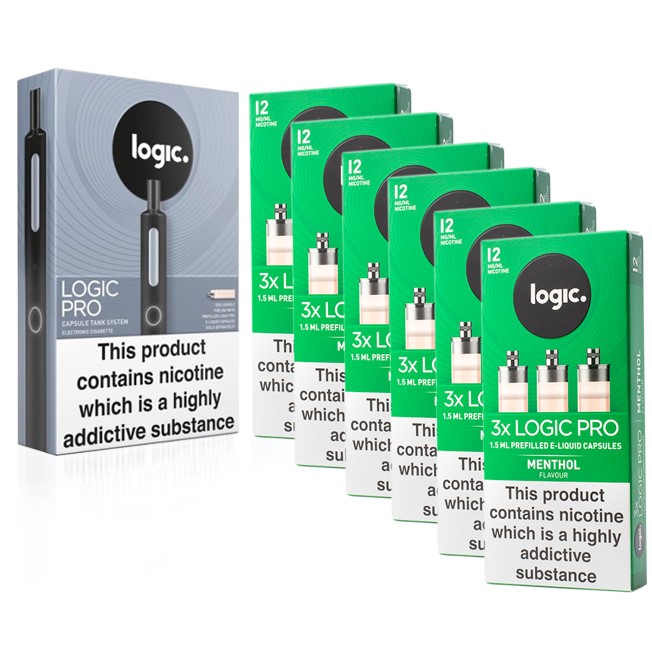
    The U.S. Food and Drug Administration has defeated Logic Technology Development after the e-cigarette manufacturer asked the courts to block the regulatory agency’s market ban on Logic’s menthol-flavored e-cigarette products, according to media reports.

    Logic filed a petition for review in the U.S. Court of Appeals for the Third Circuit, alleging the FDA violated the Administrative Procedure Act when it denied Logic’s premarket tobacco product application to market its menthol-flavored vaping products. The court denied that petition Thursday after concluding the FDA “based decisions on scientific judgments.”

    Logic alleged it was arbitrary and capricious for the FDA to apply the same regulatory framework to menthol that it used to remove fruit- and dessert-flavored e-cigarettes from commerce. The Third Circuit Court entered a stay on the FDA’s marketing denial orders (MDOs) in December 2022. The MDOs were the FDA’s first-ever MDOs directed at menthol e-cigarette products.