Blog

  • Packaging Market to Top $21 Billion

    Packaging Market to Top $21 Billion

    Photo: Taco Tuinstra

    The global tobacco packaging market will reach a value of around $21.05 billion by 2029 increasing at a compound annual growth rate of 3.2 percent, according to a new report by Precedence Research.

    The Asia Pacific region has established itself as the dominant market, commanding a 34 percent market share in 2022, and it is poised to experience the most rapid growth throughout the projected period. In particular, China stands out as the largest tobacco exporter and manufacturer. The nation is projected to become the global leader in the tobacco packaging market by 2032.

    Many tobacco packaging developments are driven by regulation, according to Precedence Research. For instance, in July 2022, India’s Ministry of Health and Family Welfare, enacted regulatory changes to the Cigarettes and Other Tobacco Products (Packaging and Labeling) Rules, 2008, introducing updated health warning requirements for all tobacco product packaging within the country.

    Numerous countries have instituted stringent measures to reduce smoking rates and safeguard public health. These regulations encompass requirements for graphic health warnings, mandates for plain packaging, and strict limitations on tobacco advertising.

    Meanwhile, suppliers of tobacco packaging are shifting toward recyclable and eco-friendly solutions. This transition reflects a broader global trend towards sustainability and environmental consciousness, driven by consumer preferences, regulatory pressures and corporate responsibility initiatives, according to Precedence Research.

    In March 2023, ITC of India reaffirmed its commitment to sustainability, emphasizing its ongoing endeavors to minimize plastic waste. The company said it reduced the plastic waste it generated by 60,000 metric tons. ITC is actively exploring environmentally friendly alternatives to single-use plastics in their tobacco product packaging, focusing on materials such as recyclable and biodegradable paperboards.

    In April 2022, British American Tobacco introduced its Vype e-cigarettes in packaging crafted from a blend of recyclable paperboard and other materials. BAT has committed to an ambitious sustainability goal to ensure that all Vype packaging becomes fully recyclable by 2023.

    In May 2022, Japan Tobacco announced its intention to render all cigarette packaging recyclable by 2025. This initiative involves the utilization of a hybrid composition consisting of recyclable paperboard and plastic materials.

    Like many other industries, the global tobacco packaging market has undergone substantial disruptions and transformations due to the Covid-19 pandemic. Lockdowns, travel restrictions and labor shortages disrupted the manufacturing and transportation of packaging materials. This resulted in delays, extended lead times, and increased manufacturer costs. To address these challenges, companies adapted by diversifying their supplier base, optimizing inventory management and exploring alternative sourcing options.

    Covid-19 has also significantly altered consumer behavior, consequently impacting the tobacco industry and, by extension, the packaging market. Measures such as social distancing, health concerns and economic uncertainties led some smokers to reduce or quit smoking altogether. This shift in demand prompted tobacco companies to reassess their product offerings and packaging strategies. Some manufacturers started offering their products in smaller pack sizes, for example.

  • ITC Reports ‘Resilient’ Cigarette Business

    ITC Reports ‘Resilient’ Cigarette Business

    Timon Schneider/Wirestock

    ITC’s cigarette business demonstrated resilience in the quarter that ended Sept. 30, the company announced in a trading update.

    Net segment revenue and segment profit before tax and interest were up 8.5 percent and 8 percent year-on-year, respectively.

    Stable fiscal policies, along with a crackdown by law enforcement on illicit tobacco sales, allowed the company to claw back sustained volumes from the black market, boosting demand for Indian tobaccos and bolstering revenue to the exchequer.

    Meanwhile, ITC continued fortifying its product portfolio through innovation, premiumization and enhancing product availability, “backed by superior on-ground execution.”

    Several recently launched brand variants launched continue to perform well, according to the company.

    While the cost of leaf tobacco and inputs escalated during the quarter, the company was able to mitigate these developments through improved mix, strategic cost management and calibrated pricing.

    During the quarter, ITC’s IndiVision subsidiary (IIVL) received regulatory approvals for its facility to manufacture nicotine and nicotine derivative products conforming to U.S. and EU pharmacopoeia standards.

    ITC believes that its unique crop development capabilities, along with its ability to provide complete traceability and assure sustainability across the value chain, will establishing IIVL as a trusted partner for high quality nicotine/nicotine derivative products.

    For the company’s paperboards, paper and packaging segments, the quarter was characterized by competition from low-priced Chinese suppliers and muted demand in export markets, along with a sharp reduction in global pulp prices. Domestic demand was also relatively subdued in certain discretionary categories

    ITC believes the drop in net sales realization and global pulp prices are likely to have bottomed out, however, and says it detected “green shoots of revival” in demand toward the end of the quarter

  • NJOY Sues Disposable Vapes Manufacturers

    NJOY Sues Disposable Vapes Manufacturers

    Photo: alexkich

    NJOY has filed litigation against 34 manufacturers, distributors and online retailers of illicit disposable e-vapor products that are unlawfully marketed and sold in California and other U.S. states. The suit alleges that these companies manufacture, distribute, market and sell products that violate California’s flavor ban law, are unlawful under federal law and subject to action by the U.S. Food and Drug Administration, and illegally compete against companies that comply with state and federal laws.

    The suit seeks a nation-wide injunction against the import, marketing and sale of these illicit products and significant compensatory and punitive damages.

    “These companies knowingly violate federal and state laws and need to be held accountable,” said Murray Garnick, executive vice president and general counsel of NJOY’s parent company, Altria Group, in a statement. “Today there are two markets—one for those who play by the rules and one for those who flagrantly ignore them. We are taking this action because the current state of the illicit e-vapor market is intolerable, and we must see more action from FDA and others.”

    Filed in the United States District Court for the Central District of California, the litigation is brought under four claims: unfair competition, false advertising, false advertising in violation of the Lanham Act and violation of the Prevent All Cigarette Trafficking Act of 2009.

    Named defendants in the suit manufacture and distribute illicit disposable e-vapor products which include  brands such as Breeze, Elf Bar, EB, EB Create, Esco Bar, Flum, Juice Box, Lava Plus, Loon, Lost Mary, Mr. Fog and Puff Bar. U.S. defendants include companies doing business in Arizona, California, Delaware, Florida, Michigan, Minnesota, New Jersey, New York and Texas. Foreign Defendants are all based in China.

    None of the Defendants has received premarket authorization from the FDA, according to NJOY.  

    Despite a ban on the sale of flavored tobacco products that went into effect in December 2022, flavored vapor products make up more than 97 percent of the California market according to a recent study commissioned by Altria.

    NJOY’s action against disposable vapor product manufacturers follows a complaint to the International Trade Commission by R.J. Reynolds Tobacco Co. charging multiple manufacturers, distributors and retailers of disposable vaping devices with unfair importation.

  • Coal to Tackle Cost and Deforestation in Zim

    Coal to Tackle Cost and Deforestation in Zim

    Photo: Michal

    Zimbabwe’s Tobacco Industry & Marketing Board (TIMB), Kutsaga research station and Hwange Colliery Co. have jointly developed a special coal facility to help reduce tobacco farmers’ production costs and address deforestation concerns, reports the Zimbabwe Independent.  

    The facility will benefit TIMB-registered growers with active grower numbers. TIMB said negotiations were underway with transporters to ensure that the coal is delivered to farmers on time and at affordable rates.

    “The high cost of tobacco production is one of the main challenges bedeviling tobacco farmers in Zimbabwe,” TIMB spokesperson Chelesani Tsarwe told NewsDay Farming, referring to the prices of production inputs, energy and other farming necessities.

    The coal facility, she said, will help tobacco farmers realize significant savings in the curing process.

     Zimbabwe Tobacco Growers Association president George Seremwe welcomed the arrangement. “The outcry has been us tobacco farmers through our associations, lobbying and advocating reduction on the cost of production and they started sort of goal rolling by engaging different suppliers in this case, Hwange Colliery Co. to come up with cheaper modalities, better way of cushioning the farmer in the form of reduction on the cost of production,” he said. “We are very happy and pleased to hear such an initiative happening.”

    More than 70 percent of Zimbabwe’s  tobacco crop is cured using unsustainable wood, with deforestation increasing, according to Zimbabwe Tobacco Association CEO Rodney Ambrose.

    “While the industry embarks on reforestation programs, more efficient curing systems and alternate sustainable curing fuels, stop-gap measures need to be put in place in order to ensure that we maintain our production levels and protect the livelihoods of thousands of farmers,” he said.

     “One of the measures is coal, and to reduce the cost of purchasing and delivering the product to farmers.”

     Zimbabwe achieved a record crop of 296 million kg of tobacco for the 2022-2023 season, earning nearly $1 billion from leaf sales.

     This year’s sales volumes put Zimbabwe on track to achieve its target of 300 million kg by 2025, as formulated in the Tobacco Value Chain Transformation Plan, ahead of schedule.

  • Researchers Identify Flavors Used to Quit

    Researchers Identify Flavors Used to Quit

    The most interesting data is that when a smoker decides to quit smoking using modified-risk electronic tools, they gravitate toward flavors different from tobacco.

    A recent survey revealed that the most utilized flavors to quit smoking in the U.S. are those of fruit, baked goods and chocolate.

    A team of European researchers affiliated with the Center of Excellence for the Acceleration of Harm Reduction (CoEHAR), the University of West Attica and the University of Patras conducted an online survey on a sample of about 70,000 adult vapers in the U.S. The study focused on comparing flavor use between current-smoking vapers (dual use) and former-smoking vapers and on specifically examining patterns of flavor use among former-smoking vapers at the time of quitting smoking.

    Graph: CoEHAR

    “This is the largest survey ever conducted on the use of electronic cigarettes in terms of sample size,” said study author Konstantinos Farsalinos in a statement. “The most interesting data is that when a smoker decides to quit smoking using modified-risk electronic tools, they gravitate toward flavors different from tobacco, with a clear preference for fruit, dessert and chocolate flavors. We can deduce, therefore, that these specific flavors are more useful for those who want to quit or avoid relapses.”

    When it comes to regulating vape flavors, Riccardo Polosa, founder of the CoEHAR, urged lawmakers to strike a balance between the need to protect young people and the desire to help adult smokers quit.

  • TACJA launches nicotine pouches in Europe

    TACJA launches nicotine pouches in Europe

    TACJA has launched nicotine pouches in the United Kingdom, Switzerland and Sweden.

    The products offer eight flavors in two taste series—Mellow and Frozen—and nicotine concentrations of 20 mg/g, 18 mg/g and 12 mg/g. According to TACJA, the products contain pharmaceutical-grade ingredients and comply with the European Union Good Manufacturing Practice.

    “We are thrilled to introduce TACJA, offering a diverse range of flavors and a delightful sensory presence,” said Charles An of TACJA in a statement. “Our nicotine pouches are designed to provide users with moments of quality and unconstraint,” he added.

  • Call for Applications to THR Scholarship

    Call for Applications to THR Scholarship

    Photo: zimmytws

    Knowledge Action Change (KAC) is inviting students to apply for its tobacco harm reduction scholarship program (THRSP). 

    Successful candidates will receive a 12-month bespoke mentoring program to undertake a tobacco harm reduction-related project of their own design plus $12,000 in financial support. New scholars are also invited to the Global Forum on Nicotine in Warsaw, Poland, where they will learn more about tobacco harm reduction and meet leading figures from the field.

    Applications for the 2024–2025 program close on Nov. 30, with 25 places available. On completion of the first scholarship, graduates of the THRSP potentially have access to up to a further three years of funded support from KAC through the one-year enhanced scholarship program and the two-year Kevin Molloy fellowship.

    Potential scholars must complete a short online course and quiz about tobacco harm reduction at the applications portal before submitting their project ideas.

    They can apply by following this link.

  • Stinchfield honored as ‘senior-level leader’

    Stinchfield honored as ‘senior-level leader’

    Photo: USTC

    Cheryl Stinchfield, regional account manager at Premier Manufacturing, was recognized as a senior-level leader at the U.S. National Association of Convenience Stores’ annual convention, U.S. Tobacco Cooperative announced on its website.

    Organized by Convenience Store News, the Top Women in Convenience program honors individuals across retailer, distributor and supplier businesses for outstanding contributions to their companies and the industry at large.

    The 10th class of Top Women in Convenience included 86 established and emerging female leaders in the convenience store industry. The honorees were selected from a pool of nominees based on their innovative corporate initiatives, extraordinary financial and strategic accomplishments, astute problem-solving acumen, exceptional performance, mentorship work and selfless charitable participation, along with other attributes that go above and beyond the call of duty.

    At the award ceremony of more than 450-plus people, Stinchfield was accompanied by Oscar House, Russ Mancuso, Steve Lucas, Mark Schueller and Irene Stinchfield.

  • RJR Complaint Could Wreck Vaping Industry

    RJR Complaint Could Wreck Vaping Industry

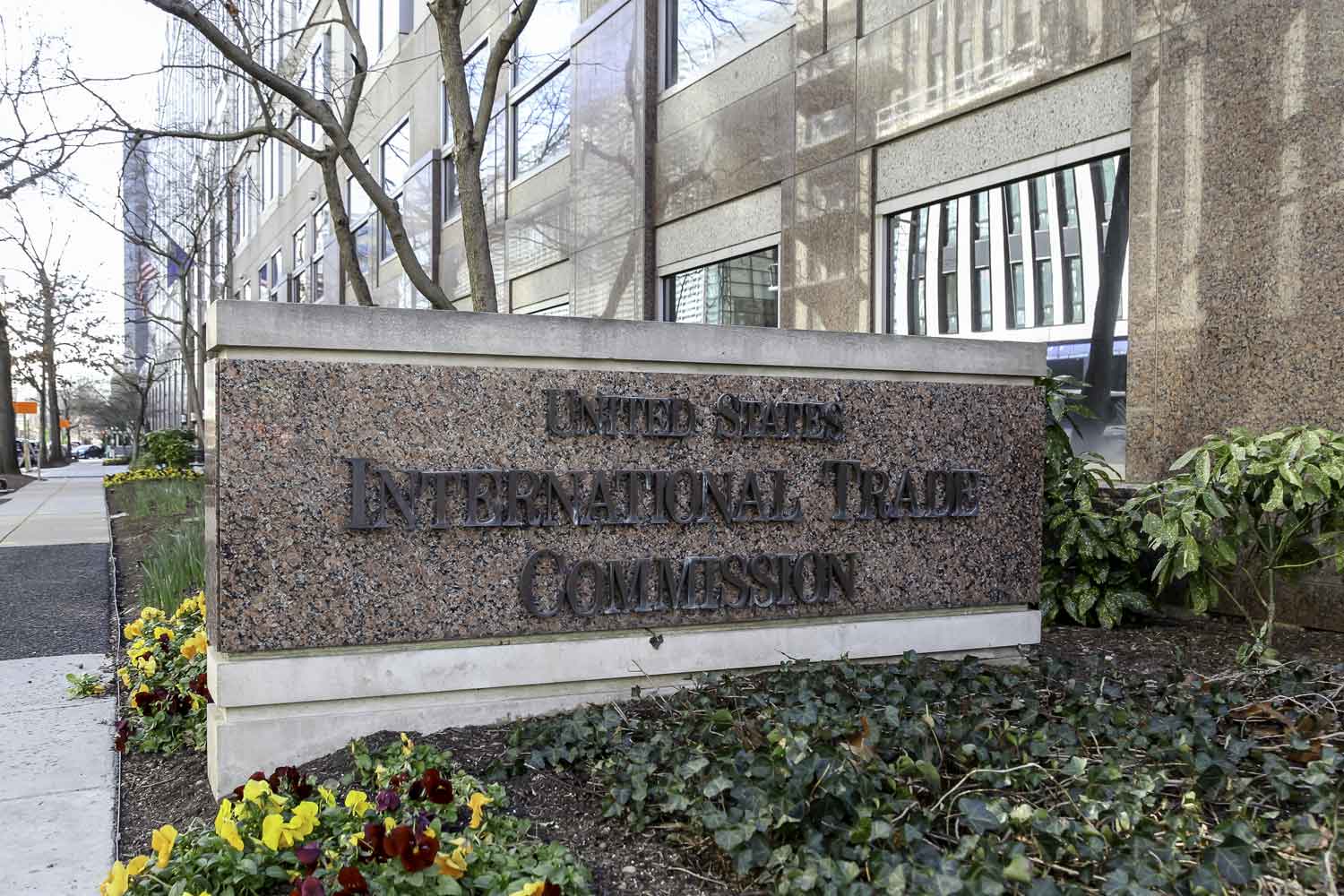
    The implications could be far-reaching. Reynolds American Inc. (RAI)  has filed a U.S. International Trade Commission (ITC) complaint charging multiple manufacturers, distributors and retailers of several popular disposable vaping devices with unfair importation. It is one of several recent actions Reynolds has made to remove its competitor’s vaping products from store shelves.

    Reynolds is asking the ITC to investigate and issue an exclusion order preventing further U.S. imports of disposable vaping products. Several legal scholars have told Tobacco Reporter that if the ITC agrees with Reynolds, all flavored disposable vaping devices without marketing authorization could be stopped at the border and prevented from entering the U.S. market.

    Reynolds wants the ITC to issue a permanent “cease and desist order” prohibiting any businesses from selling illegal vaping products. The move would push nearly the entire vaping industry underground, with the exception of products owned by major tobacco companies such as Reynolds that have received marketing orders from the FDA.

    Several businesses were named specifically as “peddlers of illegal disposable vapes” in the Reynolds complaint, including the “manufacturers, importers, distributors and retailers” of Breeze, Elf Bar, Esco Bar, Hyde, Puff Bar, and R&M disposable vapes.

    Also named are several well-known U.S. wholesale and retailers of disposable vapes, including Element Vape, Flawless Vape, Magellan Technology, Mi-One Brands, Price Point Distributors, and Vape Sourcing.

    The ITC complaint accuses what amounts to the manufacturers of all unauthorized vaping products of importing “illegal disposable vapes” in violation of Section 337 of the Tariff Act of 1930. Specifically, Reynolds claims the named businesses either falsely advertised that their products are authorized for sale by the U.S. government, failed to comply with federal laws imposing registration and reporting requirements and limitations on sales, or violated customs laws and regulations.

    “As a result of the relentless influx of illegal vapor products flowing through U.S. borders, Reynolds American Inc. subsidiaries R.J. Reynolds Tobacco Co. and R.J. Reynolds Vapor Co. have filed a complaint with the U.S. International Trade Commission against more than 30 companies involved in illegally importing unregulated, youth appealing flavored disposable vapor products,” RAI wrote in a statement. “Many of the manufacturers of these disposable vapor devices intentionally and systematically market to youth, selling products with dessert and candy flavors and featuring cartoon characters.

    “These illegal disposable vapor devices, which have unknown ingredients and bypass regulations, are jeopardizing public health by refusing to adhere to the laws that regulate the sale of tobacco products. The complaint requests that the ITC institute an investigation into unfair acts in the importation and sale of these Chinese-manufactured, youth appealing flavored disposable vapor devices into the United States.”

    Reynolds owns the Vuse vaping brand, including the Vuse Alto. Last week, the FDA issued a marketing denial order, ordering Alto menthol refill pods off the market. The Alto device and tobacco-flavored pods are still under review by the agency. Two older Vuse vapes, the Solo and Vibe models (and their tobacco-flavored refills) are among the 23 products currently authorized by the FDA. The marketing denial order was subsequently stayed by the Fifth Circuit Court of Appeals.

    In its ITC complaint, Reynolds states it has the capacity to fill any void in the market if the illegal products were removed. “Reynolds has the capacity to replace any increase in demand if the Accused Products were excluded from importation,” the complaint states. “Reynolds is willing to meet any increased demand and can do so in a commercially reasonable time, given that it already supplies the industry with significant quantities of ENDS products, as well as oral tobacco and nicotine products.”

    The ITC has not yet made a decision on the complaint that was filed on Oct. 13.

  • Bonus Content: Brent Taylor

    Bonus Content: Brent Taylor

    Brent Taylor, managing director of consumer marketplace insights and innovation at Altria Client Services, emphasized that his company wanted to make sure that the adult consumer’s voice is heard and embedded in all of Altria’s decision-making regarding regulation, innovation and science discussions for tobacco harm reduction (THR). The latter, he pointed out, rests on three pillars: youth smoking prevention, cessation support and switching adult smokers to reduced-risk products. The U.S. currently has 42 million adult tobacco users, of whom 28 million smoke combustible cigarettes, 6 million consume smokeless tobacco, 8 million smoke cigars, and 14 million use e-cigarettes.

    According to an Altria survey, over 50 percent of adult smokers are interested in switching to a less hazardous alternative. To understand the barriers that keep many of them from changing, Taylor, a former smoker himself who had successfully switched to smoke-free products six years ago, in 2021 set up Project 2021, a deep ethnographic research study that followed 21 consumers for 21 days on their journey away from cigarettes. Participants were asked to catalogue their behavior via video diaries daily, and study investigators had check-ins with them routinely to understand how this journey was going for them. After three months and six months, respectively, there were follow-up interviews to examine the long-term impact that short experience had on consumers.

    After six months, 16 of the 21 participants had switched completely to smoke-free alternatives. The balance significantly reduced cigarette consumption—down, for example, from one pack per day to one or two cigarettes. “It’s all about the mindset,” Taylor said. “Consumers will only be able to make this change if they want to make this change.” The survey also showed that external factors can influence smokers on this journey—having had a bad day, for instance, would make them go back to using a cigarette. Becoming smoke-free was liberating and opened new opportunities for participants, allowing them to move into a smoke-free apartment or date nonsmokers, for example.

    The study made clear that a support system was required in the journey to becoming a nonsmoker and that the experience was emotional and complicated, with many ups and downs through their daily life, all of which affected their success. “There’s no single way that each of these consumers approach this journey,” Taylor explained. “To accelerate THR, we need to recognize that smokers are not a monolith but represent a vast cross section of adults, different races and incomes, different genders. We need to make sure that we identify which types of clusters exists among that population so that we can design messaging and products that really cater to these different types of people.”

    Altria also looked at usage moments of cigarettes. “Smokers use cigarettes either to detach from the world to take a break or to engage with other people,” Tayor said. “If you layer these two areas, there are barriers and motivators for switching across each. We need to think of a portfolio of products to address the needs of consumers throughout the day. The tobacco space is starting to behave like the beverage category, with a proliferation of options for consumers. They might choose a different product first thing in the morning versus throughout their workday versus in the evening.”

    To help them transition to reduced-risk alternatives, he added, smokers are very much in favor of THR over prohibitionist methods. They also want options in the marketplace and choose different products, also throughout the day. Misperceptions of nicotine, however, are widely spread, with 80 percent of adult smokers believing that nicotine is a carcinogen. “The key is to always start with the consumer and build empathy with adults who smoke. The highest form of knowledge is empathy. It allows us to step into the shoes of others so we can create real change.”