Blog

  • Zimbabwe Reminds Tobacco Farmers Stalk-Destruction Deadline Passed

    Zimbabwe Reminds Tobacco Farmers Stalk-Destruction Deadline Passed

    Zimbabwe’s Tobacco Industry and Marketing Board reminded growers that the May 15 deadline for destroying all tobacco stalks has passed, urging immediate compliance to prevent the carry-over of pests and aphid-transmitted diseases into the 2026/27 season. Under Statutory Instrument 19 of 2008, farmers must completely uproot and destroy stalks to render plants incapable of regrowth, as part of an annual tobacco-free period designed to break pest and disease life cycles. Failure to comply attracts penalties of up to $100 per hectare for a first offence and $200 per hectare for repeat violations, alongside possible imprisonment. Authorities from the Ministry of Agriculture, Mechanization and Water Resources Development, and plant quarantine teams are conducting field inspections across tobacco-growing provinces as preparations begin for sowing seedbeds from June 1.

    TIMB is also urging farmers to conduct soil testing before planting to optimize fertilizer use, improve leaf quality, and reduce input costs, advising growers to work with laboratories, fertilizer suppliers, and government research departments. Additional compliance dates include no planting before September 1, clearing curing facilities by October 31, and destroying seedbed plants by January 1 each year.

  • Former Malaysian Minister Defends Nicotine Delisting After Court Rebuke

    Former Malaysian Minister Defends Nicotine Delisting After Court Rebuke

    Malaysia’s former health minister Zaliha Mustafa defended her 2023 move to delist liquid nicotine from the Poisons Act 1952, calling it a “critical step” to bring a fast-growing vape market out of the black economy and into a regulated, taxable framework. Her remarks follow a High Court ruling by Justice Aliza Sulaiman that described the exemption order as irrational after a judicial review brought by health NGOs.

    Zaliha argued that, at the time, enforcement under the Poisons Act had failed to curb widespread open sales of nicotine vapes, and that the exemption allowed authorities to track supply chains while paving the way for the Control of Smoking Products for Public Health Act 2024 (Act 852), which now regulates vape devices and nicotine liquids and bans sales to minors. She said the legal challenge reflects healthy checks and balances, but confirmed the Health Ministry will appeal, maintaining that the 2023 decision enabled Malaysia to transition from outdated poison controls to a comprehensive tobacco and vape regulatory system.

  • How LIMS supports GMP compliance

    How LIMS supports GMP compliance

    ~ The impact of LIMS in modern labs, from data integrity and traceability to materials management and quality control ~

    Good Manufacturing Practice (GMP) compliance is fundamental for laboratories operating in regulated industries such as pharmaceuticals, medical devices, medicinal cannabis, and reduced-risk nicotine products. Ensuring data integrity, maintaining traceability, and enforcing controlled processes are all essential components of GMP. Here, Chris Allen, CEO of contract research organisation Broughton, explains the critical role of laboratory information management systems (LIMS) in supporting these requirements.

    Regulators are no longer just inspecting facilities; they are interrogating data. From the US Food and Drug Administration (FDA) to the UK’s Medicines and Healthcare products Regulatory Agency (MHRA) and Health Canada, there is a clear and consistent expectation that companies must demonstrate complete data integrity, traceability and control across the product lifecycle.

    Paper-based systems or fragmented digital tools can make this difficult to achieve consistently. Against this backdrop, LIMS are rapidly evolving from operational tools into critical infrastructure for GMP compliance.

    Ensuring data integrity and traceability

    A well-designed LIMS embeds these controls directly into laboratory workflows, helping ensure processes are followed correctly and records remain secure, complete, and auditable.

    Key capabilities of LIMS that support GMP data integrity include full audit-trail systems that record user actions and changes, version control for methods, products, and specifications, electronic signatures for reviews and approvals, and permission-based access controls to manage user roles and system permissions.

    Together, these features help laboratories maintain confidence in their data while ensuring they are inspection-ready. This both reduces the chances of failing inspections and makes audits less disruptive.

    Traceability of materials and proper equipment management are also essential elements of GMP compliance. Laboratories must maintain visibility over the reagents and materials used during testing, while ensuring that instruments remain calibrated and fit for purpose.

    A LIMS can support this through integrated management of lab resources, including stock batch traceability, stock expiry monitoring, stock status controls, and equipment maintenance and calibration scheduling.

    By centralising this information, laboratories can reduce compliance risks while improving operational efficiency.

    Importantly, the impact of LIMS goes beyond compliance alone. Leading organizations use these systems to gain greater operational control and insight as real-time visibility of laboratory data allows quality teams to identify trends, investigate anomalies and make informed decisions more quickly. This can support faster batch release timelines, improved product consistency and more proactive risk management. In this sense, LIMS is not just a compliance tool, but a platform for continuous improvement.

    Supporting quality control

    Quality management processes, such as identifying and investigating out-of-specification results, are essential components of GMP laboratory operations. Managing these processes manually can introduce delays or increase the risk of errors.

    Within a LIMS environment, testing results can be automatically assessed against predefined specifications, allowing the system to immediately flag potential issues. Investigation workflows can then be initiated and tracked in the system, ensuring corrective actions are documented and managed consistently.

    Embedding these quality processes in the LIMS helps laboratories maintain structured, auditable procedures that align with regulatory expectations.

    Future-proofing labs with LIMS

    As regulatory expectations continue to evolve, the importance of robust digital infrastructure will only increase. Laboratories must manage growing data volumes, support increasingly complex supply chains, and respond to more stringent oversight.

    In this environment, LIMS is no longer a ‘nice to have’, but a foundational component of modern GMP compliance that enables organizations to meet today’s requirements while preparing for those of the future.

    For companies operating in highly regulated sectors, the question is no longer whether to adopt LIMS, but how effectively it can be implemented to support both compliance and long-term operational excellence.

    Broughton has developed its own LIMS platform, LabHQ, to address the real-world challenges laboratories face when operating in highly regulated environments. Drawing on its experience delivering GMP testing services, LabHQ was designed to support the workflows, traceability and data integrity requirements that laboratories need to meet regulatory expectations. To find out more, visit the Lab HQ website.

  • AIR Begins Nasdaq Trading Following SPAC Merger

    AIR Begins Nasdaq Trading Following SPAC Merger

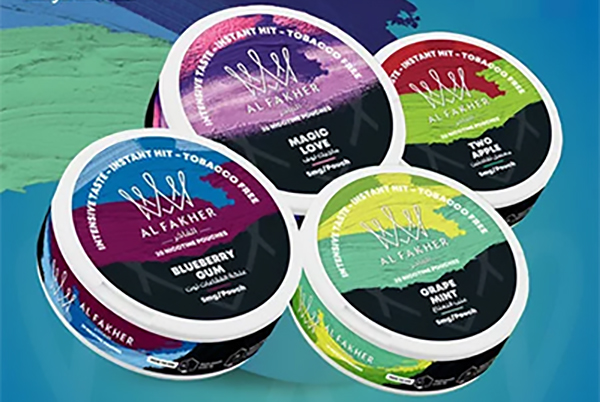
    AIR Limited completed its business combination with Cantor Equity Partners III, resulting in the formation of AIR Global PLC, whose ordinary shares began trading on the Nasdaq Stock Market today (May 18), under the ticker symbol “AIIR.” The transaction, approved by CAEP shareholders on May 12, positions the Dubai-headquartered company known for its Al Fakher brand as the only publicly listed pure-play platform focused on flavored shisha molasses and hookah products. CEO Stuart Brazier said the listing provides access to U.S. capital markets to accelerate international expansion, particularly in AIR’s largest market, the United States, and highlights the global scalability of UAE-founded consumer businesses.

    AIR said it will ring the Nasdaq Opening Bell on May 21 to mark the milestone. The company operates in more than 90 markets and cited industry estimates valuing the global flavored molasses and hookah ecosystem at $15–19 billion with projected mid-single-digit growth through 2030. As part of its growth strategy, AIR plans to open a 70,000-square-foot manufacturing facility in Romania by Q1 2027, expand recently acquired German brand NameLess into new markets, roll out its Crown Switch rechargeable pod system beyond Germany, and advance brand collaborations, including a premium flavor line with Snoop Dogg.

  • CORESTA Extends Abstract Deadline

    CORESTA Extends Abstract Deadline

    CORESTA announced that it has extended the abstract submission deadline to May 22 for its upcoming congress taking place October 25–29 in Victoria Falls, Zimbabwe. Held under the theme “Science for Sustainability and Harm Reduction in the Transforming Tobacco Landscape,” the event is calling for papers in Agronomy & Leaf Integrity, Phytopathology & Genetics, Product Science, and Product Technology, with researchers invited to submit abstracts by the revised deadline. Click here for submission information.

  • Smoking, Drinking Rates Among Young Rising in Fiji

    Smoking, Drinking Rates Among Young Rising in Fiji

    Health officials in Fiji are concerned about rising smoking and alcohol use among young people, following new data presented from the Ministry of Health’s STEPS survey at the Fiji College of General Practitioners conference. Dr. Devina Nand, Head of Health and Wellness, reported that 36.3% of Fijians currently smoke, including 50% of men and 20.6% of women, with nearly one in five smoking daily. Manufactured cigarettes account for 80.6% of use, while 9.5% use smokers’ tobacco, particularly prevalent among those aged 18 to 29. Nand said tobacco use was most common among people aged 18 to 49, and that smoking rates were highest in the Eastern Division. The report calls for earlier intervention, expanded cessation support, higher tobacco and alcohol taxes, tighter marketing controls, and broader community health programs to address the trend.

  • Bulgaria Stops Greece/Romania Illicit Cigarette Pipeline

    Bulgaria Stops Greece/Romania Illicit Cigarette Pipeline

    Officers from Bulgaria’s General Directorate Combating Organized Crime intercepted a cigarette smuggling operation moving illicit products from Greece to Romania through Bulgaria, detaining two suspects near Pernik, Deputy Director Darin Kostov said Friday. Authorities stopped a passenger car and a truck at a gas station, where they discovered 300 boxes of smuggled cigarettes. The case forms part of Interior Ministry enforcement priorities, with cross-border information sharing underway as a formal investigation begins.

  • RFK Jr.’s Spokesperson Resigns Over Flavored Vape Shift

    RFK Jr.’s Spokesperson Resigns Over Flavored Vape Shift

    Richard Danker, assistant secretary for public affairs at the U.S. Department of Health and Human Services, resigned in a letter to Donald Trump after the U.S. Food and Drug Administration authorized several fruit-flavored e-cigarette products, arguing the decision could expose minors to nicotine addiction and health risks. According to ABC News, Danker said the authorization conflicted with recent department guidance on youth risks from flavored nicotine and criticized senior officials in Robert F. Kennedy Jr.’s office for supporting it. An HHS spokesperson said political appointees are expected to advance the administration’s “Make America Healthy Again” agenda and that those who disagree are free to leave. The development follows the departure of former FDA commissioner Marty Makary, who reportedly clashed with the White House over pressure to approve flavored vape products. The FDA recently authorized four devices by GLAS, including mango and blueberry pods, marking a notable shift as the agency continues efforts to curb illicit youth-targeted vaping products.

  • Three Former WHO Directors Push for Harm Reduction

    Three Former WHO Directors Push for Harm Reduction

    Three former directors at the World Health Organization say a global smoking rate below 5% by 2040 is achievable if tobacco harm reduction is formally integrated into the WHO Framework Convention on Tobacco Control. Writing in Nature Health recently, Robert Beaglehole, Ruth Bonita, and Tikki Pang argued that progress in reducing smoking has slowed in many high-burden countries and that current policy debates increasingly conflate nicotine use with the harms of smoking. They called for a “risk-proportionate regulatory framework” that maintains strict controls on combustible tobacco while allowing regulated access to smoke-free alternatives that can displace cigarettes without encouraging youth uptake.

    The authors pointed to examples including Japan, Sweden, and New Zealand, where wider adoption of heated tobacco, snus, nicotine pouches, and vaping coincided with sharp declines in smoking rates. Former WHO director Derek Yach described the commentary as significant but questioned whether large, high-smoking countries would follow those models. The paper maintains that combining established FCTC measures with broader access to regulated smoke-free products offers the most realistic path toward the 2040 goal, even as current FCTC leadership has shown little openness to revisiting its stance on harm reduction.

  • WHO’s Report on Nicotine Pouches Draws Industry Response

    WHO’s Report on Nicotine Pouches Draws Industry Response

    Today (May 15), the World Health Organization released its first global report on nicotine pouches, warning that rapid market growth and uneven regulation could increase youth exposure to nicotine. The report, issued ahead of World No Tobacco Day, says sales exceeded 23 billion units in 2024 and values the category at nearly $7 billion in 2025. WHO said, “nicotine itself is highly addictive and harmful,” and accused companies of using “widespread industry tactics” to appeal to younger audiences, and outlined policy options for governments, including limits on flavors and nicotine strength, age-verification requirements, advertising restrictions, and clearer labeling for the oral nicotine products.

    In response, Dr. Marina Murphy, senior director of scientific affairs at Haypp, said the report does not sufficiently distinguish between combustible tobacco and lower-risk nicotine formats. She pointed to regulatory approaches in the United Kingdom, the United States, Germany, and Sweden as examples in which authorities have set product standards, age controls, and manufacturing requirements while allowing adult access. Murphy cited toxicological comparisons to nicotine replacement therapies and population data suggesting most pouch users are current or former smokers, arguing that regulatory frameworks can address youth concerns while preserving alternatives for adults.

    “The WHO should be leading a science-based strategy to end smoking. Instead, it remains ideologically opposed to the very products helping make that goal achievable,” Murphy said. “The lesson is straightforward. Countries that follow the evidence are accelerating the decline of smoking and reducing disease.

    “Those who treat all nicotine products as equally problematic risk protecting cigarettes from competition. The WHO should be helping governments distinguish between products that kill and products that can help people move away from smoking. Until the WHO embraces this reality, its reports will look increasingly detached from both the science and the real-world policy successes unfolding around it.”