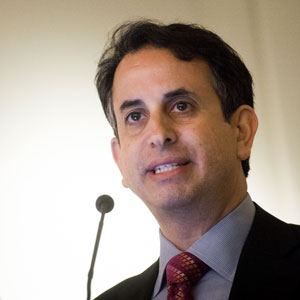
The U.S. Senate on Tuesday voted to confirm Steve Dettelbach to serve as director of the Bureau of Alcohol, Tobacco, Firearms and Explosives.
Dettelbach, 56, was confirmed by a 48-46 vote that went largely along party lines.
“Following the passage of the Bipartisan Safer Communities Act, today’s vote is another important sign that both parties can come together to support law enforcement and stand up against the horrific scourge of gun violence,” President Joe Biden said in a statement following the vote.
Prior to landing the job as the head of the ATF, Dettelbach worked as a federal prosecutor for the Justice Department – the ATF’s parent agency.
“Steve understands the importance and urgency of ATF’s mission and I am confident he will lead ATF with integrity, dedication and skill,” U.S. Attorney General Merrick Garland said in a statement.
Tuesday’s vote marked the first time the Senate has confirmed an ATF director since 2013.
According to a new study, individuals who viewed tobacco content on social media were more than two times as likely to use the substance compared with those who were not exposed. Both organic content, such as friends’ post, and curated content, or advertisements, were included in the study.
Findings of the meta-analysis were published in JAMA Pediatrics and also showed that even among never-users, those who viewed tobacco-related content on social media were more than twice as likely to use it in the future than non-viewers.
Because results are based largely on surveys conducted at one point in time, a direct cause cannot be confirmed, according to The Hill.
The review included 24 datasets, complete with information from 139,624 individuals, the majority of whom were adolescents. The studies also took place in a range of countries that included the United States, Indonesia and Australia.
“The proliferation of social media has offered tobacco companies new ways to promote their products, especially to teens and young adults,” said study co-author Jon-Patrick Allem of the Keck School of Medicine in a statement.
Those exposed to tobacco on social media were also more likely to have had past 30-day tobacco use, while similar associations of past, current and future use were seen for exposure to tobacco promotions, active engagement with content, passive engagement and exposure among youths and adolescents.
Individuals who consumed content on more than one platform were more likely to report current use or future susceptibility compared with single platform viewers.
Facebook, Twitter, YouTube, Pinterest, Tumblr, Instagram and Snapchat were among the platforms hosting tobacco-related content. Notably, relative social media newcomer TikTok was not included in the analysis, but researchers have plans to conduct further studies on new platforms including TikTok and refine associations by different tobacco form, such as e-cigarettes and smokeless tobacco.
Under the new law governing synthetic nicotine products signed on March 15, 2022, Congress imposed a short 60-day deadline for companies to file premarket tobacco product applications (PMTAs) and declared that if such applications were not approved within 120 days (the Act) they would be “in violation of” the Federal Food Drug & Cosmetic Act’s (FDCA) PMTA requirement.
Since no authorizations have been granted as of today, the question is will FDA use its enforcement discretion to continue reviewing PMTAs, or will it precipitously declare that all synthetic nicotine products must be removed from the market after July 13, 2022?
There is no question that the FDA should use its enforcement discretion. In a series of direct engagements with FDA since the Act’s passage, the Vapor Technology Association (VTA) has provided a complete set of scientific and policy justifications for synthetic nicotine products, and specific recommendations on how FDA should use its enforcement discretion – just as it has in the past – to allow synthetic nicotine products to remain on the market during the PMTA review process.
However, some have suggested that Congress mandated all products be removed from the market this week if they are not approved by FDA. But a close review of the Act reveals that the opposite is true: Congress did not require synthetic nicotine products with pending PMTAs to be removed from the market after July 13.
In interpreting laws, a court will first look to the plain language of the Act and, only if there is an ambiguity, will it look to Congressional intent to resolve such a question. Here, both support the FDA’s continued use of enforcement discretion for pending PMTAs.
The Plain Language Supports Enforcement Discretion
There are four relevant sections of the Act. First, under Section (d)(2)(A), Congress expressly stated that “as a condition to market” all manufacturers wishing to continue selling their products must file a PMTA no later than May 14, 2022.
Tony Abboud
Second, under Section (d)(2)(B), Congress expressly stated that companies which filed PMTAs “may continue to market” their products during what the Act calls a “transition period.”
Third, under Section (d)(2)(C), Congress expressly required that if a company did not file a PMTA for its synthetic products by May 14, 2022, that company is “not eligible for continued marketing.” In each of these sections, Congress expressly uses some variation of the term “market” to articulate its direction on what may (not) be marketed and when.
However, in the operative Section (d)(3), which addresses what happens after July 13, 2022, Congress makes no statement regarding marketing at all. Instead, it states that products with pending PMTAs not yet approved would be “in violation of…section 910” of the FDCA (21 USC 387g).
When presented with this question, a court likely would rule that because Congress did not expressly state that pending applicants are “not eligible for continued marketing” or that they “may not market” after July 13, as it clearly said in the immediately preceding sections, Congress did not require the removal of products with pending PMTAs.
This places synthetic nicotine products with pending PMTAs in precisely the same position as all other products with pending PMTAs which, for years, FDA has made clear are “illegal” (i.e., in violation of section 910) but are allowed to remain on the market at FDA’s enforcement discretion.
Even if a court finds that Section (d)(3) is ambiguous, there is nothing in Congressional intent that would lead to the conclusion that Congress intended for products with pending PMTAs to be removed from the market.
First, Congress could have banned synthetic nicotine products, if that is what it intended, but it did not do so. To the contrary, Congress expressly authorized manufacturers to bring new products to market after the Act’s passage. Thus, it would be folly to suggest that Congress intended all synthetic nicotine products be removed from the market without PMTA review.
Second, Congressional intent is generally divined by on the record statements made in committee hearings and in floor debate (not from press releases or media statements). But there is little to nothing which a court could rely on [with] this question because the provision was quietly slipped into the Ukraine-omnibus spending bill with no relevant hearing or floor debate.
Third, Congress was fully aware that FDA could not review PMTAs within 180 days (as required under the FDCA). In fact, the FDA told a court it will not be finished reviewing tobacco derived PMTAs until June of 2023. Thus, no one could suggest that there ever was any reasonable expectation or intent that the FDA would rule on synthetic nicotine PMTAs in 60 days.
Hence, the only reasonable conclusion that can be drawn from the plain language and Congressional intent is that Congress did not require removal of products with pending PMTAs but, rather, expected the FDA to continue to use its discretion in enforcing its PMTA regulation after July 13.
Congress did, however, expressly state that products for which no PMTA was timely filed have no continuing ability to market, authorizing the FDA to take immediate action. VTA has repeatedly communicated to the FDA the need for it to aggressively remove all tobacco products from the market for which no PMTA has been filed and to publish a list of all products covered by a synthetic nicotine PMTA so that retailers know which products can be sold.
A Careful and Complete Evaluation of Synthetic Nicotine PMTAs is Required
We live in a world that remains captive to [combustible] cigarettes. Congress won’t ban them and Congress has prevented the FDA from doing so. While electronic nicotine-delivery system (ENDS) products offer a technological solution to delivering nicotine in a substantially less harmful way, synthetic nicotine now represents the first technological innovation in nicotine itself.
Synthetic nicotine uniquely offers consumers the cleanest and purest form of nicotine with numerous benefits, i.e., the absence of heavy metals, nitrosamines, and pesticides. Synthetic nicotine uniquely offers consumers the opportunity to break free from the last remaining vestige of the tobacco plant.
Synthetic nicotine uniquely offers the FDA unprecedented product constituent clarity, replicability, and traceability down to the batch level. Not only does synthetic nicotine offer companies the opportunity to change the dynamics regarding total reliance on tobacco-derived nicotine for all tobacco and pharmaceutical nicotine products, but it also provides companies the ability to address their ESG [sustainability] goals and take a significant step to ameliorate the adverse environmental impacts of tobacco.
Our message to the FDA has been constructive and clear: it is critical to the adult smoker that FDA takes aggressive steps to create an orderly and regulated marketplace with a diversity of desirable nicotine alternatives.
Given recent history with tobacco derived PMTAs, the best way for FDA to realize that objective now is to avoid the blanket denial mistakes of the past which have mired the agency in protracted litigation. Such litigation will only delay the time until we achieve an orderly and regulated marketplace.
Instead, we have asked the FDA to work companies which timely filed synthetic nicotine PMTAs – the good actors – through the PMTA scientific process and provide them the requisite time and guidance to fulfill FDA’s requirements.
At the same time, we have asked the FDA to aggressively enforce against the non-compliant companies that have refused participate in the PMTA process – the bad actors – by interdicting such products at the border and removing such products from the market Congress has clearly required.
In the end, it is incumbent on the new FDA leadership to use its power to create an orderly marketplace by embracing scientific innovations, stimulating additional financial investment, accelerating authorizations of pending tobacco-derived PMTAs, and ensuring that synthetic nicotine products which now contain the cleanest and purest form of nicotine that science has created are available to adult smokers.
Tony Abboud serves as president for Strategic Government Solutions, and executive director of the Vapor Technology Association.
Brazil’s Growing Up Right Institute organized a seminar on child labor prevention at the Santa Cruz Country Club in Santa Cruz do Sul on July 7.
Under the theme, “Child labor: care, welcome and protection,” participants discussed the progress made in combatting child labor, along with the work that still needs to be done.
“The Institute was founded with the mission to fight child labor and generate opportunities for adolescents from the rural setting, especially in tobacco growing regions,” said Iro Schunke, president of the Growing Up Right Institute, in a statement. “It is a complex task, but with good partnerships we have achieved great results. We have already become known nationally and internationally for the innovative method of offering opportunities to adolescents from the countryside through the learning law.”
Since 2016, the rural professional learning program has benefited 596 young people in Rio Grande do Sul. As part of the program, tobacco companies associated with the Growing up Right Institute hire young apprentices and pay them a salary proportional to 20 hours a week.
Instead of working, however, the apprentices attend a rural management and entrepreneurship course in the shift opposite to their regular school hours. The classes typically take place in the apprentices’ normal schools or in venues provided by the municipal administrations, which also provide for food and transport logistics thus making it viable for the adolescents to attend the course.
According to a report by the International Labor Organization and by the United Nations Children’s Fund, 160 million children and adolescents, aged 5 to 17, were subjected to child labor in early 2020. The Covid-19 pandemic has exacerbated the problem of child labor around the world, with a sharp increase in poverty, closure of schools and consequent school evasion.
In Brazil, the National Household Sample Survey, demonstrated that 1.77 million children and adolescents works, 53.7 percent of whom are in the 16-17 year age group.
Current vaping among U.K. children aged 11-17 was up from 4 percent in 2020 to 7 percent in 2022, according to the annual YouGov youth survey for Action on Smoking and Health (ASH) carried out in March and published on July 7. The proportion of children who admit ever having tried vaping has also risen from 14 percent in 2020 to 16 percent in 2022.
Disposable e-cigarettes are now the most used product among current vapers, up more than seven-fold from 7 percent in 2020 and 8 percent in 2021, to 52 percent in 2022. Elf Bar and Geek Bar are overwhelmingly the most popular, with only 30 percent of current users having tried any other brands.
Over the past year there has been growing concern about the increasing popularity of disposable vapes with young people, but this is the first time national figures have been available to show the scale of the change. ASH said the increase in vaping shown by the survey is a cause for concern, and needs close monitoring. However, 92 percent of under 18s who’ve never smoked, have also never vaped, the organization pointed out—and only 2 percent have vaped more frequently than once or twice.
“Just to give it a try” is still the most common reason given by never smokers for using an e-cigarette (65 percent). For young smokers the most common reason for using an e-cigarette was “because I like the flavors” (21 percent) followed by “I enjoy the experience” (18 percent) then “just to give it a try” (15 percent), but they also said, “because I’m trying to quit smoking” (11 percent) or “I use them instead of smoking” (9 percent). Fruit flavors remain the most popular (57 percent).
Vaping behavior is strongly age related, with 10 percent of 11-15 year olds ever having tried vaping, compared to 29 percent of 16 and 17 year olds (the figures for those currently vaping are 4 percent and 14 percent respectively). And while underage vaping has risen, underage smoking is lower than it was in 2020 (14 percent in 2022 compared to 16 percent in 2020).
For the first time this year the survey asked about awareness of promotion of e-cigarettes. Over half (56 percent) of 11-17 year olds reported being aware of e-cigarette promotion, most frequently in shops, or online, with awareness highest amongst those who’d ever vaped (72 percent). Tik Tok was the most frequently cited source of online promotion (45 percent) followed by Instagram (31 percent).
In response to the survey results, the U.K. Vaping Industry Association (UKVIA) called for a range of get-tough measures to crack down on unscrupulous retailers who sell vapes to young people.
“The UKVIA understands the need for the right balance between supporting adult smokers to quit without encouraging take up amongst under-18s and ‘never-smokers,’” said UKVIA’s Director General John Dunne in a statement.
In a letter to the Department for Health and Social Care, the UKVIA proposed a set of recommendations to come down hard on those who sell vapes to minors while maintaining vaping’s critical role for helping smokers to quit, including fines of £10,000 ($11,897) and a national retail licensing scheme.
Zimbabwe’s Tobacco Industry and Marketing Board (TIMB) vowed to crack down on side marketing, noting that five exporters lost $57 million due to the practice in 2021, according to News Day.
Side marketing is a form of contract breach in which contracted tobacco growers sell their produce to third parties in violation of an agreement to sell all their leaf to the party who provided the agricultural inputs.
“This year, 2022, the Tobacco Industry and Marketing Board is on an accelerated drive to end tobacco side-marketing. This criminal practice is responsible for the loss of millions of dollars annually and has the potential to kill the tobacco industry,” the TIMB wrote in an article published on its website.
“TIMB cannot accurately ascertain how much is lost annually since side-marketing is an illegal activity whose statistics cannot be accurately ascertained. However, in 2021 alone five exporters lost US$57 million as a result of several factors and chief among them being side marketing,” it said.
Prior to Zimbabwe’s radical land reform program in the early 2000s, most of the country’s tobacco was produced by commercials farmers who funded their own operations and sold their leaf at auction. Today’s Zimbabwean tobacco production is dominated by smallholder production and contract buying, as most of the new farmers are unable to pre-finance their crops.
In 2021, the TIMB created a special unit, the inspectorate department, to prevent, detect and investigate side marketing and other illegal activities in the tobacco industry.
Consumption of counterfeit cigarettes jumped by more than a third in the U.K. in 2021, reports Talking Retail, citing a recent KPMG study commissioned by Philip Morris International.
As a result, the number of counterfeit cigarettes smoked in the U.K. topped 3 billion for the first time since the study began 16 years ago.
“The KPMG report highlights how both illicit tobacco and vapes are becoming increasingly prevalent in the U.K., with the situation getting steadily worse over the past five years,” said Cem Uzundal, head of Philip Morris’ U.K. field force.
“There’s a real job to be done to tackle this issue by authorities, tobacco manufacturers and even convenience retailers, who can help by reporting stores selling illicit tobacco in their area.”
“The KPMG report underlines what my team see on British streets month in, month out: illicit products—particularly counterfeits—widely available for sale,” said Will O’Reilly, a former Scotland Yard detective chief inspector who carries out regular test purchases of illicit products on behalf of Philip Morris.
“Organized criminal groups appear to consider the risk of being caught well worth the prospect of making around £1.5 million profit [$1.79 million] for every container load they bring into the U.K.”
While not yet widely available, sales of nicotine pouches are developing rapidly in select geographies, according to a blog post by the Foundation for a Smoke-Free World (FSFW) of reduced-risk products. The largest markets are currently in high-income and middle-income countries, with Sweden and the United States topping the list, partly as a result of their strong oral tobacco cultures.
Of the 15 companies ranked by the FSFW’s Tobacco Transformation Index, which measures the extent to which nicotine companies are making progress toward reducing the consumption of high-risk products, seven currently offer nicotine pouches. In 2021, nicotine pouches represented 0.3 percent of the world tobacco market in value terms.
Twenty-four of the 36 countries covered by the Tobacco Transformation Index allow nicotine pouches. Of those 24 markets in 2021, the market size exceeded 10 million units in seven: the United States, Sweden, the United Kingdom, Germany, Ukraine, Switzerland and Poland.
Legislation differs among the studied geographies, with some countries treating nicotine pouches as consumer products and others viewing them as tobacco products. Germany’s Federal Office of Consumer Protection and Food Safety determined that nicotine pouches are a foodstuff containing an unauthorized novel food ingredient—nicotine—and thus illegal for sale.
The government of Canada is “working on a solution” to help Medicago donate its Covid-19 vaccine to low-income countries, reports CTV News.
In February, Health Canada approved the pharmaceutical firm’s Covifenz vaccine for people aged 18–64. The federal government has signed a contract to buy up to 76 million doses with plans to donate vaccines to low-income countries.
However, the World Health Organization has rejected the vaccine because Philip Morris is a minority shareholder in Medicago, and the U.N. agency has a strict policy about engagement with the tobacco industry. Donations are not allowed without WHO approval.
Medicago’s majority shareholder, Mitsubishi Tanabe Pharma, has approached the Quebec government for support so Medicago’s vaccines “can receive a favorable reception from the WHO and be marketed on a large scale,” according to an entry in the Quebec Registry of Lobbyists.
During a meeting with Mitsubishi executives in Japan, Innovation, Science and Industry Minister Francois-Philippe Champagne indicated that there were discussions about the future of Medicago as a global vaccines manufacturer.
While ruling out buying shares in Medicago for the time being, Champagne indicated that the government was looking at other ways to help make Medicago a “global champion.”
Quebec Economy Minister Pierre Fitzgibbon said in June that he has been in discussions with Mitsubishi Tanabe Pharma executives to resolve the impasse, but the Japanese company must first negotiate the purchase of Philip Morris’ stake itself.
Malaysia’s Cabinet will review a bill this week that would ban smoking for those born after 2005, reports The Edge.
According to Health Minister Khairy Jamaluddin, the bill’s “implementation of the generational endgame” provision aims to prevent Malaysia’s younger generations from picking up the smoking habit and getting addicted to tobacco products when they grow older, as well as to reduce the number of smokers in Malaysia to less than 5 percent by 2040.
“This will be able to reduce the risk of premature deaths, chronic diseases and treatment costs that have to be borne by the government due to smoking complications among the community,” Jamaluddin said.
Presently, some 40.5 percent of men and 20 percent of women smoke in Malaysia.
Anticipating resistance to the bill from cabinet members worried about tax revenues and tourist spending, Khairy said that without the legislation, the government would have to bear treatment costs of about MYR8 billion ($1.81 billion) to treat health problems linked to smoking.
Malaysia’s bill, which would also regulate vapor products, is modeled on legislation in New Zealand, which in December 2021 revealed a plan to phase out smoking by gradually raising the smoking age until it covers the entire population.