Category: Also in TR

  • A Risky Strategy

    A Risky Strategy

    Photo: kurgu128

    Banning e-liquid flavors may not achieve the outcomes that proponents have in mind.

    By Neil McKeganey, Gabriel Barnard and Christopher Russell

    In the world of drug development, very clever people spend a lot of time determining what chemicals need to be combined, in what quantities, over what duration and with what frequency, for a medication to have maximum therapeutic effect. By contrast, much less attention is directed at determining the color, shape, taste or aroma of the pill or capsule involved. If we think of e-cigarettes principally as drug delivery systems, with the drug in question being nicotine, we similarly may come to think that issues of taste and flavor are of secondary importance. In reality, flavors may exert a huge influence in shaping how, why, when and whether adults who smoke use e-cigarettes as an alternative to smoking.

    Faced with concerns around youth vaping, there have been increasingly strident calls to ban all e-liquid flavors other than those that tase and smell like tobacco or menthol. The belief here is that by restricting e-cigarette flavors in this way, fewer youth will vape while leaving adults who smoke able to access at least a couple of the flavors that have been available for use.

    The risks here are considerable. First, there is the possibility that, even in the face of a ban of e-liquids containing characterizing flavors, youth interest in and use of e-cigarettes remain unchanged. That possibility is by no means unlikely given that the U.S. National Youth Tobacco Survey has shown that flavors lag well behind “curiosity” and “family and friends use” in terms of youths’ reasons for vaping. Second, there is the risk that by reducing the range of available e-liquid flavors, fewer adults will use e-cigarettes as a route out of smoking.

    At the moment, e-cigarettes are very popular. They are typically cheaper than regular cigarettes, available in a huge range of flavors, can be discretely used in a wide range of settings, and they can help adults to quit smoking. As e-cigarettes sit increasingly in the crosshairs of regulatory control, we can see each of these benefits steadily being reduced as a result of initiatives to ban flavors, raise taxes, shrink the number of outlets selling e-cigarettes and increase restrictions on where people can vape. The upshot of those accumulated restrictions may be that youth vaping remains largely unchanged while fewer adults use e-cigarettes as a way out of smoking.

    In the past, when faced with an increase in rates of volatile solvent abuse (glue sniffing) among U.K. youth and ingestion of Tide Pod detergents by youth in the U.S., the call to ban these products was resisted in favor of restrictions that were placed on how these products could be displayed and sold in retail outlets. In the case of volatile solvent-based products, out went the open shelves of solvent-based glues and cleaning products and in came the locked glass cabinets and the requirement to ask sales staff directly to provide access to the desired product.

    Through restricting how these items could be displayed, we found a way to ensure a useful household product could continue to be sold while reducing youth access to harmful chemicals. The case for trying to do the same with e-cigarettes is even greater and more compelling. The price of failure here is not simply the loss of a range of helpful household products, for which there were available alternatives, but the loss of what may be the single most impactful innovation in promoting adult smoking cessation.

    The options are stark. In the face of proposals to ban characterizing flavors, it will become increasingly important for industry to support independent research showing what role flavors play in consumers’ decisions as to whether to vape, what to vape and, most importantly, whether to continue or cease smoking. Where flavor bans are initiated, it will be important to monitor what happens once the range of preferred flavors are no longer available; will adults who have already switched from smoking to vaping with the help of now-banned flavors revert back to smoking instead of using the narrowed range of available vape flavors to “stay switched?” Will fewer adults who smoke adopt and use e-cigarettes as a route out of smoking? In addition, industry would be wise to consider ways in which flavored e-cigarettes can be packaged and displayed that actually reduce youth interest in and access to these products.

    If we fail to find a way to balance the need for youth protection and the importance of adult consumer choice in promoting smoking cessation, there is a real risk that we will have undermined vaping as a popular, permanent road away from smoking. The cost of that failure will be measured not in the loss of a range of useful household products, as was the case with volatile solvents and Tide detergent pods, but in the loss of millions of lives of adults who smoke.

  • Celebrating Two Decades of Excellence

    Celebrating Two Decades of Excellence

    Odiri Erewa-Meggison

    Odiri Erewa-Meggison reflects on the significance of BAT’s Ibadan factory in Nigeria as it celebrates its 20th anniversary.

    Contributed

    This year, BAT celebrates the 20th anniversary of its Ibadan factory in Nigeria. To mark the occasion, Precise Platform, a PR agency, interviewed Odiri Erewa-Meggison, external affairs director of BAT West and Central Africa.

    Precise Platform: Please tell us about the significance of celebrating 20 years of manufacturing excellence for your organization.

    Odiri Erewa-Meggison: Celebrating 20 years of manufacturing excellence holds immense significance for BAT West and Central Africa on several fronts. Firstly, it marks a significant milestone in our journey, showcasing two decades of dedication, innovation and resilience in the manufacturing industry within the region. This achievement underscores our commitment to quality, responsible and sustainable business practices in all aspects of our operations.

    [We are] celebrating our two decades of quality output, impacts and milestones despite the economic challenges and regulatory changes that have made a lot of foreign companies quit their investments in the country. We are able to adapt to the market dynamics and impact on our operating environment with over 350,000 job opportunities and boost the economy of the nation through our export operation.

    From the excellent productions in our Ibadan factory, we export to 11 West and Central Africa countries and recently to the USA, with $110 million annual foreign exchange from export, among other socioeconomic impacts. These achievements, which are worth celebrating, speak volumes of our strong contributions and the vital roles British American Tobacco has played in driving economic growth with social progress in our operating environment and also provide an opportunity for us to express gratitude to our employees, partners and stakeholders, whose unwavering support and dedication have been instrumental in our success. Their commitment and passion have been integral to our journey toward manufacturing excellence.

    In essence, celebrating 20 years of manufacturing excellence is not just about looking back at past achievements but also about looking forward with optimism and determination toward a future of continued success and positive impact as BAT Nigeria is here for the long haul.

    How has BAT Nigeria’s Ibadan factory evolved and grown its manufacturing capabilities while achieving sustainability milestones over the past two decades?

    British American Tobacco Nigeria has undergone substantial evolution and growth in terms of its manufacturing capabilities, reflecting its commitment to meeting the dynamic needs of the market and its stakeholders. BAT Nigeria has continually invested in upgrading its manufacturing facilities with cutting-edge technologies. These advancements have enhanced production efficiency and quality control measures, enabling the company to stay competitive in the manufacturing industry.

    Also, BAT Nigeria places a strong emphasis on maintaining high-quality standards across its manufacturing operations. The company adheres to stringent quality control protocols and certifications to ensure that our operations meet or exceed both regulatory requirements and consumer expectations for safety.

    We have also integrated sustainability practices into our manufacturing processes, aiming to minimize environmental impact and promote social responsibility. In order to reduce our carbon footprint, in 2022, we transitioned from diesel[-powered] to gas-powered generation, and in 2023, we installed our 1.4-megawatt solar plant in our manufacturing facility, which was recently launched by the executive governor of Oyo State, Seyi Makinde, during our 20th anniversary celebration. We also installed a wastewater treatment plant with a 30,000-cubic-meter storage capacity to recycle and reuse all wastewater. This earned us the Alliance for Water Stewardship (AWS) certificate. These initiatives encompass our evolution and efforts to reduce energy consumption, minimize waste generation [and] support local communities, to promote responsible business practices within the manufacturing sector.

    The success of BAT Nigeria’s manufacturing operations, particularly at the Ibadan factory, can be attributed to several key strategies and initiatives that have been instrumental in achieving milestones, beginning with our investment in the state-of-the-art manufacturing facility and sustainable technologies that enable efficient resource utilization and minimize environmental impact. These strategies have led to 100 percent waste recycling and transitioning from diesel to gas operation at our Ibadan facility.

    BAT fosters a culture of continuous improvement, where employees are encouraged to identify opportunities for optimization and innovation across all aspects of manufacturing operations. We also work closely with our suppliers and partners to promote responsible sourcing practices and ensure the integrity of our supply chain. This proactive approach enables the implementation of cost-saving measures, quality enhancements and sustainability initiatives.

    Another factor that has contributed to the success we are celebrating is our large investments in human capital training and development programs to equip employees with the skills and knowledge necessary to excel in their roles and contribute to manufacturing excellence. This includes technical training on operating equipment, safety protocols and environmental stewardship practices.

    How does BAT Nigeria guarantee the highest quality standards in its manufacturing processes while simultaneously prioritizing sustainability and environmental considerations, as outlined by the AWS and the International Renewable Energy Certificates (IREC)?

    We implement rigorous quality control measures at every stage of the manufacturing process, from sourcing raw materials to packaging finished products. This includes comprehensive testing, inspections and audits to ensure that our products meet or exceed regulatory requirements and consumer expectations for safety, consistency and quality.

    By adhering to internationally recognized certifications and standards for quality management, environmental management, and occupational health and safety, we foster a culture of continuous improvement, where employees are empowered to identify opportunities for enhancing quality, efficiency and sustainability in manufacturing operations. This includes implementing lean manufacturing principles, conducting root cause analyses and investing in training and development to drive continuous improvement initiatives.

    By prioritizing quality, sustainability and environmental considerations in our manufacturing practices, we not only meet regulatory requirements and consumer expectations but also contribute to the long-term viability and resilience of our business and the well-being of the communities and environments in which we operate.

    BAT Nigeria prioritizes maintaining the highest quality standards in its manufacturing processes while adhering to sustainability and environmental principles outlined by the Alliance for Water Stewardship and the International Renewable Energy Certificates.

    Our dedication to sustainability extends beyond energy efficiency and waste reduction. We prioritize responsible water management practices, evident in our state-of-the-art wastewater treatment plant. This impressive facility boasts a 30,000-cubic-meter storage capacity, allowing us to capture and treat all effluent wastewater generated during production. This commitment to water stewardship ensures no untreated wastewater is released into the environment.

    More importantly, we don’t simply treat the wastewater; we reuse it. In 2023 alone, we successfully recycled a significant amount—17,388 cubic meters of treated wastewater. This recycled water is likely used for noncritical processes within the factory, reducing our dependence on freshwater resources.

    This approach exemplifies our commitment to minimizing our environmental impact and operating responsibly. By effectively managing our wastewater, we not only conserve precious freshwater resources but also demonstrate our alignment with the principles set forth by the AWS certification that we hold.

    The IREC compliance translates to our using energy-efficient machinery and exploring renewable energy sources in line with the recently commissioned 1.4 MW solar plant. This reduces the factory’s dependence on fossil fuels and lowers our carbon footprint.

    This multifaceted approach allows BAT Nigeria to be a leader in manufacturing excellence. We believe this commitment to quality, sustainability and responsibility sets us apart and contributes to a brighter future.

    As BAT Nigeria celebrates two decades of manufacturing excellence in a multi-category industry, how will you leverage your achievements to further enhance and sustain your competitive advantage? Additionally, how does your annual environmental, social and governance (ESG) forum contribute to this strategy, fostering collaboration and innovation for a sustainable future?

    As we celebrate 20 years of manufacturing excellence, we are committed to further enhancing and sustaining our organization’s competitive advantage in the industry through strategic initiatives and forward-thinking plans. Here are some of our key plans:

    We will continue to invest in cutting-edge technologies beyond what we have achieved so far and innovation to optimize our manufacturing processes, improve efficiency and enhance product quality.

    We will reinforce our commitment to sustainability and environmental stewardship by implementing additional initiatives to minimize our environmental footprint, reduce waste generation and promote responsible sourcing practices. With a steadfast commitment to sustainability, we will sustain our recycling cigarette butts initiative and annually hold our private sector ESG forum to continually drive our advocacy for a sustainable environment in alignment with the sustainable development goals.

    By implementing these plans and initiatives, we aim to further enhance and sustain our organization’s competitive advantage in the industry, ensuring continued success and growth for the next 20 years and beyond.

    Our annual ESG forum plays a critical role in these strategies by fostering collaboration and innovation for a sustainable future. The forum brings together industry stakeholders, experts and thought leaders. This allows BAT Nigeria to share its own sustainability journey and learnings while also gaining valuable insights from others.

    Added to this, by facilitating open discussions on key ESG challenges and solutions, the forum fosters collaboration across the industry. This can lead to the development of innovative approaches to tackling environmental and social issues.

    The ESG forum allows BAT Nigeria to stay abreast of emerging trends and best practices in sustainability. This ensures we can continuously adapt and improve our strategies to maintain a competitive edge in a future increasingly focused on ESG performance.

    Is there any message or reflection you would like to share with the employees, stakeholders and customers who have been a part of this 20-year journey of manufacturing excellence?

    I would like to extend my appreciation to all our employees and stakeholders, who have been integral to our 20-year journey of manufacturing excellence. The BAT Nigeria team’s unwavering support, dedication and commitment have been instrumental to our success and achievements over the years.

    As we reflect on this milestone, we are reminded of the collective efforts, resilience and passion that have propelled us forward, even in the face of challenges and uncertainties. Together, we have overcome obstacles, embraced opportunities, and [we] continuously strive for excellence in everything we do.

    As we embark on the next phase of our journey, we remain committed to upholding the highest standards of excellence and sustainability in all aspects of our operations. Together, we will continue to innovate, collaborate and lead the way toward a future of continued success and positive impact.

    Thank you for being a part of our 20-year journey of manufacturing excellence. Here’s to many more years of partnership, growth and shared achievements ahead.

  • Half Measures

    Half Measures

    Photo: Be Free

    Though a generational tobacco ban is not without merit, the U.K. will not allow it to work in the way that it could—and thus the measure should be shelved.

    If I have this correctly, the U.K.’s proposed generational tobacco sales (GTS) ban has been attacked by libertarians as being contrary to the principles that people should be allowed to make their own choices about the risks they are prepared to take in life and to take responsibility for the consequences of those choices, providing they act within the law and their actions do not harm others.

    These are powerful arguments, but are they enough to defeat the proposal, which, as currently envisaged, would mean that from Jan. 1, 2027, anyone born on or after Jan. 1, 2009, could never be sold tobacco products legally in the U.K.? I suspect not.

    One problem arises because the first duty of the government is to protect U.K. citizens, and while, by not allowing smoking in public places, the U.K. government might be seen mostly to have discharged that responsibility in the case of smoking, it is not difficult to imagine how some might argue otherwise. Smokers may still smoke at home, affecting family members, and because, we are told, smoking has a negative economic impact on society, it must be seen as causing harm to nonsmokers by robbing society of the funds to help those in need.

    These are powerful arguments, but are they enough to support the radical idea of a GTS ban? I suspect not.

    A major problem to my way of thinking is that the GTS ban is based, as is much else to do with tobacco and vaping, on faulty statistics and information and on ideological rather than rational ideas. Regulatory skyscrapers have been and are being built on dodgy foundations.

    Here is an example. The first words of a GTS ban blog post from the U.K. Department of Health on Jan. 30, titled “Creating a smoke-free generation and tackling youth vaping: What you need to know,” had it that “The prime minister has set out plans to build a better and brighter future for children.”

    I find it intolerable that I am being told by a government department that I need to know something that is misleading. A Feb. 20 story by social policy editor Patrick Butler published in The Guardian newspaper and quoting the Association of Directors of Children’s Services had this to say: “In a withering assessment of the government’s record over the past few years, they said ministers had presided over deepening child poverty, crumbling schools and an exploding health and well-being crisis in young people, with low-income families worst affected. The government’s failure to prioritize the post-pandemic needs of children in England was a ‘massive missed opportunity’ that would leave many thousands of youngsters ‘left behind.’”

    The prime minister referred to in the blog is Rishi Sunak, who has been either prime minister or chancellor of the exchequer during almost the entire time frame referred to in The Guardian piece. Does it really sound like he has been building a better and brighter future for children?

    Of course not. So the question arises as to why anybody should believe anything else in the blog or any of the other so-called information put out by the government in relation to the GTS ban. And the answer is that there is no reason to believe and every reason to suspect one is being conned. You have only to gaze briefly at the graphic “warnings” on tobacco packages to realize how misleading they are and, I would contend, are meant to be. And the statistics linking diseases and death directly to smoking and to no other causes (drinking, eating highly processed food and taking nonprescription drugs, etc.) are clearly misleading.

    But as they say, we are where we are, and whether you accept the necessity of the GTS ban will probably depend largely on whether you believe the information put out by the government. So let’s for the moment accept the government’s position and say that because of the tragic consequences of smoking, and smoking alone, it is necessary to put an end to the habit.

    At this point, we need to ask whether the GTS ban is the best approach, and I think you have to say that probably it is. Nearly everyone dismisses the idea of outright prohibition because they say it would not work, and once you say that, you know it won’t be allowed to work—you have set yourself up to fail. Another idea would be to employ tobacco harm reduction (THR), but this will take forever because there are so many people opposed to it, and even those who believe in it can be made to jump and think again simply by saying, “Boo! Children!”

    So a GTS ban is the best game in town? Possibly, but that is not to say that even it would work. Let’s take a look. Despite what I wrote in the second paragraph, the blog actually says that from Jan. 1, 2027, anyone born on or after Jan. 1, 2009, “will never be able to legally sold tobacco.” That does not make sense, of course, and it makes you wonder how much effort has gone into the GTS proposal, which is being hurried along in an election year. But, no matter, the idea is not without merit. It has the advantage that, in theory, nobody who has taken up smoking after being sold tobacco products legally will ever be forced to quit.

    It has the advantage, too, that it is not really a ban. Smokers, we are told, smoke for the nicotine, and, as things stand and in theory, those who are born after Jan. 1, 2009, will still be able to buy nicotine in inhalable and possibly other forms once they have turned 18. I write that with a feeling of trepidation, however, because a U.K. representative at the February meeting of the Conference of the Parties to the World Health Organization Framework Convention on Tobacco Control said that no nonsmoker should use a vape. Whether this was meant to be simply a moral judgement whose basis was not spelled out or whether it heralded a regulatory extension of the GTS to cover vapes was not clear. If the latter is the case, GTS is probably dead in the water.

    If, on the other hand, the former is the case, it looks like GTS is set to roll, right? Not so fast. One of the major objections made against the ban is that it would create a two-tier society where some people are allowed to buy tobacco products and some are not. I am not sure that this should be seen as a huge problem because we already have age-determined dividing lines in our society in respect of many products and activities; it would just be the case that the dividing line would be on a sliding scale in respect of one product, which is not something that should send us into an intellectual death spiral. After all, the pension age has also been moved on to such a scale.

    A connected and more concerning issue to my mind is that the ban would put retailers in an invidious position because they would be required to tell the difference between two adults, one of whom was one year older than the other. There is age estimation technology available that can reliably tell if somebody is under 25 and therefore trigger a request for that person to prove they are over 18, but it seems unlikely that it could split, say, a 40-year-old from a 41-year-old.

    There are ways around this problem using some form of identity documents but none that I can think of that would be foolproof in a society where not everybody has such documentation and where not everybody who does carries it with them. And it would be a brave politician who raised the specter of a universal system of identity cards in the U.K. simply to help smokers.

    The only answer to this problem as I can see it is to make it illegal for anyone born after Jan. 1, 2009, to buy tobacco products, putting the onus on the buyer rather than the seller, who would nevertheless still be required not to sell to those under the age of 18.

    The objection here would be that people would ignore the rules and buy tobacco products illegally. But would this really matter? The law would be in place in large part to protect the individual so that if an individual decided to sidestep the law, it would be their fault if they fell ill from smoking, were fined, not an unlikely outcome at some time given that they would need to buy a pack every day or two, or if somewhere down the line they were forced to quit because the last licit smoker had died or if manufacturers withdrew cigarettes on the grounds that there were too few people left who could buy tobacco legally.

    So, we are back on track? A GTS ban it is? No, sorry, there are still a few things we need to clear up. For a GTS ban to work, in my view, it is necessary to have a long-term THR policy in force that provides a range of attractive, reasonably priced, less risky alternative products to help those who want to quit smoking and, importantly, so as not to discriminate against people based on age—one year of age. And despite the U.K.’s reputation of having embraced THR, we are nowhere near having a comprehensive policy that people can rely on to still be in force next month. Snus is banned, and the government continues to dither over heat-not-burn products. Even vapes are subject to winds of change. The government is going to ban disposable products, it is set as I write this piece to further tax these products, and, because the middle classes said, “Boo! Children!,” it is going to ban various flavors.

    And worse is to come. Because, despite what it says, the government will not adequately fund the organizations charged with controlling the retail sale of products to those underaged, the general media will soon be crawling with stories about how little Johnny, the light of his mother’s life, was sold vaping products laced with crack, drawn into a den of vice and reduced to a life that was solitary, poor, nasty, brutish and short.

    Let’s face it: Though GTS is not without merit, it is not going to be allowed to work in the way that it could, and it needs to be shelved. It is true that it is simply too risky to design policy initiatives when politicians are trawling for votes, as they currently are in the U.K.

  • Plxsur Revenues Surpass $1 Billion

    Plxsur Revenues Surpass $1 Billion

    By Timothy S. Donahue

    That didn’t take very long. The global vaping company Plxsur reached its goal of reaching $1 billion in consolidated revenues from its partners in just two years. The company has now successfully partnered with 12 of the world’s leading vaping companies to form what may be the largest and fastest-growing group of independent vaping companies in the world. According to Nigel Hardy, CEO and founder of Plxsur, the company accomplished this with a focus on compliance, governance and reporting, with responsibility at its core.

    “We believe having a portfolio of multiple brands is crucial for building a successful reduced-risk product (RRP) business at scale. Our retail sales across the group reflect the impact of Plxsur, which supports adult smokers who have switched to vaping,” explains Hardy. “We have sold products to about 4 million consumers, with retail sales by value of units sold at $1.835 billion. Additionally, our three North Star owned brands, Salt, Allo, and Flavour Beast, are expected to generate retail sales of more than $400 million in 2024.”

    Plxsur also has 10 e-liquid manufacturing facilities in six different markets. With that comes the quality management systems to ensure the quality of the raw materials that are coming in and what’s going out. It’s not only about quality control (QC), but also about quality assurance. All e-liquids are manufactured in a minimum ISO 9001-certified facility. Plxsur’s QC program ensures that all products manufactured and distributed meet or exceed all regulatory and legislative requirements in the markets where the products are produced.

    ISO 9001 is an international standard specifying quality management system requirements. Organizations use it to demonstrate their ability to consistently provide products and services that meet customer and regulatory requirements. Plxsur only produces its brands of e-liquids. The company does not do third-party manufacturing because the company’s focus is on its products.

    Plxsur leadership says its partners have a combined market share representing an estimated 10 percent of the global $19.34 billion vaping market. Hardy said the company is targeting a 20 percent market share in the next five years. The companies include Hale Vaping (Ireland), UEG Holland (Netherlands), DampShop (Belgium), Pro Vape (Latvia), Puff Store (Italy), Nobacco (Greece), Ritchy Group (Czech Republic), Vape Empire (Malaysia), Pacific Smoke (Canada) and CK Complex (Poland).

    “The past two years have seen a huge amount of financial and operational progress for Plxsur, and we have grown to become the world’s largest and fastest-growing group of independent vaping companies with consolidated revenues of over $1 billion,” said Hardy.

    In 2021, Plxsur was founded by David Newns, Charlie Yates, and Nigel Hardy. The three entrepreneurs shared a vision for the vaping industry and discussed how they could work together to achieve their goals. They believed the key to success was respecting and supporting entrepreneurship while empowering local management teams. They planned to create a global network of independent vaping companies that were both the largest and the most responsible in the industry.

    Plxsur, under Hardy’s leadership, believes in improving the businesses it brings on board by focusing on three key aspects of business strategy: governance, compliance, and reporting. Compliance involves adhering to various rules and regulations in the countries and communities where Plxsur businesses operate. This includes regulatory, communication, and marketing compliance, as well as legal compliance related to finance and jurisdiction.

    “We’re at a very important and exciting stage in our journey. The companies in that group are not only the best at what they do in their respective markets, but importantly, they share our values.

    “They put the consumers first, think big, and take responsibility seriously. All our companies want to make a real difference in the lives of adult smokers by contributing to a smokeless society. We now have a presence in Europe, Asia, and North America, covering the full vaping value chain from manufacturing, wholesale, distribution, and direct-to-consumer, both online and through our global network of over 800 specialist vaping stores.”

    In 2023, group revenues increased 40 percent on the previous year to more than $1 billion, with an adjusted EBITDA of over $200 million. The outlook for the global vaping market is strong, and last year, Plxsur commissioned an independent research report that Hardy said is the “most comprehensive consumer study conducted on vaping to date”, using data from an online panel of over 30,000 consumers in six of Plxsur’s markets.

    “The opportunity available for RRP across our 12 markets is significant, and I am pleased that our Global Vaping Market Snapshot vindicates the belief that not only will this sector continue to grow at pace, but that vaping is quickly becoming the most popular form of RRP in the market, with adult smokers who switch to vaping likely to remain loyal by navigating the regulatory framework,” he explained. “Our team has established a center of excellence leading a program of capability development to ensure management teams at a local level of the skills to deliver sustained value growth.”

    Plxsur and its partners continue raising the bar as a responsible vaping group. All its companies have now committed to the six Plxsur standards (product compliance, manufacturing safety, responsible marketing, youth access, child protection and third-party product compliance) that address the biggest issues the vaping industry faces today. The company has also supported local teams across the group and guided companies in engaging with governments on policy development, particularly around preventing youth access.

    “We’re focused on migrating consumers from disposable vapes to rechargeable pod and open systems. This is a key priority for Plxsur and our companies are already delivering huge results. In Q3 of 2023, I’m delighted that our Italian business, Puff, successfully migrated many of their consumers to pod and open devices through its launch as an exclusive distributor of new-to-market pods and e-liquids,” said Hardy.  “To keep the momentum going, our portfolio companies have exciting plans to expand their range of pod systems in the first half of this year.”

    Unlike traditional business acquisitions, Hardy explained that the company’s partners are not selected based on their financial worth. Plxsur is highly selective in its choice of partners, and financial size is not the only factor determining whether a company is suitable to join the Plxsur team. Hardy cited the example of Pro Vape, a company headquartered in Riga, Latvia, which started its business in late 2016 and met all the necessary criteria to become a Plxsur partner.

    “The Baltic market is not particularly a huge market for vaping. What Pro Vape has is a significant presence in Europe,” said Hardy. “Only 40 percent of their business is domestic, and 60 percent is across the rest of Europe.”

    Plxsur has specific criteria that businesses must meet before partnering with them. Firstly, the company must be a leader in its channel, whether it is business-to-business or business-to-consumer, or a leading player in its market. Currently, all of Plxsur’s partners meet this benchmark. Secondly, having a healthy balance of company-owned brands within the portfolio is essential, with Plxsur aiming for at least 50 percent of its revenues to be driven by such brands. Thirdly, the most crucial criterion is people.

    “Our ability to retain our unique entrepreneurial spirit while growing at a rapid pace has been pivotal to our success over the past two years,” said Hardy. “We remain committed to achieving long-term value for all stakeholders, with responsibility at the core of everything we do. Supported by several tailwinds, including evolving market dynamics and customer preferences, we remain confident in Plxsur’s medium-term prospects and our ability to continue our trajectory to promote responsibility in the sector, achieve our target of over $15 billion in revenues by 2033.”

    To achieve the lofty goal, Hardy said Plxsur is well placed to capitalize on the growing trend of vaping across the globe, unlock future value, and play a leading role in shaping the sector’s future on a platform of responsibility. He said Plxsur excels at creating a distinctive, innovative business leadership environment while growing at a pace pivotal to the company’s success over the past two years.

    “We continue to see increasing regulation around vaping, particularly disposables, flavors, and marketing,” said Hardy. “At Plxsur, we see regulation as a force for good and encourage appropriate regulation and enforcement to tackle illicit and irresponsible trading behaviors. Last year, we submitted Plxsur’s response to the UK government’s open consultation on creating a smoke-free generation, and we continue to engage with regulators worldwide.

    “This engagement with responsibility at the core of everything we do places Plxsur in a prime position to continue to grow, lead the industry, and shape the future of vaping.”

  • Taking Stock

    Taking Stock

    Image: blacksalmon

    Where are we with ESG?

    By Cheryl K. Olson

    It was once novel, even radical, to talk about making good environmental, social and governance (ESG) practices central to business and investment decisions. Today, ESG is literally front and center on the websites of major tobacco companies.

    Under the heading “Winning with ESG,” Turning Point Brands states, “We recognize that incorporating ESG into our business strategy will support our operating principles of winning with accountability, integrity and responsibility.” Altria has set up a Responsibility Progress Dashboard to track and manage ESG issues.

    Sustainability is now the trending term. Witness Philip Morris International’s Sustainability page, which begins, “For PMI, sustainability is more than just a means to minimize negative externalities and mitigate risks while maximizing operational efficiency and resource optimization.” At Universal Leaf, the first-listed “core belief” is “We believe in our responsibility to make a sustainable impact on our planet.”

    Whether ESG or sustainability, is something meaningful going on here for the nicotine product industry? What are the biggest concerns on the “E” side of things? Below are several perspectives.

    Investor Viewpoints

    Pieter Vorster, managing director at Idwala Research, focuses on tobacco harm reduction and industry transformation. When it comes to tobacco companies, says Vorster, investors may look at ESG from several angles. One is the Tobacco-Free Portfolios perspective, which assumes that there are no good tobacco companies, and all should be excluded from portfolios. Another approach, he says, is “to encourage companies to change, as with the oil industry, and invest in the least bad ones.”

    A third viewpoint looks more at process than product. Tobacco companies can end up in ESG portfolios via “good credentials on other measures like carbon footprint and water,” says Vorster. “BAT, for example, has been in the Dow Jones Sustainability Index for over 20 years.”

    Why the shift from ESG to sustainability? “From an investor perspective, the whole ESG movement is probably slowing,” Vorster says, because it’s no longer a differentiating factor. Rather, environmental and social consciousness is something that’s assumed by both investors and consumers.

    This is why he feels that measures of movement toward reduced-risk nicotine products, such as the Tobacco Transformation Index, can benefit industry. They can help companies stand out on another dimension of ESG. (More on this later.)

    “I think the sustainability label is a bit broader than ESG,” says Vorster. “For me, from an investor perspective, sustainable would be, how long can this business exist? How long can it grow?”

    “Ultimately, most investors care about performance,” Vorster says. “If a company’s environmental credentials are going to impede their share price performance, then they will care.”

    He adds, “That’s also why they care about tobacco companies transforming, because they want a more sustainable business long term. You know, it’s not good business if your products kill half your customers.”

    Investors care about tobacco companies transforming because they want a more sustainable business long term. You know, it’s not good business if your products kill half your customers.

    The Litter Issue

    When I was a child, environmental awareness meant “Keep America Beautiful” (KAB) campaigns, telling us “every litter bit hurts.” This included cigarette ends tossed from car windows. To my surprise, KAB is still going. Its website says that “cigarette butts account for 88 percent of litter four inches or smaller.”

    Concerns about cigarette litter have shifted from aesthetics to preventing chemical and plastic pollution. Cigarette filter waste was on the agenda this year at the 10th session of the Conference of the Parties (COP10) to the World Health Organization Framework Convention on Tobacco Control (FCTC). Citing a 2010 study, a COP10 news release says, “An estimated 4.5 trillion cigarette butts are thrown away annually worldwide, representing 1.69 billion pounds of toxic trash containing plastics.”

    Cigarette filters are also the focus of most research literature on tobacco and sustainability. A 2022 editorial in the journal Addiction on the environmental impact of tobacco products advocates banning the sale of filtered cigarettes, or having industry pay for cleanup. As an example of the latter, the writers point to a San Francisco “cigarette litter abatement fee,” which is currently $1.50 per pack, paid quarterly by local cigarette retailers.

    The European Union’s Single Use Plastics Directive has helped spur efforts to develop biodegradable filters. Experiments in recycling are underway, such as a project in Slovakia that plans to mix recycled cigarette filters into asphalt for surfacing roads.

    Sidelining of cigarettes by noncombustible alternatives should gradually reduce filter waste. What about litter issues with newer nicotine alternatives?

    “Next-generation, or reduced-risk, products were generally not a major source of concern on the environmental side until the rise in popularity of disposable vapes,” says Vorster. Waste from disposables is particularly difficult to address because so many are sold illicitly.

    The website of the U.K. Vaping Industry Association (UKVIA) criticizes the lack of interest in and resources for vape recycling from local councils. The UKVIA will host a webinar on April 15 to address the future of vape waste management.

    Concerns about e-cigarette waste have yet to catch fire (pardon the pun) in America. Sustainability is not listed among the “top issues” on the website of the Truth Initiative. Their brief 2023 report on “tobacco and the environment” mentions disposable e-cigarette waste and battery risks but zooms in on pollution and litter from cigarettes.

    David Sweanor, who chairs the advisory board of the Centre for Health Law, Policy and Ethics at the University of Ottawa, views this issue skeptically. “People look for something new to beat up nicotine companies on,” he says. “But your real concern isn’t about disposable e-cigarettes; it’s about batteries. Something less than 5 percent of household batteries sold in the U.S. are properly disposed of. So don’t throw it at the nicotine business or consumers.”

    During a visit to Finland, Sweanor happened upon a creative art installation that turned out to be a battery recycling station. “Because batteries are all different colors, as the container filled up, it’s a beautiful sculpture,” he recalls. “Whoever puts these in hockey arenas and shopping malls—why aren’t we doing things like that?”

    Waste from disposables is difficult to address because so many are sold illicitly. (Photo: Bennphoto)

    Concern About Carbon/Water Footprint

    Nowadays, we care less about “litterbugs” and more about carbon footprints. In her 2024 closing address to COP10, Adriana Blanco Marquizo, head of the FCTC Secretariat, emphasized environmental protection. She cited the “historic decision” to “take account of the environmental impacts arising from the cultivation, manufacture [and] consumption of tobacco products as well as the waste they create.”

    Six years ago, a groundbreaking report from Imperial College London turned attention from smoking’s health harms to the environmental harms from producing 6 trillion cigarettes per year. Researcher Maria Zafeiridou and colleagues looked at “resource needs, waste and emissions of the full cradle-to-grave life cycle of cigarettes” across the globe. As Imperial College’s news release noted, those 6 trillion cigarettes required 22,200 megatons of water, 5.3 million hectares of land, 62.2 petajoules of energy and 27.2 megatons of material resources.

    Synthetic nicotine maker Zanoprima Life Sciences recently released a report comparing the environmental impact (from the raw materials to the factory gate) of their laboratory-made nicotine and nicotine from plants. The report’s author, Eric Johnson of Atlantic Consulting of Zurich, routinely does life cycle assessments of products and services.

    “In some of the work I do, I know what the answer will be before I start,” says Johnson. “But I hadn’t looked at this issue closely.”

    Drawing on data used in the Imperial College study, Johnson found that tobacco-based nicotine (especially when fuel cured) had a substantially larger carbon footprint. Also, synthetic nicotine production doesn’t use up water.

    Johnson was struck by the size of the difference. “When it’s ‘this product has a 15 percent lower footprint than the other guy’s product,’ it’s hard to know,” he says. “But tobacco nicotine’s footprint is multiple times larger. Even with normal error and uncertainty, the result is solid.”

    Clearly, from an ESG standpoint, the big issue has to be that cigarettes are killing 8 million people a year. Not the carbon costs.

    What We Can’t Say

    As someone who makes his living as an investor, Sweanor views all of the above as relative trivialities. “Clearly, from an ESG standpoint, the big issue has to be that cigarettes are killing 8 million people a year,” he says. “Not the carbon costs.”

    A “good ESG” cigarette company would move aggressively into reduced-risk nicotine products. But that’s just the first step, says Sweanor. Such companies also have an ethical and legal responsibility to warn their customers.

    “If you’re selling products that are two or three orders of magnitude more hazardous than viable alternatives, you need to tell them. That’s basic ESG standards,” he says. “However, the laws in many countries, including the U.S. and Canada, make it illegal to do that.”

    Educating about and promoting reduced-risk products could create shareholder value and make it easier to hire good employees. “You’d also want to differentially price and have other incentives to nudge consumers toward the less hazardous nicotine products,” he adds. “But companies are precluded from doing all that.” Sweanor calls this “insane.”

    Recent surveys show that ever-fewer people, including those who smoke, think that noncombustible nicotine products are less hazardous than cigarettes. Sweanor imagined what health authorities would do if similar proportions of adults disbelieved that driving drunk increased car crashes. “They’d be totally freaking out and running a major campaign,” he says. “And probably force any companies involved to be part of that effort.”

    He stresses that this is out of industry’s hands. “The responsibility I would lay on the companies,” he concludes, “is that they are not making a big deal out of this.”

    ESG From the Inside

    I asked an industry insider, who’s had senior roles at several major companies, for their unvarnished anonymous view. “There is a lot of snark around the value of things like ESG,” they admitted. “I’ve heard it called ‘window dressing.’”

    They personally disagree with that view, noting that “unsexy” things like constant efforts to reduce manufacturing waste and water use get little publicity.

    “I’ve even heard THR (tobacco harm reduction) called window dressing. But I don’t think that’s true where I work,” they said. “We’d like to stay around for a long time, and we’ve got to do something very different to make that happen. And there is a real sense of pride about this transformation.”

    Citations

    Zafeiridou M et al. (2018). Cigarette smoking: An assessment of tobacco’s global environmental footprint across its entire supply chain. Environmental Science & Technology. https://pubs.acs.org/doi/10.1021/acs.est.8b01533

    Zanoprima Lifesciences Ltd. (2024). Carbon and water footprints of tobacco-based vs. synthetic nicotine. https://www.zanoprima.com/updates

    Truth Initiative (2024). Tobacco and the environment. https://truthinitiative.org/research-resources/harmful-effects-tobacco/tobacco-and-environment

    Morphett K et al. (2022). The environmental impact of tobacco products: Time to increase awareness and action. Addiction. https://onlinelibrary.wiley.com/doi/10.1111/add.16046

  • A Legacy of Leadership

    A Legacy of Leadership

    Image: HTGanzo

    Tobacco Reporterturns 150.

    By Mike Macdonald

    Impressionism was born in April 1874 when Monet, Renoir, Degas, Morisot, Pissaro, Sisley and Cezanne broke the rules and held their own art exhibition in Paris. Other notable events from the year included the establishment of the Universal Postal Union to coordinate international mail, the invention of the cylindrical QWERTY typewriter/keyboard, a patent for blue jeans with copper rivets by Levi Strauss (that sold for $13.50 per dozen) and the debut in Bombay of the first commercial horse-drawn carriage. Notable births that year included American philanthropist John D. Rockefeller, magician Harry Houdini, Italian inventor Guglielmo Marconi and British Prime Minister Winston Churchill.

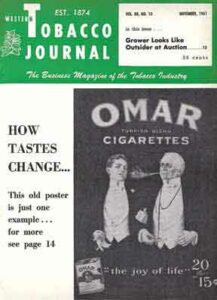
    That year also marked the birth of Tobacco Reporter magazine, the leading source of industry information for, now officially, a century and a half. Technically, Tobacco Reporter began as the Western Tobacco Journal, a small, weekly newspaper published in Cincinnati, Ohio, for farmers growing burley tobacco along the Ohio River, but even then, it was the go-to source for industry information. Over time, manufacturers, processors, importers, exporters and most anybody interested in tobacco joined the growers in reading it. Before long, it was a full-fledged, monthly magazine shipped to more than 100 countries around the world, officially changing its name to Tobacco Reporter in 1966.

    How it started

    From the beginning, the award-winning magazine rode the waves of technology in publishing and was a stalwart of the tobacco industry, priding itself on obtaining the most pertinent information possible in person, firsthand. At TR’s birth, linotype (a typesetting machine that uses a keyboard instead of people doing it manually), zinc printing plates and web presses that used rolls of paper instead of individual sheets, were all brand-new inventions that made the printing process much quicker and more affordable. Progress over the decades came in the way of the mimeograph, film, monotype machines and eventually computers, and TR took advantage with each step. Today, TR remains dedicated to the printed page but also takes advantage of the technology offered by communicating information with digital editions, e-newsletters and a website that is voraciously fed each day. Whatever medium the reader preferred, TR always delivered.

    Issues in the early years offered practical advice and news written by growers for growers, but soon, professional journalists who were experts in the field (no pun intended) joined to set the standards that still top the industry to this day. A trip through TR’s archives is like reading a meticulously detailed history of the modern tobacco world, featuring companies, innovations, trends, growing reports and governmental news as well as the people who made it all happen.

    Riding the waves of technology, even then. (Photo: simonekesh)

    In 1980, Tobacco Reporter was sold from the Western Printing Co. to Specialized Agricultural Publications, and its headquarters was moved closer to the heart of the American tobacco scene, Raleigh, North Carolina. In his December 1980 editorial, associate publisher Peter Sangenito predicted, “With this merger, Tobacco Reporter will solidify its position, despite misleading and inaccurate statements made to the contrary by a competitive magazine, as the No. 1 international tobacco industry publication in the United States. We intend to hold—and expand—this position.”

    Forty-four years later, mission accomplished! Tobacco Reporter became the flagship of the company’s tobacco and nicotine division, surrounded by other titles such as Flue-Cured Tobacco Farmer, Burley Tobacco Farmer, Tobacco Farm Quarterly, Tobacconist, Pipes and Tobaccos, Cigars and Leasure and, most recently, Vapor Voice.

    Elise Rasmussen

    The first person hired after the move to North Carolina was a spirited young salesperson straight out of college by the name of Elise Ward (Rasmussen). The rest, as they say, is history. Elise not only remains with the company these many years later heading up global sales, but she is also the publisher of TR and one of the most recognizable characters in the industry, with too many accomplishments to count. She is only the second woman to serve as the master of the Worshipful Company of Tobacco Pipe Makers and Tobacco Blenders and is a serial founder, having launched or co-founded two other magazines, including TR’s sister publication, Vapor Voice, as well as Women in Tobacco, an organization with more than 500 members that has given voice and appreciation to the women within an industry once solely dominated by men.

    Elise’s biggest contribution to the industry’s intellectual discourse, however, has been the creation of the Global Tobacco and Nicotine Forum (GTNF). Since its inaugural gathering in Rio de Janeiro in 2008, the GTNF has evolved into the nicotine business’ single most important discussion forum, bringing together not only industry executives but also senior regulators, policymakers and public health advocates to reflect on the sector’s challenges and opportunities.

    Same talent but greater ambition

    In 1996, Taco Tuinstra joined TR, and, with true Dutch wit—that being, it doesn’t come along often, but when it does, it is gold—he quips that he’s not sure if serving as a magazine’s editor-in-chief for nearly three decades should be a source of pride or an indictment on his lack of ambition. Jokes aside, Taco is one of the most respected journalists in the industry and a true believer in getting the story firsthand. He has visited more than 80 countries, including destinations that even the most adventurous tourist would be awestricken by.

    Taco has been to not only North Korea and Latin America’s tri-border region but also, in 2003, to the lawless area straddling Pakistan and Afghanistan, the place where at the end of the 19th century, a nearly equally talented but considerably more ambitious correspondent honed his craft, reporting on—and at times participating in—Britain’s bloody campaign against Pashtun tribesmen. Unlike Winston Churchill (who was featured with his signature cigar on TR’s February 1965 cover), Taco did not lay siege to his hosts, electing to talk tobacco with them instead. In fact, his sources welcomed him by noting that he was the first Western visitor to arrive in the region unarmed since the Sept. 11 attacks on the United States.

    Rounding out the award-winning editorial team are George Gay, who, with his keen sense of observation and sharp wit, has become one of the most authoritative tobacco commentators since he started reporting on the business in 1982; Stefanie Rossel, who is widely respected for her deep industry knowledge; and assistant editor Timothy Donahue, who in his 11 years has become a recognized expert on the vapor business, scoring, among many other scoops, an exclusive interview with the inventor of the e-cigarette, Herbert Gilbert. 

    These roving reporters, who you will likely have met in your fields, factories and at trade exhibitions over the years, are supported by a committed team of professionals in our Raleigh office: Marissa Dean has been instrumental in the exponential growth of TR’s website and digital offerings while graphic designer Dan Kurtz, eagle-eyed copyeditor Kailyn Warpole and all-everything Karen Pace are instrumental behind the scenes. Our most recent hire, Will Rasmussen, has been a stalwart at GTNF events for years and now gives his mother much-needed assistance.

    In print, online – and in person; industry events such as TABEXPO became an important part of Tobacco Reporter’s portfolio. (Photo: Taco Tuinstra)

    Our current lineup fits into a long tradition of hiring top talent. What industry veteran will not remember Ann Jeffries, Colleen Williams, Noel Morris, Kay O’Neill, Chris Glass, Brandy Brinson and Ann Crumpler, to name just a few of the stars whose names have graced TR business cards over the years?

    Of all the evolutions we’ve seen in the publishing industry over these 150 years, most of the biggest changes have been triggered by how readers wanted to consume their information. The internet revolution driving everything online was clearly the biggest, but another popular trend came with in-person events. Trade shows became an important part of the business world, and many magazines in all industries began hosting them as a new way to engage with their readers, and TR was no exception. Too often, companies attended such events more out of obligation than desire, though, and sensing stress within the tobacco industry because of numerous small shows, TR owner Dayton Matlick and his staff set out to create the ultimate industry show, painstakingly traveling around the world and interviewing the stakeholders to see what they actually wanted, with the mantra that we serve ourselves best by serving our customers first. In 1994, TabExpo was born under the TR umbrella, and to this day is the “must-attend” trade show for the industry.

    Tobacco Reporter’s most recent chapter began in 2020 when it was purchased by TMA, a match that has propelled both organizations to new heights. Founded in 1915 as an industry trade association, TMA is a member-driven, nonprofit source of information and analysis that empowers ideas as well as assembles stakeholders to discuss and debate tobacco and nicotine matters. Together, TR and TMA have strengthened one another to the benefit of the industry, offering daily news, financial projections, market research, business insights, company profiles, governmental coverage, virtual seminars, in-person forums and the in-depth, long-form articles that have made the magazine the unquestioned leader in the industry for the last century and a half. It’s hard to believe, but now, under the leadership of TMA, the publication that has such a rich and impressive past has an even brighter future.

    Here’s to the next 150 years!

  • Turning Up the Heat

    Turning Up the Heat

    Photo: KKF

    Heated-tobacco products continue to gain momentum, although consumption patterns are shifting.

    By Stefanie Rossel

    Heated-tobacco products (HTPs) continue to make inroads worldwide. According to Euromonitor International, the market reached $35.2 billion in 2023, up from $31.5 billion in 2022. The company expects sales to grow to $40.6 billion in 2024. Expansion continues apace. At its 2023 Investor Day in September, Philip Morris International announced that it would launch its IQOS Iluma in four yet-to-be-named U.S. cities this year.

    With almost 30 million adult smokers, the U.S. is believed to offer significant opportunities for HTPs. Euromonitor projects the U.S. consumables market to reach 15.3 billion sticks by 2027. In its September 2023 financial estimate, PMI said it was aiming to capture 10 percent, or 18 billion units, of the U.S. combustible cigarette market within five years after an IQOS Iluma launch.

    “In value terms, HTP will be one of the fastest-growing legal RRP [reduced-risk product] categories,” says Shane MacGuill, Euromonitor’s head of nicotine and cannabis research. He bases his prediction on the experience of other markets where HTPs have been successful. “These are markets with a higher disposable income, a still relatively robust smoking population and strong affordability within the cigarette category, as IQOS is a premium product,” says MacGuill. “Manufacturers can communicate around tobacco and nicotine products, thus managing expectations around the HTP. Many of those factors apply in the U.S., but obviously in particular if PMI got modified-risk approval from the Food and Drug Administration; this would give them advantages for their messaging about IQOS.”

    MacGuill also sees potential for HTPs in the U.S. cannabis space. “We do see heated cannabis consumables that effectively target the IQOS device just beginning to emerge, although this is still a tiny aspect of the cannabis landscape,” he says.

    There is, however, a lack of consensus in the nicotine industry about the immediate future of HTPs in the U.S., according to MacGuill. “A major vape manufacturer we talked to said the HTP category would be almost nothing in the next five years because of regulatory issues, such as how long it will take to get premarket tobacco product application (PMTA) approval,” he says. “If you speak to peers of PMI, there are concerns that PMI could grow the category very significantly in the U.S., leaving no space in terms of revenue and recognition for everyone else.”

    Photo: vfhnb12

    Waiting for FDA Approval

    The upcoming launch will be PMI’s second attempt to establish IQOS in the U.S. In April 2019, the company assigned the exclusive commercialization rights of the brand to Altria, which then launched IQOS in Atlanta and Richmond with more than 100 dedicated salespeople. Heat sticks were sold in 500 stores. One-and-a-half years later, IQOS was available in Georgia, Virginia, North Carolina and South Carolina.

    However, plans for further commercialization were interrupted when the International Trade Commission (ITC) upheld a claim by BAT that IQOS products infringed two of its patents. In September 2021, the ITC issued an order preventing Philip Morris and Altria from importing and selling the infringing products, IQOS models 2.4, 3 and 3 Duo and their respective heat sticks.

    In July 2020, the U.S. Food and Drug Administration authorized PMI to make modified-risk claims for its IQOS model 2.4; in March 2022, it allowed modified-risk claims for the IQOS model 3. In October of that year, PMI agreed to pay Altria $2.7 billion to reclaim the U.S. commercialization rights for IQOS as of April 30, 2024.

    The dispute with BAT was solved only in February 2024, when PMI and BAT reached a global settlement resolving all ongoing patent infringement litigation between the parties related to the companies’ HTP and vapor products. Besides dismissing all pending patent infringement cases, the nonmonetary settlement also prevents future claims against current products.

    While the agreement includes a provision to request the lifting of the IQOS sales and import ban, PMI’s focus for the launch of IQOS in the U.S. will remain on its Iluma model, for which it submitted PMTAs and modified-risk tobacco product applications to the FDA in October 2023.

    However, PMI has scaled back its original launch plans in the meantime: At the 2024 CAGNY Consumer Conference in February, the company revealed that only one city test was planned in the second quarter of 2024, with a larger scale introduction postponed to the second half of 2025 or later. The decision can be explained with the FDA’s slow reviewing process. Product authorization is the prerequisite for major geographic expansion and an increase in commercial investment, but the FDA is struggling with a substantial backlog in product reviews (see “System Overload,” Tobacco Reporter, March 2023). According to Tobacco Insider, it could take 18 months to 24 months for IQOS Iluma, which comes with a fundamentally different heating system than its predecessors and contains numerous technological improvements, to get authorization. “Thereby, IQOS will have a meaningful presence in the USA (i.e., reaching to at least half of the U.S. smoker base) only in 2027 or later […],” the platform writes on its website.

    Nonetheless, PMI will enjoy a significant head start over its competitors. According to MacGuill, it will be important for BAT to enter this category in the U.S. as soon as possible. Globally, PMI estimated the number of IQOS users at approximately 28.6 million at the end of 2023, up by 3.7 million versus December 2022. BAT thinks there are about 8.8 million users of its Glo HTP device worldwide.

    Italy Catches Up

    With an estimated market value of $11.13 billion in 2023, according to Euromonitor, Japan remains by far the leading market for HTPs. But the market appears to have plateaued; its value is expected to reach $11.23 billion in 2024. A similar trend can be detected in South Korea, where the market value of HTPs climbed from $2.19 billion in 2022 to $2.24 billion last year. For 2024, the market is anticipated to be worth $2.45 billion. According to Euromonitor, in 2022, South Korea ranked third behind Italy in the global HTP league. In 2024, it is expected to fall to fourth place, behind Germany. Russia, too, is a large HTP market, but data has become elusive since that country invaded Ukraine. The most recent figures, presented at last year’s InterTabac exhibition in Dortmund, valued Russia’s HTP market at $3.2 billion.

    As Japan’s and South Korea’s HTP markets reach maturity, price competition is increasing, according to MacGuill. “Consumers are experimenting with other brands, trying other devices, while manufacturers are subsidizing devices,” he says. “It’s the natural circle of the mature market to have rapid growth and then a plateau. However, the trend for HTP markets in general is that growth is likely to return with triggers such as price. There is no ceiling.”

    The dynamics in Italy are similar, according to MacGuill. Its HTP market value has grown from $4.07 billion in 2022 to an estimated $5.18 billion last year and is expected to reach $6.51 billion in 2024, boosted by an increasing offer of devices at lower price ranges that drive product adoption. As in Germany, where the retail value of HTPs has increased from $1.96 billion in 2022 to an estimated $2.47 billion in 2023 and is anticipated to reach $2.98 billion this year, MacGuill expects the Italian HTP market to continue to grow, albeit at a slower pace than in Japan when IQOS first hit the market 10 years ago. In Japan, HTPs benefited from higher consumer incomes and consumers’ general enthusiasm for new products, among other factors. “In the two European countries, we don’t have that combination in the same way,” says MacGuill. Italy, he says, was also increasing cigarette taxes at the time when HTPs were introduced.

    Globally, the HTP category is characterized by geographical diversification and an intensification of use. “Frequency of consumption plays an important role,” says McGuill. “In most markets, daily users represent the biggest proportion of consumers. In Italy, 73 percent of cigarette consumers smoke daily whereas 67 percent use HTPs, which is close and experiences volume progression. When there is a lot of experimentation, such as use on a weekly basis, then this will have a magnifying effect on volumes.”

    Most notably, geographical expansion is expected in Jordan, Lebanon, Egypt and Singapore. “The further down the average income table, the softer the potential for HTPs gets—also the further east you go,” says McGuill. “Here, technology development that gets the price down for HTPs is needed. In these regions of the world, affordability will be the main driver.”

    Opening Up New Possibilities

    Regarding regulation of HTPs, MacGuill expects an alignment with the cigarette category in many markets, particularly in terms of public consumption restrictions and excise tax. This, he says, will bring the price of heat sticks closer to that of cigarettes, dulling the incentive to switch.

    Herbal consumables will be an interesting segment. “It allows manufacturers to avoid the excise and regulatory hurdles,” says MacGuill. “However, regulators will move much more quickly and follow through with regulation and action. And herbal sticks could become a victim of their own success as there’s only so much rooibos tea in the world. So the security of supply might become questionable in some markets.”

    Herbal consumables democratize the category, according to MacGuill, because small manufacturers won’t have to compete with the established players for leaf tobacco. “We already see smaller brands in the space with apparent success,” he says. “The segment won’t go anywhere near a point where it’s as fragmented as the vape market, but it will be interesting to see whether the tobacco industry will push for some regulation because they want responsible players and not what we have seen in disposable vapes.”

    For tobacco companies, herbal heat sticks may pave the way for products in other areas, such as cannabis. “For BAT, for instance, which owns cannabis supplier Organigram, the next logical step could be to sell heated cannabinoid or CBD products,” says MacGuill.

    He is doubtful, however, that manufacturers would provide a combined nicotine-cannabis product. “From a regulatory perspective, manufacturers are quite keen to keep these two spaces apart,” he says.

    New heating technologies for devices, MacGuill stresses, will be successful only if they offer consumers a benefit. “This could be a meaningful difference to user experience, enhanced efficacy of the product or increased harm reduction at the higher end of the market, or a technology that drives down price at the lower end,” he says.

    The most pressing task for public health and manufacturers alike, he concludes, will be to make HTPs more accessible to consumers in low-income and middle-income countries. Home to the lion’s share of the world’s smokers, it is in these markets that lower risk nicotine products can make the greatest contribution to reducing the public health impacts of smoking.

  • Mediocre Meeting

    Mediocre Meeting

    Image: Aleksandr Baiduk

    COP10 is unlikely to significantly accelerate progress toward the FCTC objectives.

    By Stefanie Rossel

    The scene could have been from a Monty Python movie. During the 10th session of the Conference of the Parties (COP10) to the World Health Organization Framework Convention on Tobacco Control (FCTC), authorities raided four hotels hosting tobacco harm reduction (THR) advocates, investigating reports of “T-shirts and pamphlets advertising harmful products,” according to Martin Cullip, International Fellow at the Taxpayers Protection Alliance’s (TPA) Consumer Center.

    “These turned out to be clothes worn by consumer advocates bearing their organization’s name and flyers politely addressing COP10 delegates and asking them to consider harm reduction,” he says. “It is shameful that Panama considers materials expressing the right to free speech and democratic engagement to be a criminal matter.”

    Concurrent with COP10, Cullip co-organized the TPA’s “Good COP” (“Conference of the People”) counter-conference at the Central Hotel Panama. The event was livestreamed and featured almost two dozen tobacco harm reduction experts representing 14 different countries. With their presentations, they said that they were holding the WHO accountable for denying “lifesaving access to tobacco harm reduction products” and denying the public and media access to the COP meetings.

    “We know that the WHO were aware of our event as it was mentioned in webinars by Corporate Accountability, the University of Bath and the Network for Accountability of Tobacco Transnationals,” says Cullip. “It is also included in a page on COP10 interference at Tobacco Tactics [a knowledge exchange platform monitoring the tobacco industry’s activities]. One purpose of the event was to get the WHO’s attention, so we are thrilled to have achieved that. There were no attempts to stop our event, but we were visited by an inquisitive group from Vital Strategies, and a couple of delegates ventured away from the conference to have a snoop around our hotel.”

    While the “Good COP” organizers did not interact with any COP10 delegates, consumer representatives who attempted to go to the Convention Center in the hope of having a discussion were stopped. “Journalists approached WHO front groups ‘protesting’ outside the building but were told that only FCTC-accredited media would be spoken to,” says Cullip.

    Another Private Function

    Stakeholders such as consumers and tobacco growers struggled to be heard in Panama. (Pamphlet courtesy of Martin Cullip)

    COP10 was business as usual in many ways. As in past events, the conference managed to maintain its secrecy. Media representatives were cherry-picked in an accreditation process that denied access to anyone who doesn’t share the WHO’s idea of tobacco control. But even the Chosen Ones were thrown out after the delegates voted on Day 1 to exclude the press. Nongovernmental organizations (NGOs) wishing to take part had to pass a similar test of faith while consumers who have successfully quit smoking with the help of reduced-risk products were banned from sharing their experiences.

    The absence of dissenting voices allowed delegates to spread misinformation uncontested, as in the estimate of the area of land cleared for tobacco cultivation every year. It also allowed them to shame states for THR-friendly policies. The Philippines, for example, received an “Ashtray Award” for its “brazen use of tobacco industry tactics of obstinate dispute and delay throughout the COP.” Without outside scrutiny, the delegates could also conveniently ignore scientific evidence from studies not commissioned by the WHO or its financial supporters led by Bloomberg Philanthropies.

    In such a climate, only a few delegations had the courage to use the short progress statements during the opening plenary to discuss their countries’ positive experience with novel nicotine products. New Zealand was the only party to point out how the implementation of a differentiated, evidence-based regulatory framework that includes reduced-risk products (RRPs) had contributed to significantly reduced daily smoking rates.

    Most other country statements were disappointing, according to Cullip. “Canada made no mention whatsoever of harm reduction, and the U.K. were too timid to even mention the ‘Swap to Stop’ campaign, which is a central plank of the U.K.’s efforts toward the country’s Smoke-Free 2030 goal and is always mentioned in parliamentary question answers on the subject,” he says. “One can only assume they were scared of upsetting the FCTC Secretariat, so they chose not to rock the boat. There is also a suspicion that the U.K. announced its ban on disposable vapes, plain packaging and restrictions on flavors just a week before deliberately so they would be looked on favorably by the WHO.”

    Armenia, El Salvador, Guatemala and the Philippines were among the few parties to mention THR at the conference. They called for a serious and evidence-based discourse on novel tobacco products, stressing the need to consider alternative methods of reducing the health impacts of smoking. The Philippines, whose regulatory framework has recognized the role of RRPs since 2022, cited FCTC Article 1(d), which stipulates that harm reduction is one of the pillars of tobacco control.

    “There were signs at COP10 that some countries are softening on harm reduction, and quite a few made country statements referring to THR or voicing the opinion that the WHO should recognize the potential,” says Cullip. “During the proceedings, some parties also questioned the quality of reports presented by the FCTC for COP10. I had the impression that some delegations realize that the genie is out of the bottle on reduced-risk nicotine products and [that] it’s best to recognize that and accommodate them in tobacco control policies instead of banning them, which is unrealistic and futile.”

    There were signs at COP10 that some countries are softening on harm reduction, and quite a few made country statements referring to THR or voicing the opinion that the WHO should recognize the potential.

    Debate Postponed

    In line with the agenda, COP10 delegates debated novel nicotine products but without making decisions. Discussion on FCTC Articles 9 and 10, which deal with the testing and measuring of tobacco products’ contents and emissions, and the disclosure of such information, went on for the full length of the conference without achieving consensus. Cullip views this as a positive development. “It is good for consumers and public health that the wild proposals contained in COP10 reports on Article 9 and [Article] 10 did not gain any traction at COP10,” he says.

    St. Kitts and Nevis urged the FCTC Secretariat to form a working group to discuss harm reduction and to define it under the terms of Article 1(d). “This is the first time that any meaningful discussion has taken place on that part of the treaty, so it is quite significant,” says Cullip. “A working group is open to all parties to the treaty to take part in whereas an expert group is populated by cherry-picked NGOs and ‘experts’ appointed by the FCTC Secretariat and Bureau.

    “The WHO wanted an expert group set up to discuss Articles 9 and 10 to replace the previous working group, which was suspended in 2018 at COP8. Parties had been surveyed in 2020 and 2021 about the fate of the working group, and a majority, both times, were in favor of reactivating it. However, their wish was ignored, and the WHO proposed setting up an expert group regardless. It tends to explain why parties could not come to a consensus, and the St. Kitts proposal just added to the disagreement.”

    THR proponents had asked for a working group in the run-up to COP10, but so far to no avail. “There is still no formal confirmation of the decision, let alone its scope of work, objectives, criteria or membership,” says Delon Human, president and CEO of Health Diplomats and co-author of a COP10 scorecard report that measures the progress in achieving the FCTC objectives. “However, WHO’s silence on this issue should not overshadow the importance of member states finally beginning to ask the right questions,” Human notes.

    Derek Yach, who as a WHO cabinet director and executive director was heavily involved in the creation of the FCTC two decades ago, hopes that the FCTC Secretariat will look back at the way it held broad consultations with industry scientists in the years leading to the adoption of the treaty. While a draft decision requires parties to review and update the evidence and science related to tobacco harm reduction by COP11, the text, according to Yach, suggests that the proposer has prejudged the outcome.

    “It highlights ‘the need to be informed about activities of the tobacco industry that have a negative impact on tobacco control,’” says Yach, who is also the lead author of the COP10 scorecard. “Never once does the decision hint at possible positive effects of THR on tobacco use and its ultimate effect on health. Further, the decision reverts to outdated science when discussing tobacco cessation. Use of the terms ‘concern,’ ‘caution’ and ‘challenges’ all portray THR in a negative light. If this decision is adopted, it may hamper a needed open scientific debate about benefits at a time when these become clearer and stronger with new major publications.”

    The world of tobacco control and THR has changed dramatically since [2003], which is unfortunately not reflected in the interpretation, development and implementation of FCTC guidelines.

    No Significant Effect Anticipated

    The COP10 scorecard was shared with all COP10 delegates and a host of non-state THR stakeholders, according to Human. The responses received by non-state actors such as NGOs or public health advocates were mainly positive, he notes, while state actors only acknowledged receipt. The report assessed progress made by the parties to the FCTC in six sections. Trends in tobacco use and impact was rated an E-, commitments, resolutions and pledges received a B+ and implementation of resolutions a D-. In the three other sections, the FCTC got poor marks too.

    Measured against the findings of the scorecard, COP10 didn’t fare well, according to Human. “The most disappointing aspect of COP10 was the ongoing nonrecognition of THR as an integral part of tobacco control as stated in Article 1(d) of the FCTC,” he says. “Therefore, the ‘fail’ grade for not embracing THR was perpetuated. This is […] a failure to prevent unnecessary tobacco-related disease, disability and premature deaths.”

    Furthermore, the “fail” marks for neglecting THR research priorities and capacity-building in low-income and middle-income countries were validated not only by nonaction but accentuated by the ongoing exclusion of key stakeholders, Human points out. “We scored the lack of stakeholder engagement as a ‘fail’ beforehand, and unfortunately, the COP10 exclusionary behavior confirmed the ‘fail,’” he says. “FCTC’s Article 5.3 requires parties to protect the implementation of their public health policies against the commercial and vested interests of the tobacco industry. Yet this is impossible when many of the same countries are also striving to generate revenue from state-owned tobacco entities.”

    Globally, 18 governments own 10 percent or more of at least one tobacco company. This is likely to interfere with at least one of the decisions referenced in COP10’s Panama Declaration: the creation of a working group to deal with Article 19, which nations can use to hold the tobacco industry liable for people’s health and the environment. The article was repeatedly discussed in previous COP meetings, says Human.

    “The expert group which has been established will be made up of lawyers from various countries, with experience of holding tobacco companies accountable. At COP6, the expert group on Article 19 presented a comprehensive report on civil liability for the tobacco industry, and at COP7, it presented an online Civil Liability Toolkit. Whether this leads to a flurry of lawsuits after COP10 remains to be seen. The technical guidance needs to be backed up by political will in countries. Tobacco companies remain one of the most effective tax collectors for countries, so the most likely outcome will be prolonged discussions followed by minimal action,” says Human.

    Human feels encouraged by the COP10’s decision to set up another expert group to work on “forward-looking control measures” under Article 2.1, which encourages governments to implement measures beyond those required by the FCTC. “The world of tobacco control and THR has changed dramatically since [2003], which is unfortunately not reflected in the interpretation, development and implementation of FCTC guidelines,” he says.

    “Article 2.1 might offer hope in that it could guide the COP to better translate new information, science, products and consumer experience into actions. As a starting point, our hope is that the workgroup would review current peer-reviewed literature on the effectiveness of noncombustible nicotine alternatives such as ENDS [electronic nicotine-delivery systems] to facilitate and accelerate cessation. Then it could play a role in balancing the COP focus to consider supply side measures in equal weight to the current focus on reducing demand for tobacco products.”

    For Human, the recent COP’s decision to strengthen language around Article 18, which urges parties to take account of the environmental impacts arising from the cultivation, manufacture and consumption of tobacco products as well as the waste they create, is positive, as it will help integrate tobacco control policy with those protecting the environment. “For example, it will improve policy coherence between the FCTC and national and international treaties, like the Intergovernmental Negotiating Committee on Plastic Pollution, aimed at addressing hazard waste from tobacco products, including cigarette butts,” he says.

    “Another positive outcome could be an acceleration of identifying and promoting economically viable and sustainable agricultural alternatives to tobacco growing. All in all, it should strengthen implementation of the FCTC.”

    Human is less optimistic that the decisions taken at the event will contribute to accelerating the decline of global tobacco consumption. “Based on the mediocre decline in tobacco consumption facilitated by COP1 to COP10 and the inability of parties to fully embrace harm reduction strategies, science, products and methods, no significant declines are expected.”

  • The Virtue in Vice

    The Virtue in Vice

    Photo: kohanova1991

    Vice Ventures has carved out a niche investing in good companies in “bad” industries.

    By Stefanie Rossel

    For startups in the reduced-risk nicotine product business, raising money can be an almost insurmountable hurdle. In addition to the typical challenges faced by new enterprises, they must cope with unfavorable perceptions: Due to the tobacco industry’s controversial legacy, any company associated with the sector—however remotely—continues to carry a stigma in the eyes of many. For some venture capital funds, this makes investment in such companies a no-go. Many of them even have specific clauses prohibiting investments in “bad” businesses.

    Venture capitalist Catharine Dockery repeatedly ran into this issue when pitching her investments in the late 2010s. With the possibility of recession looming on the horizon, she was convinced that the best way to earn a return on capital was to invest in “vice” brands, with companies such as Altria Group and Diageo historically outperforming others in times of economic hardship. Yet many of the investment firms she applied to had provisions blocking such investments.

    Getting nowhere with established firms, Dockery in 2018 established Vice Ventures, a financial firm without inhibitions about investing in so-called sin industries. Remarkably, many of the fund managers who had rejected her strategies due to their employers’ restrictions ended up investing in Vice Ventures with their personal money, endorsing the validity of her approach.

    The venture capital firm started with a $25 million fund, raising money from family offices and high-profile investors like Marc Andreessen and Bradley Tusk. It was followed by a second fund of the same size last year. In 2020, Forbes recognized Dockery in its “30 Under 30” ranking, an index that recognizes notable young entrepreneurs in various industries.

    While Vice Ventures invests in companies catering to vices, such as alcohol, cannabis and nicotine, it takes a sober, analytical approach. By selecting good companies—those that have the power to grow explosively without hurting people—in a bad environment, Dockery says she is looking for “the virtue in the vice.”

    “We’re focused on finding responsible operators in categories where other funds often won’t get involved,” she explains. “We see nuance in this space in the sense relative to the typical fund view of entirely black or white by category.”

    Dockery is convinced that vice startups, and by extension vice investors, can generate returns while still being mindful of the social good. The reputational problems of the sector stem from the tobacco industry’s past behavior. The big tobacco firms, for example, spent years downplaying the risks of smoking. Even though many of them have changed their conduct, that legacy still taints the sector today. Dockery detects a double standard, though, noting that investors who object to tobacco may have no qualms about funding companies that have contributed to and covered up the impact of climate change, for example.

    “Our most important criterion for evaluation is legality and feasibility of the business plan.”

    Ethical Investments

    Dockery spent much time determining how morals would influence her strategy and then developed some rules to guide her decisions. Good investments, she argues, have founders and leaders who are ethical and honest. Good vice products, meanwhile, are created for, marketed to and consumed by consenting, responsible and understanding adults who have power over their decisions. According to Dockery, good vice companies care about their customers and have real-world expectations for their behavior while good vice products inform users how consumption may affect them.

    Evaluated against these criteria, investing in reduced-harm nicotine products, with cigarettes killing over 480,000 Americans each year, according to health groups, is a logical and ethical step. “There is significant research suggesting that having flavored recreational options available to adult smokers is a useful public health tool,” says Dockery. “Vice Ventures is quite active in investing in early-stage nicotine companies, including both recreational products that require premarket tobacco product application (PMTA) approval and nicotine-replacement therapy (NRT).”

    The first startup Vice Ventures financed in the nicotine sector was Lucy Goods, a Nevada-based manufacturer of recreational and NRT oral nicotine products. Lucy Gums, the company’s nonmedical flagship product, is advertised as an upgraded version of the classic nicotine gum, coming with “stronger flavors, better texture and packaging you don’t have to be a rocket scientist to open.”

    A behavioral study, published in Harm Reduction Journal in January, concluded that Lucy Gums helped prevent nicotine cravings among participants, did not appear to attract those who never used tobacco products and had low potential to promote nicotine relapse among former tobacco users. Results suggested minimal appeal to youth, and there was no evidence that Lucy Gum flavors appealed more to young adults than to older adults. “The fact that Lucy appeals to people who smoke, regardless of their intent to quit smoking, highlights the potential of Lucy to reach more adult tobacco users than medicinal NRT products and to facilitate their transition to less harmful alternatives,” said Lucy Goods’ co-founder and CEO, David Renteln. With a 0.3 percent reduction in population-level smoking rate projected for a 2.3 percent quitting rate, current smoking cessation methods show limited effectiveness.

    “While not a cessation product, Lucy is positioned in a crucial middle ground, targeting nicotine users who want to address the harms of consumption, consume nicotine in new and enjoyable ways, and potentially, in the future, work toward reducing consumption,” Dockery says. In May 2022, Lucy Goods submitted PMTAs for 42 nicotine products.

    Vice Ventures also led the financing of Qnovia’s Series A funding in 2022. The Richmond, Virginia-based startup raised $17 million, which it said it would use to move forward an investigational new drug submission to the U.S. Food and Drug Administration and begin human clinical trials for its NRT drug candidate.

    Qnovia has developed RespiRx, a handheld, pocket-size atomizer capable of producing vapor without heat, which the company hopes will become the first FDA-approved, prescription-only inhalable NRT solution (see “High-Tech Quitting,” Tobacco Reporter, March 2023). In late 2023, trial results showed that the drug delivery platform had an “exceptional” pharmacokinetic profile compared to existing NRTs.

    Qnovia claims it has the potential to fill the void for more effective pharmacotherapies and NRTs, as traditional treatments fail to deliver nicotine rapidly, which is crucial when trying to alleviate withdrawal symptoms.

    Chicago-based Black Buffalo, another company partially funded by Vice Ventures, has created a moist smokeless tobacco alternative based on nicotine-infused edible leaves from the cabbage family. According to Black Buffalo, the leaves’ properties are similar to those of tobacco in terms of texture, aroma, color and flavor. While smokeless tobacco products, such as dip, snuff and chewing tobacco, remain popular in the U.S., with sales reaching $4.98 billion in 2022, according to the Federal Trade Commission, societal attitudes toward oral nicotine use have been shifting. Black Buffalo’s products are aimed at moist smokeless tobacco consumers migrating away from traditional tobacco products.

    Focus on Harm Reduction

    So what does it take for a nicotine startup to successfully pitch with Vice Ventures? “Our first, most important criterion for evaluation is legality and feasibility of the business plan,” says Dockery. “Nicotine companies often face exceptionally long regulatory timelines and complex regulations, so we need to feel confident that the management team can navigate that landscape.”

    While Vice Ventures tends to evaluate companies on an individual basis rather than a category basis, it is especially focused on the concept of harm. “There is a myriad of ways a product can cause harm to the consumer or society, regardless of the company involved,” says Dockery.

    There are also characteristics that exclude contenders. “We frequently receive pitches for products, especially in nicotine, that are planning to operate in ways that don’t meet our investment criteria,” says Dockery. For example, Vice Ventures is uninterested in the delta-8-tetrahydrocannabinol (THC) products that have rapidly gained popularity following the passage of the 2018 U.S. Farm Bill, which legalized industrial hemp with THC levels below 0.3 percent dry weight. The fact that delta-8 products exploit a regulatory loophole has prompted Vice Ventures to stay away from the sector.

    Due to the regulatory landscape, nicotine is a bit of specialty sector in Vice Ventures’ broad portfolio. According to Dockery, convincing investors depends to a large extent on the person. “We have a track record of approaching this field in a very responsible way, which helps a lot,” she says. “Professional investors often engage with our fund the most readily because they understand the opportunity we’re working to capitalize on. Many of our fund investors are passionate co-investors, so they are frequently involved alongside the fund in our investments.

    “Outside of Vice Ventures, co-investors largely depend on the sector we’re investing in. For some of our more regulatory-intensive categories like nicotine, we often see private and high-net-worth investors instead of funds involved in early stages of companies.”

    Over the next five years, Dockery plans to continue growing the fund’s scale and reach. With the $25 million fund closed last year, the company is looking to develop approximately 30 best-in-class early-stage domestic and international companies in various vice industries. “We’re already a well-known partner for early-stage capital in our verticals, and there is natural room to grow over time,” she says. “Venture capital represents one of the most niche areas of the investment market, and our position as an early-stage partner will set us up for unique long-term relationships with top startups.”

  • Russian Resolve

    Russian Resolve

    The Chestny ZNAK system tracks items from production to real-time sales. | Photo: CRPT

    A supplier of product labeling solutions claims its technology had helped shrink the Russian illicit cigarette market by a quarter.

    By Marissa Dean

    The black market and illicit trade are hot topics. Confronted with ever-rising taxes, consumers of tobacco products in many markets are increasingly tempted by more affordable black market offerings. Many places are adjusting and implementing technologies and processes to help curb black market trade. Russia is one of these areas, having recently been listed by the World Health Organization among the countries with policies providing the highest level of protection for its citizens from tobacco.

    During a side event at the third Meeting of the Parties (MOP3) to the Protocol to Eliminate Illicit Trade in Tobacco Products, officials gave a presentation on Russia’s Chestny ZNAK track-and-trace system. The event, which took place on Feb. 13 in Panama, was aimed at familiarizing the parties “with proven approaches to ensuring traceability of tobacco products in accordance with Article 8 of the protocol,” according to Revaz Yusupov, deputy general director for the Center for Research in Perspective Technologies (CRPT) in Moscow. “Special attention during the presentations was given to the impact of the system on reducing the illicit tobacco trade in Russia. Representatives from Nigeria, Brazil and Panama were present at the event, facilitating discussions on the potential implementation of the system in their respective countries.”

    Introduced by the CRPT in 2019, the Chestny ZNAK system tracks items from production to real-time sales. According to Yusupov, the system is the first of its kind globally. “The fundamental approach involves assigning a unique digital data matrix code to each product,” explained Yusupov. “This code undergoes scanning at every stage, spanning from production to sale. The entire product journey is traced through electronic document management and online cash registers, mandated by law across the country.”

    Products with the assigned digital codes are deemed legal, complying with all requisites and documentation. Attempting to illegally introduce goods into the Russian market without proper documentation and labeling is “impractical,” according to the CRPT, because of the success of the Chestny ZNAK system—the digital codes are safeguarded by cryptographic protection, which makes forgery impossible.

    The information about the products within the system is tamper-proof as well, according to the CRPT, and the system blocks the sale of expired goods or goods lacking proper documentation. Currently, 667,000 companies and individual entrepreneurs use the system, which boasts a processing capacity exceeding 350,000 operations per second (“surpassing that of Uber or Netflix,” said Yusupov) and a data volume of nearly 100 petabytes.

    The Chestny ZNAK system isn’t specifically for tobacco products, though it has been successful in curbing the illicit tobacco market. The system can be used across goods, and it has been implemented in 16 categories of goods, including dairy products, water, clothing, footwear, perfumes, tobacco, medicines, beer and low-alcohol beverages, biologically active additives, antiseptics, medical products, soft drinks and juices, wheelchairs and children’s water, according to the CRPT. When asked about how the system works across goods, Yusupov stated that “The implementation process kicks off with pilot tests for each product category. While participation is not mandatory, it is in the business’ interest as it provides an opportunity to prepare equipment and practice with free Data Matrix codes. Workgroups are formed, comprising representatives from both the business sector and the system operator. Collaboratively, they develop a labeling concept that aligns with the unique requirements of each area within the circulation of goods.”

    And the system has been quite successful, according to its manufacturer. “Before the introduction of labeling,” said Yusupov, “the illegal tobacco market in Russia consistently grew, surpassing 15.6 percent by 2019. Following the implementation of labeling, it decreased by a quarter, with 18 productions legalized and 45 illegal ones shut down. Authorities claim that the combined impact of cracking down on illegal trade resulted in RUB245 billion ($2.7 billion) in increased tax revenues.”

    By the end of 2025, it’s estimated that the overall economic impact will reach RUB1.6 trillion ($17.6 billion).

    In addition to the Chestny ZNAK system, Russia has also enacted a law to systematize control over the circulation of tobacco raw materials and equipment through the licensing institute along with the establishment of an authorized government body for supervision. This government body has instituted a system for registration of equipment. Requirements have also been introduced for tracking the volume of production and circulation of tobacco products and raw materials and for the seizure and destruction of illegal tobacco products and the associated manufacturing equipment, and customs and border authorities have been granted additional powers in regard to illicit trade. Administrative and criminal liability are enforced for a broad range of violations related to mandatory product labeling requirements, including smuggling, production, introduction into circulation and transportation of unmarked goods. There are also quantitative restrictions on the movement of individuals within the territory of the Russian Federation with unmarked tobacco and nicotine-containing products. All of these reforms in combination with the Chestny ZNAK system have led to Russia’s success in curbing illicit trade, according to the CRPT.