Category: News This Week

  • China Fuels Zimbabwe’s Record-Breaking $1.2B Tobacco Season

    China Fuels Zimbabwe’s Record-Breaking $1.2B Tobacco Season

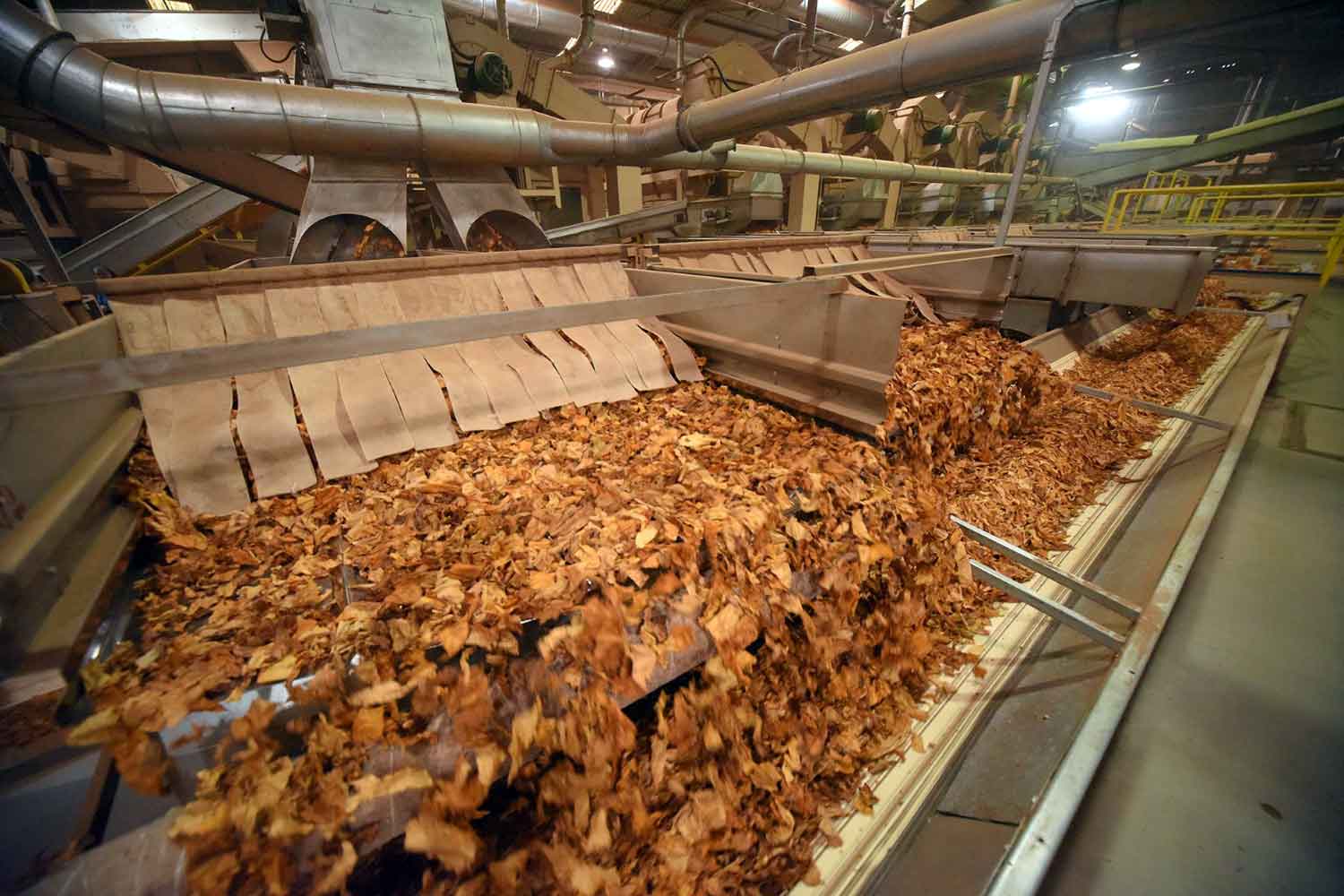
    Zimbabwe’s 2025 tobacco marketing season closed yesterday (August 7), with farmers earning a record $1.2 billion from 352.7 million kilograms of the golden leaf, significantly surpassing the 300 million kg target. About 11% of total production was sold to China, according to the Tobacco Industry & Marketing Board (TIMB).

    “The global demand for tobacco also pushed the prices,” TIMB chairman Patrick Devenish said in an interview. “The Chinese are our biggest customers and the demand for nicotine through the vaping business also had a good effect for us.”

    According to TIMB data, the average 2025 price was $3.32/kg, slightly down from last year’s $3.43. Auction prices peaked at $4.99/kg, while contract growers saw highs of $6.30/kg. Lands and Agriculture Permanent Secretary Prof. Obert Jiri hailed the season as a milestone for the Tobacco Value Chain Transformation Plan, urging greater local value addition, which currently stands at 10.15%, toward a 30% goal under the National Development Strategy 1.

    With 93% of production under contract farming, the government is working to refine the system and has proposed a $50 million agriculture fund. Stakeholders emphasized the need for local financing to reduce reliance on foreign currency and boost cigarette manufacturing, which currently produces 4 billion sticks annually against a 17 billion-stick capacity.

    Zimbabwe, the world’s fifth-largest tobacco producer, has over 140,000 active farmers.

  • California Drafting Rules for Unflavored Tobacco List

    California Drafting Rules for Unflavored Tobacco List

    Five years after passing a flavored tobacco ban, the California Attorney General’s Office this week released a draft detailing how tobacco manufacturers can request placement of products on the state’s Unflavored Tobacco List (UTL), a key requirement under the state’s flavored tobacco ban. The list is essentially the state’s official registry of tobacco products that are certified as not having a “characterizing flavor” — meaning they don’t taste or smell like menthol, fruit, candy, mint, vanilla, chocolate, or any other non-tobacco flavor.

    According to the draft, companies wanting to sell tobacco and nicotine products must file an online application for each “Brand Style” they want listed, certify that the product has no characterizing flavor, waive sovereign immunity, consent to California court jurisdiction, and submit a sample in its largest retail package. A $300 fee per product must be paid online, and applications must be truthful under penalty of perjury. Products submitted by the initial deadline will be considered for the first official list, set for release by Dec. 31, 2025.

    Products that require federal premarket authorization but haven’t received it are generally ineligible—unless they meet specific conditions, such as being on the U.S. market by certain dates and having timely FDA applications still pending. Exceptions apply if the FDA says no authorization is needed, a court vacates a denial, or the product is a variant of an already-listed brand.

    “The UTL will cause many companies to stop selling products in California because of the registration process,” wrote Charlie Minato for Halfwheel. “Many might choose not to sell limited edition cigars in California because of the added paperwork. Furthermore, because companies will need prior authorization to sell the products, it might mean that California retailers will receive delayed shipments of new items as cigar companies wait for the attorney general’s office to approve a product for the UTL.

    “It’s not just a problem for California-based retailers; this would apply to all shipments going to California, meaning that a retailer in Florida would run the risk of fines if they were to ship a product not on the UTL to a consumer in California.”

    See the full draft here.

  • Study: Curiosity-Based Messaging Reduces Nicotine Misperceptions

    Study: Curiosity-Based Messaging Reduces Nicotine Misperceptions

    Many Americans still misunderstand nicotine’s role in smoking, with some wrongly believing it causes cancer or isn’t addictive, according to researchers from the University of Pennsylvania’s Annenberg School for Communication and Rutgers University’s Institute for Nicotine & Tobacco Studies.

    In a new Scientific Reports study, researchers focused on three groups of smokers who have “been targeted by the tobacco industry and tend to hold more false beliefs about nicotine” than other populations: Black/African American adults, rural adults, and young adults.

    The study found that messages designed to spark curiosity—such as posing questions or sharing surprising statistics—were more effective at correcting nicotine false beliefs than fact-only statements, though the best approach varied by audience. The findings could help shape public education ahead of a proposed FDA rule to cap nicotine levels in cigarettes, which remain harmful regardless of nicotine content.

  • Modern Oral Sales Surge 651% in Turning Point’s Strong Q2 Report

    Modern Oral Sales Surge 651% in Turning Point’s Strong Q2 Report

    Turning Point Brands, Inc. reported robust second-quarter results, with Modern Oral net sales skyrocketing 651% Y-Y to $30.1 million, now making up 26% of total revenue. Total net sales rose 25.1% to $116.6 million, while net income increased 11.3% to $14.5 million. Adjusted EBITDA grew 14.8% to $30.5 million, and adjusted net income hit $18 million.

    The Stoker’s segment, boosted by Modern Oral, posted a 62.9% sales increase, while Zig-Zag declined 6.9% due to product mix shifts. Despite that, the company increased its full-year 2025 Modern Oral sales forecast to $100–110 million, up from $80–95 million.

    CEO Graham Purdy credited the strong results to aggressive growth in Modern Oral and resilience in legacy brands. “Our consolidated second quarter results were better than expected,” he said.

    TPB ended the quarter with $190.1 million in net debt and $176.4 million in liquidity. The company also raised its 2025 Adjusted EBITDA guidance to $110–114 million.

    A replay of the earnings call can be found at turningpointbrands.com.

    The company also declared a regular quarterly dividend of $0.075 per common share. The dividend is payable October 10, to shareholders of record on the close of business on September 19.

  • Universal Reports Solid Start to FY26 Driven by Improved Tobacco Mix

    Universal Reports Solid Start to FY26 Driven by Improved Tobacco Mix

    Universal Corporation announced solid first-quarter results for fiscal 2026, highlighting gains in its Tobacco Operations segment and continued interest in its Ingredients business. Despite a modest revenue dip of $3 million to $594 million, operating income rose by $17 million to $34 million, primarily due to a favorable product mix in Asia within the Tobacco segment. While tobacco sales volumes dropped 8%, sales prices rose 2%, reflecting stronger demand and better product quality.

    CEO Preston D. Wigner emphasized the return to more typical global tobacco buying patterns, with low uncommitted inventory (11%) and larger flue-cured and burley crops underway. “Customer demand remains firm following years of short supply,” he said.

    In the Ingredients segment, sales volumes rose, but operating income was affected by a weaker product mix, tariff-related demand concerns, and higher fixed costs tied to an expanded facility. Still, Universal noted sustained customer interest in its new value-added ingredients offerings.

    The company ended the quarter with $178.4 million in cash, $355 million in available credit, and net debt down $47.1 million quarter-over-quarter.

    The company’s board of directors also declared a quarterly dividend of $0.82 per share on the shares of the company, payable November 3, to shareholders of record at the close of business on October 13.

  • Pyxus Reports Sluggish Q1, But Reaffirms Full-Year Guidance

    Pyxus Reports Sluggish Q1, But Reaffirms Full-Year Guidance

    Pyxus International announced fiscal Q1 2026 results, reporting revenue of $508.8 million, down from $634.9 million a year earlier, primarily due to accelerated shipments into Q4 FY2025. Despite the decline, CEO Pieter Sikkel said results were in line with expectations and aligned with the company’s “normalized cycle” of buying early and selling later in the fiscal year.

    Operating income was $21 million, down from $40.5 million Y-Y, while net loss reached $15.8 million versus a $4.6 million profit last year. Adjusted EBITDA dropped to $29.5 million, reflecting lower sales volumes but was supported by strong global demand and improved pricing.

    The company noted a tobacco inventory of $1.1 billion, reflecting larger crop availability in Africa and South America. Uncommitted inventory remained low at 2.4% of processed stock, signaling sustained demand.

    Despite the early numbers, Pyxus reaffirmed its FY2026 guidance of $2.3–$2.5 billion in revenue and $205–$235 million in adjusted EBITDA.

  • KT&G Posts Strong Q2 Results, Raises Dividend Amid Global Growth

    KT&G Posts Strong Q2 Results, Raises Dividend Amid Global Growth

    KT&G reported strong second-quarter earnings with revenue up 8.7% Y-Y to KRW 1.55 trillion ($1.1 billion) and operating profit rising 8.6% to KRW 349.8 billion ($252 million). The gains mark the third consecutive quarter of growth and a new milestone, with first-half revenue exceeding KRW 3 trillion ($2.2 billion) for the first time.

    Driven by global demand for its tobacco products, especially in Asia and Latin America, KT&G also saw strong results in its next-generation products and health food segments. Global cigarette sales rose 9.1%, reaching 16.7 billion sticks.

    The company raised its interim dividend to KRW 1,400 ($1.008) per share and announced a KRW 300 billion ($216 million) share buyback and cancellation starting August 8, part of its ongoing KRW 3.7 trillion ($2.7 billion) Value Up plan to boost shareholder returns.

    KT&G reaffirmed its goal of achieving double-digit profit growth for 2025.

  • Kenya’s Health Secretary Pushes to Regulate Miraa and Shisha

    Kenya’s Health Secretary Pushes to Regulate Miraa and Shisha

    Kenyan Health Cabinet Secretary Aden Duale told the Senate that the country currently lacks laws regulating the use of miraa and shisha, and called on Parliament to enact necessary legislation to control their consumption. Appearing before the Senate Delegated Legislation Committee during deliberations on the Graphic Health Warnings for Tobacco Products, Duale said the Tobacco Control Bill, sponsored by Nominated Senator Catherine Mumma, offers a vital opportunity to introduce such controls.

    “The Ministry of Health fully supports the Bill,” Duale said. “We have submitted our proposed amendments and urge senators to pass it.” He also revealed that “powerful individuals” had tried to pressure the ministry into approving harmful tobacco products but insisted the entire government must safeguard public health.

    Mombasa Senator Mohammed Faki raised the alarm over the lack of regulations for miraa, muguka, and shisha, calling them as dangerous as tobacco. He warned that the tobacco industry would likely attempt to influence lawmakers to block the Bill.

  • Seatca Urges UN to Ban Plastic Cigarette Filters

    Seatca Urges UN to Ban Plastic Cigarette Filters

    The Southeast Asia Tobacco Control Alliance (Seatca) is urging the United Nations to impose a global ban on plastic-based cigarette filters, as final negotiations for a global plastic pollution treaty take place in Geneva this week. Seatca warned that 460 billion cigarette butts are discarded annually in ASEAN countries alone, contributing to a global total of 4.5 trillion. “The filters, made of cellulose acetate, degrade slowly, releasing toxic microplastics, nicotine, and heavy metals into ecosystems,” the organization said.

    Calling cigarette filters “a health fraud and an environmental hazard,” Seatca demanded the treaty enforce the polluter-pays principle, reject industry lobbying, and require mandatory cleanup systems for tobacco waste. They also criticized so-called “eco-filters” and “green butts” as greenwashing tactics, insisting that no sustainable alternatives exist for cigarette filters and calling for a complete ban on all types.

    Seatca estimates that ASEAN countries currently spend $10 billion annually to clean up cigarette filter waste.

  • VOOPOO Unveils “Futuristic” ARGUS Matrix

    VOOPOO Unveils “Futuristic” ARGUS Matrix

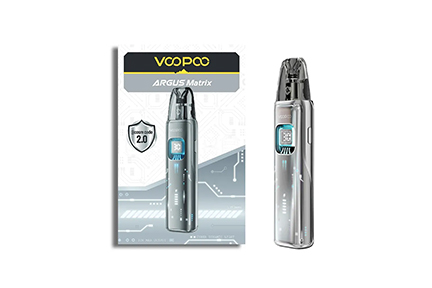
    VOOPOO launched what it calls the company’s most advanced pod device yet: the ARGUS Matrix, “a bold leap into the future of vape design and performance.”

    VOOPOO says the ARGUS Matrix features the “world’s first curved full-screen display on a pod system, creating a cyber-futuristic visual experience that’s as immersive as it is stylish,” using enhanced IML film technology and dynamic lighting that mimics circuit boards.

    According to the company, the Matrix delivers substance through iCOSM CODE 2.0 technology in the ARGUS Top Fill Cartridge V2, “ensuring leak-proof usage and up to 30 days of consistent flavor delivery. With a 100 mL e-liquid endurance capacity, it’s designed for convenience and longevity.” Vapers can fine-tune their experience with adjustable wattage (up to 30 W), a 1350 mAh battery, and a three-level precision airflow system that caters to both MTL and RDL users.

    Fully compatible with the ARGUS Pod Family, the Matrix offers seamless cartridge switching, blending style with versatility.