Category: News This Week

  • ATNF Panel Examines Role of AI in Nicotine Product Innovation

    ATNF Panel Examines Role of AI in Nicotine Product Innovation

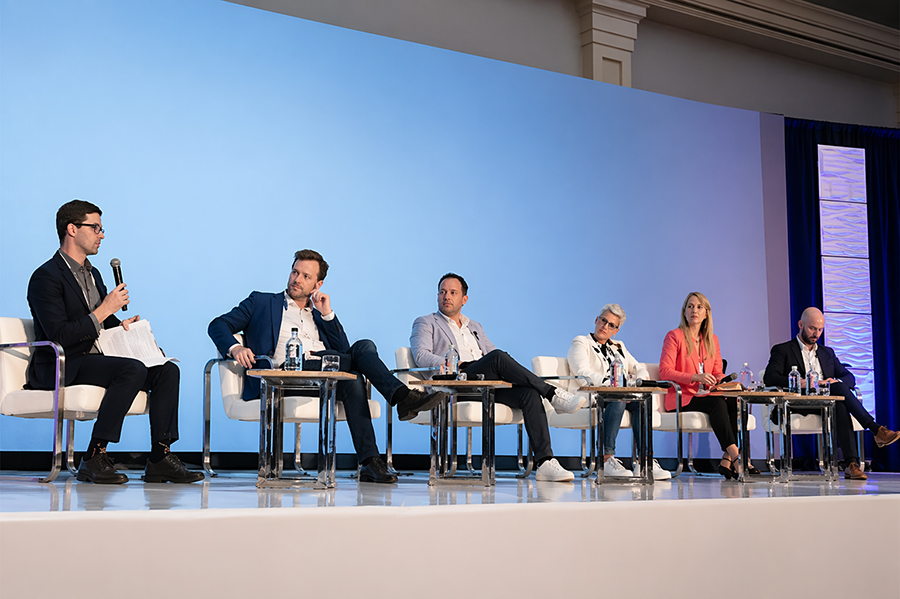
    A first-of-its-kind panel at the American Tobacco and Nicotine Forum (ATNF) focused on the role of artificial intelligence in product research and development, with moderator Dr. Stan Gilliland, managing partner for Sapphire Sciences, highlighting the importance of using the right tools in a highly regulated environment. He framed AI as a potential support across the product lifecycle—from identifying unmet needs to designing studies—but stressed that its use must be carefully managed, documented, and validated, particularly given regulatory scrutiny.

    Panelists offered differing views on AI’s role. Dr. Jessica Zdinak, founder and Chief Research Officer for Applied Research and Analysis Company, expressed skepticism, emphasizing the importance of human expertise and warning against overreliance on AI, particularly in areas lacking clear regulatory endpoints. Dr. Ian Jones, behavioral science manager for JTI Liggett, described AI as a support tool that can improve efficiency, data handling, and communication, but said human oversight remains essential to interpret results and ensure scientific integrity. Dr. Elsa Larson, vice president at M/A/R/C Research, said her organization is taking a cautious approach, limiting AI use to lower-risk applications and avoiding regulatory studies for now due to concerns about reliability and oversight.

    Nick Kadysh, founder and CEO for PharmAla Biotech, and Gavin O’Dowd, CEO for Haypp Group, took a more forward-looking stance, with Kadysh saying AI is already essential in areas such as product design and regulatory strategy, particularly as data complexity increases. O’Dowd highlighted the broader technological shift underway, noting that advances in computing power could accelerate the transition toward reduced-risk products if properly harnessed, but emphasized the need for industry-specific tools and human expertise. Across the panel, speakers pointed to ongoing challenges around data quality, transparency, regulatory acceptance, and the balance between efficiency and scientific rigor.

  • ATNF Panel Highlights Innovation Barriers and Regulatory Challenges

    ATNF Panel Highlights Innovation Barriers and Regulatory Challenges

    At the American Tobacco and Nicotine Forum (ATNF) preconference, an innovation-focused panel examined the challenges of bringing reduced-risk nicotine products to market, with moderator Ryan Selby, managing Director for Emerald Innovations Ltd., emphasizing the difficulty of changing consumer behavior despite decades of public health messaging. He noted that while the risks of smoking are well understood, millions continue to smoke, raising questions about whether innovation must be “perfect” or simply “better” to make an impact. Selby also highlighted the stigma surrounding nicotine products, the cost pressures facing innovators, and the difficulty smaller companies face in gaining shelf space and competing with low-cost combustible cigarettes.

    Tadas Lisauskas, president and co-founder of Greenbutts, said U.S. regulations are effectively pushing innovation abroad, with smaller companies unable to navigate the regulatory burden or secure funding without clearer rules. He argued that “capital follows clarity,” and warned that the current system favors large legacy players while limiting new entrants, even as demand for alternative products exists. Dr. Willie McKinney, founder and CEO of McKinney Specialty Labs, focused on the importance of responsible innovation, stressing the role of scientific oversight and toxicology in product development, while noting that inconsistent public messaging and regulatory communication create confusion for consumers.

    Dr. Anna Franzén, clinical and regulatory business development officer at Emplicure Consumer AB, said regulation can support innovation if it is clear and structured, but current frameworks—particularly in the U.S.—are better suited to large companies and hinder smaller innovators. She called for more guidance, pilot programs and engagement with regulators, while pointing to international markets such as Sweden as examples of successful product adoption. Amber Sandrock, Chief of Staff at Shelf Partners, compared nicotine regulation to the food industry, noting that the rigid PMTA process limits the ability to refine products after submission and slows innovation. She also highlighted the need for more flexibility, cost efficiency and support for sustainable product development within the regulatory system.

  • Articles Accuse Makary of Putting Reputation Over Science

    Articles Accuse Makary of Putting Reputation Over Science

    Over the weekend, multiple sources criticized FDA Commissioner Marty Makary for being influenced by reputational considerations rather than evolving evidence on risk and consumer behavior in the regulation of reduced-harm nicotine products. According to The Wall Street Journal, tensions have emerged between the White House and the FDA, with the administration pushing to expand access to flavored vaping products while Makary has blocked authorizations despite internal scientific support. The report cited a case involving vape company Glas, where FDA scientists recommended approval of several flavors, but a memo from Makary’s office delayed the decision, highlighting a divergence between scientific review and agency leadership.

    Separately, Brownstone Institute published an article by Roger Bate arguing that regulatory progress on reduced-risk nicotine products has stalled despite declining youth vaping rates and evidence supporting harm reduction. Bate wrote that approvals for products such as vapes and nicotine pouches have slowed significantly, and wrote that “reputable sources” attributed this in part to Makary’s reluctance to act, citing concerns within the agency that decisions are being shaped by reputational risk rather than scientific data.

  • Cyprus Compromise May Solve EU Tobacco Impasse

    Cyprus Compromise May Solve EU Tobacco Impasse

    International Policy Digest is reporting that a new compromise proposal from Cyprus may help break the long-standing deadlock among EU member states over revising the Tobacco Excise Directive, which has not been updated since 2011. The European Commission’s 2025 proposal sought to raise minimum excise duties and extend taxation to newer products such as heated tobacco and nicotine pouches, but faced strong opposition from several countries concerned about market disruption and illicit trade.

    The Cyprus proposal retains higher taxes and broader product coverage but introduces a more gradual approach, including transition periods for implementation and limits on automatic inflation-linked increases. It also offers more flexibility for member states in applying taxes to newer nicotine products, addressing key concerns raised in earlier negotiations that stalled progress.

    Initial reactions from EU governments suggest cautious support for the revised approach, though unanimous agreement from all 27 member states remains required. The outcome is time-sensitive, as failure to reach a deal during Cyprus’s presidency could shift negotiations to Ireland, where officials are expected to push for stricter tax measures.

  • BAT Calls Pakistan Largest Illicit Cigarette Market

    BAT Calls Pakistan Largest Illicit Cigarette Market

    British American Tobacco (BAT) says Pakistan has become the world’s largest illicit cigarette market, with illegal products accounting for roughly 55–58% of consumption. Simon Trussler, BAT’s Group Head of International Trade and Fiscal Affairs, said steep tax increases in recent years have widened the price gap between legal and illicit cigarettes—now around half the price—driving consumers toward untaxed products while overall consumption remains broadly unchanged at about 80 billion sticks annually.

    BAT said higher taxes have failed to deliver expected revenue gains and instead have fueled domestic illicit production, which accounts for the majority of illegal supply. The company called for a more stable excise policy alongside sustained enforcement across the supply chain, noting recent seizures and factory closures as signs of increased government action.

  • Zimbabwe Assures Farmers Record Tobacco Crop Has Buyers

    Zimbabwe Assures Farmers Record Tobacco Crop Has Buyers

    Zimbabwe’s Tobacco Industry and Marketing Board (TIMB) guaranteed that the country’s projected record tobacco harvest projected to top 400 million kg will be fully absorbed by buyers, easing concerns over a global supply glut. International and domestic merchants have already committed to purchase the bulk of the crop, with authorities aiming to prevent a repeat of market disruptions seen in other producing countries where oversupply led to price collapses.

    Despite strong volumes, global demand has softened following post-pandemic stock rebuilding by cigarette manufacturers, contributing to an estimated 18% drop in prices. However, officials say emerging markets and potential future supply risks could support demand and pricing later in the season.

  • South Korea to Regulate Vapes as Cigarettes from April 24

    South Korea to Regulate Vapes as Cigarettes from April 24

    South Korea will begin regulating liquid e-cigarettes under the same framework as conventional cigarettes starting April 24, following revisions to the Tobacco Business Act. The updated law expands the definition of tobacco products to include all nicotine-based products, bringing vapes under rules covering health warnings, advertising restrictions, and retail licensing requirements.

    The changes also extend smoking bans to vaping, prohibiting use in designated non-smoking areas, and introduce tighter controls on automated sales devices amid concerns over youth access. Authorities said enforcement checks will begin immediately, as vape use continues to rise despite declining conventional cigarette smoking rates.

  • Belgium Nearing 1 Billion Illicit Cigarettes Seized

    Belgium Nearing 1 Billion Illicit Cigarettes Seized

    Belgian authorities have seized 946 million counterfeit cigarettes between January 2020 and November 2025, resulting in an estimated €394 million in lost tax revenues, according to government data. In 2025 alone, customs confiscated nearly 150 million illegal cigarettes and uncovered multiple clandestine production and storage sites across the country, highlighting the scale of the illicit trade.

    Officials say the operations are driven by sophisticated, decentralized criminal networks that spread production and distribution across multiple locations to evade detection. Lawmakers are calling for stronger international cooperation, with Belgium already working alongside Europol and other agencies to disrupt cross-border supply chains.

  • PMI Partners IQOS with Devialet at Milan Design Week

    PMI Partners IQOS with Devialet at Milan Design Week

    Philip Morris International announced a collaboration between its IQOS heated tobacco brand and French audio company Devialet, featuring an exhibition at Milan Design Week 2026. The installation runs from April 20–27 and includes a co-branded limited-edition product pairing an IQOS device with Devialet earbuds.

    “The sound waves carry a signature rhythm – a pattern as unique as a fingerprint,” said Oggie Kapetanovic, president of the Heat Not Burn division at PMI. “Devialet’s sound waves turn emotion into shared experience; IQOS empowers self‑expression while connecting a community of over 35 million users.”

  • PCA Honors Industry Leaders with 2026 Step Up Awards

    PCA Honors Industry Leaders with 2026 Step Up Awards

    The Premium Cigar Association (PCA) recognized a group of industry and policy leaders at its 2026 Trade Show in New Orleans, presenting its annual Step Up Awards for advocacy and leadership. Honorees included retailers, manufacturers, and policymakers such as Rocky Patel, Drew Estate’s Glenn Wolfson, and Louisiana Governor Jeff Landry, alongside local advocates credited with advancing cigar-friendly legislation and opposing tax increases.

    The awards highlight efforts across multiple states, including successful lobbying for cigar bar exemptions, tax caps, and the formation of new industry associations. PCA said the recipients reflect the growing importance of coordinated advocacy at local, state, and national levels as the premium cigar sector navigates evolving regulatory pressures.