Category: News This Week

  • Imperial Flags Share Losses, Leans on H2 Growth for FY26

    Imperial Flags Share Losses, Leans on H2 Growth for FY26

    Imperial Brands warned of modest first-half profit growth and expected market share declines across its key markets, sending shares down more than 8%, as the company pivots toward profitability over volume. While reaffirming its FY26 guidance, including low-single-digit tobacco growth, double-digit next-generation product (NGP) revenue growth, and £2.2 billion in free cash flow, the group said performance would be weighted to the second half, supported by pricing in combustibles and continued momentum in heated tobacco, vaping, and oral nicotine.

    The shift comes as Imperial accelerates its five-year strategy to expand alternatives while stabilizing its core tobacco business, though weaker trends in the U.S. and Australia and heightened geopolitical risks linked to Middle East tensions could impact the outlook.

  • Pyxus Named Supplier Engagement Leader by CDP

    Pyxus Named Supplier Engagement Leader by CDP

    Pyxus International, Inc. announced that it has been named a Supplier Engagement Leader by CDP for the third consecutive year, earning an “A” rating on CDP’s Supplier Engagement Assessment Leaderboard. The recognition places Pyxus among the top tier of global companies for its work engaging contracted growers and suppliers on climate action across its value chain.

    CDP’s assessment evaluates governance, emissions-reduction targets, Scope 3 emissions management, and value-chain engagement as part of its annual climate disclosure process. Pyxus said the designation reflects its ongoing efforts to work with growers to improve environmental performance, strengthen supply chain resilience, and deliver measurable emissions reductions through supplier education and shared accountability.

  • Australian Banks Flag 300 Suspicious Illicit Tobacco Cases

    Australian Banks Flag 300 Suspicious Illicit Tobacco Cases

    Australia’s major banks have ramped up efforts to combat illicit tobacco-linked money laundering, filing hundreds of suspicious activity reports and forcing over 1,000 customers out following regulatory pressure from AUSTRAC, according to the Australian Broadcasting Company. According to the article, the illegal tobacco market, which is estimated at up to $6.9 billion and as much as 60% of total sales, is increasingly tied to organized crime, prompting closer scrutiny of tobacco retailers and financial transactions.

    Authorities say enhanced intelligence-sharing between banks and law enforcement is yielding results, including large seizures, as part of a broader push to disrupt criminal networks profiting from the trade. Since calling for a crackdown in November, AUSTRAC received more than 300 suspicious matter reports from banks involving illicit tobacco and made more than 70 referrals to law enforcement.

  • Poland Moves to Tax Induction E-Cigarettes

    Poland Moves to Tax Induction E-Cigarettes

    Poland’s government is set to introduce excise duties on induction-based e-cigarettes, aiming to close regulatory gaps that have allowed some products to be taxed at lower rates, according to a report from WNP. Under proposed amendments to the Excise Tax Act, devices and liquid tanks using electromagnetic induction — identified by the presence of a ferromagnetic element — will be classified as e-cigarettes and subject to a PLN 40 ($11.20) per unit tax. The move is part of broader efforts to tighten oversight of emerging vape technologies and ensure consistent taxation across the category.

  • Pakistan Battling Illicit Cigarettes as Farmers Seek Balance

    Pakistan Battling Illicit Cigarettes as Farmers Seek Balance

    Pakistan is intensifying efforts to tackle distortions in its tobacco sector, combining a nationwide crackdown on illicit cigarettes with growing provincial demands for fiscal reforms. Finance Minister Bilal Azhar Kayani announced enforcement actions targeting illegal manufacturers and retailers, alongside track-and-trace systems and stronger tax oversight, noting the illicit market costs around Rs200 billion ($720 million) annually and now exceeds 50% of total consumption (43.5 billion sticks), with cheaper untaxed products undercutting legal sales.

    At the same time, lawmakers in Khyber Pakhtunkhwa are pushing to tax the transport of locally grown tobacco to other regions, arguing the province — despite producing about 98% of Pakistan’s flue-cured Virginia tobacco — captures little value due to cigarette manufacturing being concentrated in tax-free zones elsewhere. Officials say the imbalance is fueling unemployment and farmer losses, underscoring calls for coordinated policy measures to restore fair taxation and economic returns across the supply chain.

  • Hong Kong Banning Public Use of Alternative Products

    Hong Kong Banning Public Use of Alternative Products

    The Hong Kong Special Administrative Region Government will begin enforcing new penalties on April 30, 2026 under the Tobacco Control Legislation (Amendment) Ordinance 2025, making it an offense to carry or use alternative smoking products in public. The measure applies to electronic cigarettes, e-liquids, and herbal cigarettes, with violators facing fines of up to HK$50,000 ($6,500) and up to six months’ imprisonment under a “one strike” enforcement approach and no transition period. The move is part of a broader tightening of tobacco controls that will also introduce a cigarette duty stamp system and a future ban on flavored conventional smoking products.

  • NZ Retailers Want Crackdown to Avoid Australia’s Illicit Tobacco Crisis

    NZ Retailers Want Crackdown to Avoid Australia’s Illicit Tobacco Crisis

    Retail NZ is calling for the government to establish an urgent multi-agency task force to combat the growing illicit tobacco trade, warning that New Zealand risks facing the kind of organized crime activity seen in Australia if enforcement is not strengthened. In a report released April 13, Chief Executive Carolyn Young said black-market cigarettes are now being sold openly in some Auckland shops at steep discounts, undermining tobacco control measures and exposing retailers to criminal pressure.

    Retail NZ is urging coordination between police, customs, and the Ministry of Health, tougher penalties, and an independent roundtable to address the issue, noting that current enforcement is fragmented and sanctions remain low. Under existing law, selling illicit cigarettes can carry penalties of up to six months’ imprisonment or a NZ$20,000 ($11,800) fine, while importing tobacco without paying excise duty violates customs regulations.

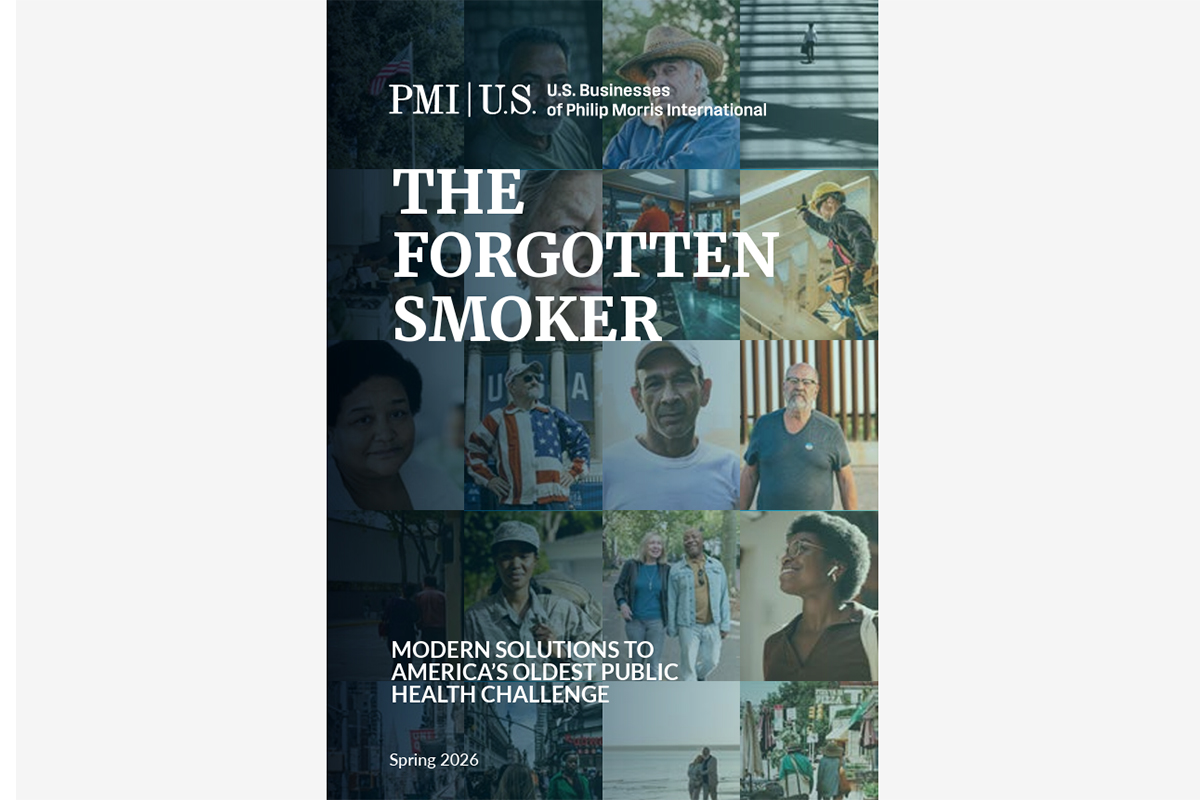
  • New “Forgotten Smoker” White Paper from PMI U.S. Warns That America Didn’t End Smoking; It Just Moved On—and 8 in 10 Americans Surveyed Demand a Better Approach

    New “Forgotten Smoker” White Paper from PMI U.S. Warns That America Didn’t End Smoking; It Just Moved On—and 8 in 10 Americans Surveyed Demand a Better Approach

    PRESS RELEASE

    The paper calls for immediate steps to make cigarette smoking a public health priority in the U.S. and to better understand adult smokers, who feel judged, ignored, and left behind

    WASHINGTON, DC – America likes to believe it has solved the problem of smoking. It hasn’t. Results of a new national survey, released today, show that 79% of Americans say more must be done to combat smoking-related harm. Philip Morris International’s U.S. business (PMI U.S.) agrees, as detailed in The Forgotten Smoker: Modern Solutions to America’s Oldest Public Health Challenge. This white paper makes the case for policymakers, public health authorities, and medical professionals to recenter cigarette smoking as a public health priority.

    The paper (and its accompanying website) offers a set of practical, evidence-based policy recommendations to help reduce smoking-related harm, counter misinformation, and expand access to regulated, FDA-authorized alternatives for legal-age adults who smoke. It describes today’s “forgotten smokers,” who are more likely to be disconnected from standard anti-smoking campaigns.

    The paper also highlights widespread misperceptions that discourage adults who smoke from considering the less harmful, FDA-authorized, smoke-free alternatives now on the market.

    “We continue to be encouraged by the declining smoking rates in the U.S.; however, millions of our neighbors, co-workers, and family members are still facing real health risks from cigarettes,” said Stacey Kennedy, Chief Executive Officer of PMI U.S. “The Forgotten Smoker calls for a renewed public health focus on adults who smoke by addressing misinformation, recognizing the varying levels of health risk across combustible and noncombustible products, and expanding access to FDA-authorized nicotine alternatives—while helping prevent youth tobacco use.”

    Recommendations from the white paper include:

    • Meet adults who smoke where they are: 52 percent of adult smokers surveyed feel discriminated against. It is time to treat cigarette smoking as a persistent public health challenge—not a moral failing—and invest in strategies that work for longtime, highly dependent adults who smoke.
    • Let the science lead: Misperceptions about nicotine and the role of combustion in smoking-related disease impede progress. Public and medical understanding of the science behind tobacco harm reduction is essential—and long overdue.
    • Expand access to FDA-authorized smoke-free alternatives: Despite recent progress, there remains a backlog of smoke-free product applications at the FDA. Adults who smoke deserve access to the science-based, smoke-free options still awaiting FDA review. Authorization of new products must coincide with the agency’s continued youth access prevention and enhanced enforcement against illicit products.
    • Combat nicotine misinformation: To accelerate progress, the FDA should clearly communicate, especially to medical professionals, which products it has authorized and what the science says about their relative risk profiles, so adults who smoke can make informed choices.
    • Implement risk-based taxation: Tobacco taxes are the most regressive in the country. Tax policy should be structured to discourage use of the most harmful products (combustible cigarettes) and encourage adult smokers to switch to lower-risk alternatives. Price is a powerful lever of persuasion.

    “The FDA has recognized that tobacco and nicotine products exist on a continuum of risk—but too often that science hasn’t trickled down to the people who interact with smokers every day, including medical professionals,” said Keagan Lenihan, Chief External Affairs Officer, PMI U.S. “If we’re serious about ending cigarette smoking, the leading cause of preventable death in the U.S., we need the FDA to assess and authorize better alternatives to combustible cigarettes in a timely fashion and take a leading role in educating healthcare providers, policymakers, and the public about tobacco harm reduction and the role smoke-free products can play. This is how we will move this issue out of the shadows and solve it once and for all.”

    Povaddo, an independent research firm, conducted the national online survey among 2,000 U.S. adults (aged 21+) between February 27 and March 10, 2026. PMI U.S. commissioned the survey.

    Topline findings point to a stubborn barrier: confusion about nicotine and the relative risks of combustible versus noncombustible products, as well as strong support for action:

    • 52% of adults surveyed incorrectly believe nicotine directly causes cancer.
    • Confirming the prevalence of misinformation in this arena, 73% mistakenly believe all tobacco and nicotine products are equally harmful to the user, while 70% believe they all pose the same risk to public health.
    • 53% agree that adults who still smoke should be encouraged to switch from cigarettes to smoke-free nicotine alternatives.
    • 81% say it is important for public health agencies like the FDA to provide scientifically substantiated information about the relative harms of tobacco and nicotine products.
    • 63% agree that FDA reform is needed to keep pace with newer smoke-free products.

    PMI U.S.: Invested in America

    Philip Morris International Inc.’s U.S. businesses are invested in America’s future and advancing a smoke-free nation. The businesses are committed to providing the approximately 30 million legal-age consumers who smoke cigarettes with better, smoke-free alternatives and to ensuring the products are marketed responsibly. From PMI’s global headquarters in Stamford, Connecticut, and other locations.

  • Kentucky Overhauls Tobacco and Vape Licensing Laws

    Kentucky Overhauls Tobacco and Vape Licensing Laws

    April 10, Kentucky Governor Andy Beshear signed Senate Bill 245, amending revised statutes that establish a standardized licensing system for tobacco, nicotine, and vapor product retailers under the Kentucky Department of Alcoholic Beverage Control, including uniform application forms, published requirements, and annual renewal rules, while barring the agency from adding extra requirements beyond statute.

    The measure introduces “batch licensing” for multi-location retailers, mandates online publication of forms within 30 days, requires fee refunds if licenses are denied, and sets grace periods for application corrections and ownership changes. Retailers would need to apply within 60 days of enactment if unlicensed, with enforcement continuing without delay; the bill also repeals transitional licensing rules, requires rapid implementation of regulations, and applies some provisions retroactively to January 1.

  • PM Urges Court to Uphold FDA Graphic Rule Ruling  

    PM Urges Court to Uphold FDA Graphic Rule Ruling  

    Philip Morris USA asked the U.S. Court of Appeals for the Eleventh Circuit to affirm a lower court decision vacating a U.S. Food and Drug Administration rule that would have required graphic health warnings on cigarette packaging. The company argued that the district court correctly found the FDA failed to follow required administrative procedures when developing the rule. According to Law 360, the appeal centers on whether the agency’s rulemaking process complied with federal standards, after the district court struck down the regulation on procedural grounds.