Category: News This Week

  • Researchers Map Final Steps of Nicotine Biosynthesis

    Researchers Map Final Steps of Nicotine Biosynthesis

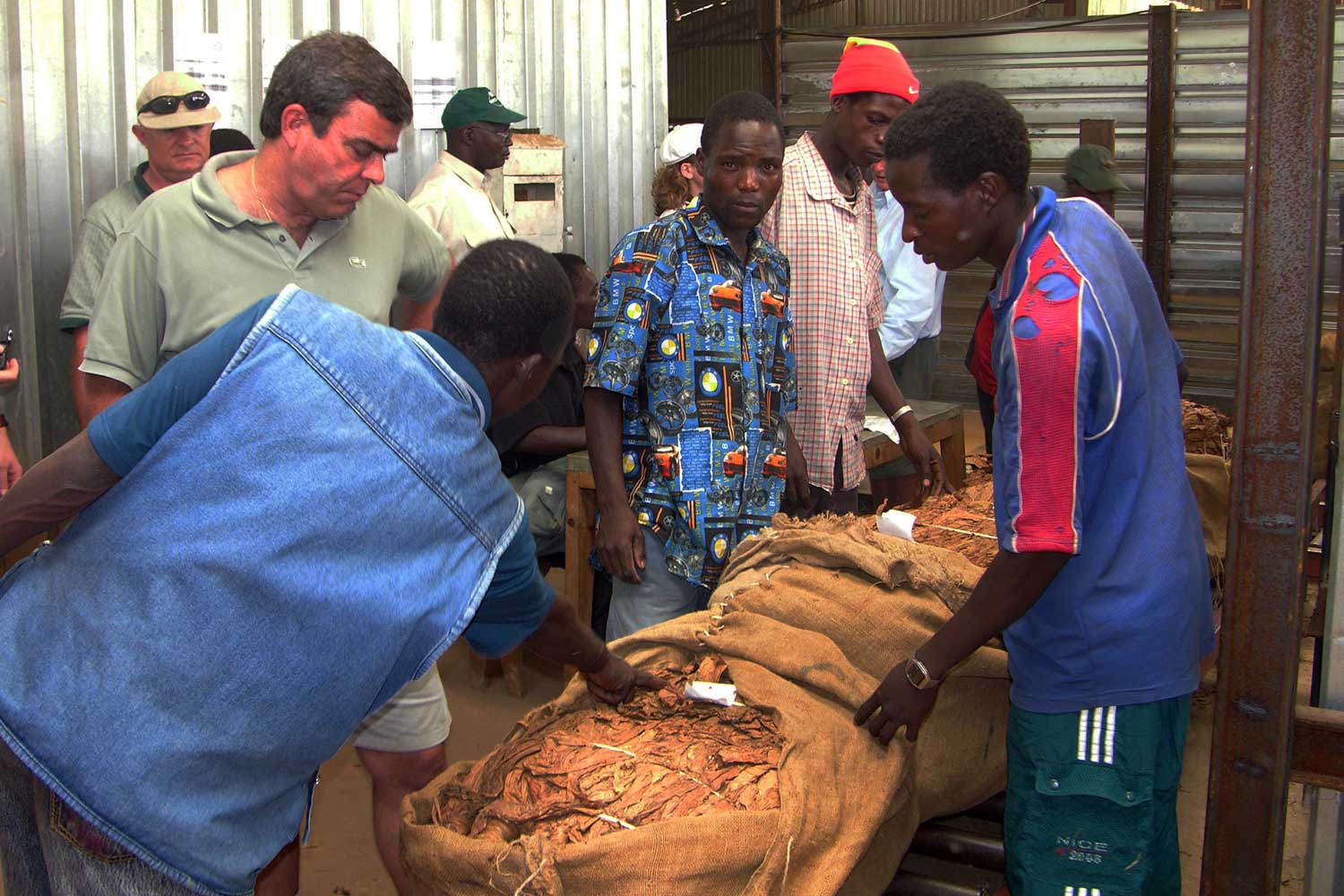
    Researchers at the Chinese Academy of Sciences identified the complete biochemical pathway responsible for nicotine formation in wild tobacco, publishing the findings in Cell. Led by Prof. Li Dapeng, the work clarifies long-unknown steps in nicotine’s biosynthesis and provides new insight into how plants build complex alkaloids, with potential implications for synthetic biology and controlled production of high-value natural compounds.

    Working in Nicotiana attenuata, the researchers uncovered a five-enzyme “dynamic metabolon” that coordinates the final assembly, stabilization, and transport of nicotine inside plant cells. Using multi-omics analysis, the group identified key enzymes and a transporter that enable a tightly controlled glycosylation and deglycosylation process, allowing the plant to safely produce and store nicotine without self-toxicity.

  • Pakistani Tobacco Growers Raise Tax, Pricing Concerns

    Pakistani Tobacco Growers Raise Tax, Pricing Concerns

    A delegation from Pakistan’s Khyber Pakhtunkhwa Tobacco Action Committee met Faisal Karim Kundi in Islamabad to highlight challenges facing growers across Charsadda, Mardan, Swabi, Nowshera, Buner, and Mansehra, citing rising taxes and low tobacco prices. The group said current policies threaten livelihoods despite tobacco contributing more than Rs 3.25 billion ($11.7 million) annually to the provincial economy. The Governor voiced support for farmers and proposed forming a joint committee including growers, the Federal Board of Revenue, Customs, and the Pakistan Tobacco Board to address the issues through consultation.

  • Former China Tobacco Head Expelled from CPC for Corruption

    Former China Tobacco Head Expelled from CPC for Corruption

    Han Zhanwu, former deputy head of the State Tobacco Monopoly Administration, has been expelled from the Communist Party of China and removed from public office following an anti-corruption investigation. According to a notice from the Central Commission for Discipline Inspection and the National Commission of Supervision, Han was found to have accepted gifts, cash, and valuables, improperly influenced hiring decisions, and sought benefits for others in business dealings. Authorities said the case involves suspected bribery and serious violations of Party discipline, with the matter now transferred to prosecutors for review and potential charges.

  • PMI Principal Partner of Ferrari Hypersail Racing Project

    PMI Principal Partner of Ferrari Hypersail Racing Project

    Philip Morris International has been announced as the principal partner of Ferrari Hypersail, a new offshore racing initiative led by Ferrari that applies Formula 1–grade engineering to a 30-meter full-foiling monohull designed for renewable-energy-powered ocean racing. The project, scheduled for launch and sea trials in 2026, is positioned as a platform for cross-industry innovation in aerodynamics, energy efficiency, and advanced control systems.

    PMI CEO Jacek Olczak linked the partnership to the company’s science-driven, smoke-free technology strategy, while Ferrari CEO Benedetto Vigna described Hypersail as a real-world testing ground for extreme-condition innovation. PMI will also debut an updated visual identity on the vessel, marking the first external use of its new branding.

  • Nepal Debates Revival of Janakpur Cigarette Factory

    Nepal Debates Revival of Janakpur Cigarette Factory

    Debate is intensifying over a potential restart of the long-closed Janakpur Cigarette Factory in Nepal, which once employed thousands and contributed significantly to domestic tobacco production and tax revenue. The government-owned factory, which shut down due to management failures, outdated technology, and supply chain issues, remains a focal point of competing policy arguments. The factory produced an estimated 3 to 4 billion cigarettes annually at its peak.

    Proponents of revival say the facility could be modernized through improved technology and private-sector participation to restore jobs and industrial output, while public health advocates warn that resuming cigarette production would increase tobacco-related harm. The government is now weighing how to balance potential economic gains with health and regulatory concerns as pressure builds from industry stakeholders and local voices.

  • S. Korean Retailers Brace as Vapes Get Reclassified as Tobacco

    S. Korean Retailers Brace as Vapes Get Reclassified as Tobacco

    Vape shop owners across South Korea say upcoming changes to the Tobacco Business Act could force many of them out of business as synthetic nicotine liquids are reclassified as cigarettes starting April 24. Stores that operated for years outside the tobacco retail system must now qualify as designated tobacco sellers, a process retailers describe as nearly impossible due to strict location and licensing limits already filled by convenience stores and established outlets.

    Trade groups, including the Korea Electronic Tobacco Industry Association, say numerous specialty vape shops are preparing to close rather than attempt to register, as they are unlikely to obtain authorization. Retailers also warn that cigarette-level taxes on synthetic nicotine products will drive up prices and shrink demand, while pushing consumers toward unregulated nicotine-free or pseudo-nicotine liquids sold online. Many shop owners argue that the law corrects a past regulatory gap but does so in a way that sidelines small businesses that grew under the previous framework, leaving them with little path to remain in the legal market.

  • HTPs Drive Record In-Flight Smoking Reports in Japan

    HTPs Drive Record In-Flight Smoking Reports in Japan

    Japan-based air carriers reported a record 429 in-flight smoking incidents in 2025, the highest level since data collection began in 2004 and a sharp rise from 65 cases in 2019, according to the Ministry of Land, Infrastructure, Transport and Tourism. Authorities believe the growing use of heated tobacco products — now accounting for over 40% of domestic tobacco sales, per the Tobacco Institute of Japan — has contributed to the increase, as vapor can trigger aircraft smoke detectors. Smoking on board, including use of e-cigarettes and heated products, is prohibited under Japan’s Civil Aeronautics Act, with violators facing fines of up to ¥500,000 ($3,150) if they fail to comply with crew instructions.

  • Mozambique Advances Comprehensive Tobacco Control Law 

    Mozambique Advances Comprehensive Tobacco Control Law 

    Mozambique’s Assembly of the Republic approved in general terms a new Tobacco Law aligned with the World Health Organization’s WHO Framework Convention on Tobacco Control, aiming to curb consumption and exposure to tobacco smoke. Presenting the bill, Justice Minister Mateus Saíze outlined health harms linked to tobacco use and said the country faces an estimated 11.7 billion meticais ($187 million) in annual direct and indirect losses — about 1.3% of GDP — including 900 million meticais ($14.4 million) in healthcare costs.

  • Ukraine Conducts 70 Raids, Busts Illegal Vape Liquid Operation

    Ukraine Conducts 70 Raids, Busts Illegal Vape Liquid Operation

    The Office of the Prosecutor General of Ukraine and the Bureau of Economic Security of Ukraine have dismantled a large-scale illegal production and distribution network for e-cigarette liquids operating since 2023, Prosecutor General Ruslan Kravchenko said. Authorities allege the group manufactured and sold nicotine mixtures, including non-tobacco flavors banned in Ukraine, through storefronts and online channels with more than 200 people involved.

    Over 70 simultaneous searches across Kyiv and five regions seized flavorings, base liquids, cartridges, pod systems, production equipment, $70,000 in cash, and records, with total assets valued at about UAH 30 million ($690,000). Illegal kiosks linked to the network were dismantled, assets are to be frozen, and further charges are being prepared as investigators map the full network.

  • MOHRE Urges Evidence-Based Review of EU Tobacco Rules

    MOHRE Urges Evidence-Based Review of EU Tobacco Rules

    The Observatory for Harm Reduction in Medicine sent an open letter to European Commissioner for Health and Animal Welfare Olivér Várhelyi, criticizing the European Commission’s evaluation of the Tobacco Products Directive (TPD), arguing it overlooks scientific evidence on tobacco harm reduction and fails to compare the risks of smoke-free products with combustible cigarettes. The group said the review relies heavily on selective data and the SCHEER opinion while ignoring evidence from countries such as Sweden, where wider use of alternatives like snus and nicotine pouches coincided with sharp declines in smoking rates and tobacco-related disease.

    The letter calls on the Commission to adopt a comparative risk framework, include evidence from independent health authorities, and examine Sweden’s experience as part of the TPD review. It argues that a narrow focus on complete cessation overlooks varied addiction profiles and could lead to regulations that unintentionally discourage smokers from switching to lower-risk alternatives.