Category: News This Week

  • FDA Sends ENDS Comment Period Reminder

    FDA Sends ENDS Comment Period Reminder

    Today (April 8), the U.S. Food and Drug Administration’s Center for Tobacco Products issued a reminder that the public has until 11:59 p.m. EDT on May 11 to submit comments on its draft guidance for flavored e-cigarette applications, docketed as FDA-2026-D-1817 on Regulations.gov.

    The reminder relates to draft guidance the agency released on March 11, titled “Flavored Electronic Nicotine Delivery Systems (ENDS) Premarket Applications – Considerations Related to Youth Risk,” which outlines how the FDA plans to weigh the youth appeal of flavored products against any added benefit they may provide to adults compared with tobacco-flavored options, including expectations for evidence on adult switching, youth initiation risk, and the potential use of device access-restriction technology.

  • Mozambique Tobacco Exports Rise 16% in 2025 Despite Output Drop

    Mozambique Tobacco Exports Rise 16% in 2025 Despite Output Drop

    Tobacco export revenues from Mozambique climbed 16% year over year to €224.5 million in 2025, according to data from the Bank of Mozambique, even as national production fell. Output was 72,380 tons, down from 92,343 tons in 2024, while the sector’s production value slipped 4.1% to 7,255 million meticais, reflecting pressure on the country’s key cash crop.

    Government reporting attributes part of the strain to the exit of British American Tobacco operations to South Africa, affecting tax revenues. The industry is now concentrated in two firms — Mozambique Leaf Tobacco and Sociedade Agrícola de Tabaco — as Mozambique remains among the world’s largest tobacco cultivation areas, ranking eighth globally according to a World Health Organization report with 91,469 hectares.

  • Vape Firms Ask NC Court to Keep ‘Sealed Container’ Ruling

    Vape Firms Ask NC Court to Keep ‘Sealed Container’ Ruling

    A vape distributor and retailer have asked the North Carolina Supreme Court to uphold an appellate decision that cleared them of liability in a lawsuit stemming from an exploding vape battery, arguing the lower court correctly applied the state’s “sealed container” defense. The doctrine shields sellers from product-liability claims when they sell goods in their original, unopened packaging without altering them.

    AMV Holdings LLC and Medusa Distribution LLC say the North Carolina Court of Appeals properly found they could not be held responsible for an alleged defect in a product they neither manufactured nor modified. The plaintiff is seeking to overturn that ruling, contending the defense should not apply in this case.

  • Dutch Retailers Keep Selling Illegal Vapes Despite Fines

    Dutch Retailers Keep Selling Illegal Vapes Despite Fines

    Hundreds of retailers across the Netherlands continue selling illegal flavored vapes and supplying minors despite repeated penalties, according to reporting by RTL Nieuws based on enforcement data from the Netherlands Food and Consumer Product Safety Authority. Records show 244 businesses were fined at least twice over four years, with 72 receiving five fines and six racking up 10 or more; one seller was issued a 14th fine during an inspection observed by reporters and said stopping sales was “not worth it.”

    Inspectors say nearly half of vape checks ended in a fine or warning, but current penalties — ranging from €1,360 for a first offense to a maximum cumulative €22,500 — are failing to deter persistent violators. Administrative law professor Herman Bröring of the University of Groningen told RTL the system is “not working well enough,” while NVWA officials acknowledged sellers are increasingly hiding stock to evade checks as the agency adapts its inspection tactics.

  • Indonesia Proposes Vape Ban Over Narcotics Concerns

    Indonesia Proposes Vape Ban Over Narcotics Concerns

    Indonesia’s National Narcotics Agency (BNN) proposed a nationwide ban on electronic cigarettes and vape liquids as part of revisions to the country’s narcotics and psychotropic substances bill, citing evidence that vaping devices are being used to distribute illicit drugs. BNN chief Suyudi Ario Seto told lawmakers that lab tests on 341 vape liquid samples found synthetic cannabinoids in 11 samples, methamphetamine in one, and etomidate in 23. He said existing health regulations carry lighter penalties, limiting enforcement effectiveness.

    Seto noted that several ASEAN countries — including Singapore and Thailand — already prohibit vapes, arguing that banning the devices in Indonesia would help curb the spread of new psychoactive substances, 175 of which are already present in the country.

  • ‘Made in America’ Claims Rise as Brands Navigate Crackdown

    ‘Made in America’ Claims Rise as Brands Navigate Crackdown

    A Reuters investigation reports a growing wave of vape brands promoting “Made in America” credentials as the U.S. market faces tougher enforcement against unlicensed products, particularly those linked to Chinese manufacturers. The article says at least eight new brands have emerged since October, emphasizing U.S. identity, despite lacking authorization from the U.S. Food and Drug Administration, which has approved only a limited number of vaping products for sale.

    According to the report, trademark filings show some of these brands are tied to Chinese or Hong Kong interests, suggesting the marketing shift may be aimed at avoiding scrutiny from customs officials amid heightened trade tensions and regulatory pressure under the administration of Donald Trump. Analysts cited by Reuters say the tactic could slow efforts to push consumers from the illicit to the regulated vape market.

    The story also highlights that China remains the dominant supplier of vapes to the U.S., with trade data showing exports worth over $4 billion in 2025, even as companies experiment with partial U.S. production or American-themed branding to adapt to tariffs, enforcement actions, and changing consumer perceptions.

  • Philippines Warns of Tobacco Oversupply, Moves to Stabilize Market

    Philippines Warns of Tobacco Oversupply, Moves to Stabilize Market

    The Philippines’ National Tobacco Administration raised concerns over a potential oversupply of flue-cured Virginia tobacco as the trading season opens in the Ilocos Region and Abra, after several local government units reportedly encouraged farmers to expand production without formal marketing agreements. Of the country’s 45,000 registered tobacco growers, only 10,000 are covered under the Tobacco Contract Growing System, leaving thousands exposed to uncertain market access and pricing pressure.

    To manage the surplus risk, NTA Administrator Belinda Sanchez is convening meetings with local governments, traders, and farmer leaders, while lobbying manufacturers to prioritize locally grown leaf over imports during the 2026 trading season. The agency says stronger coordination is needed to prevent market gluts that could hurt farmer incomes.

    At the same time, NTA branch offices have been tasked with mediating grading and pricing disputes at trading centers, after reports that some tobacco leaves were being misclassified or rejected. Buying stations run by Universal Leaf Philippines Inc., Trans Manila Inc., and Continental Leaf remain open to receive farmers’ crops across the Ilocos provinces.

  • RJR Seeks to Block Lawyer’s Live Testimony in Altria Dispute

    RJR Seeks to Block Lawyer’s Live Testimony in Altria Dispute

    R.J. Reynolds Vapor Co. asked a North Carolina court to quash a trial subpoena that would require one of its in-house attorneys to testify in person at an evidentiary hearing in an ongoing royalty dispute with Altria Group. The company argues that a previously recorded deposition of the attorney should suffice, saying live testimony would be unnecessary and burdensome.

    The dispute centers on royalty obligations tied to vaping technology and agreements between the rival firms. Reynolds maintains that compelling its lawyer to appear would intrude on privileged matters and exceed what is needed for the court to assess the evidentiary issues. The matter is before a judge in North Carolina, who will decide whether the deposition recording can replace in-court testimony.

    Source: Law 360 (pay)

  • 22nd Century to File New PMTA for 100mm VLN

    22nd Century to File New PMTA for 100mm VLN

    22nd Century Group, Inc. said it will submit an additional premarket tobacco product application to the U.S. Food and Drug Administration for a new 100mm version of its VLN reduced-nicotine cigarette, building on its status as “the only company with FDA authorization for a low-nicotine combustible product.” The company’s existing 84mm king-size VLN cigarettes received PMTA authorization in 2021.

    The new product, developed under its “Operation 100” initiative, is designed to offer adult smokers a familiar format while significantly lowering nicotine intake. 22nd Century said expanding into the 100mm size responds to retailer and consumer feedback and could widen access to reduced-nicotine alternatives without requiring smokers to switch to non-combustible products.

    Beyond the single submission, the company outlined plans to pursue multiple PMTAs across different combustible formats, blends, and sizes, including filtered cigars, creating a broader portfolio that can be licensed to other tobacco companies. Management said this strategy is intended to accelerate retail penetration of VLN products and to position the company as a provider of regulatory pathways for reduced-nicotine tobacco offerings.

  • Polish Officers Seize 223,000 Illegal Vapes

    Polish Officers Seize 223,000 Illegal Vapes

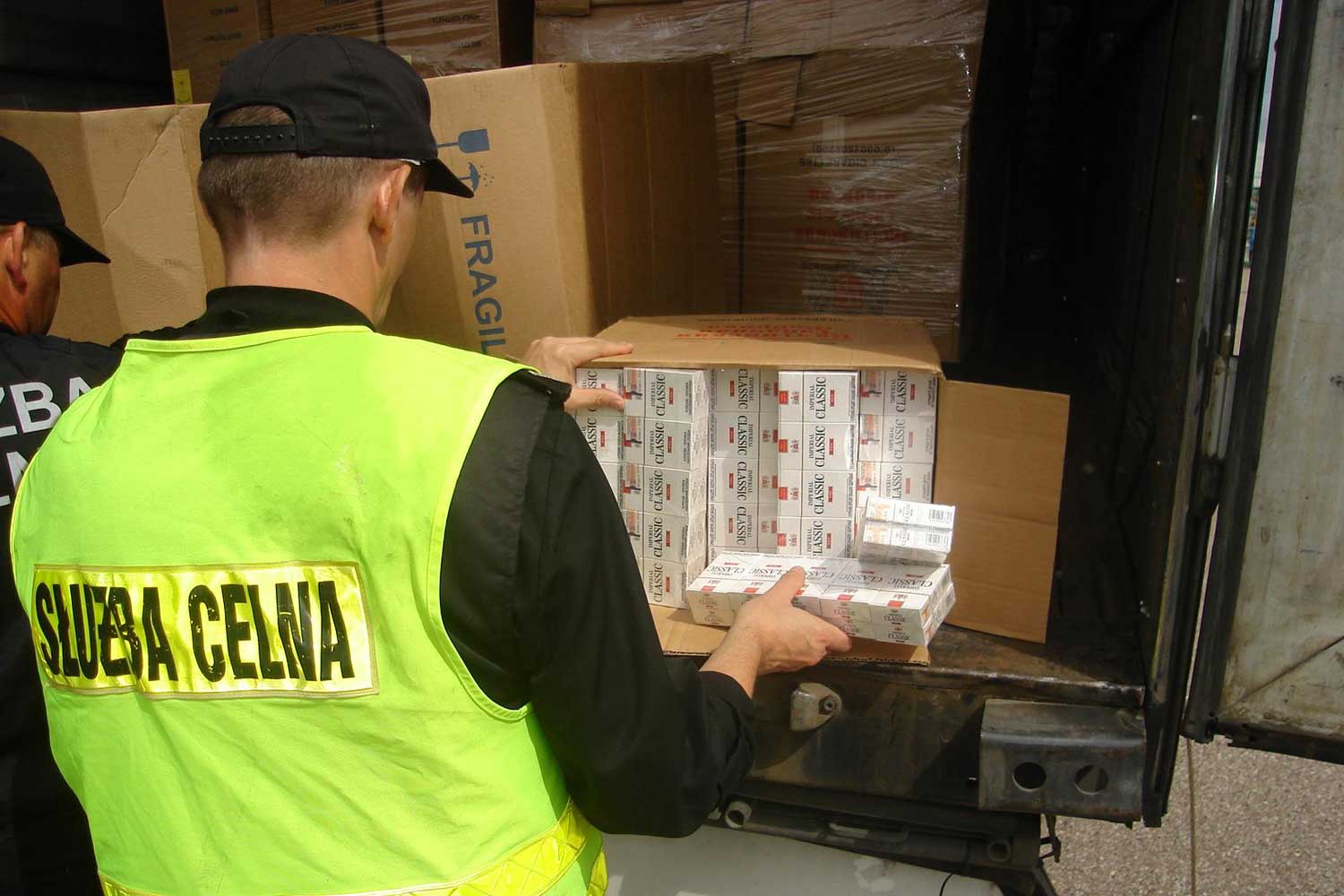
    Officers from the National Tax Administration in Łódź seized 223,688 disposable e-cigarettes without excise stamps during a raid on a property near Zgierz. The devices contained a combined 447 liters of e-liquid, with the market value of the goods estimated at over PLN 473,000 ($128,000).

    Authorities said the scale of the illegal stock exposed the state to potential excise losses exceeding PLN 10.2 million ($2.8 million), given Poland’s current excise rate. The goods were allegedly stored by a 49-year-old man, who has been charged with a serious fiscal crime and potentially faces 10 years in prison.