
The Premium Cigar Association announced PCA Connect Mexico 2026, a new international market-development program scheduled for August 24–30, aimed at strengthening the premium cigar sector in Mexico. The initiative, developed with Cigar Roller Mexico, will take place across multiple cities, including Mexico City, Guadalajara, and the Riviera Maya, and is designed as a curated business and education roadshow rather than a traditional trade show. It will bring together importers, retailers, hospitality professionals, brands, and adult consumers for training, market engagement, and promotional activities, as the PCA expands year-round programming to support global industry growth and professionalization.
Category: News This Week
-

Article Examines S. Africa’s Intentions vs Consequences in Tobacco Control
A new article by Mukundi Budeli, recently published by TheCommonSense, warns that South Africa’s proposed Tobacco Products and Electronic Delivery Systems Control Bill could unintentionally strengthen the illicit tobacco market by introducing plain packaging and other restrictive measures without adequate enforcement capacity. While acknowledging the public health objectives behind the legislation, Budeli argues that South Africa risks repeating mistakes seen during the 2020 tobacco sales ban, which he says failed to curb smoking and instead boosted illegal trade.
“On its own terms, the public health rationale is coherent,” Budeli wrote. “The disagreement is not about whether that goal is worthy. It is about whether this instrument, in this country, at this moment, is likely to achieve it.”
The article contends that plain packaging may make counterfeit products easier to produce in a market already plagued by weak enforcement, limited cigarette seizures, and the absence of a functioning track-and-trace system. Budeli urged policymakers to consider South Africa’s enforcement realities and the potential economic and fiscal consequences before adopting regulations modelled on measures implemented in countries with stronger regulatory infrastructure. “Policies designed in Geneva or Canberra do not automatically produce good outcomes in Johannesburg or Limpopo,” he said. “Good intentions, poorly calibrated to local conditions, have a habit of serving neither the public health goals they were designed to advance nor the broader fiscal and social interests of the country.”
-

10% of Korean Teenagers Say Smoking Looks ‘Cool’
A new South Korean study found that nearly one in 10 teenagers view characters who smoke in TV shows, films, and online videos as attractive, highlighting concerns about the influence of media depictions on youth attitudes toward smoking. The survey of 3,384 middle and high school students found that 9.2% considered smoking characters appealing, while 44.3% reported frequently seeing smoking scenes in media.
Researchers identified a strong link between exposure to smoking content, perceiving smokers as attractive, and greater tolerance toward smoking, with 12.2% of respondents saying teenage smoking should be allowed. The study concluded that smoking is often portrayed as “cool” or rebellious in entertainment content, potentially shaping positive perceptions of smoking among young people in South Korea.
-

Kenya Looking to Crack Down on Shisha Offenders
The Kenyan government proposed tougher regulations targeting shisha, including fines of up to Sh1 million ($7,700) and prison terms of up to six months for offenders, arguing that the country’s 2017 ban has failed to eliminate the product from nightclubs and other venues. The proposed Public Health (Control of Waterpipe Tobacco Products) Rules, 2026 would maintain the ban on the importation, manufacture, sale, distribution, promotion, and use of shisha while expanding enforcement powers across the supply chain.
Health authorities cited continued use among young people, concerns over addiction and disease risks, and evidence of ongoing non-compliance with the existing ban. If approved, the rules would replace the 2017 regulations and establish a stricter legal framework aimed at fully eliminating waterpipe tobacco products in Kenya.
-

Netherlands Rules Out Disposable Vape, Filter Bans
The Dutch cabinet ruled out introducing a national ban on disposable vapes and cigarette filters, saying legal constraints make such measures unworkable domestically and that regulation should instead be handled at the EU level in the Netherlands.
In a letter to parliament, ministers cited research showing a filter ban could reduce microplastic pollution without increasing health risks, but argued enforcement would be weak because consumers could easily switch to imports or illicit markets. They also said a national ban on disposable vapes would conflict with EU tobacco rules, despite concerns about environmental damage and fire risks linked to waste processing incidents.
The cabinet said it will instead push for a Europe-wide ban in Brussels and continue enforcement against illegal vape trade, while flavored vapes are already prohibited in the country.
-

FDA Memo Questions Flavored-Vape Reversal: AP
A newly released FDA memo is raising questions about the agency’s watershed authorization of fruit-flavored e-cigarettes after revealing that the products were not significantly more effective at helping smokers quit than tobacco-flavored alternatives, according to the Associated Press. The decision drew criticism from public health groups and Democratic lawmakers, who argue the authorization departs from the agency’s long-standing position that fruit and dessert flavors require a particularly high evidentiary standard because of their appeal to youth.
The six-page document, published weeks after the FDA approved mango- and blueberry-flavored vaping products from Glas Inc., acknowledged that study data showed no statistically significant difference in smoking cessation outcomes between users of the fruit-flavored products and those using tobacco-flavored e-cigarettes. The finding contrasts with previous FDA authorizations of flavored products, including menthol e-cigarettes from Juul Labs and NJOY, which demonstrated measurable benefits over tobacco-flavored products.
However, the AP said regulators explained that the Glas flavored vapes “did not have to demonstrate added adult benefit,” because young people were unlikely to use them. Glas requires users to unlock each e-cigarette with an age-verifying cellphone app. The memo indicates that FDA regulators instead relied heavily on the company’s age-verification technology, concluding that youth uptake was unlikely because users must unlock devices through a smartphone app. The approval was finalized shortly before the departure of former FDA Commissioner Marty Makary and comes amid broader scrutiny of the agency’s recent approach to vaping regulation.
-

Nicotine Pouch Use Surging with Young Canadians
New research from the Ontario Tobacco Research Unit suggests nicotine pouch use among young Canadians has surged dramatically, with more than one-third (34.8%) of respondents aged 17 to 27 reporting they had tried the products by 2026, up from 7.6% in 2022. The longitudinal study, which tracks approximately 3,400 young Canadians, found recent use also climbed sharply, with the share of respondents reporting nicotine pouch use in the previous month rising from 1% to 8.5% over the same period. Researchers said the rapid growth was unexpected and noted that only about one-third of pouch users were cigarette smokers, indicating substantial uptake among non-smokers.
The findings come as debate continues over Canada’s restrictions on nicotine pouches, which were limited to pharmacy sales in 2024. Health advocates cited the study as evidence supporting strict regulation to prevent youth uptake, while industry representatives and some conservative politicians have argued that broader access could help adult smokers switch from cigarettes and reduce illicit market activity. The research also found that 97% of pouch users had previously tried vaping, with use particularly high among males and in Alberta, underscoring concerns that nicotine pouches are emerging as a fast-growing category among younger consumers.
-

Indonesia Customs Seizes 8M Illegal Cigarettes
Indonesia Customs and police are investigating a smuggling network after seizing 8.3 million illegal cigarettes at the Merak–Bakauheni ferry crossing on June 11, preventing an estimated Rp7.9 billion ($442,000) in state losses. The shipment, valued at Rp12.68 billion ($710,000), included OK BOLD and imported Double Happiness cigarettes concealed under livestock feed on a truck traveling from Java to Sumatra.
Authorities arrested the truck driver, who has been charged under Indonesia’s Excise Law, and say he has links to prior similar deliveries. Investigators are now working to identify the wider ownership, financing, and supply network behind the operation.
-
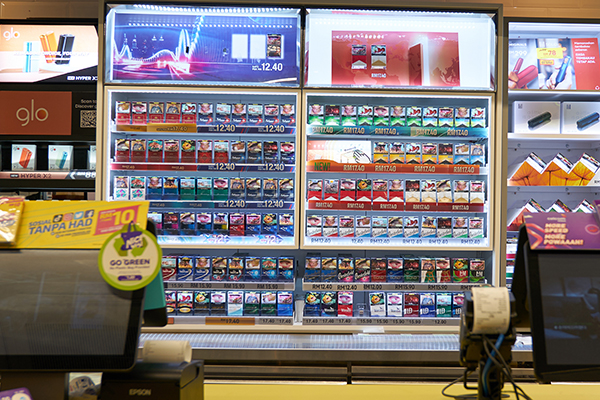
Pouch Popularity Forcing Retailers to Reshape the Backbar
According to an analysis by industry publication CSStoreDecisions, convenience retailers are increasingly reshaping tobacco and nicotine category strategies as declining cigarette volumes, rapid growth in nicotine pouches, evolving FDA regulations and shifting consumer preferences transform the backbar. While cigarettes remain the category’s primary revenue driver, retailers reported growing segmentation between premium brands and lower-priced fourth-tier offerings as price-sensitive consumers seek value. Meanwhile, oral nicotine pouches continue to be the industry’s strongest growth segment, driven by consumer migration from cigarettes and traditional smokeless products, aggressive promotions, and expanding flavor and strength options.
Retailers interviewed by the publication said regulatory uncertainty and rapidly changing manufacturer priorities are forcing constant adjustments to shelf space and assortment decisions. Vape sales have stabilized following years of disruption and increased FDA enforcement, while traditional smokeless tobacco continues to face structural declines as its consumer base ages. Industry operators emphasized that success increasingly depends on localized merchandising, compliance, disciplined pricing and balancing established tobacco products with fast-growing modern nicotine alternatives, particularly as consumer behavior becomes more fluid across multiple product categories.
-

PM Italia Fined €7M for ‘Smoke-Free’ Language
Italy’s competition authority fined Philip Morris Italia €7 million for allegedly misleading consumers through marketing claims related to its smoke-free and non-combustible tobacco products. The regulator said an investigation launched following a complaint from Italy’s Health Ministry found that terms such as “smoke-free,” “smoke-free products,” and references to a “smoke-free future” could lead consumers, including minors, to believe heated tobacco and e-vapor products are harmless or less harmful than conventional cigarettes, despite scientific evidence that does not conclusively support such claims.
Philip Morris Italia rejected the findings and said it will appeal, arguing that the terminology complies with Italian and European Union regulations and accurately distinguishes products that do not involve combustion from traditional cigarettes.