
The Premium Cigar Association announced PCA Connect Mexico 2026, a new international market-development program scheduled for August 24–30, aimed at strengthening the premium cigar sector in Mexico. The initiative, developed with Cigar Roller Mexico, will take place across multiple cities, including Mexico City, Guadalajara, and the Riviera Maya, and is designed as a curated business and education roadshow rather than a traditional trade show. It will bring together importers, retailers, hospitality professionals, brands, and adult consumers for training, market engagement, and promotional activities, as the PCA expands year-round programming to support global industry growth and professionalization.
Category: Business & Finance
-
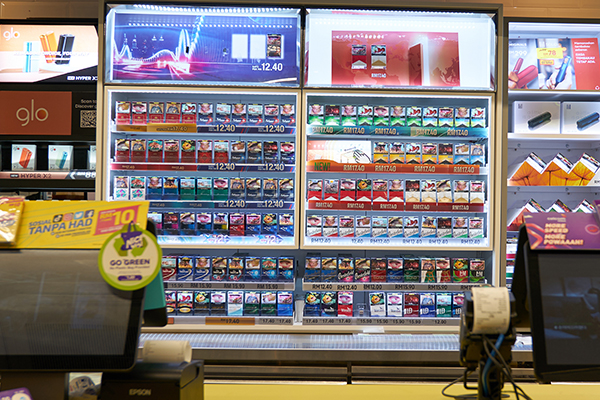
Pouch Popularity Forcing Retailers to Reshape the Backbar
According to an analysis by industry publication CSStoreDecisions, convenience retailers are increasingly reshaping tobacco and nicotine category strategies as declining cigarette volumes, rapid growth in nicotine pouches, evolving FDA regulations and shifting consumer preferences transform the backbar. While cigarettes remain the category’s primary revenue driver, retailers reported growing segmentation between premium brands and lower-priced fourth-tier offerings as price-sensitive consumers seek value. Meanwhile, oral nicotine pouches continue to be the industry’s strongest growth segment, driven by consumer migration from cigarettes and traditional smokeless products, aggressive promotions, and expanding flavor and strength options.
Retailers interviewed by the publication said regulatory uncertainty and rapidly changing manufacturer priorities are forcing constant adjustments to shelf space and assortment decisions. Vape sales have stabilized following years of disruption and increased FDA enforcement, while traditional smokeless tobacco continues to face structural declines as its consumer base ages. Industry operators emphasized that success increasingly depends on localized merchandising, compliance, disciplined pricing and balancing established tobacco products with fast-growing modern nicotine alternatives, particularly as consumer behavior becomes more fluid across multiple product categories.
-
PM Italia Fined €7M for ‘Smoke-Free’ Language
Italy’s competition authority fined Philip Morris Italia €7 million for allegedly misleading consumers through marketing claims related to its smoke-free and non-combustible tobacco products. The regulator said an investigation launched following a complaint from Italy’s Health Ministry found that terms such as “smoke-free,” “smoke-free products,” and references to a “smoke-free future” could lead consumers, including minors, to believe heated tobacco and e-vapor products are harmless or less harmful than conventional cigarettes, despite scientific evidence that does not conclusively support such claims.
Philip Morris Italia rejected the findings and said it will appeal, arguing that the terminology complies with Italian and European Union regulations and accurately distinguishes products that do not involve combustion from traditional cigarettes.
-

BlackRock Increases Stake in KT&G
BlackRock announced that it acquired an additional 467,350 shares of KT&G over the past four months, increasing its stake in the Korean company from 5.01% to 6.15%. The move follows a similar investment by Capital Group, which recently raised its holding to 7.21%, helping push foreign ownership of KT&G above 51%. The increased foreign investment reflects confidence in the company’s earnings outlook, supported by strong international tobacco sales and expectations for enhanced shareholder returns.
KT&G’s overseas cigarette business continues to drive growth, with first-quarter revenue rising 24.6% year-on-year and operating profit increasing 56.1%, aided in part by strategic price increases. The company has also intensified engagement with international investors through roadshows and other investor-relations activities and plans to introduce a new shareholder return policy in the second half of 2026, with stronger dividend payouts expected to be a key feature. KT&G said the rising stakes held by major global asset managers demonstrate confidence in its long-term growth strategy and commitment to delivering industry-leading returns to shareholders.
-

PMI Declares $1.47 Quarterly Dividend
The board of directors of Philip Morris International Inc. today (June 11) declared a regular quarterly dividend of $1.47 per common share, payable on July 20, to shareholders of record as of June 25. The ex-dividend date is June 25. For more details, visit www.pmi.com/dividend.
-

PM India Calls to Disrupt Illicit Tobacco Ecosystem
A new industry update from the EU-ASEAN Business Council highlights the continued scale of illicit tobacco trade in India and across Southeast Asia, underscoring growing concerns over smuggling, counterfeit products, and unregulated nicotine markets. According to the Tobacco Institute of India (TII), illicit cigarettes account for nearly one-quarter of India’s domestic cigarette market, resulting in estimated annual revenue losses of around Rs. 23,000 crore ($2.4 billion). The report coincides with World Anti–Counterfeiting Day remarks from Philip Morris India, which reiterated calls for stronger enforcement and industry collaboration to combat illegal tobacco flows.
Broader regional data from EU-ABC and Euromonitor International show the illicit tobacco market across ASEAN-6 generated an estimated $12.6 billion over 2024–2025, with illicit cigarette volumes rising 14% and illicit e-vape sales increasing 24% in the past year. Additional intelligence cited in the update points to a rapidly expanding global illicit nicotine ecosystem, including a multi-billion-dollar illegal e-cigarette market, alongside continued enforcement actions in India such as large-scale seizures of prohibited vaping devices and cigarette shipments. PM India said the findings reinforce the need for stronger track-and-trace systems, cross-border enforcement, and coordinated policy responses to curb the growing black market.
-

BoA Data Shows Shift from Cigarettes to Oral Nicotine Products
Bank of America’s latest four-week scanner data through May 30 showed continued volume declines across most U.S. tobacco categories, while oral nicotine products remained the industry’s strongest growth segment, according to Investing.com. It said industry cigarette sales fell 3.3%, with volumes down 7.4%, while vapor sales declined 17.2%. In contrast, oral tobacco sales increased 5.8%, driven by a 0.4% rise in volume and a 5.4% improvement in price mix.
Among major manufacturers mentioned in the article, British American Tobacco delivered the strongest oral nicotine performance, with sales up 28.3% and share gains of 590 basis points, while vapor sales increased 8.8%. Altria gained 20 basis points of cigarette share despite a 6.9% volume decline, but continued to lose share in vapor and oral products. Philip Morris International reported modest 0.6% growth in oral tobacco sales ahead of the U.S. rollout of Zyn Ultra, while Imperial Brands posted 34.6% growth in smokeless and oral products. Japan Tobacco was the only major manufacturer to record cigarette volume growth, with cigarette sales rising 2.6% and share increasing by 70 basis points.
-

New Report Predicts 17% Increase in Cigarette Market by 2032
Research and Markets released a new industry report today (June 9), projecting that the global cigarette market will grow from an estimated $637.7 billion in 2025 to $748.1 billion by 2032, representing a compound annual growth rate (CAGR) of 2.3%. The report highlights continued demand across global markets, with the flavored cigarette segment expected to reach $457.6 billion by 2032, while unflavored products are forecast to grow at a faster 3.1% CAGR. The U.S. cigarette market was valued at $197.3 billion in 2025, while China is projected to expand at a 4.2% CAGR to $162.5 billion by 2032. The report cites factors including affordability, cultural acceptance, peer influence, celebrity endorsements, and ongoing marketing efforts as key drivers of consumption. The 631-page report sells for $5,850.
-

AIR Updates Financials After Nasdaq Listing
AIR Global Plc released additional operating and financial details following its recent Nasdaq listing, reporting a closing price of $6.91 per share and approximately 160.39 million ordinary shares outstanding as of June 5. That total includes roughly 5 million shares subject to return under a Forward Purchase Agreement and 8.69 million earnout shares tied to future share-price milestones that had not been vested.
The company also outlined the mechanics of its May 11 Forward Purchase Agreement with Harraden Circle Investments LLC, which covers 5 million shares and could provide AIR with approximately $52.45 million in gross proceeds if executed in full. AIR said it had net debt of about $268 million as of Dec. 31, 2025, excluding certain lease liabilities, derivative liabilities, and transaction-cost adjustments. The company added that it received approximately $2.3 million of cash in connection with its business combination with Cantor Equity Partners III and incurred transaction costs and fees of up to $55 million.
-
Charlie’s Holdings Touts Progress to Shareholders
Charlie’s Holdings, Inc. sent out a shareholder letter today (June 8), outlining its recent progress and highlighting improved financial stability, portfolio expansion, and regulatory positioning across its premium vapor products business. The company said it strengthened liquidity and operations over the past year, including the $7.5 million sale of 16 PMTA-authorized products to a major tobacco company and the expansion of its U.S. manufacturing footprint to support domestic production, reduce costs, and meet state-level compliance requirements.
The letter also emphasized Charlie’s strategic focus on regulatory innovation and capital market advancement. The company detailed its licensing agreement with IKE Tech to commercialize an AI-powered age-gating system for disposable vapes, which it believes could unlock significant licensing revenue and potential partnerships. It also noted steps toward a potential uplisting to a national exchange, including a clean 2025 audit, elimination of prior business lines, and shareholder approval of a reverse stock split, while reaffirming its goal of growing compliant nicotine and alternative vapor product sales amid tightening enforcement against illicit products.