
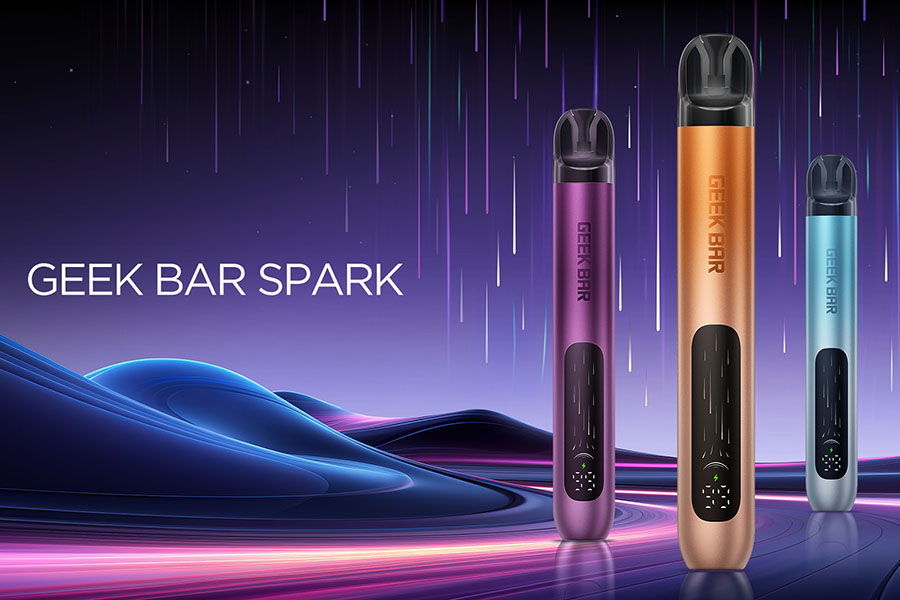
Geek Bar announced it is officially returning to the European market, launching its Geek Bar Spark across “select countries” this month, with “additional markets and flavor options to follow.” The new-generation, reusable system includes a fast-charging battery, supports up to 1,000 puffs per prefilled pod, and offers new “Europe-specific flavors,” including Moonshine Cherries, Tropical Punch, Pineapple Lemon Fizzy, and Apple Cider.
Category: Business & Finance
-

Herzog Talks Industry Shifts, Expects Market to Hit $67B by 2035
Goldman Sachs Managing Director Bonnie Herzog described the U.S. nicotine market as “attractive and growing,” projecting total revenues to reach about $67 billion by 2035 as the profit pool shifts decisively toward smoke-free products. Speaking last week at CSP’s Convenience Retailing University, she said cigarettes, which currently generate about 70% of industry operating profit, are expected to fall to roughly 50% by 2035, with smoke-free categories becoming the primary engine of profit growth due to stronger unit economics. Smoke-free products already account for about 48% of U.S. nicotine volumes, a figure she expects to rise to around 75% over the next decade, driven by downtrading and cross-category movement.
On e-vapor, Herzog said illicit products represent roughly 70% of the market today, a dynamic she said is suppressing growth in the formal channel and weighing on retailer sentiment amid limited enforcement. While she expects illicit penetration to decline over time, she cautioned that vapor will likely underperform other reduced-risk categories until enforcement improves, adding that British American Tobacco is positioned to remain the largest branded player.
In modern oral, Herzog forecast nicotine pouches to reach nearly $11 billion in revenue by 2035 and become the second-largest category by volume behind e-vapor. She highlighted continued momentum for Zyn from Philip Morris International, citing retailer survey data showing strong fourth-quarter gains supported by promotions, and described Velo Plus from Reynolds American Inc. as a “fierce” competitor in the expanding pouch segment.
-

BAT’s Velo Pouches Back on Market in Kenya
BAT Kenya resumed sales of its Velo oral nicotine pouches following regulatory clarity, signaling a renewed push into non-combustible products amid declining cigarette consumption, according to Capital Business. Company officials said this “regulatory clarity” involved confirming that oral nicotine pouches can be marketed and retailed under current rules rather than being in a grey zone or treated the same as banned products. The move supports the company’s strategy to diversify revenue streams in a market challenged by rising illicit tobacco sales. BAT Kenya reported a 10% drop in turnover in 2025 to Sh23.2 billion ($176.6 million), with Velo contributing about Sh232 million ($1.8 million), or roughly 1% of total revenue, between July and December 2025.
Finance Director Philemon Kipkemoi said the return was enabled by a regulatory environment now accommodating oral nicotine products. With local manufacturing divested, Velo is currently imported from Pakistan, though local production may be reconsidered depending on performance. Globally, British American Tobacco has reached 34 million non-combustible product users, 68% of its 2030 target, and aims for 50% of revenue from such products by 2035. In Kenya, Velo could contribute 15–25% of total revenue within three to five years, forming a key part of BAT’s strategy to expand alternative nicotine products in line with evolving regulations and consumer trends.
-

PMJ Launches First IQOS Capsule
Philip Morris Japan launched its first capsule-equipped cigarette stick, the “Sentia Purple Capsule,” for the IQOS ILUMA heated tobacco series on March 2. Initially available at IQOS stores nationwide, the rollout at convenience stores and other tobacco retailers begins April 6, with the Nagoya IQOS store relocating on March 7.
The capsule product features blueberry-flavored capsules with invigorating menthol, allowing users to release a burst of menthol and blueberry aroma by crushing the capsule. The product’s purple color reflects the blueberry inspiration. This addition brings the SENTIA lineup to 18 brands, including regular, menthol, flavored, and capsule variants.
The price is 530 yen ($3.34) per 20-stick pack, rising to 570 yen ($3.59) from April 1. Daniel Sevsick, Philip Morris Japan’s portfolio marketing director, highlighted that this is SENTIA’s first menthol capsule product.
-

BAT and McLaren Collaborate on Limited Edition Glo
British American Tobacco Japan announced that it has teamed up with McLaren Racing to launch the “glo Hilo Plus McLaren Racing-inspired limited edition set,” available from March 3 at glo Store Ginza and glo’s online store.
This premium collection features a limited-edition glo Hilo Plus device with McLaren’s signature papaya colors inside the device and on the charging case slide, along with exclusive glo and McLaren logos. The charging case also offers a rubberized grip for stability and a brushed metal finish that reflects motorsports engineering aesthetics.
The set includes a special Alcantara sleeve, a limited-design charging dock, and a warranty card confirming its limited-edition status, all packaged in a dedicated box. It is priced at 30,000 yen ($189).
-

JTI Refreshes Nordic Spirit Look
Today (March 3), JTI UK unveiled a refreshed brand identity for its Nordic Spirit nicotine pouches, introducing “striking new packaging” designed to enhance shelf visibility and provide clearer guidance for adult nicotine users. Inspired by the “North Star,” the updated packs — now live across JTI360 and rolling out in stores — feature Dry or Moist indicators for slower or faster nicotine release, alongside a six-dot strength system ranging from 6mg to 17mg. Each can contains 20 pouches and includes a compartment for used pouches, with recyclable polypropylene packaging.
The refresh follows the launch of Nordic Spirit Frosty Mint Max and comes as the UK nicotine pouch category grows to £15.9 million per month. Brand Lead Manager James Richards said the redesign aims to improve shelf standout and help retailers better guide customers, while maintaining the same product quality and flavor range. The brand’s Moist Range was also named Product of the Year 2026 in the Nicotine Pouch category, marking its third major award in five years and reinforcing its position in the expanding UK market.
-

Turning Point Reports 31% Profit Increase for FY25
Turning Point Brands, Inc. reported strong growth in Q4 2025, driven by its Modern Oral category, which saw net sales surge 266% to $41.3 million, now accounting for 34% of total company net sales compared with 12% in Q4 2024. Total consolidated net sales rose 29.2% to $121.0 million, with Stoker’s segment up 69.5% and Zig-Zag segment down 12.8%. Adjusted EBITDA increased 14% to $30.0 million, while net income climbed 239.8% to $8.2 million. For the full year, consolidated net sales rose 28.4% to $463.1 million, with net income up 46.1% to $58.2 million and adjusted EBITDA up 14.4% to $119.5 million. CEO Graham Purdy highlighted strong performance from FRE and ALP brands, emphasizing Modern Oral as a key driver for long-term category share growth while legacy brands continue to generate reliable cash flows.
The company said it is well-prepared for FY 2026, expecting Modern Oral gross revenue of $220–$240 million and net revenue of $180–$190 million, with Q1 2026 adjusted EBITDA projected at $24–$27 million, inclusive of marketing and trade investments. Stoker’s segment continues to lead sales at 67% of the total, driven by triple-digit Modern Oral growth, while Zig-Zag’s 33% contribution reflects declines due to the planned wind-down of Clipper products. TPB has strengthened operational systems, including digital tracking and FDA compliance support, and maintains liquidity of $290.1 million, comprising $222.8 million in cash and $68.1 million in asset-backed credit.
-

Ethical Holdings to Produce 8M Cigarettes per Month
Zimbabwe’s Ethical Holdings will begin producing cigarettes under a toll manufacturing arrangement with a Chinese partner, a move aimed at boosting local beneficiation and maximizing export earnings from the golden leaf. The initiative aligns with the government’s Tobacco Value Chain Transformation Plan, which emphasizes shifting from raw leaf exports to high-value local manufacturing.
Already a major player in tobacco farming and leaf processing, Ethical Holdings will produce 8 million sticks per month, marking its transition into a fully integrated tobacco company controlling the full value chain from primary production and auctioning to finished products. General Manager Tendai Ngongoni said the move supports national value-addition goals.
-

KT&G to Launch ‘Reel Able 3.0’ in Seoul
KT&G said it will introduce its latest cigarette-type heated tobacco device, the Reel Able 3.0, tomorrow (Feb. 28) at four locations in the Seoul metropolitan area. The new model features significantly reduced charging and preheating times, with a full charge completed in about one hour — half the time of its predecessor — and a preheating time shortened by 10 seconds.
The device retains key Reel Able functions such as pause during use, selectable usage modes and support for three consecutive sessions. For the first time in the series, KT&G has applied metal materials and curved edges to enhance grip and design, alongside an AMOLED display showing remaining usage counts and mode settings. Reel Able 3.0 will debut in four colors, with Oud Gray and Platinum Silver released first at a retail price of 68,000 won ($47). The company said the launch supports its strategy to reinforce leadership in the heated tobacco segment through differentiated product upgrades.
-

Altria Declares $1.06 Quarterly Dividend
Altria Group, Inc. today (Feb. 26) announced that its Board of Directors declared a regular quarterly dividend of $1.06 per share, payable on April 30, to shareholders of record as of March 25. The ex-dividend date is March 25.