Category: PMTA

  • U.S. FDA Issues MDOs for SMOK

    U.S. FDA Issues MDOs for SMOK

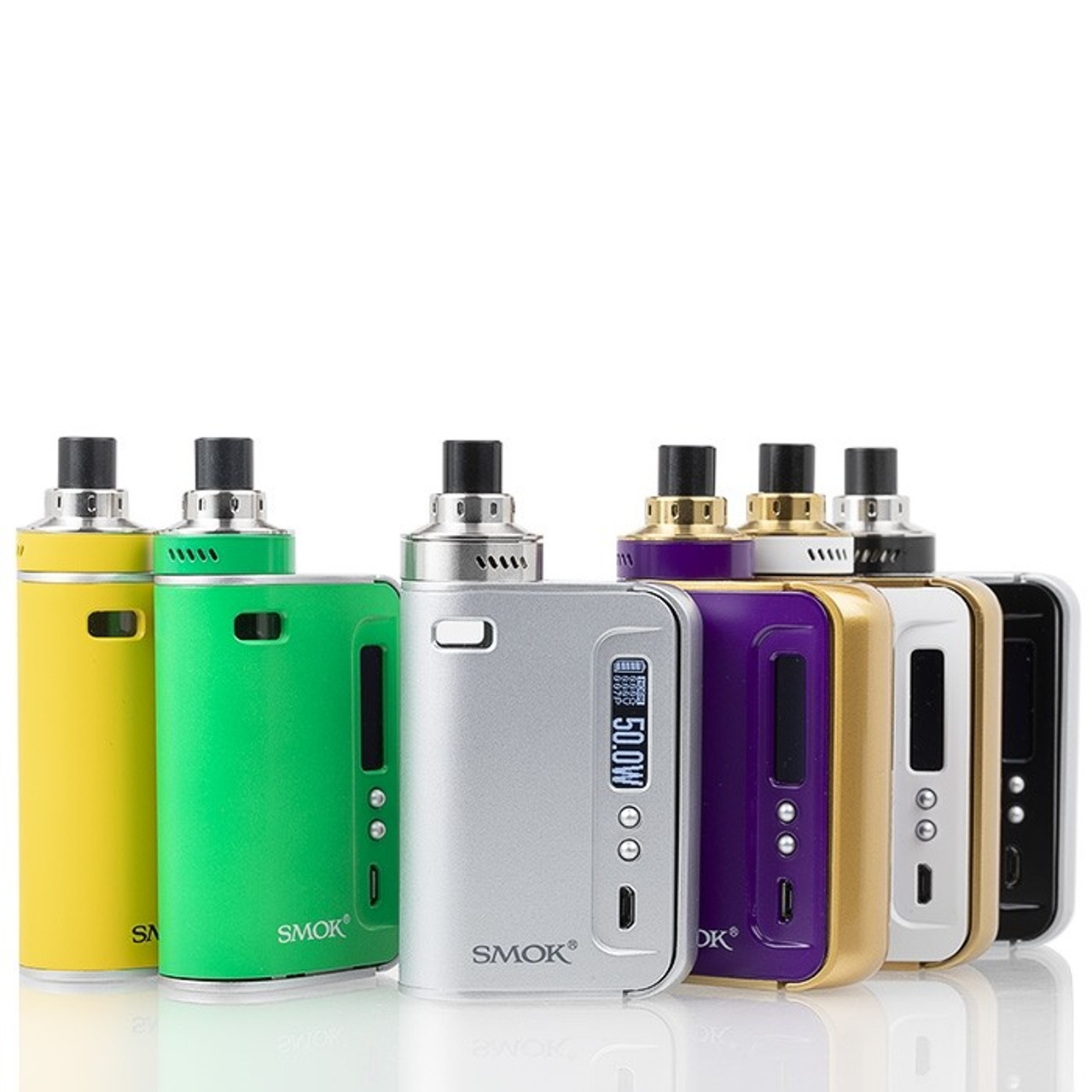
    The U.S. Food and Drug Administration issued marketing denial orders (MDOs) to Shenzhen IVPS Technology Co., Ltd for 22 SMOK vaping hardware products.

    The denied products include devices, pods, atomizers, and cartridges. It’s the first time the agency has denied strictly hardware products from one company en mass.

    The products were denied because they were submitted without a specific e-liquid to be used with the devices, according to the FDA. “The denied SMOK e-cigarette products are not sold with an e-liquid. A consumer instead adds their separately purchased e-liquid into the device,” the agency wrote. “Therefore, these SMOK products have the potential to be used with any e-liquid on the market and available to the consumer, which could include tobacco-flavored and non-tobacco-flavored e-liquids.”

    The products receiving MDOs include:

    • SMOK OSUB ONE Device
    • SMOK OSUB ONE RPM Cartridge
    • SMOK RPM DC 0.8 Ω MTL Atomizer
    • SMOK OSUB ONE RPM Cartridge 3 Pack
    • SMOK RPM DC 0.8 Ω MTL Atomizer 5 Pack
    • SMOK Nfix Device
    • Nfix DC 0.8 Ω MTL Pod
    • SMOK POZZ Device
    • SMOK POZZ DC 0.8 Ω Pod
    • SMOK RPM 40 Device
    • SMOK RPM Empty Standard Cartridge
    • SMOK RPM Empty Nord Cartridge
    • SMOK RPM Mesh 0.4 Ω Atomizer
    • SMOK Nord DC 0.8 Ω MTL Atomizer
    • SMOK SCAR-P3 Device
    • SMOK SCAR-P3 Empty RPM 2 Cartridge
    • SMOK SCAR-P3 Empty RPM Cartridge
    • SMOK PRM 2 Mesh 0.16 Ω Atomizer
    • SMOK RPM Mesh 0.4 Ω Atomizer
    • SMOK Nord 2 Device
    • SMOK Nord 2 RPM Cartridge
    • SMOK Nord 2 Nord Cartridge

    After reviewing the company’s PMTAs, the FDA determined that the applications lacked sufficient evidence to demonstrate that permitting the marketing of the products would be appropriate for the protection of public health, which is the standard legally required by the 2009 Family Smoking Prevention and Tobacco Control Act. More specifically, the applicant failed to provide sufficient data to characterize constituent delivery, product stability, and product abuse liability.

    “Science is a cornerstone of FDA’s tobacco product review process, and CTP remains committed to evaluating applications based on a public health standard that considers the risks and benefits of the tobacco product to the population as a whole,” said Brian King, director of FDA’s Center for Tobacco Products. “It is the applicant’s responsibility to provide sufficient scientific evidence to demonstrate that marketing a new tobacco product is appropriate for the protection of the public health. In this case, the applicant failed to provide this evidence.”

  • Retailers Face Civil Money Penalties

    Retailers Face Civil Money Penalties

    The retailers selling illegal flavored disposable vapes are under scrutiny. The U.S. Food and Drug Administration issued complaints for civil money penalties (CMPs) against 22 retailers for the illegal sale of Elf Bar/EB Design.

    The FDA previously warned each retailer in the form of a warning letter to stop selling unauthorized tobacco products, according to the agency. During follow-up inspections, the FDA observed the retailers had not corrected the violations, which resulted in the civil money penalty actions. 

    “The FDA has been abundantly clear that we are committed to using the full scope of our authorities, as appropriate, to hold those who break the law accountable,” said Brian King, director of the FDA’s Center for Tobacco Products (CTP). “These retailers were duly warned of what could happen if they failed to correct their violations. They chose inaction and will now face the consequences.”

    The complaints seek the maximum civil money penalty of $19,192 for a single violation from each retailer. While the FDA has issued civil money penalty complaints to retailers for selling unauthorized tobacco products in the past, this is the first time the agency is seeking CMPs for the maximum amount against retailers for selling illegal flavored disposable vapes.

    The retailers can pay the penalty, enter into a settlement agreement, request an extension of time to file an answer to the complaint or file an answer and request a hearing. Those that do not take action within 30 days after receiving the complaint risk a default order imposing the full penalty amount.

    Courtesy: US FDA

    In addition to the CMP complaints, today the FDA announced an additional 168 warning letters to brick-and-mortar retailers for illegally selling Elf Bar/EB Design products. These warning letters were the result of a coordinated nationwide retailer inspection effort conducted throughout the month of August, according to the agency.

    Warning letter recipients have 15 working days to respond with the steps they have taken to correct the violation and ensure compliance with the law. Failure to promptly correct the violations can result in additional FDA actions such as injunction, seizure or civil money penalties.

    “We continue to monitor closely all those in the supply chain, including retailers, for compliance with federal law,” said Ann Simoneau, director of the Office of Compliance and Enforcement in the CTP. “This includes follow-up inspections and surveillance of those who have received a warning letter, and taking additional action, as appropriate, to enforce the law.” 

  • Esco Bar Challenges FDA Rejection

    Esco Bar Challenges FDA Rejection

    Credit: Waldemarus

    Pastel Cartel, manufacturer for Esco Bar, has filed a federal lawsuit challenging the U.S. Food and Drug Administration’s refuse-to-accept (RTA) decision for over 100 products included in multiple premarket tobacco product applications (PMTAs) filed by the company, according to Vaping360.

    The lawsuit was filed in the U.S. District Court for the Western District of Texas. It alleges that the FDA acted arbitrarily and capriciously when it issued an RTA for the PMTAs.

    Esco Bar is seeking: a preliminary injunction staying the RTA orders until the case is decided; a judgment finding that the RTAs violate the Administrative Procedure Act and the U.S. Constitution (due process and the Fifth Amendment); and a final judgment setting aside the RTA orders and remanding the company’s PMTAs back to the FDA for further review.

  • ‘FDA Botched Review’

    ‘FDA Botched Review’

    Image: Tobacco Reporter archive

    The U.S. Food and Drug Administration failed to conduct a proper analysis before rejecting premarket tobacco product applications (PMTAs) submitted by Fontem U.S. for certain vaping products, the U.S. Court of Appeals for the D.C. Circuit found on Aug. 29.

    The court upheld the regulatory agency’s denial of Fontem’s application to market flavored vaping products but rejected the FDA’s denial of Fontem’s application for unflavored products.

    “While the FDA identified multiple ‘deficiencies’ [in Fontem’s application], it failed to analyze the trade-offs necessary to make a public health finding,” the judges wrote in their ruling. “Nor did the agency explain how the specific deficiencies relate to its overall conclusion that Fontem failed to demonstrate its unflavored products were appropriate for the protection of public health. The agency’s denial therefore failed to comport with the requirements of the Tobacco Control Act.”

    The FDA’s failure to correctly apply the public health inquiry to Fontem’s unflavored products led it to make another serious error, according to the court. In its initial deficiency letter, the FDA requested certain information from Fontem, thereby indicating such information would be sufficient for the agency to approve Fontem’s products.

    But in its denial order, the agency changed its tune, reproaching Fontem for failing to provide information that the agency had never explicitly sought.

    “Shifting the regulatory goal posts without explanation is arbitrary and capricious,” the judges wrote. “By indicating in its deficiency letter that Fontem could resolve issues with its applications by providing specific information, the FDA represented such information would be sufficient to secure approval.”

  • TPMP Comment Period Extended

    TPMP Comment Period Extended

    Credit: May1985

    The U.S. Food and Drug Administration has extended the comment period on its proposed rule for tobacco manufacturing practices.  

    Stakeholders now have until Oct. 6, 2023, to share their thoughts.

    The proposed rule would place new requirements for tobacco product manufacturers regarding the manufacture, design, packing and storage of their products. According to the FDA, these proposed requirements would help protect public health by, among other things, minimizing or preventing contamination and limiting additional risks by ensuring product consistency.

  • Public Meeting on PMTA Process

    Public Meeting on PMTA Process

    Credit: JHVEPhoto

    The U.S. Food and Drug Administration will hold a two-day public meeting on the agency’s premarket tobacco product application (PMTA) process on Oct. 23–24, 2023.

    The meeting will be held on the FDA’s White Oak Campus in Silver Spring, Maryland, and will be in a hybrid format with the option to attend virtually.

    Staff from the Center for Tobacco Products’ Office of Science will present on topics related to the PMTA process and be available to respond to questions received from stakeholders on the topic, according to a press note.

    Additional information, including registration and question submission processes, will be available soon.

  • FDA Denies Marketing of Myblu Menthol

    FDA Denies Marketing of Myblu Menthol

    Image: Tobacco Reporter archive

    The U.S. Food and Drug Administration on July 10 issued a marketing denial order (MDO) for Myblu Menthol 2.4 percent, an e-cigarette product made by Fontem US. The order prohibits the company from marketing or distributing this product in the United States.

    “Thorough scientific review of tobacco applications is a key pillar under FDA’s role to protect the public from the dangers of tobacco use,” said Matthew Farrelly, director of the Office of Science within the FDA’s Center for Tobacco Products. “This application lacked the scientific evidence needed to demonstrate that the product provided a net benefit to the public health that outweighs the known risks.”

    Among other shortcomings, the application presented insufficient scientific evidence to show that the menthol-flavored e-cigarette products provided an added benefit for adults who smoke relative to tobacco-flavored e-cigarettes, according to the FDA.

    Fontem US may resubmit a new application to address the deficiencies for the product subject to this MDO.

    To date, the FDA has authorized 23 tobacco-flavored e-cigarette products and devices. Last year, the FDA issued MDOs to Fontem US for several other Myblu products, which are the subject of ongoing litigation.

  • Ninth Circuit Denies Lotus MDO Review

    Ninth Circuit Denies Lotus MDO Review

    Entrance to United States Court of Appeals for the Ninth Circuit . Headquartered in San Francisco, California, the Ninth Circuit is by far the largest of the 13 courts of appeals. (Credit: Eric BVD)

    The U.S. Court of Appeals for the 9th Circuit on June 30 declined to review a Food and Drug Administration marketing denial order for Lotus Vaping Technologies’ flavored e-liquid products.

    The FDA issued marketing denial orders for Lotus’ flavored products, finding that the petitioners’ applications lacked sufficient evidence showing that the flavored products would provide a benefit to adult users that outweighs the risks such products pose to youth.

    Lotus challenged the ruling in court, but the judges held that the text of the Family Smoking Prevention and Tobacco Control Act authorizes the FDA to require that manufacturers submit comparative health risk data, which necessarily includes comparisons of flavored e-liquids to tobacco-flavored e-liquids.

    The judges also held that the FDA did not arbitrarily or capriciously deny Lotus’ applications and that any error the agency committed by failing to consider Lotus’ marketing plans was harmless.

  • Second Circuit Appeals Court Rules for FDA

    Second Circuit Appeals Court Rules for FDA

    Credit: Andrey Popov

    The U.S. Food and Drug Administration acted reasonably in denying vapor maker Magellan Technology’s request for a marketing order for its flavored vaping products, the U.S. Court of Appeals for the 2nd Circuit ruled May 16.

    The court upheld the FDA’s finding that Magellan failed to show the product would provide a benefit to adult users that would outweigh the risks to youth.

    The agency found Magellan’s evidence—four nonclinical studies—was insufficient to establish that the flavored pods would be more effective than tobacco-flavored electronic nicotine-delivery systems in helping smokers switch to e-cigarettes to stop smoking altogether, according to Bloomberg Law.

    The manufacturer of Hyde and Juno brand e-cigarettes sued the FDA and the U.S. Department of Health and Human Services, claiming the agencies violated the Administrative Procedure Act.

    New York-based Magellan Technology accused the agencies of refusing to review the company’s premarket tobacco product applications (PMTAs) for 12 products, a process that cost the company $1 million. Magellan claims the FDA “arbitrarily” and “capriciously” rejected the applications.

    “Magellan had already spent over $1 million on the PMTAs at the time the RTA [refuse-to-accept] order [was] issued and plans to spend over $10 million on the PMTAs in total,” the suit states.

    Texas-based retailer Vapor Train 2 is also a plaintiff in the suit. The companies asked a Texas federal court to temporarily stay the RTA order that the FDA issued to Magellan, according to the lawsuit filed Thursday.

    The companies are expected to appeal the ruling. Magellan could now seek an en banc review of the case (a rehearing by the full 2nd Circuit) or could appeal to the Supreme Court of the United States. 

  • FDA to Finish Reviewing PMTAs by End of Year

    FDA to Finish Reviewing PMTAs by End of Year

    Credit: Monticello

    The U.S. Food and Drug Administration says it is on track to finish reviewing premarket tobacco product applications (PMTAs) for the most prevalent e-cigarettes by the end of the year, reports CSP.

    The FDA has reviewed 52 percent of covered applications as of March 31. Covered applications are for new tobacco products on the market as of Aug. 8, 2016, with a PMTA filed by Sept. 9, 2020, and sold under the brands Juul, Vuse, Njoy, Logic, Blu, Smok, Suorin or Puff Bar and reach 2 percent or more of total retail sales volume per NielsenIQ reports, according to CSP. 

    Based on the latest status report, the FDA plans to have 53 percent of covered applications acted on by June 30, 55 percent of covered applications acted on by Sept. 30 and 100 percent of covered applications acted on by Dec. 31.  

    The court-ordered deadline for FDA review of PMTAs was Sept. 9, 2021, but the agency did not meet that deadline and now has to file regular status reports on progress. The next status report is due by July 24.