Category: PMTA

  • New Resources to Help Amend PMTAs

    New Resources to Help Amend PMTAs

    Credit: Postmodern Studio

    The U.S. Food and Drug Administration’s Center for Tobacco Products (CTP) has created two new resources to help applicants prepare and submit amendments to their premarket tobacco product applications (PMTAs): Fact Sheet—Amendment Tips: Completing Form FDA 4057a and Video—Using the CTP Portal.

    The fact sheet provides quick tips for completing Form FDA 4057a—Premarket Tobacco Product Application Amendment and General Correspondence Submission. In most circumstances, the CTP can only accept PMTA amendments for review that include Form FDA 4057a. In general, when submitting amendments for a PMTA, the FDA will review the required Form FDA 4057a first. If required content is missing from the form, the FDA may not continue reviewing the amendment.

    The video provides an overview of the CTP Portal and how to use it, including how to find application submission tracking numbers online.

    Recently, CTP Director Brian King outlined several new actions to enhance the center’s efficiency, effectiveness and transparency. These activities include enhanced communication on scientific issues and practices. By providing these new resources, the CTP is aiming to better support applicants navigating the PMTA process.

  • Reynolds Likely to Prevail in PMTA Lawsuit

    Reynolds Likely to Prevail in PMTA Lawsuit

    When the U.S. Court of Appeals for the 5th Circuit granted a stay to R.J. Reynolds Vapor Co. (RJRV) of the U.S. Food and Drug Administration’s denial of its 150,000-page premarket tobacco product application (PMTA) for its menthol Vuse products, the judges indicated that the court believes RJRV is likely to prevail on the merits when the full review is heard. 

    Tobacco harm reduction expert Clive Bates of Counterfactual said the substantive decision rests on three main arguments, as outlined by the judges granting the stay. The order states: “Specifically, RJRV demonstrates that the FDA failed to reasonably consider the company’s legitimate reliance interests concerning the need for longitudinal studies and marketing plans; failed to consider relevant evidence, inter alia, that youthful users do not like menthol-flavored e-cigarettes; and has created a de facto rule banning all nontobacco-flavored e-cigarettes without following APA notice and comment requirements.”

    The three main points argued by the court are outlined below:

    FDA changed the decision-making criteria after the application.

    1. Legitimate reliance interests

    “The FDA did not reasonably consider RJRV’s legitimate reliance interests before changing its position on the types of comparative studies and marketing plans critical to a compliant and complete PMTA.”

    Failure to consider Reynolds’ arguments adequately 

    2. Failure to consider relevant factors

    The FDA did not adequately address RJRV’s evidence that substantial health benefits would accrue to adult and youth cigarette smokers alike who switched to menthol Vuse while popularity among youth would remain low overall. For example, RJRV’s application contained studies that “switching from smoking to use of menthol Vuse Vibe substantially reduces toxicant exposure in a manner similar to smoking abstinence.” RJRV also submitted evidence of low popularity among youth relative to other flavored electronic nicotine-delivery systems (ENDS).

    Bates stated that at least one portion of the court’s argument looks troubling for Brian King, the newly appointed director of the FDA’s Center for Tobacco Products (CTP).

    “Then in July 2022, a new CTP director appeared on the scene and told OS that ‘the approach to menthol-flavored ENDS should be the same as for other flavored ENDS, i.e., the products could be found [appropriate for the protection of the public health] only if the evidence showed that the benefits of the menthol-flavored ENDS were greater than tobacco-flavored ENDS, which pose lower risk to youth.’ OS then changed its position.”

    FDA has been implementing a de facto tobacco product standard (a flavor ban) without using the rule-making process, public comment, etc. 

    3. “Tobacco product standard”

    RJRV has adduced evidence that the FDA has effectively banned all nontobacco-flavored e-cigarettes pursuant to its new and secret heightened evidentiary standard without affording affected persons any notice or the opportunity for public comment. There is no dispute that the TCA requires the FDA to abide by notice-and-comment rulemaking procedures before establishing a “tobacco product standard.” 8 21 U.S.C. § 387g(c)–(d). Similarly, it is clear that a ban on all but tobacco-flavored e-cigarettes would constitute a “tobacco product standard.” 

    Bates explains that the court justifies its assertion that the FDA is imposing a de facto standard with reference to the so-called “fatal flaw memo.” This was an expedited decision-making regime that stipulated that applications for nontobacco-flavored products must be supported with controlled trials or longitudinal studies showing a quitting or switching advantage over a tobacco flavor. Otherwise, they would be automatically denied. 

    “We conclude that the Fatal Flaw memo’s heightened evidentiary standard ‘bears all the hallmarks’ of a substantive rule. City of Arlington, 668 F.3d at 242. First, the memo is binding on its face by mandating that applications contain ‘the necessary type of studies.’ Second, it has been applied in a way that indicates it is binding; indeed, the subsequent, myriad Denial Orders refer to the same deficiencies identified as ‘fatal’ in the memo. Third, it took away the FDA reviewers’ former discretion to consider individual PMTAs solely on their merits and instead requires a cursory, box-checking review.

    “Finally, it affected the rights of literally hundreds of thousands of applicants whose PMTAs were denied. This is not a close call.”

    Bates stated that the third point the court makes is potentially “very” serious for the FDA and “not a close call,” as the court suggests. “A tobacco product standard under the TCA s.907 means that the burden is on the FDA to show that its de facto standard is appropriate for the protection of public health—e.g., considering the impact of closing down all vape shops, the likely impact on adults or youth who smoke, unintended consequences, illicit trade, etc.,” explains Bates. “It shifts the analysis from the individual applicant (PMTA) to the system-wide impact (Product Standard)—and FDA will find this difficult or impossible to meet, in my view.”

    Taking everything into account, the court weighs up its decision to grant the stay against four criteria, as Bates outlined: 

    “Our judgment is ‘guided by sound legal principles’ that ‘have been distilled into consideration of four factors: (1) whether the stay applicant has made a strong showing that he is likely to succeed on the merits; (2) whether the applicant will be irreparably injured absent a stay; (3) whether issuance of the stay will substantially injure the other parties interested in the proceeding; and (4) where the public interest lies.’”

    Bates stated that the first of these four criteria reflects the courts’ view on the merits discussed in the three above-stated substantive arguments. In the fourth: where the public interest lies, the court gives significant weight to the “highest public importance that federal agencies follow the law” and states: “In sum, ‘there is generally no public interest in the perpetuation of unlawful agency action,’ Texas v. Biden, 10 F.4th at 560. And there is no evidence that ‘Congress’s policy choice’ included an exemption from mandatory federal administrative procedures.”

    No date has been set for the court to complete its full review.

  • FDA Denies Marketing Applications for Vuse Menthol

    FDA Denies Marketing Applications for Vuse Menthol

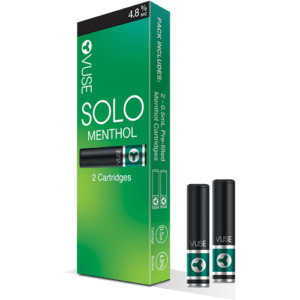
    The U.S. Food and Drug Administration issued marketing denial orders (MDOs) for two menthol e-cigarette products currently marketed by R.J. Reynolds Vapor Company under the Vuse Solo brand.

    Reynolds is expected to challenge the order.

    The currently marketed products include the Vuse Replacement Cartridge Menthol 4.8% G1 and the Vuse Replacement Cartridge Menthol 4.8% G2, according to a statement. The company may resubmit applications or submit new applications to address the deficiencies for the products that are subject to these MDOs. 

    The FDA evaluates premarket tobacco product applications (PMTAs) based on a public health standard that considers the risks and benefits of the product on the population as a whole.

    After reviewing the company’s PMTAs, the FDA determined that the applications lacked sufficient evidence to demonstrate that permitting the marketing of the products would be appropriate for the protection of the public health, which is the applicable standard legally required by the 2009 Family Smoking Prevention and Tobacco Control Act.

    Specifically, the evidence submitted by the applicant did not demonstrate that its menthol-flavored e-cigarettes provide an added benefit for adult smokers relative to tobacco-flavored e-cigarettes.

    In October last year, the FDA issued MDOs for several menthol-flavored vaping products marketed by Logic Technology Development. It was the first time the FDA issued MDOs for menthol products after receiving a scientific review.

    A few days after the order was issued, Logic obtained a court order from the U.S. Circuit Court of Appeals for the 3rd Circuit that temporarily stayed the order.

    The case continues.

  • Bantam Receives PMTA Acceptance Letter

    Bantam Receives PMTA Acceptance Letter

    Image: Tobacco Reporter archive

    Bantam Vape received acceptance of its premarket tobacco product application (PMTA) submission from the U.S. Food and Drug Administration for its nontobacco nicotine e-liquids, according to a press release. Bantam’s application now moves to the next step in the PMTA process—a preliminary scientific review to confirm the application contains all required items to permit a substantive review by the FDA.

    Bantam submitted its application for its nontobacco nicotine e-liquids to the FDA on May 13, 2022, and is seeking marketing orders from the agency.

    “The receipt of this acceptance letter reflects Bantam’s efforts to provide adult consumers with high-quality, science-based e-liquids while upholding our responsibility to restrict youth access and use of these products,” said Bantam spokesperson Anthony Dillon. “Bantam remains supportive of the need for science-based regulation in the e-liquids industry and is proud of the progress of our various PMTAs. We remain confident in the quality and consistency of our products and the science behind them.”

    Prior to its nontobacco nicotine-focused submission, Bantam submitted a PMTA to the FDA in September 2020 for its tobacco-derived e-liquids. The application entered scientific review in August 2021, and, to date, remains under FDA review.

  • FDA Rejects First Menthol Product PMTAs

    FDA Rejects First Menthol Product PMTAs

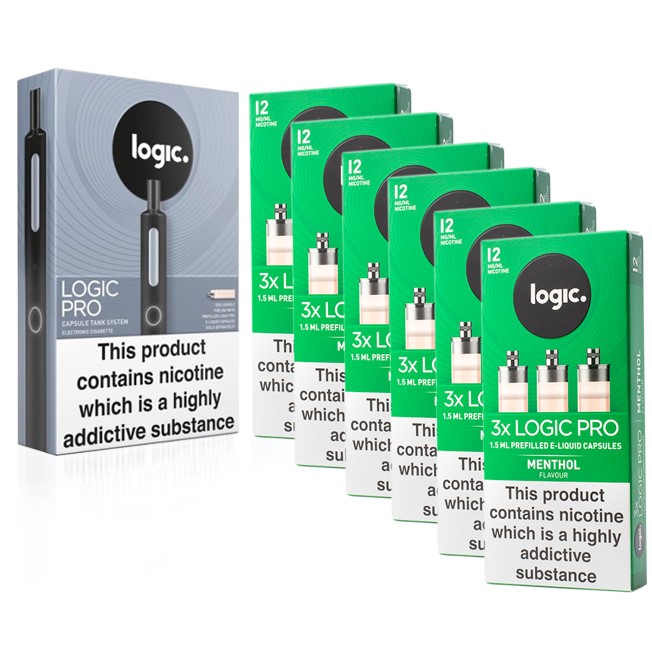
    The U.S. Food and Drug Administration has issued marketing denial orders (MDOs) for several menthol-flavored vaping products marketed by Logic Technology Development. The products include the Logic Pro Menthol e-Liquid Package and Logic Power Menthol e-Liquid Package. It’s the first time the FDA has issued MDOs for menthol products after receiving a scientific review.

    The move seems inline with the regulatory agency’s goal to ban menthol flavors from tobacco products. The FDA also isn’t expected to approve any flavored vaping product other than tobacco.

    “Ensuring new tobacco products undergo premarket evaluation is a critical part of the FDA’s work to reduce tobacco-related disease and death,” said Brian King, director of the FDA’s Center for Tobacco Products (CTP), in a release. “We remain committed to evaluating new tobacco products based on a public health standard that considers the risks and benefits of the tobacco product to the population as a whole.”

    Gregory Conley, director of legislative and external affairs for the American Vapor Manufacturers Association, told Tobacco Reporter that the latest move by the FDA to ban menthol vaping flavors is reminiscent of the agency’s “fatal flaw” review of PMTAs that resulted in millions of denials. The term “fatal flaw” was used by the FDA for PMTA submissions that didn’t have specific studies. The term has been at the center of nearly all lawsuits filed against the FDA for its handling of the PMTA process.

    “The dysfunction at the FDA knows no bounds. For the last year-plus, the FDA has sat back deferred decision making on menthol vaping products,” Conley said. “Lest anyone believe that FDA was hard at work coming up with ways to achieve balance, today they revealed that their big plan for menthol vaping products is to follow the exact same ‘fatal flaw’ review process that has led to dozens of lawsuits being filed against the agency.”

    The agency stated that after reviewing the company’s premarket tobacco product applications (PMTAs), the FDA determined that the applications “lacked sufficient evidence to demonstrate that permitting the marketing of the products would be appropriate for the protection of the public health (APPH), the applicable standard legally required by the 2009 Family Smoking Prevention and Tobacco Control Act.”

    The FDA stated that the evidence provided within Logic’s denied PMTAs did not demonstrate that menthol-flavored e-cigarettes are more effective in promoting “complete switching or significant cigarette use reduction” relative to tobacco-flavored e-cigarettes.

    Logic must now decide if it will resubmit its applications or submit new applications to address the deficiencies for the products that are subject to the MDOs. However, these acts could prove futile since the FDA states that for non-tobacco-flavored e-cigarettes, including menthol-flavored e-cigarettes, “existing evidence demonstrates a known and substantial risk” with regard to youth appeal, uptake and use.

    “The FDA conducts a rigorous, scientific review of submitted premarket tobacco product applications, evaluating the data for each product to determine if it meets the public health standard,” said King. “In this case, the applicant did not provide sufficient scientific evidence to show that the potential benefit to adult smokers outweighs the risks to youth.”

    A recently accepted manuscript of an article set for publication in Nicotine & Tobacco Research found that flavored vaping and other tobacco sales restrictions in California did not affect youth e-cigarette use.

    The MDO letter that Logic received today is not limited to the two products named above, according to the agency. In general, the FDA publicly names only products that the applicant is marketing to avoid potential disclosure of confidential commercial information.

    Any products subject to an MDO may not be offered for sale or distributed in the United States, or the FDA may take enforcement action. These products cannot be legally introduced into interstate commerce in the U.S. without risking FDA enforcement. In March, the FDA authorized several tobacco-flavored e-cigarette products from the company under the Logic Vapeleaf, Logic Power and Logic Pro brands, including devices. 

    In addition to ensuring that Logic complies with this order, the FDA intends to ensure compliance by distributors and retailers. Specifically, the FDA notes that all new tobacco products on the market without the “statutorily required premarket authorization” are marketed unlawfully and their distribution or sale is subject to enforcement action.

    Recently, the U.S. Department of Justice filed complaints for permanent injunctions in federal district courts against six e-cigarette manufacturers on behalf of the FDA. The cases represent the first time the FDA has initiated injunction proceedings to enforce the Federal Food, Drug, and Cosmetic (FD&C) Act’s premarket review requirements for new tobacco products.

    Retailers should contact Logic with any questions about products in their inventory. 

  • Court Refuses to Suspend Fontem MDO

    Court Refuses to Suspend Fontem MDO

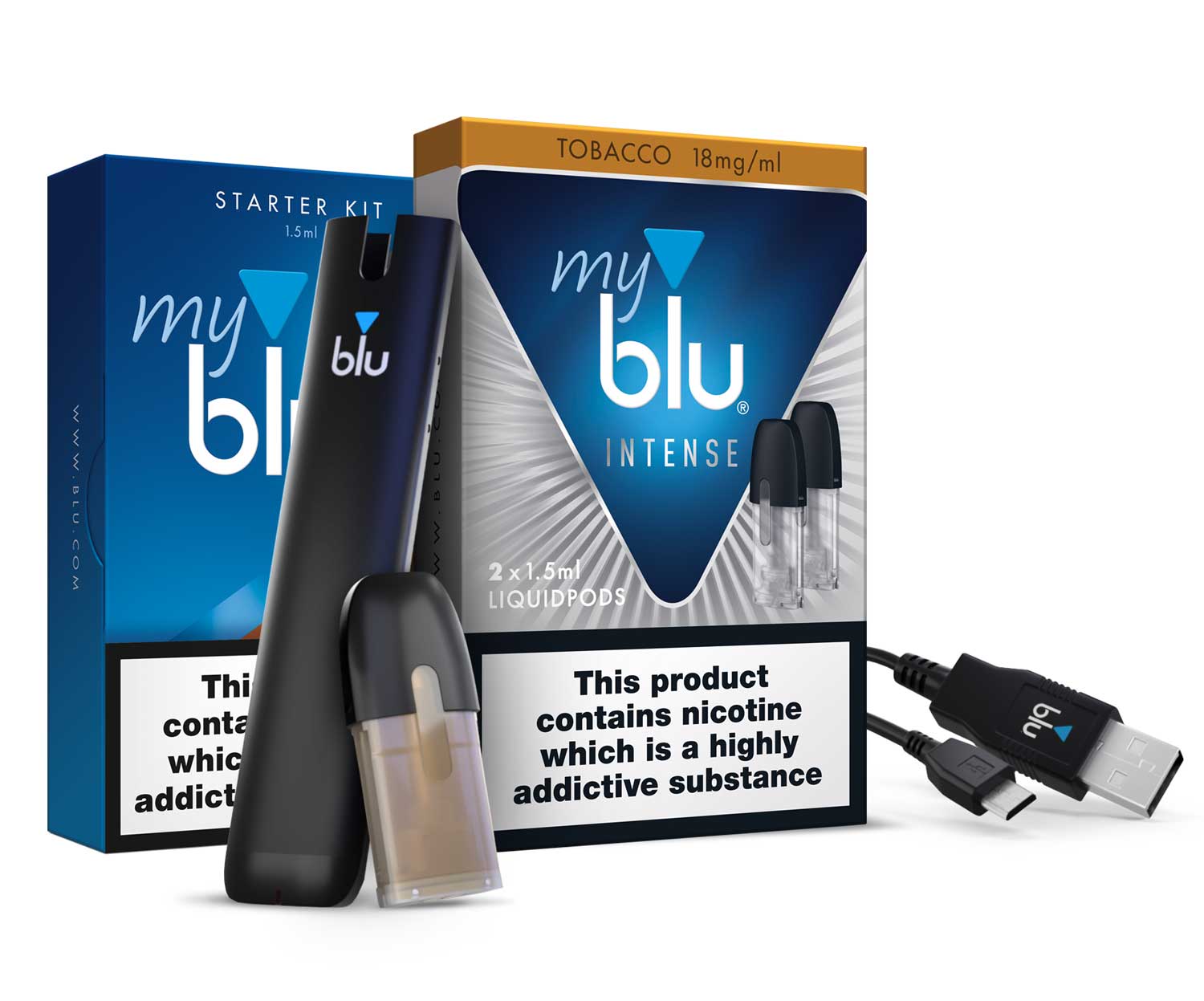
    A U.S. appeals court denied Fontem US’ request to suspend the Food and Drug Administration’s marketing denial orders (MDO) for certain Myblu products.

    On April 8, the FDA rejected several of the company’s premarket tobacco product applications on the basis that they lacked sufficient evidence to show that permitting the marketing of those products would be appropriate for the protection of public health.

    The court rejected Fontem’s July 12 request for a stay, saying that the e-cigarette company had waited too long to file the motion.

    “Fontem has demonstrated that the marketing denial order is causing it harm, but by waiting more than two months after the marketing denial order’s issuance to seek emergency relief, Fontem weakened its claim of irreparable harm,” the court wrote.

    The court also stated that Fontem “has not made a strong showing” that it is likely to succeed in its appeal of the MDO on merits.

    “The court ruling does not affect our progress through the FDA’s administrative appeals process, through which we intend to convince the agency that approval should be granted for Myblu products,” said a spokesperson for Fontem US.

    “In the meantime we continue to supply Myblu to the majority of retailers. The MDO does not apply to Blu disposables which constitute 50 percent of Blu share in the U.S. market.”

  • Joytech Parent Submits PMTA to FDA

    Joytech Parent Submits PMTA to FDA

    China-based JWEI has announced today that they have successfully submitted a premarket tobacco product application (PMTA) to the U.S. Food and Drug Administration for a device created with “new innovative technology” that focuses on safety, harm reduction and is designed to curb underage use.

    “JWEI has been a leader in this industry from the start and this milestone again reiterates our commitment to the industry and public health: ensuring our adult customers continued access to less harmful alternatives to traditional tobacco products, while setting a new standard preventing underage youth access.” said VP of JWEI Group Jason Yao.

    JWEI is the parent to the brands Joytech, Eleaf, Wismec and Joyevita. The company did not offer additional information on the specific device submitted for the PMTA.

    JWEI developed a set of principles to guide through every step of its new product development, led by safety and effectiveness studies in early 2019. “The design philosophy is the foundation and guide rails for designing, manufacturing, verifying, validating, and continuously improving innovative, responsible, reliable, and high-quality products,” the release states.

    The limited product debut in the UK has received overwhelming recognition from users and commercial partners after a few months’ actual use, according to JWEI

    “As one of the world-leading device manufacturers and innovators of e-cigarette and vaping products, JWEI has over 3,600 granted patents and multiple internationally recognized manufacturing and quality certifications (GMP, HACCP, ISO9001, ISO13485, EHS, and ERP),” according to a press release.

  • Juul: FDA ‘Overlooked’ Aerosol Data

    Juul: FDA ‘Overlooked’ Aerosol Data

    The U.S. Food and Drug Administration overlooked a key part of Juul’s premarket tobacco product application (PMTA) when the agency ordered Juul Labs’ products off the U.S. market, according to court documents.

    In court filings Tuesday, Juul said the agency overlooked more than 6,000 pages of data that the company had submitted to the FDA on the aerosols that users inhale, according to the Wall Street Journal.

    Juul also said the agency failed to consider the totality of Juul’s evidence, which the company said established that the public-health benefits of Juul products significantly outweighed the potential risks.

    “FDA’s order acknowledged that ‘exposure to carcinogens and other toxicants present in cigarette smoke were greatly reduced with exclusive use’ of Juul products compared with combustible cigarettes,” Juul Labs stated in court documents.

    A federal appeals court last week granted Juul Labs a temporary stay of the FDA’s marketing denial order that requires the vaping company to pull its e-cigarettes off the U.S. market.

    “The purpose of this administrative stay is to give the court sufficient opportunity to consider petitioner’s forthcoming emergency motion for stay pending court review and should not be construed in any way as a ruling on the merits of that motion,” the court wrote.

    The FDA has until July 7 to respond to Juul’s motion and Juul Labs has until July 12 to reply to the FDA response if submitted.

  • Marketing Approvals for NJOY ‘Daily’ Vapes

    Marketing Approvals for NJOY ‘Daily’ Vapes

    Photo: NJOY

    The U.S. Food and Drug Administration has approved the premarket tobacco product applications (PMTA) for NJOY’s Daily Rich Tobacco 4.5% and NJOY Daily Extra Rich Tobacco 6%.

    “It should be noted that our determination that the marketing of these products is APPH [appropriate for the protection of public health] is based in part on the submitted microbial stability data,” the agency wrote in its marketing granted order (MGO).

    The designation does not mean the products are safe and they are not “FDA approved,” the agency said, but the MGOs allows the NJOY to legally market the authorized products in the United States.

    While approving NJOY’s Daily Rich Tobacco 4.5% and NJOY Daily Extra Rich Tobacco 6%, the FDA denied authorization for multiple other Daily e-cigarette products. These are presumed for products with nontobacco flavors. Any of those products that remain on the market must be removed or risk FDA enforcement, the agency said. Applications for two menthol-flavored Daily products remain under FDA review.

    Additionally, the authorization imposes marketing restrictions on the company to greatly reduce the potential for youth exposure to advertising for these products. The FDA said it will closely monitor how these products are marketed and will act as necessary if the company fails to comply with any applicable statutory or regulatory requirements, or if there is a notable increase in the number of non-smokers—including youth—using these products.

    On April 26, the FDA authorized four NJOY Ace products through the PMTA pathway.

  • Senator Calls on U.S. FDA to End Enforcement Discretion

    Senator Calls on U.S. FDA to End Enforcement Discretion

    Photo: Tobacco Reporter Archive

    In a speech on the Senate floor, U.S. Senator Dick Durbin blasted the U.S. Food and Drug Administration for its delays in completing its public health review of e-cigarette premarket tobacco product applications (PMTAs). The deadline for the FDA to finish reviewing e-cigarette applications was Sept. 9, 2021, more than eight months ago.

    On June 13, the regulatory agency submitted an update on the agency’s review of e-cigarette applications and stated it will not finish reviewing e-cigarettes until July 2023 and that products under review may continue being sold.

    “These companies have flooded the market with addictive devices. Companies like Juul, partially owned by the tobacco companies, understand that they’ve promoted their products to children,” Durbin said, according to a release from his office. “For years, none of these products were legally authorized. Who was supposed to be the cop on the beat? The Food and Drug Administration, but they were nowhere to be found.”

    In March, Durbin led a bipartisan letter with 14 of his colleagues calling on the FDA to finish its review of e-cigarettes immediately; reject applications for e-cigarettes, especially kid-friendly flavors, that do not prove they will benefit the public health; and clear the market of all unapproved e-cigarettes.

    “I am calling on the FDA to immediately halt its enforcement discretion and remove all unauthorized e-cigarettes from the market,” Durbin stated. “Don’t allow Juul and other tobacco companies one more day of endangering our children. Stop cowering before Big Tobacco’s highly paid lawyers.”