Category: Global Regulation

  • Hong Kong Seizes $26.6 Million in Illegal Cigs

    Hong Kong Seizes $26.6 Million in Illegal Cigs

    Credit: Timothy Donahue

    Customs officers in Hong Kong seized illegal cigarettes worth more than HK$208 million ($26.6 million) in the first 15 days after a tobacco tax increase came into force as part of last month’s budget.

    Superintendent Jeff Lau Leung-chi of the Customs Revenue Crimes Investigation Bureau said on Monday that if the tobacco had been legally imported, the contraband products would have generated about HK$147 million in tax.

    Lau attributed the increase in cigarette seizures to enhanced enforcement action at all levels to combat the trade in illegal tobacco products and the operation’s longer duration in the second phase, according to media reports.

    “We also believe that crime syndicates anticipated the possibility of an increase in tobacco tax, so they stockpiled a larger quantity of illicit cigarettes ahead of time to supply the market after the tax hike,” he said.

    The untaxed cigarettes were discovered over the second phase of a citywide operation code-named “Tempest”, which involved the arrest of 776 people between February 29 and March 14.

    During the first round of the operation, which took place between February 19 and 28, Customs detained 538 people and seized HK$62 million worth of illegal tobacco products in 10 days.

  • Flava Pulled From Philippine Shelves

    Flava Pulled From Philippine Shelves

    Flava brand vaping products have been pulled from store shelves in the Philippines amid allegations of illegal marketing to minors and tax evasion, the Department of Trade and Industry has said.

    The DTI’s Fair Trade Enforcement Bureau (FTEB) on March 15 ordered Flava Corporation, Lilac’s Vape Shop, and social media influencer Lilac Sison Tayaban, CEO of Flava, to refrain from manufacturing, importing, selling, packaging and distributing imported Flava vapes, according to media reports.

    Once the Sampaloc, Manila-based business receives the preliminary order issued by DTI-FTEB, all of Flava’s commercial activities must immediately stop.

    Flava was the respondent to formal charges alleging violations of Republic Act No. 11900, or the Vaporized Nicotine and Non-Nicotine Products Regulation Act, filed before the DTI-FTEB on March 14.

    In turn, the DTI-FTEB gave the preliminary order to confiscate Flava products that violate RA 11900, to prevent the disposition or tampering of evidence and the continuation of the acts being complained of.

    The DTI is the lead implementing and enforcement agency of RA 11900, the landmark law aimed at protecting minors from vaping. The House Ways and Means Committee earlier estimated as much as P728 million ($1.3 million) in foregone tax revenues from the alleged technical smuggling of P1.4 billion worth of illicit Flava devices last year.

    After laboratory testing, The House panel discovered that Flava had not declared the vapes it imported from China. Flava allegedly mislabeled its ingredient as freebase nicotine, which has a lower excise tax than nicotine salt — the nicotine used in Flava products.

    Also, the House committee discovered Flava’s aggressive marketing of its flavored vapes to minors, most especially on social media—a violation of RA 11900. Last week, Bureau of Internal Revenue commissioner Romeo Lumagui Jr. disclosed that the taxman seized 1,029 master boxes of Flava vapes from a warehouse in San Pablo City, Laguna, with tax deficiencies totaling P75.7 million.

    The BIR raid conducted together with the Laguna provincial field unit of the Philippine National Police’s Criminal Investigation and Detection Group (PNP-CIDG) also led to the arrest of two individuals manning the warehouse.

    As such, the BIR will file criminal tax evasion charges against Flava.

    “This successful raid of a vape warehouse containing 102,900 bottles of Flava vape products will be one of many. The BIR supports the whole of the government’s approach to eradicating illicit vape products. We have warned you as early as 2022. Our raids are successful. We won the criminal cases. You already have pending warrants of arrest. Register and pay your proper taxes, or suffer the consequences,” Lumagui said.

    Meanwhile, Consumer Protection Group spokesperson, Trade Assistant Secretary Amanda Nograles said they will check the report of the Philippine Drug Enforcement Agency that marijuana-laced electronic cigarettes or vapes are now proliferating in the market.

    “That report alarms us, especially when these will be sold to minors. Since the information was just new, then we will get additional information. But the DTI will continue to confiscate vape products with flavor descriptors and have cartoon characters that are appealing to minors, and products that use influencers,” Nograles said in a radio interview.

    She said if the DTI encountered or confiscated vapes with marijuana oil, then they would refer it to the PDEA.

    On Thursday PDEA operatives seized cannabis oil and ‘kush’, and assorted vaping devices, with an estimated total value of P842,000 in simultaneous raids in Taguig City.

  • Massachusetts Court OKs Generational Ban

    Massachusetts Court OKs Generational Ban

    Brookline, Massachusetts (Credit: Wangkun Jia)

    The highest court in Massachusetts ignored objections from vape shop owners and tobacco retailers and upheld the legality of a novel bylaw that bars cigarette sales to anyone born after January 1, 2000, in the town of Brookline. The restriction, the first of its kind in the United States, is designed to prevent future generations from using not only tobacco but also nicotine.

    Retailers argued that the 2021 Brookline bylaw was pre-empted by a state law approved in 2018 that raised the minimum age for purchasing a tobacco product from 18 to 21, according to media reports. The retailers pointed out that the Brookline bylaw effectively means someone born after January 1, 2000, will not be able to purchase a nicotine product regardless of their age.

    Over time, as the population ages, the bylaw will effectively ban the sale of tobacco products in the town.

    In the Supreme Judicial Court’s unanimous opinion, written by Justice Dalila Wendlandt, the court acknowledged the Brookline bylaw is more restrictive than the state’s minimum age standard, but the justices had no issues with that. They said the bylaw “augments the state statute” by further limiting access to tobacco products to persons under the age of 21.

    The court rejected claims by the tobacco retailers that the state law was designed to clarify what had become a muddled regulatory environment as municipality after municipality raised the minimum age for buying tobacco products.

    “The retailers claim that the purpose of the Tobacco Act was ‘actually to benefit tobacco retailers . . . by eliminating the confusion that arises when the minimum age for purchasing tobacco varies from town to town and city to city across the Commonwealth,’” the opinion said. “To the contrary, the act reflects the legislative intent to protect young persons and other vulnerable populations from the deleterious health effects of tobacco product use.”

    The case drew attention in Massachusetts and around the nation and the world and the outcome is likely to prompt more communities to follow Brookline’s lead, creating a patchwork quilt of regulation of tobacco products.

  • More FDA Warnings

    More FDA Warnings

    Photo: Ljupco Smokovski

    The violations involve products sold under the Elf Bar/EB Design/EB Create, Funky Republic, Lost Mary brands.

    The U.S. Food and Drug Administration has warned five more online retailers for selling flavored disposable vaping products.

    On Feb. 28, the regulatory agency announced that the warning letters cite the sale of disposable e-cigarette products marketed under popular brand names such as Elf Bar/EB Design/EB Create, Funky Republic, Lost Mary, Hyde, Breeze and Cali Bars, according to a press release.

    “Protecting our nation’s youth from the harms of tobacco products is crucial to our center’s public health mission,” said Brian King, director of the FDA’s Center for Tobacco Products in a statement. “We’re committed to continuing to use a data-driven approach to identify and prevent the sale of unauthorized tobacco products and to take compliance and enforcement action when appropriate.”

  • FDA Denies Marketing of Flavored Blu Products

    FDA Denies Marketing of Flavored Blu Products

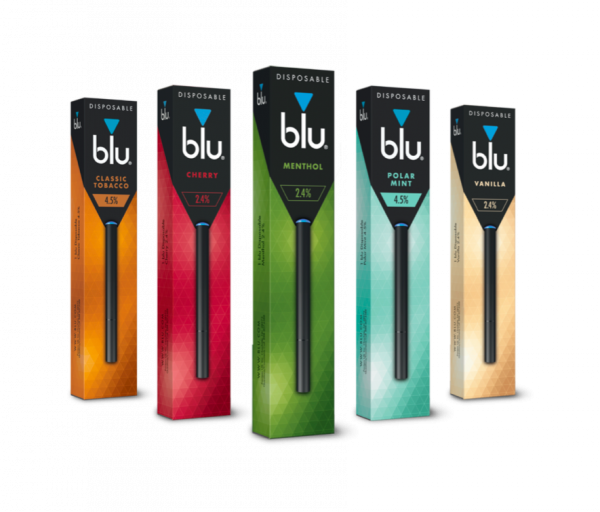
    The U.S. Food and Drug Administration issued marketing denial orders (MDOs) to Fontem U.S. for four Blu disposable products and one MyBlu e-cigarette product.

    The denied products include a closed menthol e-liquid and several flavored disposable e-cigarettes. As a result, the company may not legally market or distribute these products in the United States. However, the company may submit new applications for the products that are subject to these MDOs.

    The products that received MDOs are Blu Disposable Menthol 2.4 percent; Blu Disposable Vanilla 2.4 percent; Blu Disposable Polar Mint 2.4 percent; Blu Disposable Cherry 2.4 percent; and MyBlu Menthol 1.2 percent.

    After reviewing the company’s premarket tobacco product applications, the FDA determined that the applications lacked sufficient evidence to demonstrate that permitting marketing of the products would be appropriate for the protection of the public health, which is the standard legally required by the 2009 Family Smoking Prevention and Tobacco Control Act. 

    More specifically, the FDA said the application lacked sufficient evidence regarding harmful and potentially harmful ingredients in the aerosol for one product and battery safety for several products. Additionally, the applicant did not present sufficient data demonstrating that the new products have a potential to benefit adult smokers, in terms of complete switching or significant cigarette use reduction, that would outweigh the risk to youth, according to the agency.

  • FDA Warns More Sellers of Flavored Vapes

    FDA Warns More Sellers of Flavored Vapes

    The U.S. Food and Drug Administration has again issued warning letters to several small business owners for selling flavored disposable vaping products.

    The regulatory agency issued letters to 14 online businesses for selling unauthorized e-cigarette products. The warning letters cite the sale of disposable e-cigarette products marketed under brand names, including Elf Bar/EB Design, Lava Plus, Funky Republic/Funky Lands, Lost Mary, Cali Bars, Cali Plus, and Kangvape.

    “These warning letters were informed by FDA’s ongoing monitoring of multiple surveillance systems to identify products that are popular among youth or have youth appeal, an agency press release states. “Findings from the 2023 National Youth Tobacco Survey found that more than 50 percent of youth who use e-cigarettes reported using the disposable e-cigarette brand Elf Bar; in 2023, the manufacturer of Elf Bar began marketing the product under the name EB Design.”

    In addition, the brands Lava Plus, Funky Republic/Funky Lands, Kangvape, Cali, and Breeze were identified as popular or youth-appealing by the agency following a review of retail sales data and emerging internal data from a survey among youth, according to the agency.

    Retailers receiving warning letters sold or distributed e-cigarette products in the United States that lack marketing authorization from the FDA violate the Federal Food, Drug, and Cosmetic Act.

    Warning letter recipients are given 15 working days to respond with the steps they will take to correct the violation and to prevent future violations. Failure to promptly correct the violations can result in additional FDA actions such as an injunction, seizure, and/or civil money penalties.

    As of Jan. 30, 2024, FDA issued more than 440 warning letters and 88 CMPs to retailers for the sale of illegal e-cigarettes, including through a series of nationwide inspection efforts of brick-and-mortar retailers, according to the release.

    Earlier this week, the FDA issued complaints for civil money penalties (CMPs) against 21 brick-and-mortar retailers for selling unauthorized Esco Bars e-cigarettes.

    In a press release, the agency stated that it had previously issued each retailer a warning letter for their sale of unauthorized tobacco products. However, follow-up inspections revealed that the retailers had failed to correct the violations.

    The agency now seeks the maximum penalty of $20,678 from each retailer.

  • Civil Money Penalties for 21 Vape Shops

    Civil Money Penalties for 21 Vape Shops

    The U.S. Food and Drug Administration has issued complaints for civil money penalties (CMPs) against 21 brick-and-mortar retailers for selling unauthorized Esco Bars e-cigarettes.

    In a press release, the agency stated that it had previously issued each retailer a warning letter for their sale of unauthorized tobacco products. However, follow-up inspections revealed that the retailers had failed to correct the violations.

    The agency now seeks the maximum penalty of $20,678 from each retailer.

    The complaints announced today represent the first set of CMPs FDA has filed for the sale of unauthorized Esco Bars e-cigarettes. “These retailers were duly warned of what could happen if they continued selling these unauthorized e-cigarettes,” said Brian King, director of the FDA’s Center for Tobacco Products (CTP). “They should have acted responsibly to correct the violations, but they chose not to do so and now must face the consequences of that decision. FDA won’t sit back and tolerate inaction to comply with the law.”

    Currently, $20,678 is the maximum civil money penalty amount FDA can seek for a single violation from each retailer, consistent with similar CMPs sought against retailers for the sale of unauthorized Elf Bar products in Sept., Nov., and Dec. of 2023.

    The retailers can pay the penalty, enter into a settlement agreement based on mitigation factors, request an extension of time to file an answer to the complaint, or file an answer and request a hearing. Retailers that do not take action within 30 days after receiving a complaint risk a default order imposing the full penalty amount, according to the release.

    “Today’s CMP actions are just the latest in the continued, comprehensive push by FDA to take action across the supply chain to remove unauthorized e-cigarettes, particularly those that are popular among youth, from the marketplace,” the release states. “As of Jan. 30, 2024, FDA has issued more than 440 warning letters and 88 CMPs to retailers, including brick and mortar and online retailers, for selling unauthorized tobacco products.

    “In addition to actions involving retailers, FDA has issued more than 660 warning letters to firms for illegally manufacturing and/or distributing unauthorized new tobacco products, including e-cigarettes.

    “The agency has also filed civil money penalty complaints against 48 e-cigarette firms for manufacturing unauthorized products and sought injunctions in coordination with the U.S. Department of Justice against seven manufacturers of unauthorized e-cigarette products.”

  • Bidi Vapor Appeals MDO of Tobacco Bidi Stick

    Bidi Vapor Appeals MDO of Tobacco Bidi Stick

    Bidi Vapor will appeal the U.S. Food and Drug Administration’s January 2024 decision to deny the company’s premarket tobacco product application (PMTA) for Bidi Vapor’s “Classic” tobacco-flavored Bidi Stick electronic nicotine-delivery system.

    Bidi Vapor has asked the U.S. Court of Appeals for the 11th Circuit to review the marketing denial order (MDO), which Bidi Vapor believes violates the Administrative Procedure Act. Bidi Vapor will also be seeking a stay of the MDO pending the outcome of the litigation.

    “Bidi Vapor disagrees with the FDA’s decision and is taking immediate action accordingly,” said Bidi Vapor founder and CEO Niraj Patel in a statement. “In the meantime, it is important to note that the decision only affects the ‘Classic’ or tobacco-flavored Bidi Stick. The remaining ten Bidi Stick flavors are still under FDA scientific review and remain in distribution in the United States through Kaival Brands, subject to the FDA’s enforcement discretion.”

    With its recent legal challenge, Bidi Vapor hopes to build on its record of successfully contesting adverse FDA decisions. In August 2022, the 11th Circuit set aside the original MDOs issued for its 10 nontobacco-flavored products. That ruling put the 10 PMTAs back into scientific review and allowed those flavors to remain available for sale pursuant to the FDA’s compliance policy for deemed tobacco products. During this evaluation period, the 10 nontobacco-flavored products are still under FDA enforcement discretion.

  • FDA Moves PMTA Finish Date to June 30

    FDA Moves PMTA Finish Date to June 30

    Credit: Postmodern Studio

    The U.S. Food and Drug Administration now states that it will complete all covered marketing applications by June 30. In its latest court-ordered status report, the agency stated that continued review is necessary in light of recent judicial decisions, including the D.C. Circuit’s decision in Fontem US.

    “Further, several of these remaining applications present complex scientific issues that require careful review and consideration.

    In the Fontem case, the court’s unanimous decision in Fontem US v. FDA upheld the regulatory agency’s denial of Fontem’s application to market flavored vaping products, in line with prior D.C. Circuit precedent but rejected the FDA’s denial of Fontem’s applications for unflavored products.

    The agency stated that it was also facing challenges from manufacturers that filed premarket tobacco product applications (PMTAs) that made amendments to their applications after several legal decisions were handed down by courts.

    “Many of these amendments contain substantial data and scientific explanation,” the agency wrote. “The amendments range from a few pages to hundreds of pages and were received on a rolling basis, with the most recent 2023 amendment being filed in December 2023.”

    Also, on Jan. 3, the U.S. Court of Appeals for the Fifth Circuit ruled that the FDA acted “arbitrarily and capriciously” in rejecting the premarket tobacco product applications (PMTA) of Wages and White Lion Investments, doing business as Triton Distribution, and Vapetasia for approval to sell their products in the United States.

    The 9-5 decision by the New Orleans-based 5th U.S. Circuit reversed a July 2022 decision by a three-judge panel of that court.

    The agency “sent manufacturers of flavored e-cigarette products on a wild goose chase,” telling them what would be needed to approve their products, and then denying all applications, the court said in an opinion by Judge Andrew S. Oldham. The FDA “never gave petitioners fair notice that they needed to conduct long-term studies on their specific flavored products,” Oldham wrote.

    The regulatory agency is under court order to file regular status reports on the agency’s review of pending PMTAs for new tobacco products that were on the market as of Aug. 8, 2016.

    For such new tobacco products to be lawfully marketed in the United States, the Family Smoking Prevention and Tobacco Control Act requires the FDA to complete a substantive review of the PMTA for each new tobacco product and issue a marketing granted order authorizing the sale of the product.

    The court order stems from litigation filed by health groups against the FDA seeking a court-imposed deadline for finalizing the review of the PMTAs that were filed with the agency by Sept. 9, 2020.

    The court-imposed deadline to complete the agency’s review was originally Sept. 9, 2021, which the FDA could not meet due to the extremely large number of PMTAs filed by manufacturers.

    The most recent and FDA’s seventh status report was filed on Oct. 23, 2023. Specifically, in these reports, the FDA provides an update on the progress to finalize the agency’s review of pending PMTA “covered applications.”

    A “covered application” is for new electronic cigarette/vapor products that were on the market as of Aug. 8, 2016, which had a PMTA filed with the FDA by Sept. 9, 2020, are sold under the brand names of Juul, Vuse, Njoy, Logic, Blu, Smok, Suorin, or Puff Bar, and reach 2 percent or more of the total retail sales volume in NielsenIQ’s various retail e-cigarette sales reports.

    The agency also stated that it now expects to take action on 94 percent of covered applications by March 31. The FDA stated that it would file another status report on or before April 22.

  • FDA Denies Marketing of Bidi Stick

    FDA Denies Marketing of Bidi Stick

    Image: tashatuvango

    The U.S. Food and Drug Administration issued a marketing denial order to Bidi Vapor for its Bidi Stick Classic e-cigarette. This product is a closed-system, disposable, tobacco-flavored e-cigarette device.

    “FDA has a key role to protect the public from the dangers of tobacco use,” said Matthew Farrelly, director of the Office of Science within the FDA’s Center for Tobacco Products (CTP). “Integral to that role, our tobacco application review process relies on scientific evidence that demonstrates a product provides a net benefit to public health that outweighs the known risks. The science in this application did not show that.”

    The FDA evaluates premarket tobacco product applications (PMTAs) based on a public health standard that considers the benefits (e.g., benefit from adult users of more harmful tobacco products completely switching) and risks (e.g., initiation among youth) of the product to the population as a whole. After reviewing the company’s PMTA, the FDA determined that the application lacked sufficient evidence to demonstrate that permitting marketing of the product would be appropriate for the protection of the public health, which is the standard legally required by the 2009 Family Smoking Prevention and Tobacco Control Act. Specifically, evidence submitted by the applicant did not demonstrate an overall net benefit to people who use tobacco products and lacked sufficient evidence to address health risks.

    “Bidi Vapor is disappointed by the FDA’s decision and is currently reviewing the opinion based on its merits,” said Niraj Patel, CEO of Bidi Vapor. “In the meantime, the decision only affects our Classic, or tobacco-flavored, product. Our remaining 10 flavors are still under scientific review and available for sale. At this time, we are investigating legal remedies and expect to have updates in the coming days. For now, we ask that our wholesale and retail partners direct their questions to our sales representatives.”

    “The center has made considerable progress in reviewing the massive volume of tobacco product applications submitted to the agency, thanks to the tireless efforts of our dedicated legion of civil servant scientists,” said Brian King, director of the CTP. “The center remains committed to processing submitted applications as expeditiously as possible while ensuring the utmost scientific integrity of the reviews.”

    To date, the FDA has authorized 23 tobacco-flavored e-cigarette products and devices. The distribution or sale of unlawfully marketed products is subject to compliance and enforcement action.