Category: Global Regulation

  • Smok Appeals Marketing Denial Orders

    Smok Appeals Marketing Denial Orders

    Image: Wasan

    China-based Shenzhen IVPS, the parent to Smok brand vaping devices, has appealed the U.S. Food and Drug Administration’s marketing denial orders (MDOs) for six of the company’s open-system vaping devices.

    IVPS filed the appeal with the New Orleans, Louisiana-based U.S. Court of Appeals for the 5th Circuit and was joined in the suit by a Dallas, Texas-based distributor of the Smok products that were denied marketing.

    The FDA claimed that it had issued the MDOs for the premarket tobacco product applications (PMTAs) for the Smok products because the applications “failed to provide sufficient data to characterize constituent delivery, product stability and product abuse liability.” The agency also stated that Smok failed to provide a specific e-liquid, and consumers could use any e-liquid in the devices.

    Shenzhen IVPS challenges those assertions, saying it “invested more than $30 million in its applications, which totaled well over 600,000 pages in all, and collaborated with the world’s leading laboratories to conduct robust harmful and potentially harmful constituent aerosol testing, in vitro toxicology testing and toxicological analysis, accelerated and 24-month storage and stability testing, and rigorous clinical pharmacokinetic studies to test the products’ potential abuse liability profiles,” according to a press release.

    “FDA is using isolated data from testing of the devices with e-liquid formulations that the products’ instruction manuals specifically warn are not compatible with these devices and ignoring the overwhelmingly positive toxicological and safety profile of these products,” said Shenzhen IVPS CEO Welfer Ouyang.

    On Jan. 3, the U.S. Court of Appeals for the 5th Circuit ruled that the FDA acted “arbitrarily and capriciously” in rejecting PMTAs of Wages and White Lion Investments, doing business as Triton Distribution, and Vapetasia for approval to sell their products in the United States.

    The 9-5 decision by the New Orleans-based 5th U.S. Circuit reversed a July 2022 decision by a three-judge panel of that court.

    The agency “sent manufacturers of flavored e-cigarette products on a wild goose chase,” telling them what would be needed to approve their products and then denying all applications, the court said in an opinion by Judge Andrew S. Oldham. The FDA “never gave petitioners fair notice that they needed to conduct long-term studies on their specific flavored products,” Oldham wrote.


  • VTA: MDOs Continue ‘De-Facto’ Flavor Ban

    VTA: MDOs Continue ‘De-Facto’ Flavor Ban

    Tony Abboud
    Tony Abboud, director of the Vapor Technology Association.

    When the U.S. Food and Drug Administration’s Center for Tobacco Products (CTP) issued marketing denial orders (MDOs) for Suorin and Blu PLUS+ e-cigarette products, Tony Abboud, executive director of the Vapor Technology Association (VTA), said the decision was just the latest installment of the FDA and CTP’s efforts to implement its de-facto ban on e-cigarettes in the U.S.

    “The constant refrain from CTP is that e-cigarette manufacturers are not providing ‘sufficient scientific evidence’ in their PMTAs, yet CTP refused to answer the Reagan-Udall Foundation’s most fundamental criticism of CTP’s entire regulatory process: that CTP has not clearly articulated what is required to prove what is appropriate for the protection of the public health (APPH) or how it is interpreting what is APPH,” Abboud stated in a release.

    He stated that the FDA has failed to objectively define the APPH standard while simultaneously using it to deny marketing authorization to critical smoking cessation and harm-reduction products, which is a “gross overreach” for any governmental institution whose mandate is to follow the science.

    “Courts have found that the process has become ‘arbitrary and capricious’ in practice, with CTP leadership choosing on a case-by-case basis how the standard ought to be defined,” he stated. “Meanwhile, companies are simply trying to do the right thing by complying with and adhering to the PMTA process set forth by the FDA.”

    Abboud stated that the actions of the FDA and CTP do nothing to protect public health or help Americans who smoke. “VTA once again calls on CTP to reverse course on its misguided actions and restore scientific integrity to its regulatory and decision-making process. Enough is enough,” he wrote.

  • FDA Denies Marketing of Suorin, Blu Plus+

    FDA Denies Marketing of Suorin, Blu Plus+

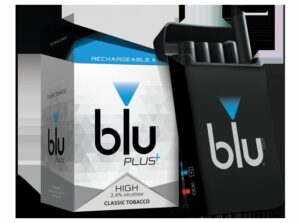
    The U.S. Food and Drug Administration has issued marketing denial orders (MDOs) to Shenzhen Youme Information Technology Co. Ltd. for two Suorin brand e-cigarette products. It also issued Fontem US, LLC MDOs for its Blu PLUS+ brand e-cigarette products.

    “Thorough scientific review of tobacco products applications is a key pillar of FDA’s comprehensive regulatory approach,” said Brian King, director of FDA’s Center for Tobacco Products (CTP). “It is the applicant’s responsibility to ensure that sufficient scientific evidence is included in an application to meet the necessary public health standard required by law. In these cases, such evidence was lacking.”

    The companies must not market or distribute these products in the United States or they risk FDA enforcement action. The companies may submit new applications for the products that are subject to these MDOs, according to an agency press release.

    The FDA denied Suorin Air refillable vaporizers in various colors and an empty refillable cartridge. The FDA stated that Suorin Air’s empty cartridges would allow consumers to fill the cartridge with an e-liquid purchased separately.

    “The applications submitted by Shenzhen Youme Information Technology Co. Ltd. lacked sufficient evidence regarding abuse liability, which is the ability of a tobacco product to promote continued use and the development of addiction and dependence,” the release states.

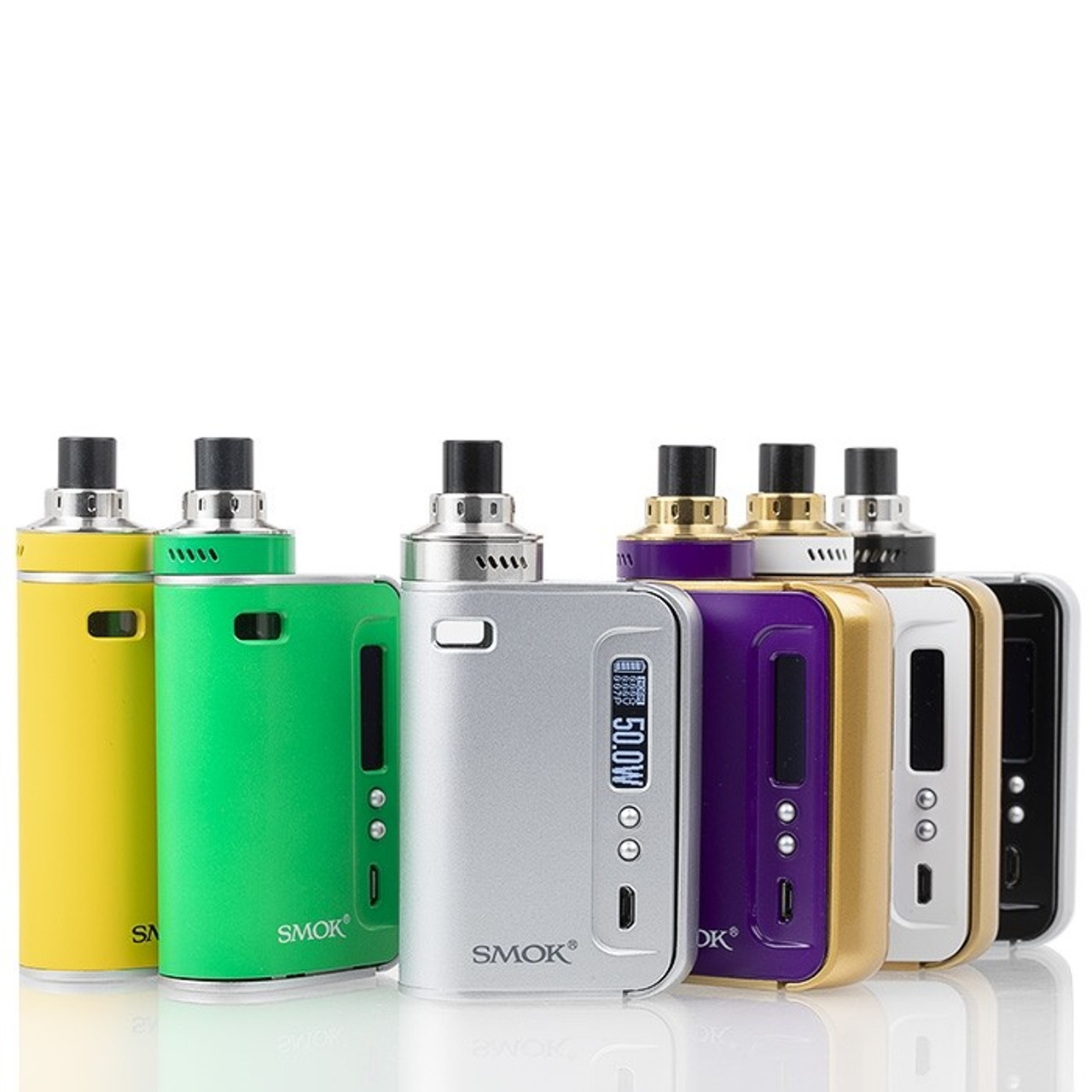
    SMOK recently had 22 products denied, including devices, pods, atomizers, and cartridges. It was the first time the agency has denied strictly hardware products from one company en mass. The products were denied because they were submitted without a specific e-liquid to be used with the devices, according to the FDA. 

    The denied Blu PLUS+ products include a battery and several prefilled e-liquid pods:   

    • blu PLUS+ Battery  
    • blu PLUS+ Carolina Bold 2.0%  
    • blu PLUS+ Classic Tobacco 1.2%  
    • blu PLUS+ Classic Tobacco 2.4%  
    • blu PLUS+ Gold Leaf 1.2%  
    • blu PLUS+ Gold Leaf 2.4%  
    • blu PLUS+ Menthol 1.2%  
    • blu PLUS+ Menthol 2.4%

    “Among other deficiencies in their applications, Fontem US, LLC failed to include sufficient ingredient information, harmful and potentially harmful constituent (HPHC) yield quantities, and abuse liability information.,” the FDA stated. “In addition, the applicant did not provide sufficient evidence demonstrating that the flavored new products have a potential to benefit adult smokers, in terms of complete switching or significant cigarette use reduction, that would outweigh the risk to youth.
    The FDA also issued MDOs for additional blu PLUS+ products not listed above. The regulatory only publicly names products that the FDA or the manufacturer has confirmed to be currently marketed to avoid the release of confidential commercial information.

  • U.S. FDA Issues MDOs for SMOK

    U.S. FDA Issues MDOs for SMOK

    The U.S. Food and Drug Administration issued marketing denial orders (MDOs) to Shenzhen IVPS Technology Co., Ltd for 22 SMOK vaping hardware products.

    The denied products include devices, pods, atomizers, and cartridges. It’s the first time the agency has denied strictly hardware products from one company en mass.

    The products were denied because they were submitted without a specific e-liquid to be used with the devices, according to the FDA. “The denied SMOK e-cigarette products are not sold with an e-liquid. A consumer instead adds their separately purchased e-liquid into the device,” the agency wrote. “Therefore, these SMOK products have the potential to be used with any e-liquid on the market and available to the consumer, which could include tobacco-flavored and non-tobacco-flavored e-liquids.”

    The products receiving MDOs include:

    • SMOK OSUB ONE Device
    • SMOK OSUB ONE RPM Cartridge
    • SMOK RPM DC 0.8 Ω MTL Atomizer
    • SMOK OSUB ONE RPM Cartridge 3 Pack
    • SMOK RPM DC 0.8 Ω MTL Atomizer 5 Pack
    • SMOK Nfix Device
    • Nfix DC 0.8 Ω MTL Pod
    • SMOK POZZ Device
    • SMOK POZZ DC 0.8 Ω Pod
    • SMOK RPM 40 Device
    • SMOK RPM Empty Standard Cartridge
    • SMOK RPM Empty Nord Cartridge
    • SMOK RPM Mesh 0.4 Ω Atomizer
    • SMOK Nord DC 0.8 Ω MTL Atomizer
    • SMOK SCAR-P3 Device
    • SMOK SCAR-P3 Empty RPM 2 Cartridge
    • SMOK SCAR-P3 Empty RPM Cartridge
    • SMOK PRM 2 Mesh 0.16 Ω Atomizer
    • SMOK RPM Mesh 0.4 Ω Atomizer
    • SMOK Nord 2 Device
    • SMOK Nord 2 RPM Cartridge
    • SMOK Nord 2 Nord Cartridge

    After reviewing the company’s PMTAs, the FDA determined that the applications lacked sufficient evidence to demonstrate that permitting the marketing of the products would be appropriate for the protection of public health, which is the standard legally required by the 2009 Family Smoking Prevention and Tobacco Control Act. More specifically, the applicant failed to provide sufficient data to characterize constituent delivery, product stability, and product abuse liability.

    “Science is a cornerstone of FDA’s tobacco product review process, and CTP remains committed to evaluating applications based on a public health standard that considers the risks and benefits of the tobacco product to the population as a whole,” said Brian King, director of FDA’s Center for Tobacco Products. “It is the applicant’s responsibility to provide sufficient scientific evidence to demonstrate that marketing a new tobacco product is appropriate for the protection of the public health. In this case, the applicant failed to provide this evidence.”

  • Attorneys General Urge Menthol Ban

    Attorneys General Urge Menthol Ban

    Credit: Jet City Image

    A coalition of 21 state attorneys general submitted a letter to the White House Office of Management and Budget urging the Biden administration to complete its review and swiftly implement proposed bans on menthol cigarettes and flavored cigars.

    “The proposed FDA rules, which are supported by ample evidence, have been long overdue,” said California Attorney General Rob Bonta in a press release. “In today’s letter, the coalition specifically highlights calls for action by civil rights and public health groups to remove menthol tobacco products from the marketplace to protect public health and address the systemic and disproportionate impact of these products on minority communities and other vulnerable populations, including young people.”

    Bonta said tobacco companies have intentionally targeted specific communities across the nation, particularly communities of color, which has contributed to significant health disparities and inequities.

    “The time to act is now,” said Bonta. “I urge the Biden Administration to finally halt the sale of these flavored tobacco products, which will lay the groundwork to reverse decades of disparities in tobacco use and save lives.” 

    In the letter, the multistate coalition urges the Biden Administration to finalize its review of the U.S. Food and Drug Administration’s proposed rules without delay.

    “As state and territorial chief legal officers, the attorneys general address unfounded claims that the proposed menthol ban will increase illicit trade or criminalize the individual purchase, possession, or use of menthol cigarettes and flavored cigars,” the letter states. “The coalition argues that the FDA’s proposed rules are critical steps for advancing health equity and protecting public health. Moreover, banning menthol cigarettes and flavored cigars will bring the country closer to achieving the Cancer Moonshot, President Biden’s historic push “to end cancer as we know it.”

    Bonta co-leads the attorneys general of Arizona, Connecticut, Hawaii, Illinois, Maine, Maryland, Massachusetts, Michigan, Minnesota, Nevada, New Mexico, New York, North Carolina, North Mariana Islands, Oregon, Pennsylvania, Puerto Rico, Rhode Island, South Dakota, and District of Columbia.

    A copy of the letter can be found here.

  • Taxes had ‘No Impact’ on Singapore’s Vape Ban

    Taxes had ‘No Impact’ on Singapore’s Vape Ban

    The Singapore government said that the potential loss in revenue from tobacco tax was not a factor in its decision to ban the use of e-cigarettes in 2018.

    In his reply to a question by a Workers’ Party and Sengkang member of Parliament, Deputy Prime Minister Lawrence Wong, who is also the Minister for Finance, said, “The Government’s decision to ban the use of e-cigarettes in 2018 was based on public health considerations, to protect our population from the harms of these products. The potential loss in tobacco tax revenue from the reduced consumption of tobacco products was not a factor in this decision.”

    … our priority is to protect the health of our population and prevent e-cigarettes from causing harm to our people, especially to younger Singaporeans.”


    Lawrence Wong

    Wong added that if the government were to legalize and tax e-cigarettes “the challenges would be similar to those we encounter for cigarettes and other tobacco products today,” according to a Yahoo news report.

    “In any case, the government has no plans to change our current approach, as our priority is to protect the health of our population and prevent e-cigarettes from causing harm to our people, especially to younger Singaporeans,” he said.

  • Supermarkets Dodging Ban With Tobacco Shops

    Supermarkets Dodging Ban With Tobacco Shops

    Dutch supermarkets are opening specialist tobacco shops next to their food retail stores in anticipation of a tobacco sales ban set to come into force on July 1, reports Dutch News.

    Beginning in July, the Netherlands will prohibit supermarkets from selling cigarettes and rolling tobacco, but tobacconist shops can be opened without a license.

    TabakNee, an anti-tobacco group, is pushing for the introduction of licenses to sell tobacco.

    “There was a lot of demand,” said Rolf Hoogkamer, a Jumbo franchise owner who opened a specialist store next to his shop. “It is often older people who live in the flats near here and can’t walk far. They can now easily still pick up [their cigarettes] and that is a good thing.”

    “There is a 7.5 percent profit margin on each packet,” said Hoogkamer. The total tobacco product market reached €4.4 billion ($4.8 billion) in 2020, €2.4 billion of which came from supermarkets.

    “Some 7 percent of our turnover comes from tobacco, so you are talking about €700 million a year,” Jumbo chief executive Ton van Veen said.

    The outgoing government has raised taxes, bringing the price of a 20-pack of cigarettes to €10, banned advertising and introduced plain packaging. Tobacco sales will be restricted to specialist stores only by 2032.

    The government agreed to leave the issue of tobacco shop licensing to the next administration.

  • Oman Bans Shisha and Vaping Products

    Oman Bans Shisha and Vaping Products

    Credit: YTA

    The chairman of the Consumer Protection Authority states that a fine of up to OMR2,000 ($5,196) for multiple violations will be imposed on anyone who trades in e-cigarettes, shisha, and their accessories in the Sultanate of Oman.

    His Excellency Sulayem bin Ali Al-Hakmani issued Ministerial decision No. 756/2023 on Sunday, January 7, 2024, creating the ban, according to media reports.

    Article One stipulates that the circulation of e-cigarettes, shisha, and their accessories is prohibited.

    Article Two states that, “without prejudice to the penal penalties stipulated in the aforementioned Consumer Protection Law, an administrative fine not exceeding OMR1,000 shall be imposed on anyone who violates the provisions of this decision, and the fine shall be doubled in the event of a repeat violation.

    shisha hookah
    Credit: Helga Bragina

    “If this violation continues, an administrative fine of OMR 50 will be imposed for each day that the violation continues, provided that its total does not exceed OMR 2,000. The seized quantities of electronic cigarettes, shishas, ​​and their accessories will be destroyed in accordance with the controls in force at the Consumer Protection Authority.”

    The new bill also repealed an earlier Resolution (No. 698/2015), as well as any laws or rules that contravene the current resolution or conflict with its provisions.

    It also stipulates that the decision “shall be published in the Official Gazette, and shall be effective from the day following the date of its publication.”

  • Thailand Urged to Strengthen Enforcement

    Thailand Urged to Strengthen Enforcement

    Photo: kikujungboy

    Thailand should strengthen its monitoring and enforcement of e-cigarettes, according to World Health Organization representative Jos Vandelaer, reports The Nation.

    Speaking at the Thai Health Promotion Foundation on Dec. 18, Vanderlaer praised the kingdom’s decision to prohibit vaping in the country.

    However, because vaping is still widespread in Thailand, he believes the government must do a better job of enforcing the law.

    Vandelaer rejected the notion that e-cigarettes are an effective smoking cessation tool, as claimed by tobacco harm reduction activists. “Don’t get fooled,” he was quoted as saying. “There is as of now no evidence that the commercialization of e-cigarettes as consumer products has had a net benefit for public health.”

    According to a recent study by the Faculty of Medicine Ramathibodi Hospital, 8.8 percent of Thais aged 13 to 15 used e-cigarettes in 2021, up from 3.3 percent in 2015.

    Vanderlaer’s comments come in the wake of a WHO statement urging action to prevent the uptake of e-cigarettes to counter nicotine addiction. On the same day, the global health body released a technical note with detailed information on the evidence and factors underpinning its guidance.

  • CTP Releases Strategic Plan

    CTP Releases Strategic Plan

    Image: Tada Images

    On Dec. 18, Brian King, director of the U.S. Food and Drug Administration Center for Tobacco Products, published a statement about the release of the center’s comprehensive strategic plan. The new strategic plan outlines CTP’s programmatic and workforce initiatives for the next five years.

    The CTP’s strategic plan defines five goals, 10 outcomes and several corresponding objectives. As outlined in the goals and outcomes in the plan, the center is collectively committed to issuing impactful regulations, using robust science to inform application reviews, pursuing timely and impactful compliance and enforcement strategies, and educating the public about the risks of tobacco products.

    King said the CTP will also continue to invest in its staff by advancing operational enhancements and supporting the further development of its workforce.

    In conjunction with the strategic plan, the CTP also published the center’s policy agenda of rules and guidance documents that are in development or planned for development. According to the agency, this policy agenda will create a more efficient approach to meeting the CTP’s strategic plan. The agenda will be updated annually.