The global authentication and brand protection market will reach $6.68 billion by 2030 from $3.34 billion in 2022, reflecting a compound annual growth rate (CAGR) of 9 percent, according to a new report from The Insight Partners.
The anticipated growth is driven by the emergence of new counterfeit and product-forging mechanisms, which has increased demand for stronger brand security measures.
In addition, the rise of omnichannel retailing systems benefits the authentication and brand protection market. These retailing systems feature efficient product allocation, better inventory management and real-time inventory visibility.
North America dominated the authentication and brand protection market in 2022 and is anticipated to have significant growth in the forecasted period. The report’s authors expect the Asia-Pacific market to grow at the fastest CAGR during the projected period.
The authentication and brand protection market is segmented into overt, covert, forensics and digital. In 2022, the covert segment held a larger share of the global authentication and brand protection market. Covert authentication and brand protection is a safety marker that is invisible to the naked eye, often printed on primary and secondary packaging with security inks. Additional forensic safety layers are also embedded in the materials and can be confirmed by more extensive lab analysis. This extra security layer proves to be very difficult for the counterfeiter but is easily verified by field inspectors.
Based on technology, the market is segmented into security printing and tamper-proof labels, security inks and coatings, OVDs and holograms, unique codes, bar codes, RFID, authentication ICs, and others. The bar codes segment held the largest share in the authentication and brand protection market in 2022. In addition, the authentication ICs segment is expected to register the highest CAGR during 2022–2030. Authentication ICs are typically mounted on a printed circuit board. They don’t have any contactless capabilities yet, but they are developing. Inclusion of contactless will add to the growth potential of this market as it will allow the use of authentication ICs in more (nonelectronic) applications and products and form factors such as tags and stickers.
The government of Malta is working to make tobacco companies responsible for the cost of disposing cigarette butts, in line with the European Union’s Single-Use Plastics (SUP) Directive, reports Malta Today.
Cigarette butts account for 22 percent of waste collected from European beaches. A survey conducted by the environment ministry in 2021 found that 11 percent of smokers admit to throwing cigarette butts on the floor.
Nearly all filters in circulation today are made of plastic fibers that won’t break down organically. Studies show that it may take up to 10 years for a cigarette butt to decompose.
Malta’s draft legal notice introduces a framework compelling tobacco producers to cover the costs associated with clean-up efforts, waste receptacles and public awareness campaigns. The industry will also be required to fund the waste management of their products through a producer responsibility organization (PRO). Until a PRO is set up, Malta’s Environment and Resources Authority will allocate the costs according to tobacco companies’ market shares.
The R Street Institute, a U.S. think tank promoting free markets and limited government, has published the first of three papers on tobacco issues and policy. Authored by Resident Senior Fellow Jeffrey Smith, the first installment addresses the health risks of smoking through the lens of preserving individual liberty.
According to the R Street Institute, new reduced-risk products, such as e-cigarettes, oral nicotine and heat-not-burn products, offer smokers an unprecedented opportunity to reduce their health risks by transitioning to less harmful methods of nicotine consumption.
However, the U.S. regulatory environment makes it nearly impossible for such products to enter the market. In addition, consumers must contend with considerable volumes of misinformation. As a result, too many Americans continue to die and suffer from smoking-related diseases.
The R Street Institute urges industry stakeholders, regulatory bodies and public health experts to work together—instead of in opposition—to reduce smoking-related death rates and provide smokers with safer options.
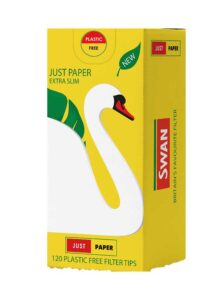
Republic Technologies has launched Just Paper plastic-free filter tips in the United Kingdom, reports Talking Retail.
According to Republic Technologies, Just Paper filters provide consumers with an experience that is similar to that of traditional cellulose acetate filters but with a lower environmental impact.
“The Just Paper range represents a breakthrough in the development of filter tips with a significantly reduced impact on the environment,” said Gavin Anderson, sales and marketing director at Republic Technologies (U.K.).
“We know that there’s more to do on this journey, but innovation of this kind is a major step for the brand and category. We’re confident that it will attract new shoppers to Swan, strengthening its position as the brand of choice for retailers and roll-your-own shoppers.”
The Center of Excellence for the acceleration of Harm Reduction (CoEHAR) at the University of Catania, Italy, signed a letter of intent with the Universitas Padjadjaran to create a new CoEHAR branch in Indonesia. The branch will serve as a regional center for research, outreach and education on smoking harm reduction in the Asia-Pacific region.
According to statistics from the World Health Organization and other groups, Indonesia had nearly 80 million smokers aged 15 and older in 2022. This places the country third in the world in terms of the number of tobacco users. Conventional cigarette smoking remains the second-highest risk factor in Indonesia.
“The research conducted by the CoEHAR team at the University of Catania is changing the world, contributing to the revolution of policies aimed at protecting public health in many countries,” said CoEHAR founder Riccardo Polosa in a statement. “Supporting the CoEHAR efforts in Indonesia is a great source of pride for us but also a promise of further commitment to change the fate of a country plagued by unhealthy habits and lifestyles.”
“Low[-income] and middle-income countries in the Asian region represent a different and multifaceted field of investigation and activity,” said CoEHAR Director Giovanni Li Volti. “Our goal is to enhance research activities by developing joint projects that can fully utilize both the human and technological resources of all the universities and institutions involved, which will contribute to change and the exchange of knowledge and skills.”
Previously, the universities had already agreed to promote joint research, mobility and training in the field of smoking harm reduction.
The end of Chevron deference could have ripple effects across the nicotine industry.
By Timothy S. Donahue
U.S. courts will no longer need to “humbly respect” how government agencies interpret the law. The end of Chevron deference means unelected officials will no longer have the leeway to subjectively decide what Congress intends when it passes regulatory legislation.
The court’s ruling in Loper Bright Enterprises v. Raimondo and the related case Relentless v. Department of Commerce will likely have far-reaching impacts on nearly every action government agencies take. For the nicotine industry, it could change how courts view the U.S. Food and Drug Administration’s premarket tobacco product application (PMTA) process. It could also impact the agency’s efforts to regulate menthol and lower the levels of allowable nicotine in combustible cigarettes.
“For far too long, unelected bureaucrats at the FDA have been making up the law to suit their ulterior agenda and … the Supreme Court has thankfully put a stop to it once and for all,” said Allison Boughner, vice president of the American Vapor Manufacturers Association, in a statement. “No longer will it be good enough for [prohibitionists] in Congress to write vague, Crayola language and then connive behind closed doors with FDA to impose arbitrary policies on the American public that could never withstand the light of day. [This] ruling is a stirring rebuke of FDA and, we hope, with more soon to follow in pending cases.”
In declaring the doctrine’s demise, Chief Justice John Roberts wrote that agencies “have no special competence” in resolving statutory ambiguities—but courts do.
“Chevron is overruled,” wrote Justice Roberts in the Loper Bright decision. “Courts must exercise their independent judgment in deciding whether an agency has acted within its statutory authority, as the APA [Administrative Procedure Act] requires. Careful attention to the judgment of the Executive Branch may help inform that inquiry.
“And when a particular statute delegates authority to an agency consistent with constitutional limits, courts must respect the delegation while ensuring that the agency acts within it. But courts need not and under the APA may not defer to an agency interpretation of the law simply because a statute is ambiguous.”
Agustin E. Rodriguez, a partner with Troutman Pepper, explained that “under the doctrine of Chevron deference, courts would defer to a federal agency’s interpretation of an ambiguous statute if the agency was charged with administering the statute in question and its interpretation was reasonable. However, the end of Chevron deference may alter that traditional thinking.”
Bryan Haynes, also a partner at Troutman Pepper, added, “The Supreme Court’s decision overruling Chevron in the Loper Bright Enterprises v. Raimondo case could affect federal courts’ overall outlook on agency interpretations, possibly making courts hesitant to defer to agencies as a general practice.”
The decision could potentially result in alterations to the FDA’s methods of regulating vaping products. The Supreme Court of the United States (SCOTUS) has agreed to hear its first-ever vaping case, Wages and White Lion Investments v. U.S. FDA, which is compelling because deferring to Chevron has been the standard for lower courts when deciding regulatory cases brought by manufacturers of nicotine products (the end of Chevron deference isn’t likely to directly impact the White Lion case, according to its attorneys).
Robert Burton, an expert with more than 11 years of experience in the U.S. vaping industry and current group scientific and regulatory director for the U.K.-based vaping company Plxsur, said another general concern is that now, federal agencies may have to put more resources into the additional legal challenges that they will likely face and divert staff away from review/approval processes.
“Agencies, such as FDA, may also have to look to improve their primary knowledge in those ‘gray areas’ to be able to demonstrate they actually have the knowledge and expertise rather than it being ‘assumed’ or deferred by judges based upon Chevron,” Burton explained. “I also can’t see anything changing soon; if anything, this will create a further backlog of court cases and delays in regulatory decisions based upon the potential for an agency to be challenged legally.”
How it started
The Chevron doctrine, based on the 1984 decision in Chevron v. Natural Resources Defense Council, held that courts should defer to the interpretations of “expert” federal agencies regarding ambiguous laws they are required to implement, as long as the agency interpretations are reasonable.
In many cases, what would be considered “reasonable” was also left to government agencies to decide because nonelected bureaucrats were often considered “experts” even though they had little to no experience in the industries they were regulating.
For 40 years, unelected officials were given latitude to decide on their own what Congress had intended when it wrote unclear laws—even if there were other sufficient interpretations that the courts could have considered. According to the New York Times, Chevron deference was applied in 70 Supreme Court decisions and 17,000 lower-court rulings during those years.
The plea to overturn the Chevron doctrine came to the court in two cases challenging a rule issued by the National Marine Fisheries Service (NMFS) that requires the herring industry to bear the costs of observers on fishing boats. Applying Chevron, both the U.S. Court of Appeals for the District of Columbia Circuit and the U.S. Court of Appeals for the 1st Circuit upheld the rule, finding it to be a reasonable interpretation of federal law.
The fishing companies brought their case to the Supreme Court, seeking the justices’ input on both the rule in question and the overruling of the Chevron doctrine. Roman Martinez, speaking on behalf of a group of fishing vessels, informed the justices that the Chevron doctrine undermines the courts’ responsibility to interpret the law and violates the federal law that governs administrative agencies, which calls for courts to independently review legal questions.
Under the Chevron doctrine, he observed, even if all nine Supreme Court justices agree that the fishing vessels’ interpretation of federal fishing law is better than the NMFS’ interpretation, they would still be required to defer to the agency’s interpretation as long as it was reasonable. Such a result, Martinez concluded, is “not consistent with the rule of law.”
Chris Howard, executive vice president of external affairs and new product compliance for Swisher, parent to the vaping company E-Alternative Solutions, welcomed the ruling, saying that federal agencies have had too much power for decades.
“That ended with the Supreme Court’s decision overturning the longstanding Chevron doctrine,” said Howard. “The decision marks a significant shift in the judicial landscape, correcting the balance of power between federal agencies and the judiciary. It fundamentally alters how courts rule on agency statutory interpretation. As the majority states, courts will no longer be restrained by the need to provide deference.
“Instead, ‘Courts must exercise their independent judgment in deciding whether an agency has acted within its statutory authority, as the APA requires.’ This transformation will likely lead to significantly less regulatory flexibility and increased judicial scrutiny. The implications of this decision will resonate across industries, including the tobacco industry, influencing regulatory practices and shaping the future of administrative law. Regulatory overreach will become the exception as opposed to the norm and enable courts to fulfill their duty to interpret the law.”
Credit: Sean Pavone Photo
Immediate uproar
The end of Chevron deference is extremely far-reaching, with other industries, such as healthcare, likely to review previous decisions that have gone against them. Justice Elena Kagan, in her dissent, asserted that government regulators are best positioned to tackle highly technical subjects.
“This court has long understood Chevron deference to reflect what Congress would want, and so to be rooted in a presumption of legislative intent,” Kagan wrote. “Congress knows that it does not—in fact cannot—write perfectly complete regulatory statutes. It knows that those statutes will inevitably contain ambiguities that some other actor will have to resolve and gaps that some other actor will have to fill.
“Today, the court flips the script: It is now ‘the courts (rather than the agency)’ that will wield power when Congress has left an area of interpretive discretion. A rule of judicial humility gives way to a rule of judicial hubris. In recent years, this court has too often taken for itself decision-making authority Congress assigned to agencies. The court has substituted its own judgment on workplace health for that of the Occupational Safety and Health Administration, its own judgment on climate change for that of the Environmental Protection Agency and its own judgment on student loans for that of the Department of Education.
“In one fell swoop, the majority today gives itself exclusive power over every open issue—no matter how expertise-driven or policy-laden—involving the meaning of regulatory law. As if it did not have enough on its plate, the majority turns itself into the country’s administrative czar. It defends that move as one (suddenly) required by the (nearly 80-year-old) Administrative Procedure Act. But the act makes no such demand. Today’s decision is not one Congress directed. It is entirely the majority’s choice. And the majority cannot destroy one doctrine of judicial humility without making a laughingstock of a second.”
Several national healthcare groups made a joint statement expressing that Chevron deference protected the legal stability of public health programs such as Medicare and Medicaid. The groups claim that Chevron ensured that laws passed by Congress were interpreted and implemented by expert federal agencies such as the Centers for Medicare and Medicaid Services.
“As our amicus brief noted, large health programs such as Medicaid and Medicare, as well as issues related to the Food, Drug and Cosmetic Act, are extremely complex, so it is key that decisions about how to interpret and implement relevant laws are made by experts at government agencies,” the statement reads. “Yet [this] majority opinion explicitly ends the use of this sensible doctrine.
“As leading organizations that work on behalf of people across the country who face serious, acute and chronic illnesses and many people who lack access to quality and affordable healthcare, we will continue to work to ensure that healthcare laws are implemented in ways that benefit public health.”
In its response to the Chevron ruling, the Public Health Law Center at the Mitchell Hamline School of Law stated that the Loper Bright ruling will “undoubtedly impact” the field of administrative law and implicate regulations that, in addition to promoting public health and safety, have served to protect consumers, workers, civil rights and the environment.
“Legal experts differ on the degree to which Loper Bright may wreak havoc on the federal administrative state; however, the forceful dissent written by Justice Kagan in this case and its companion case, Relentless v. Department of Commerce, should not be ignored. The dissent expressed grave concern that these decisions ‘will … cause a massive shock to the legal system, cast doubt on many settled constructions of statutes and threaten the interests of many parties who have relied on them for years.’
“In the absence of Chevron deference, the tobacco industry will doubtless feel emboldened to dispute any regulatory actions taken on its products. This includes e-cigarette manufacturers who will be eager for courts to undo FDA-issued premarket tobacco product application denial orders for many thousands of vape products.”
The Biden administration called the Chevron decision “yet another deeply troubling decision that takes our country backward,” adding that President Biden’s legal team would work with federal agencies to do “everything we can to continue to deploy the extraordinary expertise of the federal workforce.”
Reshma Ramachandran, a health policy expert and assistant professor at the Yale School of Medicine, said, “This term has been disastrous for public health in many ways.”
In the vaping industry, however, Tony Abboud, executive director of the Vapor Technology Association (VTA), said that the decision clearly bolsters what the VTA has been saying for years: the FDA and, specifically, the Center for Tobacco Products overstepped their authority when they chose to implement a de facto ban on flavored e-cigarettes in their deeply flawed implementation of the PMTA process.
“To be clear, it is [the] FDA’s responsibility under the law to create a regulation that clearly addresses the statutory standard of what is ‘appropriate for the protection of public health’ since the Tobacco Control Act is ambiguous on how that determination should be made. However, there is no question that the FDA violated the Administrative Procedure Act by implementing what the 5th Circuit Court of Appeals called ‘a de facto ban on flavored e-cigarettes’ through its shifty implementation of the PMTA regulation by imposing new requirements on products after applications were already filed, ultimately ensuring their application’s demise.
“The Supreme Court’s decision elevates the importance of the Reagan-Udall Foundation’s findings after being convened at the request of the FDA commissioner, which specifically and clearly criticized the FDA’s Center for Tobacco Products for failing to inform companies what must be provided under the regulation to demonstrate APPH [appropriate for the protection of the public health] and, as importantly, for failing to inform the public on how FDA is applying this standard.”
Beyond nicotine
The cannabis industry also will likely be impacted by the Chevron ruling. Asheville, NC-based attorney Rod Kight, a global resource and expert in cannabis law, said that the recent ruling by the SCOTUS that Chevron deference is dead is welcome news to the cannabis industry. With respect to the hemp sector, the death of Chevron means that unofficial positions taken about various cannabinoids and processes to produce hemp products by both the U.S. Drug Enforcement Agency (DEA) and the FDA on their respective websites and in letters to stakeholders do not hold any weight, at least not with the courts.
“In practical terms, this means that judges may not defer to federal agency positions and interpretations and, instead, must weigh their positions relative to the strength of the legal positions and interpretations put forth by the hemp industry,” explains Kight. “For instance, with respect to tetrahydrocannabinolic acid (THCA), the DEA has stated in two letters during the past year that ‘cannabis-derived THCA does not meet the definition of hemp under the CSA because upon conversion for identification purposes as required by Congress, it is equivalent to delta-9 THC.’
“As I have discussed in several blog posts and interviews, this is partially incorrect and is not exactly what ‘Congress required.’ Rather, Congress requires a post-decarboxylation test for hemp production (i.e., cultivation) but not for harvested hemp or hemp products.”
In the past, this type of unofficial guidance may have warranted a court’s deference to the DEA, even if an opposing position by a hemp industry participant was stronger and more well articulated. However, Kight said that, in the post-Chevron world, the DEA’s position will not hold any more weight with the court than a counter-position by an opposing litigant.
“The same thing applies to any number of other issues, from vapes to synthetic cannabinoids,” said Kight. “Hopefully, this exciting legal development will curb the appetite for DEA and FDA to take strong positions that are often unwarranted while helping the hemp industry to carve out favorable judicial rulings based on the best and most well-articulated positions.”
Abboud said the SCOTUS’ decision in Loper exposes the FDA’s improper regulation of flavored e-cigarettes. While the vaping cases that have gone before the SCOTUS were not explicitly decided on Chevron deference, it is hard to believe that the court will not look skeptically on the FDA’s prior “regulatory shenanigans and post-hoc justifications” laid bare by the 5th Circuit Court of Appeals in the White Lion case.
“However, unlike the complete overturning of Chevron, it is likely that the court would issue a more limited ruling in the vape cases before it. That said, the real power of Loper is that it provides a template for new litigation against the FDA that is not limited to individual application decisions,” said Abboud. “This new regulatory challenge would reveal the full story of FDA’s tortured and disingenuous implementation of the ambiguous PMTA statutory provisions to ban flavored vaping products and possibly, as a result, spell the demise of the PMTA regulation.
“VTA is once again calling for the FDA to immediately suspend any further denials based on its existing process and instead create a clear and streamlined tobacco product standard that will allow independent companies of all sizes to get less harmful nicotine alternatives on the market as it is required to do under the law.”
Timothy Donahue is the assistant editor
of Tobacco Reporter. Since joining our team in
January 2013, he has become not only an
expert on the traditional tobacco business but
also a well-respected voice in the rapidly developing
vapor industry. Tim spends much of his time on the
road, attending conferences and interviewing industry representatives.
His networking skills, work ethic and quick mind
are valuable assets to our diverse audience.
Irish Health Minister Stephen Donnelly proposed bans on nontobacco vape flavors and advertising in nonspecialized shops, reports The Irish Times. He tabled the suggestions as Ireland’s cabinet approved restrictions on disposable vapes on Sept. 9.
Donnelly said the proposals are aimed at protecting children. He believes companies are “very cynically” targeting children. The proposed legislation, he said, would see just one flavor, tobacco, being sold.
“We live in a country where around 13 percent of people between the ages of 12 and 17 have vaped in the last 30 days,” said Taoiseach Simon Harris, who described vaping as “the revenge of the tobacco industry.”
Minister of State for Public Health Colm Burke said the regulations are necessary because “many people who used vaping products subsequently moved on to smoking.”
Joel J. Sherman, former president and CEO of Nat Sherman, passed away Sept. 9 in New Jersey surrounded by his family.
Born on August 2, 1939, Joel Sherman spent decades shaping and elevating the family business, leaving behind a lasting legacy in the world of premium cigars and fine tobacco.
At the age of 10, Joel Sherman worked in the original Nat Sherman store on Broadway in New York City. Nat Sherman later relocated to 42nd Street near Grand Central Terminal, where it became a symbol of sophistication and high-quality cigars.
In 1990, after the passing of his father, Nat Sherman, Joel Sherman returned to lead the family business. Under his leadership, Nat Sherman expanded into a prestigious name in the premium cigar world, developing its own lines of cigars and cigarettes.
In 2017, Nat Sherman was acquired by Altria Group. Although the iconic Nat Sherman store closed in 2020, the cigar blends live on under the Ferio Tego brand, now led by Michael Herklots, who previously served as the vice president of Nat Sherman International and was a longtime associate to Joel Sherman and his family.
“Mr. Sherman was an industry icon,” Herklots told the Premium Cigar Association. “He was beloved by everyone who knew him and certainly those who had the good fortune of working for him. His moral and ethical compass was always guiding the business and above all, he led with love.”
Throughout his career, Joel Sherman received many industry honors and awards, including TMA’s “Giant of the Industry” award in 2014. He served as director of Tobacco Reporter’s parent organization, the Tobacco Merchants Association, and was an active participant in, and board member of, several other industry associations.
Dutch lawmakers are growing concerned about dwindling tax receipts as legal tobacco consumption plummets in the wake of higher tobacco duties, reports DutchNews.
In April, the price of cigarettes increased to more than €11 ($12.14) per pack, a figure that includes €7.80 in taxes.
According to the finance ministry, tobacco sales fell 40 percent in June and 30 percent in July and August, causing the government to miss its revenue targets.
“The government’s forecast of a €400 million increase in taxes threatens to become a loss of €100 million,” tobacco retail group NSO said.
Figures from the regional statistics office suggest some 35 percent of tobacco products consumed in the Netherlands are not bought there. Government research last year showed 25 percent of discarded cigarettes packs originated abroad.
Research by the public health institute RIVM also indicates that smokers buy around 10 percent of their tobacco abroad, either importing it themselves or asking others to do so.
Members of the pro-countryside party BBB called on the finance minister to confirm whether the tax figures are accurate. “If that is the case, we have to reverse the tax increase,” said Member of Parliament Henk Vermeer.
In July, customs officials seized 6 million cigarettes and 4.5 tons of rolling tobacco at Rotterdam port. If seized product had been sold officially, it would have generated €3.9 million in tax income, officials said.
Marlboro remains the world’s most valuable tobacco brand, but smokeless alternatives are gaining ground.
Contributed
The total value of the world’s top 10 most valuable tobacco brands has decreased by 6 percent, with eight out of 10 brands experiencing a decline in brand value this year, according to the latest ranking by Brand Finance, a leading brand valuation consultancy. The ranking reveals a significant shift in the industry toward smokeless alternatives, driven by changing consumer preferences and increasing regulatory pressures. Despite these changes, traditional combustible tobacco brands remain the most valuable, supported by loyal customer bases and effective pricing strategies.
IQOS (brand value up 8 percent to $3.5 billion) is the fastest-growing tobacco brand, driven by rising revenue from smoke-free products. Philip Morris International reported smoke-free products reached nearly 40 percent of total net revenues in the fourth quarter of 2023. This was driven by the continued growth of IQOS, which has now surpassed Marlboro in net revenues, solidifying its position as the leading premium nicotine brand less than 10 years after its launch.
Despite a 6 percent drop in brand value to $32.6 billion, Marlboro retains its position as the world’s most valuable tobacco brand for the 10th consecutive year. It leads the sector by a significant margin, with a brand value more than five times that of L&M, which holds the second spot.
Altria Group, which owns Marlboro in the United States, and PMI, which owns the brand elsewhere, have both faced declining revenue from combustible products. Altria has struggled with lower shipment volumes and increased promotional investments, including a recent $0.17 per pack price increase on Marlboro and other brands in the U.S. Similarly, PMI has reported a drop in revenue from combustible tobacco. Nevertheless, Marlboro retains its top position due to its loyal customer base and strong promotional strategies.
L&M (brand value $6.2 billion) has climbed to second in the ranking, despite recording a 2 percent decline in brand value. It has overtaken PallMall, which now sits in third following a 9 percent loss in brand value to $5.9 billion. L&M’s brand value has taken a hit as shipment volumes have declined. L&M is the sector’s strongest brand with a Brand Strength Index score of 77 out of 100.
Richard Haigh
“While Marlboro continues to lead as the most valuable tobacco brand for the 10th consecutive year, the industry is undergoing significant transformation,” said Richard Haigh, global managing director at Brand Finance.
“The rise of smokeless alternatives like IQOS highlights shifting consumer preferences and changing market dynamics. Earlier this year, BAT’s announcement of a $31.5 billion impairment on the value of some of its U.S. cigarette brands marked the first significant write-down in a major market.
“Acknowledging the reality that the market for traditional cigarettes is shrinking and taking action should be seen both as a bold and an important step in addressing an existential problem for the company. With eight out of the top 10 brands experiencing declines in value, tobacco giants must be brave in admitting market shifts and strategically planning their next moves to sustain global dominance and relevance.”
Chesterfield (brand value $3.1 billion) has maintained its brand value year-on-year and advanced one position to seventh place. The brand has seen a rise in shipment volume, with an 8 percent increase in the fourth quarter of 2022 and a 14 percent increase for the full year, which has contributed to its stable brand value this year.
The latest rankings highlight the dominance of U.S. tobacco brands, which make up a remarkable 92 percent of the total brand value in the ranking, totaling $61 billion. Only two brands in the ranking are from outside the U.S., the U.K.’s Rothmans (brand value down 8 percent to $2.9 billion) and Indonesia’s Sampoerna (brand value down 12 percent to $2.7 billion).