Category: Top News

  • New Zealand Urged to Rethink Disposables Ban

    New Zealand Urged to Rethink Disposables Ban

    Photo: Evgeniy Vershinin

    The Coalition of Asia Pacific Tobacco Harm Reduction Advocates (CAPHRA) is urging New Zealand to reconsider its proposed vaping regulations, which include a ban on closed systems, tighter limits on displays in retail shops and new flavor restrictions.

    “This amendment will make it more difficult for adults who smoke to access vaping products, potentially pushing them back to smoking,” said CAPHRA Executive Coordinator Nancy Loucas. “It’s a step backward in our journey toward a smoke-free New Zealand.”

    The CAPHRA submission highlights several concerns. According to the advocacy group, the ban disproportionately affects older adults and those with dexterity issues who rely on simpler closed systems. The proposed display restrictions, says CAPHRA, may deter smokers from switching to less harmful alternatives. Meanwhile, the focus on further display restrictions in retail shops ignores the real issue of social supply to youth, according to the organization, while flavor restrictions could hinder successful smoking cessation efforts.

    “Consumers have the right to make informed choices about their health. This amendment proposes to restrict consumer autonomy and may hinder harm reduction efforts,” said Loucas. 

    “Even the Ministry of Health suggested that the regulations, as they are, are fit for purpose, and the ASH Year 10 survey has shown that youth vaping has declined from the peak a couple of years ago.

    “CAPHRA calls for a more balanced approach, focusing on education and transparent risk communication. By highlighting the facts about vaping, who it is for and what it is, we can combat misinformation and support public health,” said Loucas.

  • Korea Urged to Regulate Vapes as Tobacco

    Korea Urged to Regulate Vapes as Tobacco

    Photo: Teo

    Health advocates are calling on South Korea to regulate e-cigarettes as tobacco products, reports the Maeil Business Newspaper.

    The current law does not classify vapes as cigarettes, which means they are exempt from many of the regulations that apply to tobacco products. For example, vaping companies do not have to print graphic health warnings on their products or charge their customers tobacco consumption tax.

    Article 2 of the Tobacco Business Act defines “cigarettes” as products suitable for smoking, sucking, inhaling, chewing or smelling.

    The calls for expanding the legal definition follow concern about the growth of unmanned e-cigarette stores in Seoul, which are said to have inadequate age-verification procedures.

    A survey by the Seoul metropolitan government revealed that the number of unmanned e-cigarette stores has quadrupled since April.

    According to data from the Korea Centers for Disease Control and Prevention, three out of 10 youth smokers started smoking e-cigarettes from 2019 to 2023. Six out of 10 teenagers who started with e-cigarettes are currently smoking regular cigarettes, the center said.

    Bills to regulate e-cigarettes were tabled in the 20th and 21st National Assembly but failed to cross the plenary session threshold in each instance.

  • Industry Groups Push Back on Plain Packaging

    Industry Groups Push Back on Plain Packaging

    Photo: Taco Tuinstra

    More than 20 industry organizations signed a joint statement against Indonesia’s plans to require plain packaging for tobacco and vaping products, reports The Jakarta Post. The signatories included groups representing manufacturers, tobacco and clove farmers, labor unions, traders/retailers, creative industries, broadcasters and advertisers.

    Franky Sibarani, vice chairman of the Indonesian employers’ association Apindo, noted that, given the significance of the tobacco business in Indonesia, the regulatory pressures were likely be felt in other sectors as well. The tobacco industry, he pointed out, supports millions of jobs, including farmers, workers, traders and retailers, along with professionals working in the creative industry.

    “Policymakers should be cautious in issuing regulations that could threaten prolonged contractions,” said Sibarani.

    Henry Najoan, chairman of the Indonesian kretek cigarette manufacturers association Gappri, emphasized that the tobacco industry is not just a business but a significant economic and cultural chain.

    “The proposal for plain packaging […] will have serious impacts, as it exacerbates already excessive policies and could lead to a contraction in state revenue and employment,” he said. “Therefore, we firmly reject this regulation.”

    Benny Wachjudi, chairman of the Indonesian white cigarette producers association Gaprindo, highlighted the tobacco industry’s contributions to the national economy. The industry, he said, accounts for up to 10 percent, or more than IDR200 trillion ($12.99 billion), of Indonesia’s annual excise duty collections. Plain packaging, Wachjudi warned, would boost the illicit cigarette trade.

    Kusnasi Mudi, secretary-general of the National Tobacco Farmers Association, noted that tobacco cultivation alone supports 2.5 million livelihoods in Indonesia. “Tobacco is one of the national strategic commodities, but our existence is continually suppressed,” he said. “We request government protection for the 2.5 million farmers who are also struggling for their livelihoods and facing various other issues.”

    Tutum Rahanta, chairman of the advisory council of the Indonesian Retailers and Shopping Center Tenants Association, said that the plain packaging proposals are impractical for all parties involved. “This regulation seriously undermines the tobacco industry at a time when the sector, from upstream to downstream, has adhered to previous regulations,” he said. “The government should focus on combating illegal cigarettes rather than interfering with legal cigarettes that comply with the law.”

    Fabianus Bernadi, chairman of the Indonesian outdoor media association AMLI, said the proposed legislation would significantly impact his members’ economic viability. A recent survey suggested that in some regions, the organization’s companies derived up to 79 percent of their business from tobacco products.

  • Price Hikes Fuel Smuggling

    Price Hikes Fuel Smuggling

    Photo: igorkol_ter

    Recent tobacco price hikes in the Netherlands have prompted smokers to source their tobacco abroad, reports Turkiye Today.

    On April 1, the Dutch government increased a special consumption tax, causing the price of a 20-stick pack of cigarettes to rise by €1 ($1.11) to more than €11. By comparison, a similar pack sells for €8.93 in Germany and €6.50 in Belgium. In Luxembourg, which is among the cheapest countries for smokers in western Europe, a pack of 20 cigarettes sells for €5.07.

    Many Dutch smokers have also started sourcing their cigarettes in Turkiye, where tobacco products are frequently offered for less than half of the price in the Netherlands.

    The Netherlands permits travelers to import a maximum of 800 cigarettes from EU countries. For cigarettes obtained outside of non-EU countries such as Turkiye, the duty-free limit is 200 cigarettes.

    Earlier this month, Dutch lawmakers expressed concern about dwindling tax receipts as legal tobacco consumption plummets in the wake of the higher tobacco duties.

  • New Tobacco Rules Worse Than Covid: Critics

    New Tobacco Rules Worse Than Covid: Critics

    Photo: Taco Tuinstra

    Indonesia’s planned new tobacco restrictions may cause greater economic damage than the coronavirus pandemic, critics warned.

    Franky Sibarani, deputy head of the Indonesian Employers Association, said Government Regulation No. 28 of 2024 on Health and the Ministerial Regulation on Tobacco Products and Electronic Cigarette Bill could have a bigger impact on workers than Covid-19.

    “Our incomes did slow down during the Covid-19 pandemic, but the companies could still overcome the situation,” he was quoted as saying by Tempo. “There were layoffs, but this time [the government] will halt the industry.”

    The new legislation calls for the elimination of tobacco brand identities through the standardization of tobacco packaging, the implementation of stricter tar and nicotine limits, and new geographic restrictions on where tobacco can be sold, among other measures.

    Sudarto of the Federation of Cigarette, Tobacco, Food and Beverage Workers—All-Indonesian Workers Union noted that the tobacco industry employs around 6 million people in Indonesia. Even if the regulation targets the distribution of tobacco products, he argued, any reduced sales would still impact workers and tobacco farmers.  

    “We are not anti-regulation, but they must not interfere with job security and income security as part of protected worker’s rights,” Sudarto said.

  • Poland Sets Export Record

    Poland Sets Export Record

    Photo: JTI

    At the end of 2023, the net value of Polish tobacco exports (exports minus imports) reached $3.97 billion, the highest since recordkeeping began, according to the Ministry of Economic Development and Technology.

    Poland was the world’s largest importer and second-largest exporter of tobacco and tobacco substitutes in 2023. China and Germany exported tobacco worth $9.18 billion and $3.39 billion, respectively, that year.

    In terms of value, the main destinations of Polish tobacco products were Germany ($2.56 billion), Spain ($677 million) and Italy ($550 million).

    Poland’s largest non-EU customers included the United Kingdom, Saudi Arabia and Algeria in 2023.

    In terms of production, the country ranked only 31st last year, with an output of 22 million kg. By the end of 2023, there were about 3,500 tobacco growers registered in Poland.

    Poland’s rise to prominence in the global tobacco trade was driven in part by entry into the European Union on May 1, 2004, after which many international tobacco companies invested in the country. EU membership has enabled Poland to better integrate into European supply chains, and local manufacturing has become more competitively priced.

    In 2023, Polish exports of tobacco products continued to grow, although the growth rate leveled off due to stricter regulations, rising production costs and changing consumer preferences. For example, domestic consumption has decreased significantly. Today, approximately 24 percent of Poles smoke, down from a peak of 40 percent in previous decades.

  • Frustration Voiced at FDA Hearing

    Frustration Voiced at FDA Hearing

    Photo courtesy of Plus PR

    U.S. lawmakers and advocacy groups expressed concern about the Food and Drug Administration’s regulation of smoke-free products during a Sept. 10 House of Representatives’ Energy and Commerce Subcommittee hearing.

    Health Subcommittee Chair Brett Guthrie criticized FDA delays and what he viewed as a lack of transparency. “Manufacturers filing premarket tobacco product applications [PMTAs] with the goal of meeting the standard of an ‘appropriate [for the] protection of public health’ still have no clear guidance and are waiting for hundreds of days for outreach on their applications,” he said.

    “More importantly, these products pending at FDA could present an opportunity to improve public health by providing less harmful alternatives to traditional cigarettes. This lack of transparency has consequences.”

    Full Committee Chair Cathy McMorris Rodgers highlighted the massive backlog of product applications at the FDA’s Center for Tobacco Products (CTP). “Out of the over 26 million applications for electronic nicotine-delivery systems, or ENDS products, the center has authorized fewer than 50 products,” he said.

    “However, according to recent market data, those products only account for about 10 percent of sales, showing how behind the FDA is in keeping up with demand.”

    Representative Richard Hudson blamed the CTP for the increase in illegal products on the U.S. market from abroad. “Millions of illegal products are on the market targeting our youth while some legitimate companies have been waiting for years for review or [to] even hear a word from FDA about their application,” he said.

    “The illicit market has been enabled by the Center for Tobacco Products’ lack of action … the fact is, the inefficiency of CTP has driven an illicit market that has been filled by China.”

    In a separate statement, Philip Morris said the hearing put a bright bipartisan spotlight on the fact that the agency is neglecting millions of adult smokers by failing to authorize scientifically substantiated, smoke-free nicotine products that are better alternatives to combustible cigarettes.

    “More than 26 million premarket tobacco product applications have been submitted to the FDA for review, but the agency has authorized only several dozens of those applications, and none within the 180-day deadline set by Congress,” said PMI Director for Regulatory Communications Matthew Sheaff.

    “FDA’s goal to strike ‘an appropriate balance between regulation and encouraging development of innovative tobacco products that may be less dangerous than cigarettes’ is far from the reality of its actions. It is our hope the FDA will fully embrace the tobacco harm reduction principles enshrined in the Tobacco Control Act and more importantly provide the millions of adult smokers in the United States access to better alternatives to combustible cigarettes.”

    The Taxpayers Protection Alliance (TPA) criticized the FDA’s authorization process and noted the low rate of youth e-cigarette use. “The PMTA costs to manufacturers are astronomical while the regulatory requirements are obscure at best,” Lindsey Stroud wrote on the TPA’s website.

    “To date, the FDA has only authorized 56 products under the PMTA pathway. Given the current low rate of youth e-cigarette use and the high number of adults using novel tobacco products, there is a pressing need for the FDA to adapt its authorization strategies to better serve adults seeking to quit smoking through these alternatives. Lawmakers are urged to advocate for this necessary shift in FDA policy.”

    Americans For Tax Reform (ATR) called on the FDA to educate the public about the continuum of risk for nicotine products. “The agency’s failures to educate the public about the continuum of risk in nicotine products—despite their own internal documents demanding the need to do so—has meant that 75 percent of Americans inaccurately believe vaping is equal to or worse than smoking,” Tim Andrews wrote on ATR’s website.

    “The fact that the agency’s leadership continues to ignore its own comprehensive plan for tobacco and nicotine, where harm reduction is supposed to play a central role in the FDA’s tobacco control plan, is a downright scandal.”

  • FDA Halts Packaging Enforcement for 15 Months

    FDA Halts Packaging Enforcement for 15 Months

    Credit: Bilitster

    The U.S. Food and Drug Administration has provided guidance on the “Tobacco Products; Required Warnings for Cigarette Packages and Advertisements” final rule that established new required health warnings for cigarette packages and advertisements.

    Specifically, the FDA has issued guidance to the tobacco industry that describes the agency’s enforcement policy for the final rule. The final rule was issued in March 2020 and was challenged in the U.S. District Court for the Eastern District of Texas. In December 2022, the District Court struck down the rule.

    The government appealed the decision and in May of 2024, the U.S. Court of Appeals for the 5th Circuit reversed the District Court’s decision. This reinstated the final rule, causing the rule to now be in effect. The plaintiffs’ petition for a review by the Supreme Court review is pending.

    “The new guidance for the agency’s enforcement policy states that the FDA intends to exercise enforcement discretion and generally not enforce requirements of the final rule for 15 months, or until December 12, 2025,” an FDA release states. “With respect to products manufactured before December 12, 2025, the FDA also intends to exercise enforcement discretion and generally not enforce the rule’s requirements for these products for an additional 30-day period, or until January 12, 2026.”

    The pause aligns with the 15-month compliance period originally contemplated by the Family Smoking Prevention and Tobacco Control Act.

    The FDA chose 15 months to provide an orderly transition period; this aligns with the 15-month compliance period originally contemplated by the Family Smoking Prevention and Tobacco Control Act, before that timing was disrupted by litigation.

    The final rule also requires the industry to submit a plan and obtain FDA approval for the random and equal display and distribution of required warnings on cigarette packages and the quarterly rotation of required warnings in cigarette advertisements.

    The agency’s guidance recommends that entities that do not already have approved cigarette health warning plans submit such plans as soon as possible, but in any event, within five months or by February 10, 2025. Entities that previously submitted cigarette plans to the FDA do not need to resubmit their plans unless they wish to make changes.

    The public can provide comment on the guidance in the docket at regulations.gov. 

  • DKiss Menthol Flavoring to Exhibit at Intertabac

    DKiss Menthol Flavoring to Exhibit at Intertabac

    Menthol cigarettes and menthol-flavored heated tobacco sticks are strictly banned in multiple countries, including Canada, Ethiopia, the European Union, Moldova, Turkey, the United Kingdom, and specific regions of the United States like California, the District of Columbia, and Massachusetts.

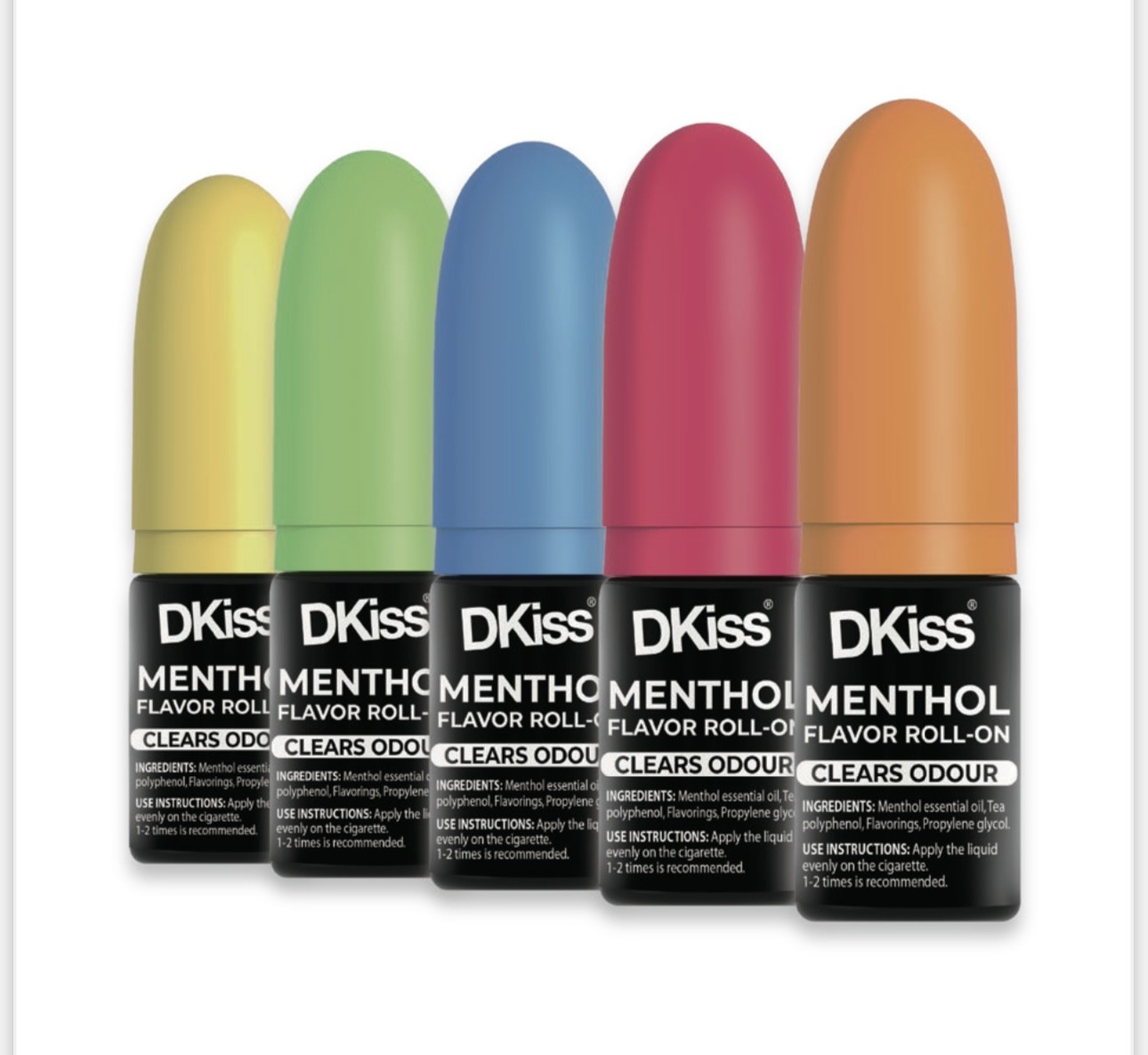
    In an effort to satisfy menthol consumers, Dekang Biotech Co. Ltd., an established player in the vaping industry, developed the DKiss menthol flavor roll-on. According to the company, the innovative product is set to transform the smoking experience in several ways.

    “It is the easiest way to flavor cigarettes. The DKiss Menthol Flavor Roll-On is distinguished by its innovative roll-on design, ensuring a clean and convenient application process while allowing users to adjust the intensity based on their preferences,” a Dekang representative said.

    The DKiss menthol flavor roll-on can be used with both traditional cigarettes and heated tobacco sticks for heat-not-burn nicotine delivery systems. It caters to a diverse audience by providing a wide variety of flavor options, including flavors specifically designed for individuals sensitive to cigarette odors.

    DKiss menthol roll-on allows smokers to flavor their own cigarettes. In addition to menthol, the Dkiss line offers several other mixed flavors derived from plant extracts, such as loquat and ginseng, blended with menthol. This helps remove the bad breath caused by smoking. It brings the most satisfying fragrance to add a new dimension to your inhalation experience, according to Dekang.

    “This product effectively eradicates cigarette odors and bad breath caused by smoking, serving as a discreet solution for smokers,” the representative said. “Mint enthusiasts will appreciate the refreshing mint flavor variant, which cleverly balances the taste of the cigarette and the unpleasant smell it creates, making it an ideal choice for menthol cigarette lovers.”

    Dekang will showcase its DKiss menthol roll-on brand and its other innovative product lines during the Intertabac industry trade show (booths 5.D14 and 1B.A28), which will be held in Dortmund, Germany, from Sept. 19 – 21, 2024.

  • New Canadian Rules Trigger Pouch Shortage

    New Canadian Rules Trigger Pouch Shortage

    Photo: rawpixel.com

    Canada’s new restriction on nicotine pouch sales have left many users scrambling to find the product, reports Western Standard.

    On Aug. 28, the federal government prohibited the sale of nicotine pouches in convenience stores and banned flavors. Modern oral products can now only be legally sold behind the counter in pharmacies.

    In the immediate wake of the ban, some consumers reported difficulty finding the nicotine pouches, as many Canadian pharmacies do not have them in stock yet, and some do not plan to carry the products.

    Health Canada licensed Imperial Tobacco Canada’s (ITCAN) Zonnic nicotine pouches last year, but officials now say they have become too easy for young people to obtain.

    Tobacco harm reduction proponents say the recent measure has made pouches harder to find for adults who use them to stop smoking. Earlier this year, ITCAN launched a public awareness campaign about its Zonnic nicotine pouches. The company said it aimed to dispel myths and prove accurate, science-based information about nicotine-replacement therapies and Zonnic’s potential role in reducing smoking in Canada.